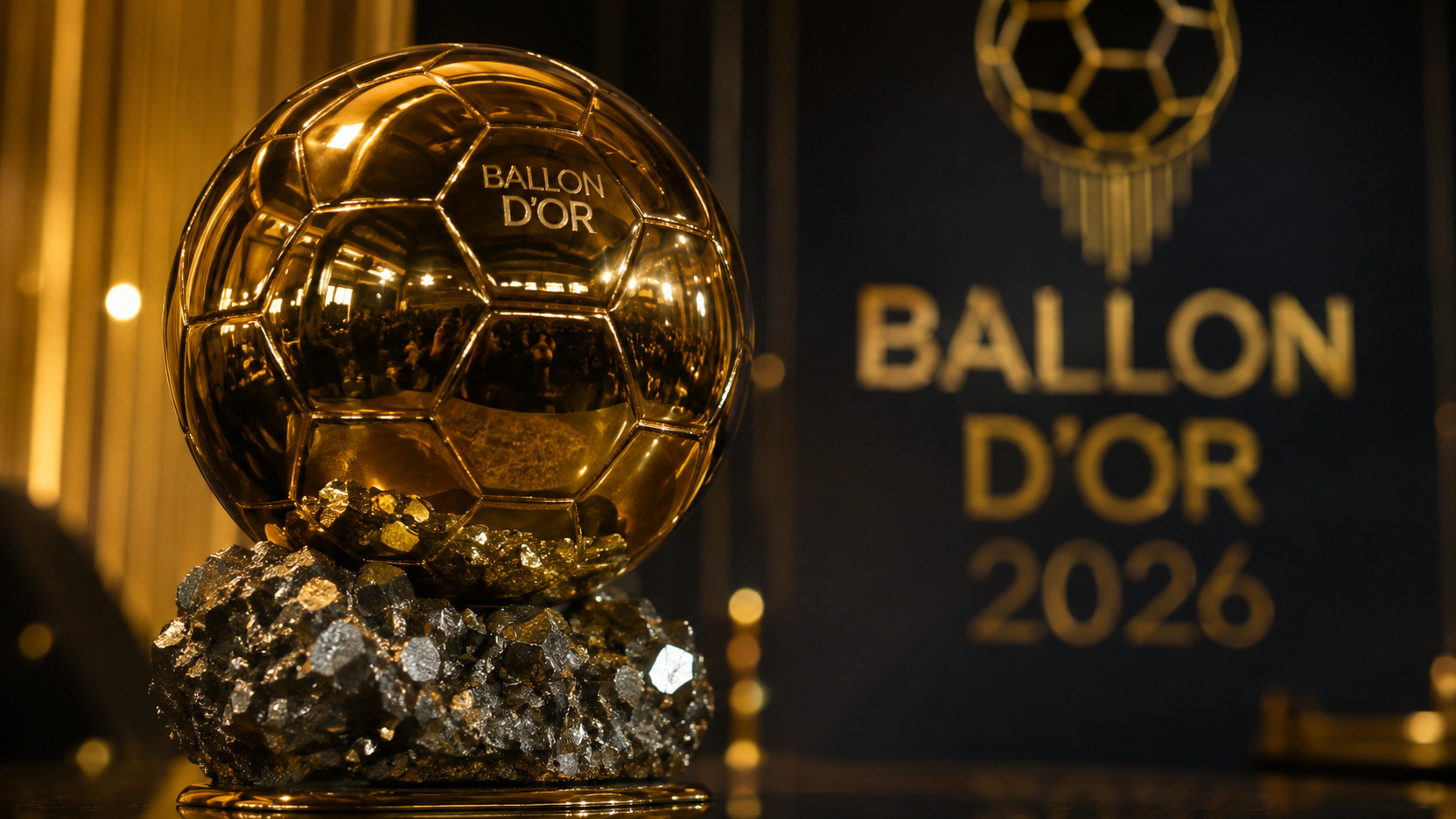
The World Cup counts towards the 2026 Ballon d'Or, but there is no public rule that turns the world title into an automatic pass to the award. The men's edition considers the 2025/26 season and includes club and national team competitions, including the 2026 World Cup. The choice, however, continues to be made by journalists who evaluate players according to three general criteria and then order them on a voting ballot.
This difference is the central point for understanding the debate. An excellent World Cup can change the perception of a season, mainly because it brings together games of enormous pressure and global reach. Even so, it enters into the same evaluation process that also considers individual performance throughout the cycle, collective results by club and national team and the dimension of class and fair play. In the public rules consulted, there is no specific percentage for the World Cup, bonus for being champion or multiplier for knockout matches.
What period does the 2026 Ballon d'Or consider
The organization informs that the 2026 edition rewards the best players of the 2025/26 season. For the men's award, domestic and international competitions, in clubs and national teams, include explicitly the World Cup played between June 11 and July 19, 2026.
This means that the World Cup is not a separate tournament from analysis. What a player did in the World Cup belongs to the same section that covers the club season. A decisive performance in June and July can, therefore, reinforce or alter the reading built over the previous months, but does not automatically erase everything that happened before the tournament.
The practical consequence is simple: comparing candidates only for the seven or eight matches that a team can play at the World Cup is to reduce the evaluation field. Likewise, ignoring the World Cup would also be wrong in 2026, because the organization itself expressly includes it in the period considered.
Who votes for the Ballon d'Or
For the 2026 men's award, the organization foresees an international jury of 100 journalists, with one representative from each of the 100 highest placed countries in the FIFA ranking used to form the electoral college. In the women's award, there are 50 journalists from countries in the top 50.
This detail helps to dismantle two common confusions. The main Ballon d'Or is not decided by popular vote, and the choice is not made directly by players and coaches. The core of the process is journalistic and international.
UEFA, which co-organizes the awards with Groupe Amaury and France Football, also explains that the voting system remains the responsibility of France Football. The partnership expanded the organization of the event, but did not transform the award into an election conducted by national federations or by UEFA itself.
How each judge's top 10 turns into points
In the official mechanics detailed by UEFA, each juror chooses ten players in order of merit from the list of nominees. First position receives 15 points; the second, 12; the third, 10; then come 8, 7, 5, 4, 3, 2 and 1 point up to tenth position.
The winner is whoever scores the most points from all the ballots. In case of a tie, the first tiebreaker criterion is the number of votes in first place. If equality continues, votes come in second, third and so on.
This format matters because the dispute does not just depend on how many judges place a certain player at the top. An athlete who appears frequently among the first places may accumulate a lot of points, while another may receive more first-place votes, but appear little or much lower on the other ballots. The final result is a sum of individual rankings, not a binary question about who was "the best in the World Cup".
What are the three official criteria
The first criterion is individual performance, paying attention to the player's decisive and impressive character. This is where goals, assists, creation, defense, match control and, above all, real influence in important moments come into play. The regulation does not reduce this analysis to a single statistic.
The second criterion involves collective performances and achievements. Relevant titles and campaigns matter because football is a team sport. Winning the Champions League, national championship or World Cup can strengthen a candidacy, but the collective trophy does not replace the individual's assessment.
The third criterion is class and fair play. It serves as a reminder that voting was not designed just to count numbers and medals. Sports conduct and the way the player presents himself within the competition are also part of the official framework.
Public rules present these three criteria, but do not distribute mathematical weights between them. There is, for example, no published formula saying that individual performance is worth 50%, titles 40% and fair play 10%. The final decision depends on each juror's reading within this framework.
So what is the real weight of the World Cup
The official weight of the World Cup is easy to define: it is within the evaluated period and its matches can meet the same criteria used for the rest of the season. The subjective weight, however, varies from judge to judge because there is no specific coefficient for the World Cup.
In practice, the World Cup tends to be very influential for three reasons. First, it concentrates high-pressure knockout matches. Second, it offers direct comparison between stars who typically play in different leagues. Third, it produces very visible moments, capable of redefining the narrative of a season in a few weeks.
This explains why a remarkable performance in the quarter-finals, semi-finals or final can have a disproportionate impact on the memory of those who vote. But memory impact is not the same thing as a punctuation rule. The organization does not say that a goal in the World Cup final is worth more points than a decisive goal in the Champions League, nor that lifting the world cup generates an automatic advantage on the ballot.
Why being world champion doesn't guarantee the Ballon d'Or
The Cup is won by an entire team, while the Ballon d'Or rewards one player. It is possible that the world champion has several protagonists, that the individual highlight of the competition is in another team or that an athlete arrived at the World Cup after a club season that was clearly inferior to that of a competitor.
There is also the opposite scenario: a player may not win the Cup and still produce an extraordinary individual campaign, combined with a dominant season for his club. Because judges need to look at the entire cycle and not just the tournament champion, these combinations remain open.
History itself helps to show that "world champion = Ballon d'Or" was never an automatic equivalence. In 2010, Spain won the World Cup, but Lionel Messi won the Ballon d'Or. In 2014, Germany was champion and Cristiano Ronaldo won the award. In 2018, France lifted the cup and Luka Modric, runner-up with Croatia, was the winner. These editions had different contexts and formats from the current one, which is why they serve as a historical illustration, not as a regulation for 2026.
What does it mean to say that "the World Cup counts"
Saying that the World Cup counts means four things at the same time. The World Cup games are included in the edition; individual performance in them can make or break a candidacy; the team's collective campaign is included in the evaluation; and the events of the tournament can influence the order that each journalist puts together their top 10.
What the phrase does not mean is that there is a separate score for the World Cup, that the best player in the competition receives additional votes or that the captain of the winning team is automatically placed in first place. The ballot continues to be an ordering made by the jurors within the general criteria.
How to follow the dispute without falling into a false "favorite ranking"
The most useful way to follow the 2026 Ballon d'Or is to separate rules from narrative. The rule informs the period, who votes, how the points are distributed and what criteria guide the
choose. The narrative is born from performances, titles, debates and the perception of the jurors. It changes throughout the season and becomes especially intense after a World Cup.
When the statement appears that a certain player "has already won" the Ballon d'Or because he was world champion, it is worth asking three questions: how was his complete individual season, what were his achievements for club and country and how he compares to the others within the three official criteria. This filter is more faithful to the process than any single cup count.
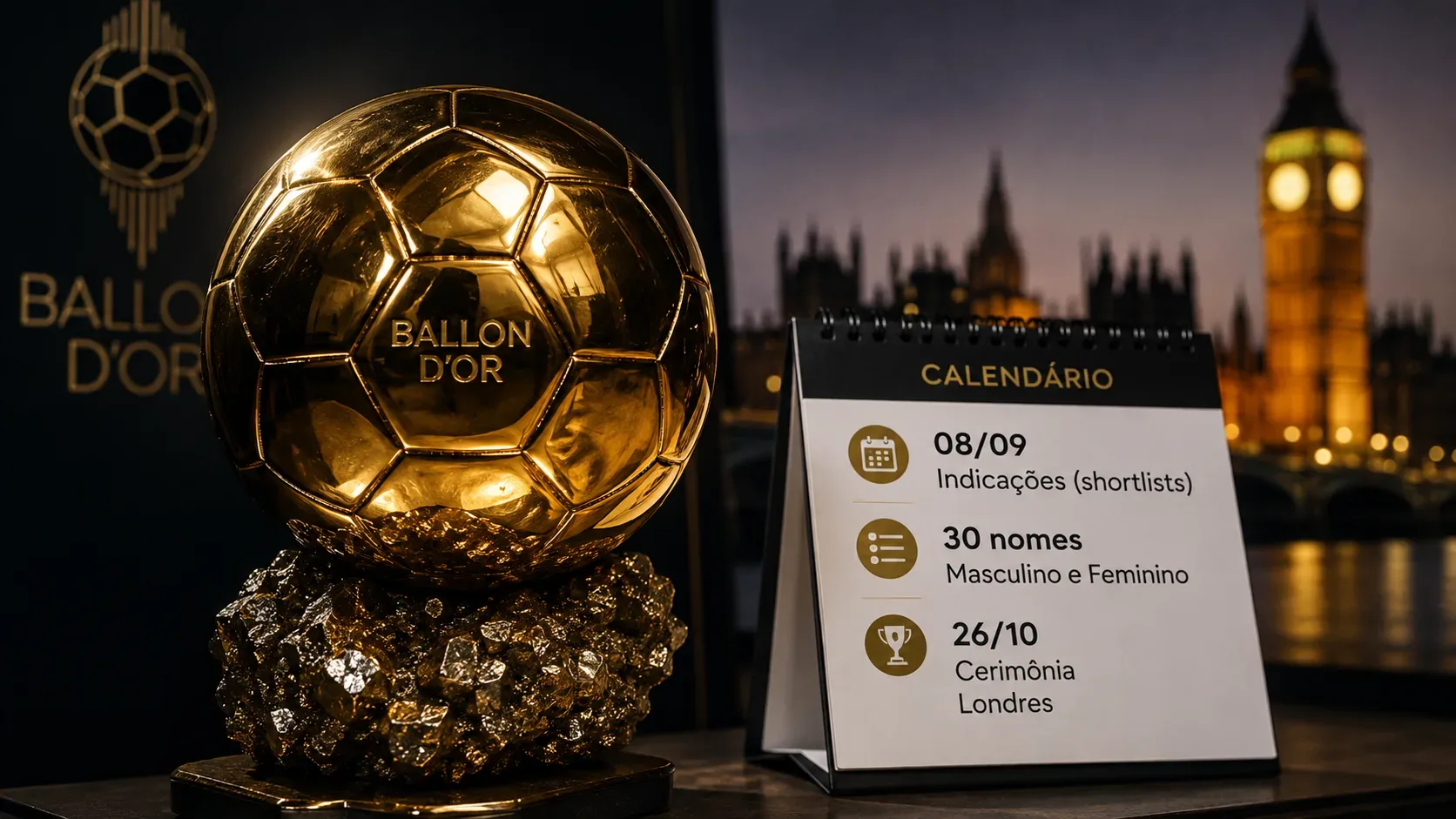
The 2026 edition will be delivered on October 26, in London. Until then, the World Cup is a relevant part of each candidate's dossier, but not a sentence. The award is born from the sum of the ballots from 100 journalists and an evaluation of the entire season. That's why "the World Cup weighs" and "the World Cup decides" are very different statements.