What YouTube announced on September 23
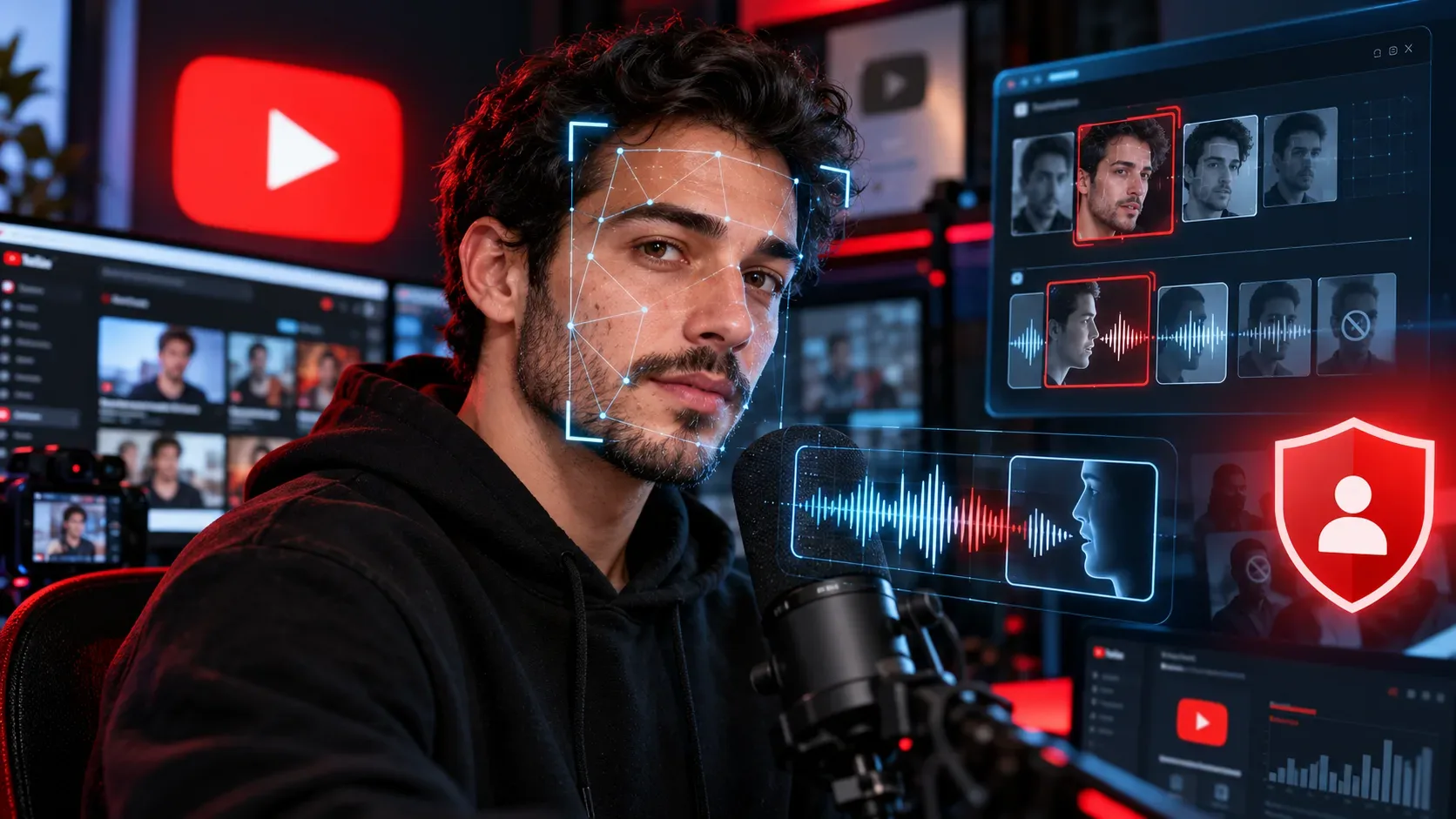
At Made on YouTube 2026, YouTube announced an expansion of its likeness detection tool that will eventually combine facial and speaking-voice signals and bring the tool to its mobile app. Its existing facial tool lets enrolled creators find potential uses of their appearance in videos on the platform. Voice integration is planned for later in 2026 and should not be mistaken for audio protection already available to everyone.
According to YouTube, combining speaking voice and facial detection is intended to improve match accuracy and lay the groundwork for broader voice protections. The mobile version is intended to support enrollment, match alerts, reviewing results and taking action from a phone. The announcement gives no exact release date for each creator or country.
How the existing detection works
The optional YouTube Studio tool checks recently uploaded videos against a facial reference provided by creators who enroll. It looks for potential likeness matches rather than copyrighted excerpts, unlike Content ID. A video appearing in the results is a lead for review, not automatic proof of a deepfake or infringement.
YouTube says its current automated search identifies facial matches for enrolled participants. Results can even include genuine footage or reposted clips without AI manipulation. According to the platform, other faces may be detected during scanning but people who have not enrolled cannot be identified, and nonmatching scan data is immediately discarded.
Who is eligible and how to enroll
An earlier expansion extended the feature to eligible creators older than 18, beyond the pilot associated with the YouTube Partner Program. However, the feature remains experimental and unavailable in some countries. Setup requires channel Owner or Manager access, consent to biometric processing, a government-issued ID and a short video selfie.
On a computer, the documented path is YouTube Studio > Content detection > Likeness > Start now. Identity verification can take up to five days after submitting the ID and video. Each on-camera person who wants their own protection needs to enroll. Authorized Managers and Editors can review matches and submit reports for enrolled participants.
What changes with voice and mobile access
The voice announcement concerns a future integration of speaking voice into facial analysis to strengthen identification of potential impersonations. As of this date it is not a promise to find every voice-only clone or automatically remove a video. YouTube Help still says the operational detection tool searches for facial likeness and that audio expansion is under development in 2026.
For mobile, the announced goal is to bring enrollment, alerts, review and action into the YouTube app itself. Until deployment reaches a creator’s account, they should use the available Studio workflow and check Content detection. An announcement does not establish immediate availability, including in Brazil.
A match appears: what should you do?
Open YouTube Studio > Content detection > Likeness > For review and examine the video, its context and whether the face has actually been altered or generated with AI. If you believe it violates privacy, use the removal-request path provided by the platform. Review and possible removal depend on the applicable policies, not solely on the detected likeness.
A genuine clip containing your face is not automatically removable under the privacy policy. Unauthorized reuse of your own work may instead involve a separate copyright route, subject to exceptions such as fair use or public domain. A likeness claim differs from a copyright claim and, according to YouTube Help, can block playback without penalizing the publishing channel.
If you find a voice imitation or an altered video that the tool did not catch, use the privacy complaint process directly. YouTube acknowledges that the experimental system can miss cases.
Personal data and limits of control
Enrollment requires consent to biometric technology and identity verification. YouTube says it uses the selfie video and images from participants’ content to build detection references, and that setup data does not train Google generative AI models without consent. A separate optional permission allows face and voice templates to help improve likeness detection technology and can be withdrawn in Studio.
Participants can turn off scanning in the management panel; stopping new matches can take up to 24 hours. According to the documentation, full name, selfie video and likeness model may be retained for up to three years after the last login unless consent is withdrawn or the account is deleted, under the service’s stated conditions. The tool offers detection and a complaint route, not guaranteed complete detection or unrestricted removal of legitimate content.