Spoiler warning: this text discusses events from episodes 1 and 2 of Lanterns.
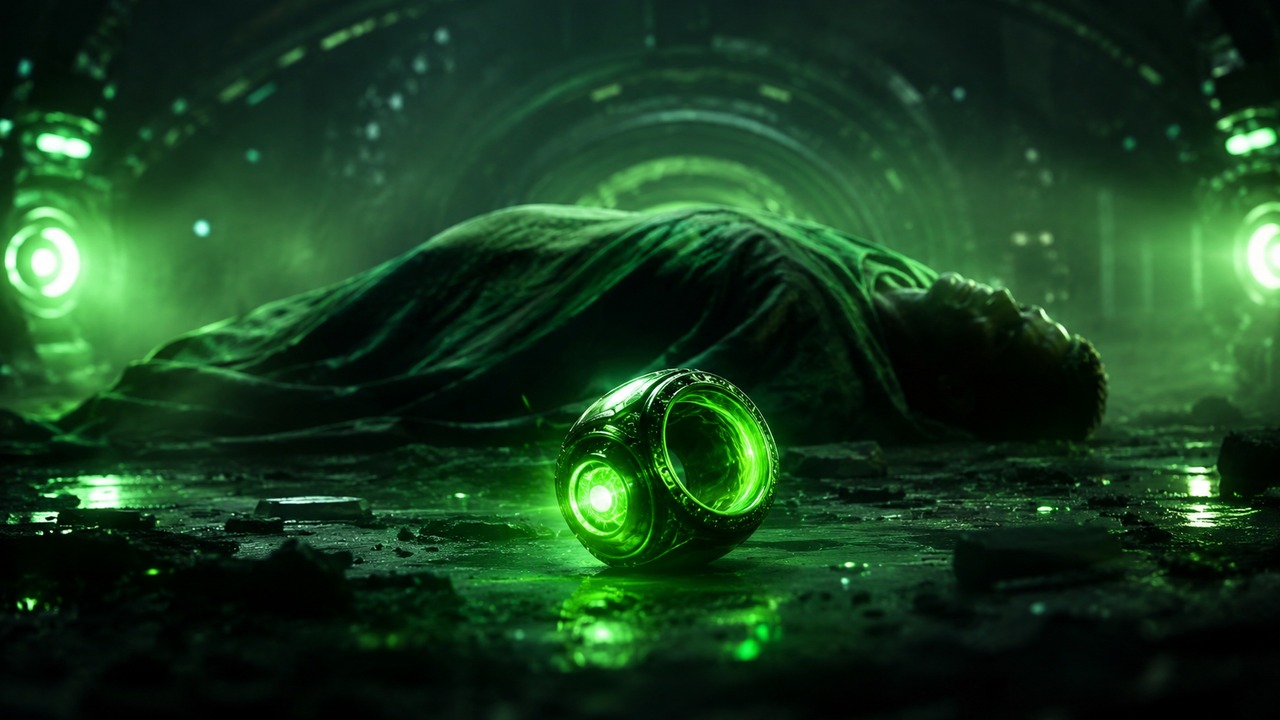
At this point in the series, the safest answer is yes: Hal Jordan is dead in the 2026 timeline. Episode 1 shows John Stewart returning to Rushville, Nebraska, and finding Hal's body frozen in the bleachers of the football field. The ring is not on his hand. More importantly, the creators themselves have started talking about the scene as Hal's death, not merely as the appearance of death.
That does not mean Lanterns has already explained the case. The episode confirms the victim, but it does not reveal who killed Hal, exactly when it happened, how the ring left his possession or why John is not using the object he spent much of 2016 being trained to inherit. And after episode 2, the existence of a Manhunter capable of hiding inside a society gave new fuel to the theory that the body could be an impostor. For now, however, that hypothesis remains a theory.
Episode 1 shows Hal dead and without the ring
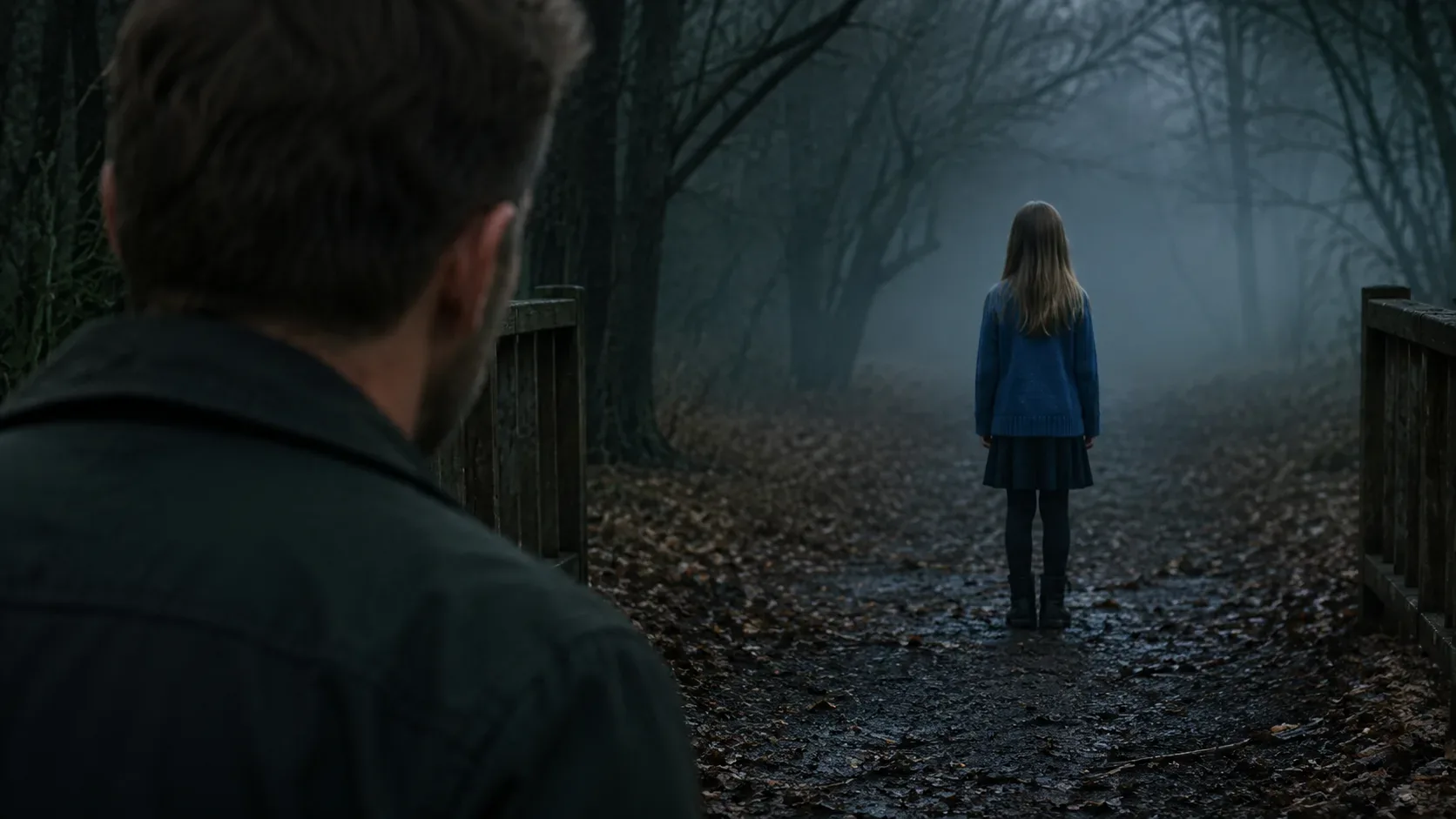
Most of the premiere takes place in 2016. Hal Jordan, a veteran of the Green Lantern Corps, trains John Stewart while the two investigate a massacre in Rushville. The investigation soon gains an extraterrestrial component: a suspect is able to pass as human and, when confronted, blows up his own body. Hal contains part of the impact with the ring and survives.
Then the narrative jumps ten years. In 2026, John returns to the same town and meets Sheriff Kerry Kane. She takes him to the stadium, where Hal is sitting in the bleachers, covered in snow and lifeless. The scene also draws attention to his hand: the ring is gone.
The premiere therefore establishes three points with narrative clarity. Hal is presented as dead in 2026. The ring is not with the body. John is not shown wearing that ring either. What is not explained is the entire path between the living Hal of 2016 and that final scene.
The cause and circumstances of the death also remain open for investigation. The production shows a severe head wound, but the premiere does not reveal who is responsible or reconstruct the crime. The effect is deliberate: instead of saving the death as a surprise for the end of the season, Lanterns turns Hal's fate into the case that reorganizes everything the audience sees from then on.
The creators treat the death as fact
The strongest evidence against reading the scene as merely an immediate trick lies outside the episode, in statements from the creative team.
In a GQ interview published on premiere day, Tom King said the idea that unlocked the story was precisely "Hal is dead." He explained that the team needed to answer questions about the new DCU, including why Guy Gardner is already appearing as a Green Lantern and where Hal and John fit into that transition. Hal's death raised the stakes and became a structural part of the series.
Damon Lindelof and Chris Mundy gave the same direction in other interviews. Speaking to Entertainment Weekly, the team described the decision as the most meaningful way to bring John back to Rushville in 2026 and concentrate the emotional weight of the story on him. Speaking to DiscussingFilm, Lindelof said he wanted the audience to feel sadness, anger and confusion - reactions of someone who loses an important person.
That is very different from a team avoiding confirmation to protect a fake corpse reveal. So far, the people responsible for the series want the audience to accept the death as a fact of the narrative.
Dead now does not mean impossible to return
There is, however, an important nuance. In the same GQ interview in which he calls Hal dead, Tom King notes that this is a superhero story and adds, in essence, that you never know what may happen. Comic-book mythology itself has ways to bring characters back, alter states of existence or use echoes of consciousness.
That makes it possible to separate two questions that are often mixed together. "Is Hal dead at the end of episode 1?" The series and the creators say yes. "Can Kyle Chandler never play Hal again in any future form?" That second claim has not been confirmed.
Lanterns has already created a mechanism to preserve the character's presence without undoing his death: the so-called Halogram. When John uses the ring in the premiere, a younger copy of Hal's consciousness stored in the object appears. The team itself describes this figure as a consciousness backup. Therefore, seeing Hal in another scene or hearing his voice in the future would not, by itself, prove that the man found in 2026 was alive.
Why the impostor-body theory gained strength
The theory did not come out of nowhere. Episode 1 already teaches that extraterrestrial beings can assume a human appearance extremely convincingly. The suspect investigated by Hal is able to pass as human until he is pressed with specific questions. The premiere therefore plants the idea of false identity as part of the mystery.
Episode 2 expands on that by revealing the Manhunters. According to the explanation given within the series and detailed by the creative team, these synthetic beings predate the Green Lantern Corps, and one of them is hidden in Rushville. It would be capable of constructing new bodies to infiltrate a society without attracting attention.
From there, the fans' reasoning is simple: if there is an entity capable of manufacturing a body and assuming an identity, the corpse seen in 2026 might not be the real Hal. The hypothesis is compatible with the fictional tools the series has placed on the table.
Compatible, however, does not mean proven. Through the end of episode 2, there is no scene showing the Manhunter copying Hal, no line saying the corpse is fake and no statement from the creators pointing in that direction. On the contrary, when they talk about the premiere, they continue calling the character dead. The impostor theory is a possible story route, not a hidden revelation that can already be treated as fact.
The missing ring is the most concrete clue
If the body invites speculation, the ring creates an objective question. John looks at Hal's hand and does not find the object. The absence receives visual emphasis because the relationship between mentor, successor and ring is one of the engines of the season.
Tom King went further on the official Lanterns podcast. Commenting on the situation, he drew attention to three elements: Hal is dead, John is not wearing the ring and Guy Gardner has "the ring." The wording directly links the mystery of the premiere to Guy's presence in the DCU.
What is still missing is the verb of the story. The series has not shown Guy stealing the ring, receiving it from Hal, being chosen by it, getting it from the Guardians or finding it after the death. It has not explained when possession changed either. Saying that "Guy killed Hal to get the ring," for example, would go far beyond what has been shown.
There is also a chronology detail that the team itself uses as a narrative question: Guy already appears as a Green Lantern in Superman, while Lanterns spans a decade between 2016 and 2026. That means the simple sequence "Hal dies, the ring chooses Guy" does not solve the puzzle on its own. Something happened before the body was discovered and has not yet been told.
Manhunter: Could Hal be both suspect and victim?
After episode 2, another variation began to circulate: what if the Hal in part of the story was already the Manhunter? The logic draws on the contrast between different versions of the character, the theme of people hidden in plain sight and the enemy's ability to create bodies.
Again, it is a possible theory, but it is unconfirmed. Episode 2 shows Hal investigating the Manhunters, looking for answers and visiting Sinestro. Nothing there establishes that he has been replaced. The series may be planting a major disguise, or it may simply be using identity paranoia as a tool to make the audience distrust everyone.
This is one of those cases where the genre encourages speculation. When a story announces that someone may be hiding inside any body, every strange behavior becomes a potential clue. The important thing is not to reverse the logic: the existence of a mechanism capable of producing an impostor does not prove that the mechanism was used specifically on Hal's body.
What is Hal's status after episode 2?
As of what had aired by August 28, 2026, the best-supported status is this: Hal Jordan is dead in the 2026 timeline, and the series wants that death to be taken seriously. The corpse and the creators' statements support that conclusion.
What remains open is the case surrounding the death. The identity of the person responsible, the exact moment Hal lost the ring, the way Guy Gardner entered that chain and the role of the Rushville Manhunter have not yet been revealed. Episode 2 makes the hypothesis of a fake body technically possible within the series' universe, but it does not confirm it.
For that reason, the best way to read the premiere is not "maybe Hal did not die at all," but rather "Hal is dead, but we still do not know what that death really means." Lanterns has already answered the initial shock. Now it has to explain the body, the ring and the ten missing years between the mentor of 2016 and the victim found in 2026.