Spoiler warning for The Whisper Man. The final scene does not objectively confirm that Jake is seeing a ghost. What it does confirm is the visual identity of the girl in the blue sweater: Tom finds a photograph of Rebecca, his late wife and Jake's mother, as a child, wearing the same sweater and matching the figure the boy has been describing. From there, the film leaves two readings open — a supernatural presence or a psychological construction tied to grief.
Who is the girl in the blue sweater?
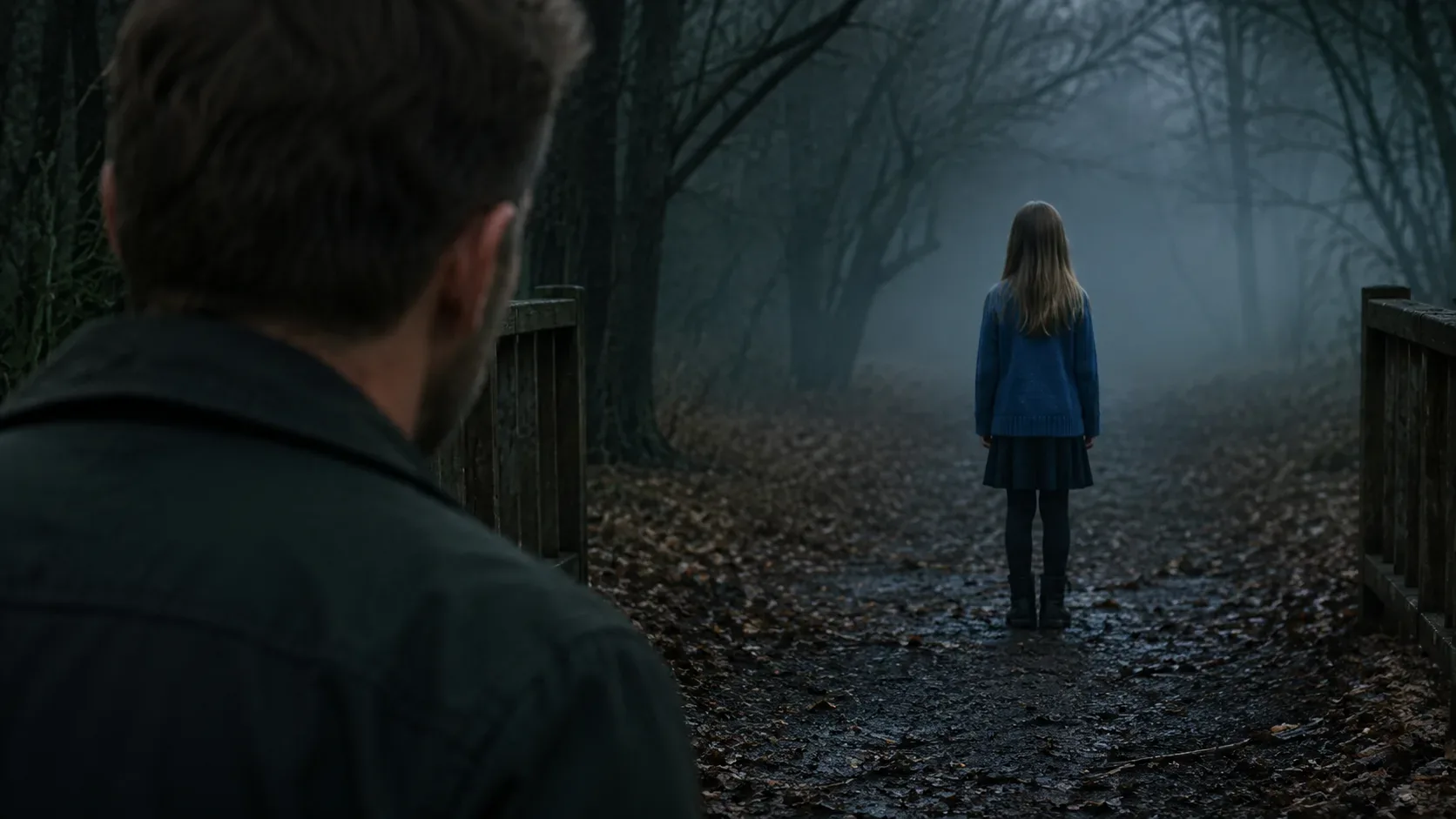
The girl is connected to Rebecca, Jake's late mother. In the ending, Tom looks through old photographs of his wife and finds an image of her as a child. Her appearance matches the imaginary friend who has accompanied Jake throughout the film.
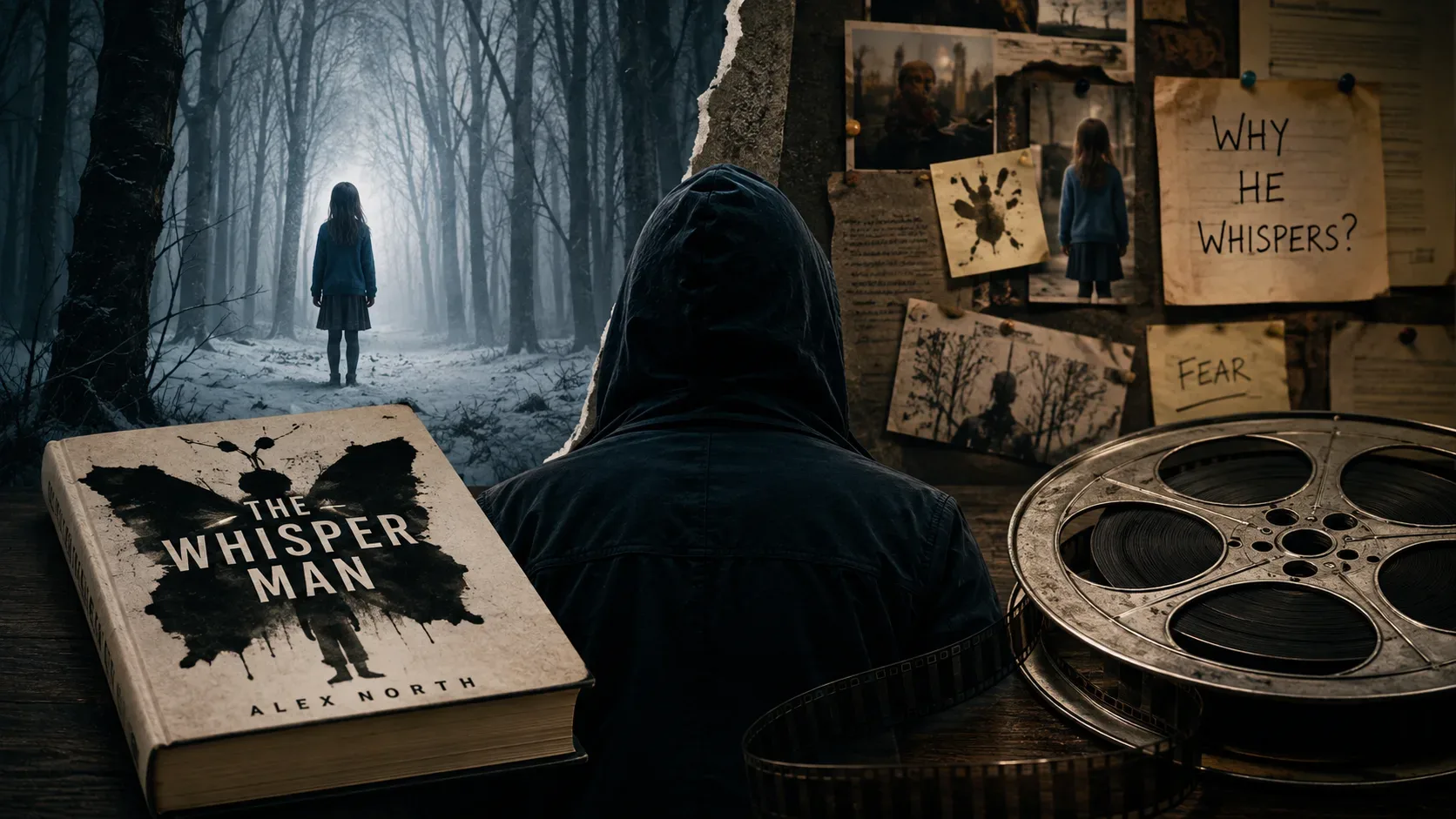
This detail was not invented only for the adaptation. In Netflix's official ending deep dive, author Alex North says the reveal comes directly from his 2019 novel and that this element was, for him, the heart of the book. The adaptation preserves the link between the child figure and Jake's mother, while turning the reveal into a more concentrated final beat.
So is she the ghost of Jake's mother?
That is a possible reading, and it is the personal reading director James Ashcroft says he prefers, but it is not an absolute confirmation within the narrative. In an interview with Decider, Ashcroft said he sees the reveal as the presence and spirit of Jake's mother influencing and guiding events toward the family's healing.
In the same answer, however, he explained that the filmmakers wanted to keep the question in tension: the imaginary friend had to work both as a supernatural being and as a psychological manifestation of the boy. In another official explanation published by Netflix Tudum, Ashcroft is even more explicit that the element must work as possible psychosis and/or possible supernatural intervention, and that viewers can choose one interpretation, the other, or both.
That is why simply writing “the girl is the mother's ghost” turns the director's interpretive preference into a certainty the film itself avoids establishing.
What the photograph actually confirms
| Element | What the ending confirms | What remains open |
|---|---|---|
| Visual identity | The figure Jake sees reproduces Rebecca as a child, including the blue sweater. | Whether Jake is seeing a real entity or mentally creating that figure. |
| The girl's function | She appears as a protective presence tied to the memory of his mother. | Whether that protection comes from supernatural intervention or Jake's own psyche. |
| The director's reading | Ashcroft personally reads the presence as the mother's spirit guiding the family. | He keeps the ambiguity as a deliberate part of the work. |
Why does the psychological reading still work?
Jake spends the film grieving his mother. A child in that situation can create an imaginary friend or an internal representation of someone who has died as a way to organize fear, longing, and a sense of protection. The final photograph gives viewers a possible origin for the image: Rebecca as a child may exist in memories, photographs, or family objects surrounding Jake.
This interpretation does not require everything the girl “knows” to be explained literally. The film treats Jake's perception subjectively and leaves coincidences and intuitions in a zone of uncertainty. Ashcroft described precisely that balance as intentional.
And why does the supernatural reading feel so strong?
The supernatural alternative gains force because the girl is not merely company. She guides Jake at decisive moments and seems to act as a protective presence. The photograph reveal, placed at the very end, invites viewers to reinterpret those appearances as signs that Rebecca has continued to watch over her son.
This is where Ashcroft's statement to Decider matters: his own reading is spiritual. But the statement does not erase the ambiguous construction. Rather than saying the film has a single factual answer, the director separates his personal interpretation from the experience he wanted to offer viewers.
Why does the film end on this uncertainty?
The Whisper Man is built largely around fathers, sons, abandonment, and family inheritance. The girl in the blue sweater brings the mother back to the center at the very end. According to Ashcroft, the reveal adds an emotional layer and helps symbolically reunify the family after its losses.
That also changes the function of the twist. The photograph is not there only to deliver a supernatural jolt. It reorganizes Jake's story: what Tom treated as childish fantasy may have been, at the same time, a way for the boy to carry his mother with him and a possible presence that helped him survive.
Short answer: ghost or imagination?
The film does not force viewers to choose. The girl in the blue sweater represents Rebecca, Jake's mother, as a child. James Ashcroft says he personally sees her as the mother's spiritual presence, but he also confirms that the scene was designed to sustain a psychological explanation. Therefore, “she is the mother's ghost” is an interpretation strongly supported by the director — not the film's sole, indisputable canonical fact.
Main sources: Netflix Tudum, official ending explanation; Decider, James Ashcroft interview; Entertainment Weekly, ending interview.