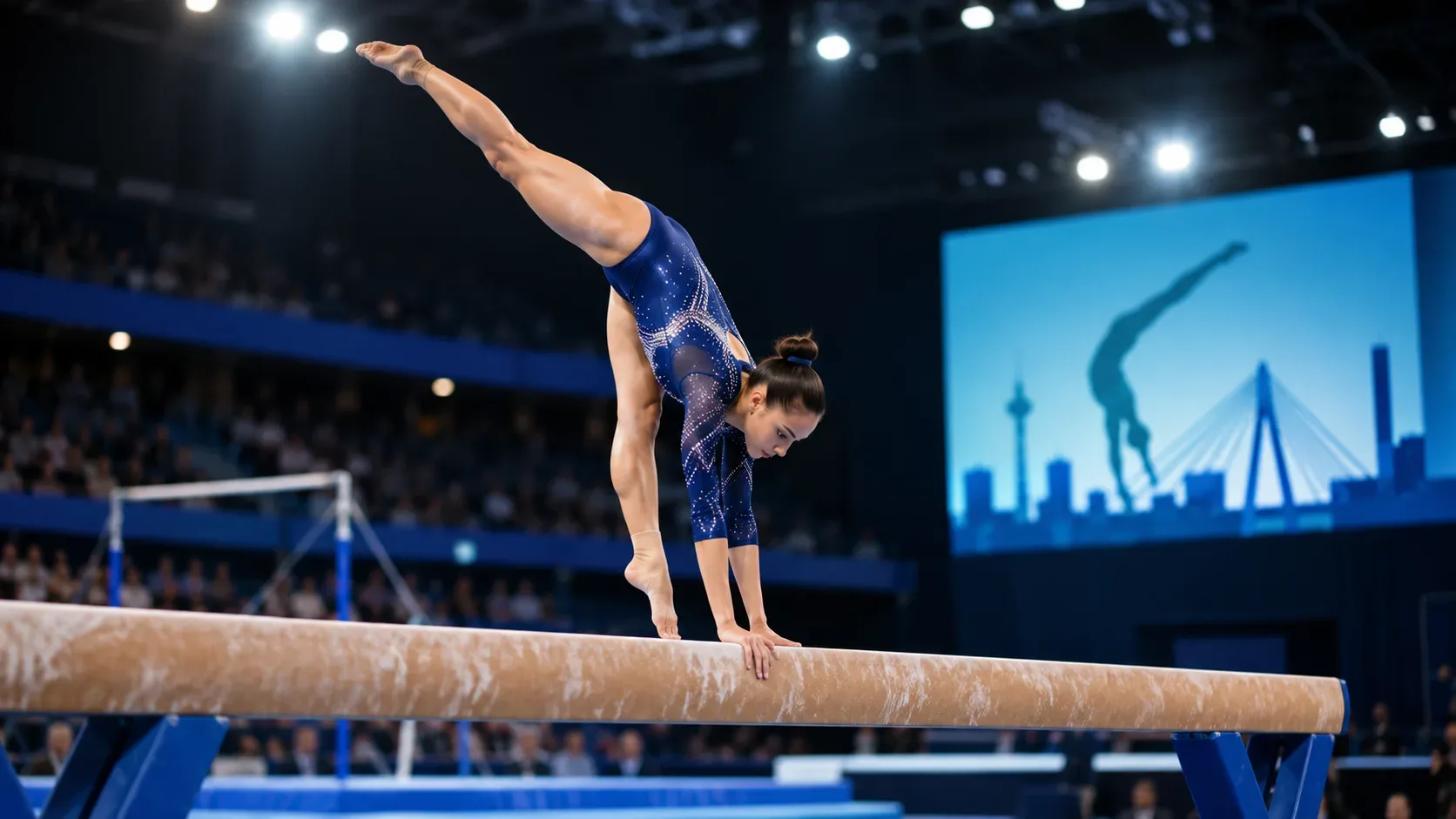
The 54th Artistic Gymnastics World Championships will take place from October 17 to 25, 2026 at Rotterdam Ahoy in the Netherlands. The official program already organizes the nine competition days into four easy-to-follow blocks: qualifications, team finals, all-around finals and apparatus finals. The World Gymnastics event page confirms the dates, venue and technical files, while the official Rotterdam 2026 website publishes the sessions in local time.
For viewers in Brazil, there is one important time-zone detail: through October 24, Rotterdam is five hours ahead of Brasília time. In the early hours of October 25, the Netherlands ends daylight saving time and moves the clock back one hour, reducing the difference to four hours that Sunday. The October 25 clock change is confirmed by the Dutch government.
2026 Artistic Gymnastics World Championships schedule
The times below reproduce the official session windows and add the conversion to Brasília time. They show when each session starts and ends; they are not the exact performance time of a specific gymnast.
| Date | Stage | Rotterdam time | Brasília time |
|---|---|---|---|
| Oct. 17 | Men's qualifications — sessions 1 and 2 | 10:00–14:00 and 16:00–20:00 | 05:00–09:00 and 11:00–15:00 |
| Oct. 18 | Men's qualification — session 3; women's qualification — session 4 | 10:00–14:00 and 16:00–21:00 | 05:00–09:00 and 11:00–16:00 |
| Oct. 19 | Women's qualifications — sessions 5 and 6 | 09:30–14:00 and 16:00–22:30 | 04:30–09:00 and 11:00–17:30 |
| Oct. 20 | Men's team final | 19:00–22:00 | 14:00–17:00 |
| Oct. 21 | Women's team final | 19:00–21:30 | 14:00–16:30 |
| Oct. 22 | Men's all-around final | 19:30–22:00 | 14:30–17:00 |
| Oct. 23 | Women's all-around final | 19:30–22:00 | 14:30–17:00 |
| Oct. 24 | Apparatus finals — block 1 | 14:00–18:00 | 09:00–13:00 |
| Oct. 25 | Apparatus finals — block 2 | 14:00–18:00 | 10:00–14:00 |
How the format separates team, all-around and apparatus events
The October 17–19 qualification rounds are the gateway to the later stages. Results there determine who advances in the team competition, the all-around and the individual apparatus finals. That means the same qualification session produces different rankings: one for national teams, another for gymnasts competing across the full set of apparatus, and separate rankings for specialists.
Team competition
In the team event, the focus is the national team's collective result across all apparatus in the men's or women's program. The finals are held on separate days: men on October 20 and women on October 21. In 2026, these finals carry extra weight because Rotterdam opens the team qualification pathway to the Los Angeles 2028 Olympic Games. According to World Gymnastics and the local organizers, the top three men's teams and top three women's teams will each secure an Olympic berth for a full five-athlete team.
All-around
The all-around measures a gymnast's ability to build a total across every apparatus in the discipline. Men compete on six: floor exercise, pommel horse, still rings, vault, parallel bars and horizontal bar. Women compete on four: vault, uneven bars, balance beam and floor exercise. The men's all-around final is on October 22 and the women's final is on October 23.
Apparatus finals
The apparatus finals bring together specialists and gymnasts who earned the strongest qualification rankings on each event. The official program splits the world titles over two days:
- October 24: men's floor exercise, women's vault, men's pommel horse, women's uneven bars and men's rings.
- October 25: men's vault, women's balance beam, men's parallel bars, women's floor exercise and men's horizontal bar.
What to watch in each stage
- October 17–19 — qualifications: watch the team standings, who moves into all-around contention and which specialists enter qualifying positions on each apparatus. This is also when the subdivision draw matters most for planning what to watch.
- October 20–21 — team finals: beyond the world titles, the team podium directly affects the LA28 Olympic qualification race.
- October 22–23 — all-around finals: the focus shifts from collective depth to an individual gymnast's consistency across the entire apparatus program.
- October 24–25 — apparatus finals: the championships close with shorter, event-specific contests in which each title is decided on a single apparatus.
The qualification draw has already been published
On September 4, organizers announced the official qualification draw. It determines which subdivision each country competes in, the time of that subdivision and the apparatus on which it starts. Anyone following a specific national team should therefore look beyond the general October 17–19 schedule and also check the men's or women's draw published on the official event website.
The draw sets the structure of the sessions, but it should not be treated as the final list of every individual performance. Final team selections, entry changes and detailed start orders may still be updated in official documents as the championships approach.
How to read the times without missing a routine
A session window can last several hours because different groups and apparatus rotate in sequence. If you are following one country or gymnast, use the session time only as the first filter and confirm the subdivision and start order closer to the competition. For Brazilian viewers, October 25 is the easiest date to misread: the final still starts at 14:00 in Rotterdam, just as on the previous day, but it moves from 09:00 to 10:00 Brasília time because Dutch daylight saving time ends that morning.
What still needs to be confirmed closer to the event
As of September 12, 2026, the session calendar, competition-stage structure and qualification draw have been published. A few items still deserve a final check during the week of the championships:
- final team selections and any changes to entries;
- detailed start orders and more granular timings within each session;
- TV channels, streaming services and availability in Brazil;
- any operational schedule changes;
- qualification results, which will determine who actually competes in each final.
For updates, the two main reference points are the official World Gymnastics event page, which collects technical and qualification files, and the Rotterdam 2026 competition schedule. Using both makes it possible to plan the week without relying on predictions about results or outdated participant lists.