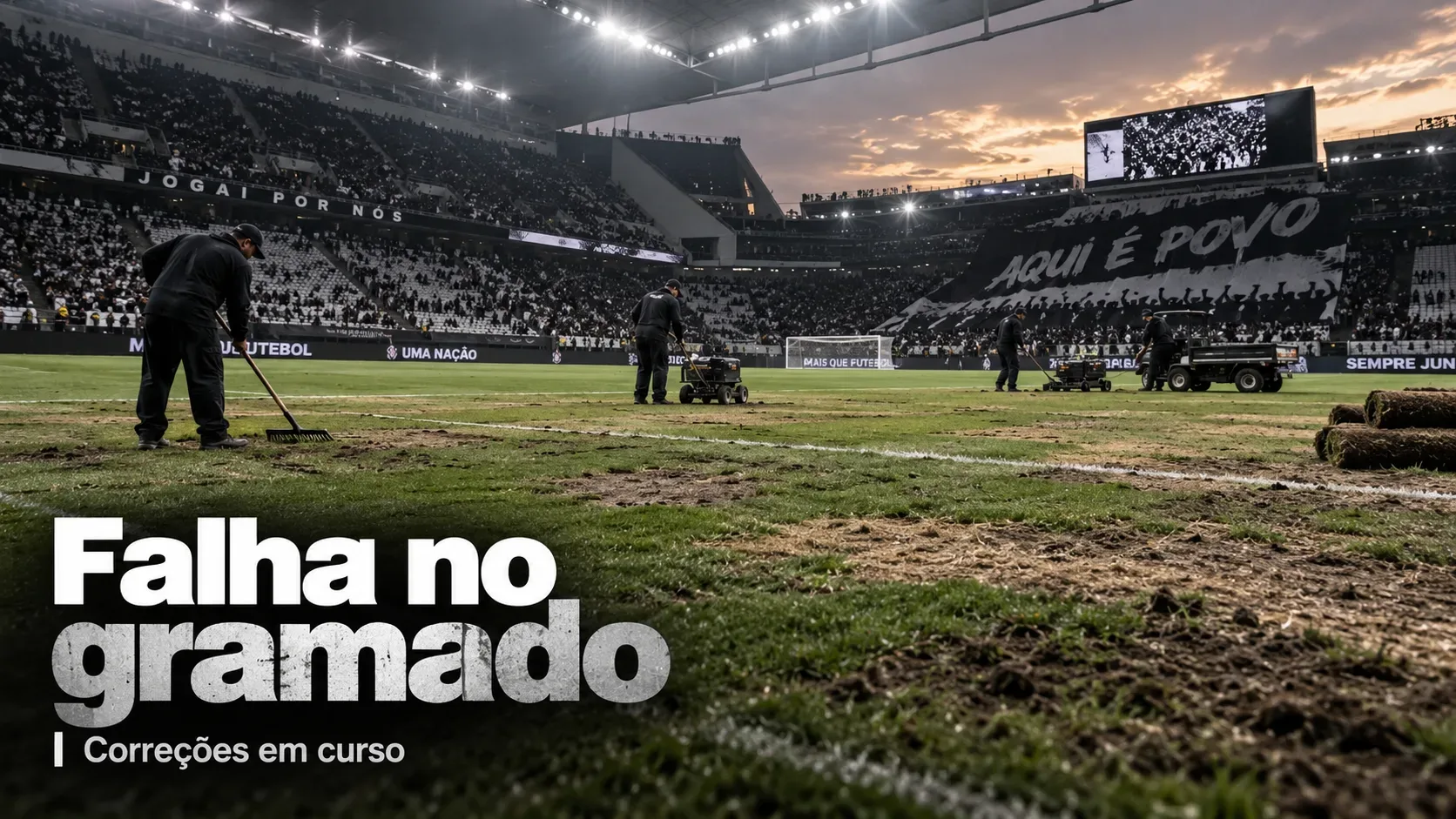
Corinthians acknowledged that the recovery plan for the Neo Química Arena pitch did not deliver the expected result when matches resumed after the 2026 World Cup break. In an interview published on September 19, football executive Marcelo Paz said the expectation was for the field to be in good condition by the match against Remo, but that did not happen. He also cited the game against Athletico Paranaense as another fixture played with the pitch below the desired standard.
The explanation presented by the executive centers on a change in process: for the first time since the Arena opened, the full renovation was carried out in winter. According to Paz, the grass responded differently from projections during that period and the surface took longer to establish. That account is consistent with explanations previously provided by the stadium management and World Sports, the company responsible for the pitch since the Arena opened.
What changed in the pitch renovation
The renovation began in June during the calendar break. Neo Química Arena reported that the work included removing old organic matter, lifting the synthetic fibers used in the hybrid system, leveling the surface with sand and reseeding the grass. The stadium also announced the purchase of photosynthesis equipment to support grass development.
The Arena surface combines natural grass with synthetic fibers installed below the playing layer. The 2026 renovation used winter ryegrass over a sand base. According to World Sports, the surface was established by seeding and needs time to develop plant density, roots and integration with the synthetic fibers.
The company told ge that best practices for this model indicate about eight weeks for full maturation. At Neo Química Arena, matches resumed roughly 40 days after seeding began. That gap helps explain the lower grass density and the exposed sand in the most heavily used areas.
Where the planning fell short
Marcelo Paz described the failure as an inaccurate expectation about how quickly the pitch would respond in winter. The plan was for the surface to be in good condition by the return against Remo. It was not, and problems were still visible against Athletico Paranaense.
At the time, ge reports identified two recurring symptoms: excess sand on the surface and insufficient compaction. Players and coaching staff also complained about the condition of the field. Arena operations manager Marcio de Luna acknowledged in July that the pitch performance was not matching the planned level.
One important distinction is that the club did not present the situation as a consequence of changing suppliers. Paz said the company responsible for maintenance was not new and had worked at the stadium since the beginning of Neo Química Arena. The acknowledged problem concerned the planning outcome and the grass response within that working window.
Which corrective measures were documented
| Observed problem | Announced or executed measure | What the sources confirm |
|---|---|---|
| Low compaction and visible sand | Pitch perforation and maintenance aimed at increasing surface consistency | ge reported that the club had begun perforation work and was monitoring compaction. |
| Incomplete grass maturation | A specific maintenance protocol to consolidate the root system | World Sports said the protocol would be carried out together with the stadium team. |
| Short term quality below expectations | A task force involving the football department, Arena management and the maintenance company | On July 31, Marcelo Paz announced a six-day push to improve the pitch before the next home match. |
| Need to support growth | Use of new photosynthesis equipment | Arena management announced the purchase of the equipment at the start of the renovation. |
| Risk of future overload | Protecting the stadium calendar | ge reported a tendency to reject year-end event proposals in order to preserve the pitch. |
These measures describe the documented recovery plan, but there is an important timing caveat. As of September 19, the sources reviewed had not published a new agronomic bulletin with updated measurements for compaction, grass density or maturation. It would therefore be inaccurate to claim from these reports alone that every technical parameter had already returned to its ideal level.
Did the pitch cause player injuries?
There is not enough evidence to establish a direct causal link. The issue became more prominent after injuries during the match against Athletico Paranaense. Fernando Diniz had publicly associated Zakaria Labyad's problem with the condition of the field, while Marcelo Paz used more cautious language in September.
Regarding Yuri Alberto, the executive noted that the injury was muscular and happened in a play involving contact, so he said he could not attribute it to the pitch. In Zakaria's case, Paz said the possibility could be discussed but stressed that technical opinions differed. The safest conclusion is that the field was in poor condition during that match, while the specific medical cause of each injury requires a separate assessment.
What to watch next
- new technical assessments from Neo Química Arena or World Sports about compaction, roots and grass density;
- feedback from players and the coaching staff after the next matches in Itaquera;
- decisions on additional events at the stadium, since pitch preservation became part of the planning discussion;
- possible changes to the schedule for future full pitch renovations, especially in winter windows;
- any official update that distinguishes routine maintenance from a new structural intervention.
The episode leaves an important distinction. Corinthians acknowledged that the schedule did not produce the expected pitch quality when matches resumed, but the club did not attribute the problem to a newly hired company or confirm that the field directly caused the injuries. What is documented is a combination of a shorter maturation window, a different winter-grass response and subsequent maintenance and preservation measures.
Main sources: Meu Timão, 19/09/2026; ge, 31/07/2026; ge, 31/07/2026; Neo Química Arena, 11/06/2026.