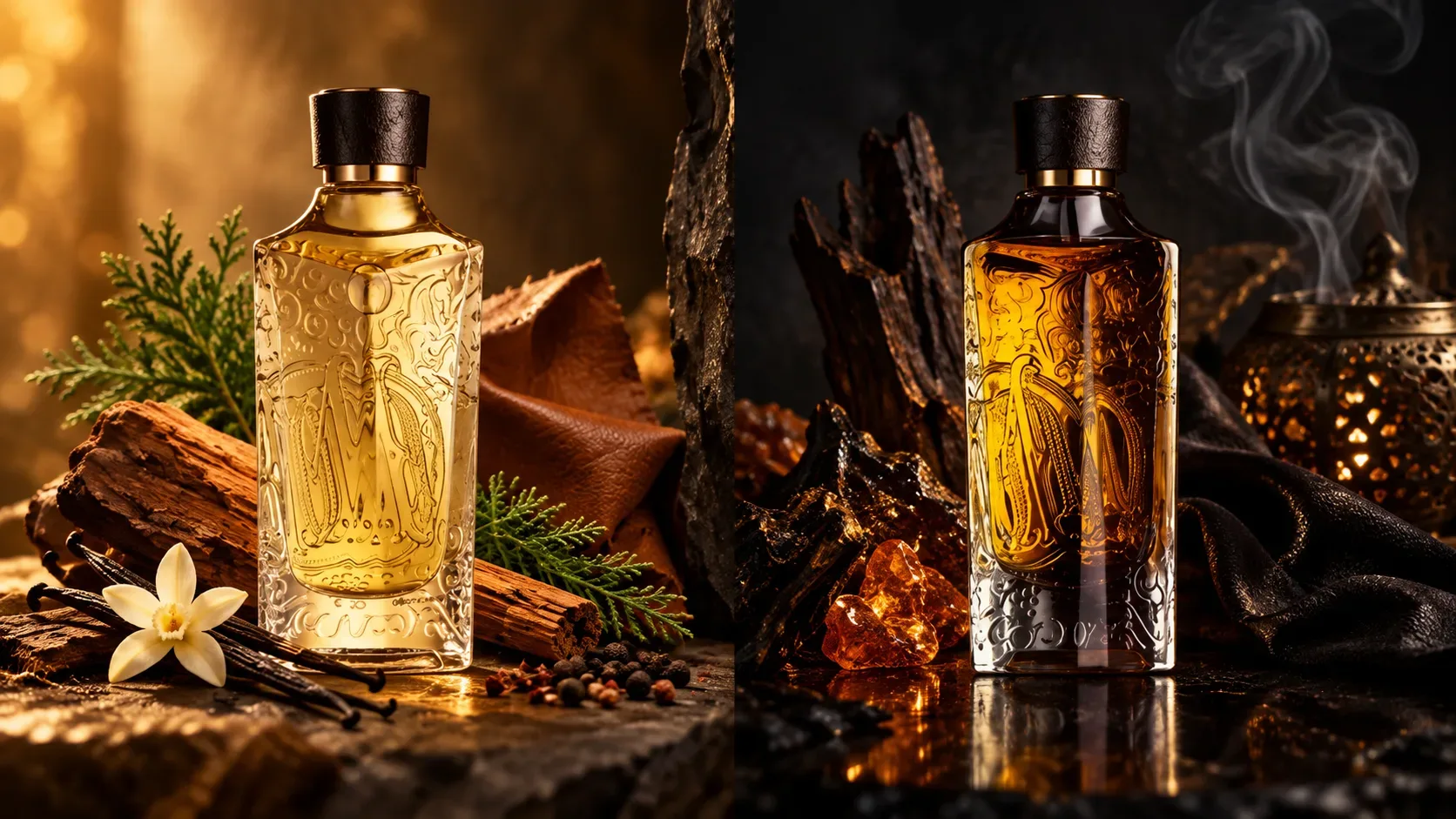
Malbec Eau de Parfum and Malbec Signature are not two versions that can be reduced to asking which one is “stronger.” Both are 90 ml Eau de Parfums, but they follow different olfactory structures. The new Malbec Eau de Parfum focuses on spices, leather, cedar and vanilla; Signature combines a citrus-spicy opening with woods, amber, vetiver and the oud-associated Privé Accord. Choosing by the profile you want to smell on skin makes more sense than creating a simple concentration hierarchy.
What actually changes between Malbec Eau de Parfum and Malbec Signature
| Criterion | Malbec Eau de Parfum | Malbec Signature |
|---|---|---|
| Declared concentration | Eau de Parfum | Eau de Parfum |
| Official fragrance family | Woody Oriental | Woody Amber |
| Top | Cardamom, black pepper, bergamot | Mandarin, bergamot, lemon, basil, coriander, cardamom, black pepper, nutmeg and cedar leaves |
| Heart | Sage, elemi, cypress | Patchouli, cedar, clove |
| Base | Patchouli, leather, cedar, vanilla infusion | Vanilla, amber, musk, vetiver, Privé Accord |
| Official positioning | Elegance and power for special occasions, highlighting Grasse Leather, vanilla and spices | A luxurious and sophisticated Malbec edition, highlighting oud and the Privé Accord |
The pyramids above come from the official pages for Malbec Eau de Parfum and Malbec Signature. They are the safest basis for comparing the announced composition; descriptions such as “drier,” “darker” or “sweeter” below are editorial readings of that structure, not laboratory measurements.
Malbec Eau de Parfum: spices up top, leather and vanilla in the base
In Malbec Eau de Parfum, cardamom and black pepper appear alongside bergamot from the start. This combination tends to put spice in the foreground without completely giving up citrus freshness. In the heart, sage, elemi and cypress shift the fragrance toward an aromatic, resinous and green-woody middle.
The base makes the identity clearer: patchouli, leather, cedar and vanilla infusion. O Boticário describes the fragrance as a woody oriental with balanced sweetness, highlighting a Grasse Leather accord and the warmth of vanilla. Editorially, that points to a scent built around the contrast of dry spices, leather texture, woods and a sweet finish — rather than a vanilla gourmand with vanilla acting as the sole star.
Malbec Signature: citrus and spices before an ambered oud base
Signature opens with a broader set: mandarin, bergamot and lemon share space with basil, coriander, cardamom, black pepper, nutmeg and cedar leaves. There are therefore more citrus and aromatic elements in the opening than the fragrance's “dark” reputation might suggest.
Patchouli, cedar and clove then support the heart. The base includes vanilla, amber, musk, vetiver and the Privé Accord. In institutional launch material, O Boticário explained that the Privé Accord combines Malbec's olfactory signature with oud. Signature therefore makes more sense for someone seeking a darker, more luxurious woody-amber interpretation than for someone simply looking for “more concentration.”
So which one is stronger?
The responsible answer is: the concentration name cannot be turned into a universal strength ranking between the two. Both are Eau de Parfums. IFRA explains that terms such as Eau de Parfum are general descriptors rather than rigid international definitions; for alcohol-based products, the typical EDP usage range is broad. In other words, “EDP” helps identify the category, but it does not by itself tell you the projection, diffusion or longevity of two different formulas. See IFRA's explanation of fragrance concentrations.
O Boticário states that Malbec Eau de Parfum is “the most concentrated woody fragrance among all Malbecs” and communicates “up to 12 hours of intensity,” noting that the figure was validated through a consumer perception study. That is an official product claim, not a guarantee that it will always project more or last longer than Signature on every person.
Performance perception also changes with the formula itself and with skin. The Perfume Society notes that denser base materials such as woods, resins and leather, as well as factors such as oily or dry skin, influence how long a fragrance remains perceptible. Without a public, controlled head-to-head test of these two products, there is no solid basis for naming a universal winner in “strength.”
Which one to choose by scent profile
- Choose Malbec Eau de Parfum if you want a more direct path from spices to a base of leather, cedar, patchouli and vanilla. It is the option that tends to communicate warmed woods, leather and sweetness through a more obvious contrast.
- Choose Malbec Signature if you prefer a more complex citrus-spice opening and an ambered base in which oud/Privé Accord, amber, musk and vetiver create a darker, more ceremonial impression.
- Do not choose only by the word “concentrated.” If “strong” means wide trail, dryness, sweetness, density or longevity to you, those are different criteria and may point to different products.
How to test them side by side without confusing the opening with the drydown
- Apply the same amount to equivalent areas, one fragrance on each arm.
- Compare the opening in the first few minutes, return after about an hour to judge the heart, and check again a few hours later for the base.
- Record four things separately: how much you like the opening, how you perceive the scent trail, which drydown you prefer and which one feels more comfortable for longer.
- If the decision matters, repeat on another day. Temperature, skin hydration and olfactory perception can change the experience.
Verdict: two propositions, not two steps of the same fragrance
Malbec Eau de Parfum is the more logical choice for someone seeking the contrast of spices, leather, cedar and vanilla and who values the brand's official claim of the highest concentration within the line. Malbec Signature remains better aligned with someone seeking a woody-amber profile built around oud/Privé Accord and a darker, more luxurious olfactory impression.
If the question is “which one is simply stronger?”, the comparison loses useful information. Declared concentration, projection, longevity and olfactory density are not synonyms. To choose well, compare the note structures and test how each one develops on your skin.