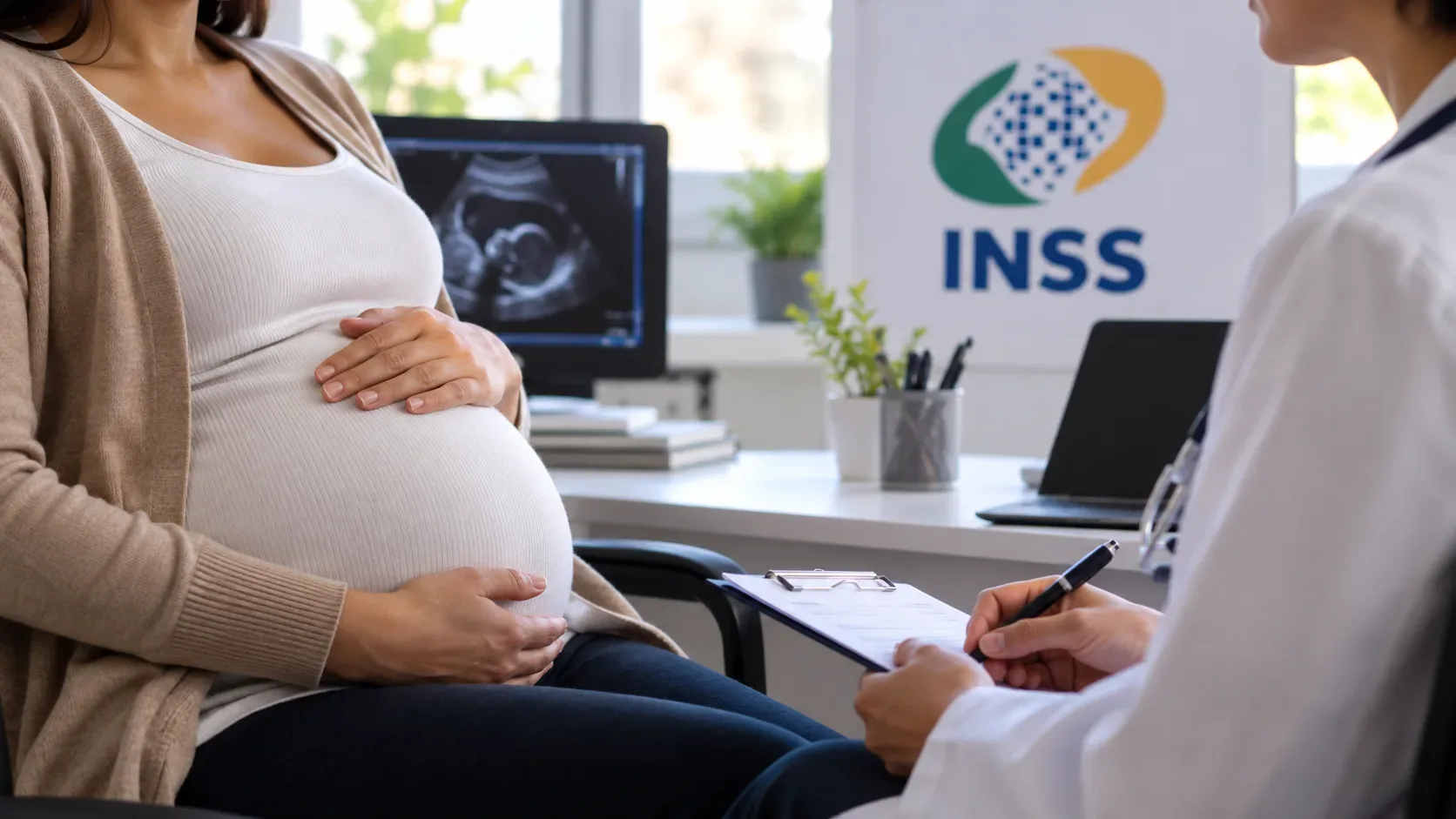
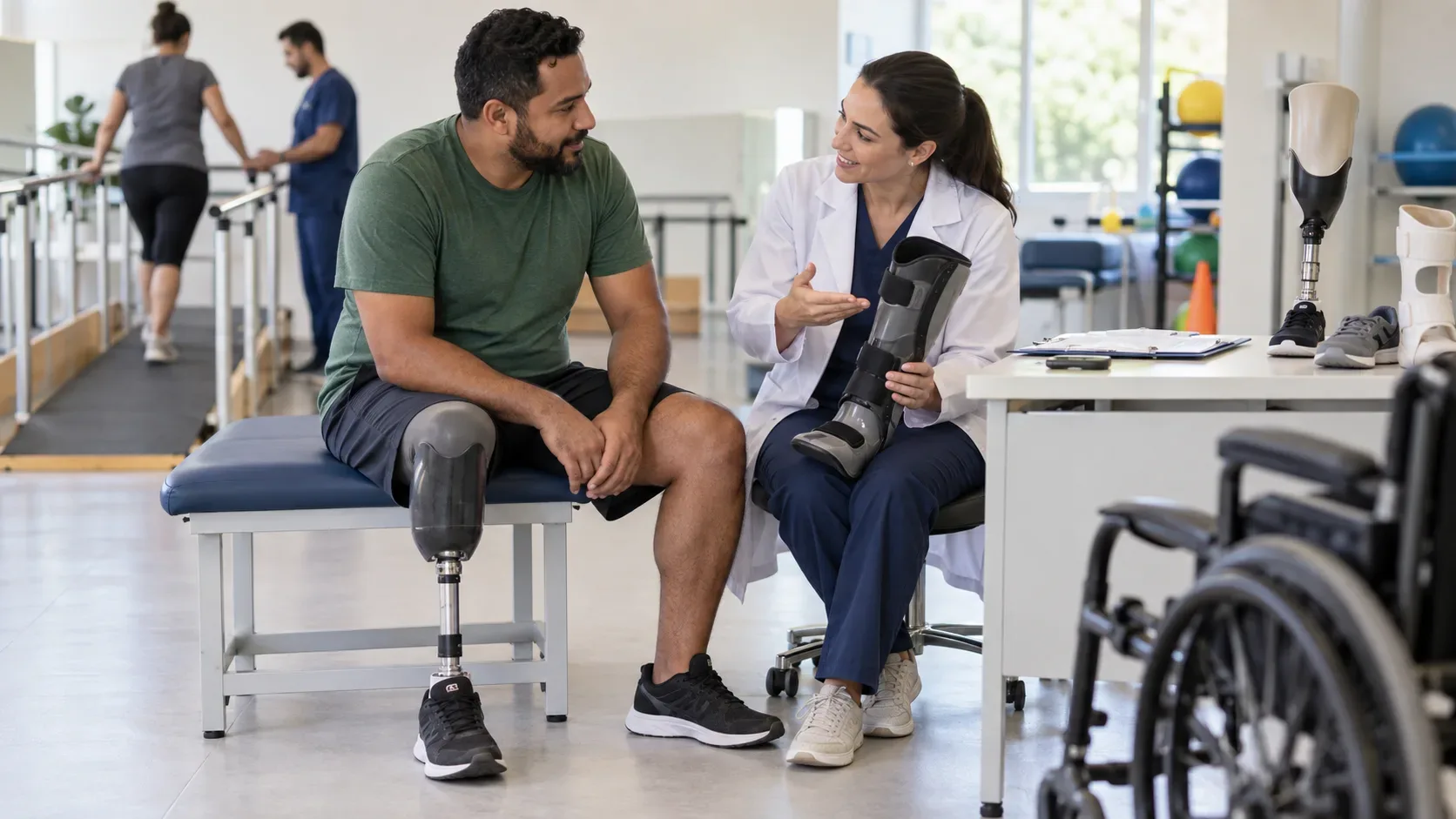
Brazil’s INSS can provide orthoses, prostheses and mobility aids (OPM) when these resources are needed in the Vocational Rehabilitation process and help reduce a functional limitation so that the insured person can return to or remain at work. This is not a free-choice purchase or a reimbursement scheme: the need must be assessed within the INSS process, and prescribing the OPM is the responsibility of the Federal Medical Examination service.
In practice, the route changes according to the person’s situation. Someone entering Vocational Rehabilitation usually reaches the service through referral by the Federal Medical Examination service or by court order. Someone already in rehabilitation may have an OPM indicated during follow-up. And someone who has already returned to the labor market may contact INSS for repair or replacement of a resource previously supplied by the agency, under the current rule for an insured person who is working.
Who can receive a prosthesis, orthosis or mobility aid from INSS
Law No. 8,213/1991 includes, within vocational habilitation and rehabilitation, the supply of prostheses, orthoses and mobility aids when their use can reduce the loss or reduction of functional capacity. The same law also provides for repair or replacement when these devices are worn through normal use or damaged by an event beyond the beneficiary’s control.
The Social Security Regulation states that, when indispensable to Vocational Rehabilitation, these resources must be provided to insured persons, including retirees. For dependents, assistance is subject to INSS capacity; for persons with disabilities who are not affiliated with Brazil’s General Social Security Regime, assistance depends on a technical-financial cooperation agreement.
Therefore, “having a disability” or “needing a prosthesis” does not by itself create an automatic entitlement to an INSS device. The decisive point is eligibility within Vocational Rehabilitation and the assessment that the resource is necessary for the return or adaptation to work.
The three situations that change the request route
| Situation | How the process starts | What happens with the OPM |
|---|---|---|
| Entry into Vocational Rehabilitation | Usually through referral by the Federal Medical Examination service during a disability-benefit assessment; referral may also be ordered by a court. | The rehabilitation team assesses work potential and the insured person’s needs. An OPM only enters the process if it is considered necessary. |
| During the rehabilitation program | The insured person is already being followed by the Vocational Rehabilitation team. | The Federal Medical Examination service issues the prescription, with an assessment by the Reference Professional. INSS then arranges acquisition, fitting and delivery according to its procedures. |
| After returning to the labor market | For an insured person who is working and needs repair or replacement of OPM/assistive technology previously supplied by INSS, the first contact should be the 135 call center. | The case is assessed again. The current rule limits this working-insured scenario to repair or replacement of a resource previously supplied by INSS. |
Who prescribes the prosthesis or orthosis
The key distinction is between an external clinical recommendation and the prescription that is valid within the social-security process. Under Decree No. 3,048/1999, prescription of orthoses, prostheses, mobility aids and accessories is performed by the Federal Medical Examination service. INSS also explains that the indication is made together with the assessment of the Vocational Rehabilitation Reference Professional.
This means the insured person cannot simply choose equipment and later ask INSS to pay for it. Health reports or records may be part of the person’s medical history, but they do not replace the prescription and authorization required in the INSS process.
How it works when an OPM is indicated during rehabilitation
The official INSS Vocational Rehabilitation page states that the service includes assessment of work potential, vocational guidance and follow-up and, when indispensable, provision of OPM. The insured person must attend program appointments and assessments and explain the functional limitations that affect return to work.
If the team identifies a need for a device, the Federal Medical Examination service issues the prescription. Acquisition is not a direct purchase by the insured person: INSS uses its own procurement procedures. Recent INSS contracts may include, depending on the case, pre-prosthetic assessment, fabrication, adjustments, repairs, fitting and training in use of the resource.
The time between prescription and delivery can vary because the process includes technical, administrative and procurement stages. A recommendation should not be treated as permission to buy the device privately and later charge INSS.
If the person has already returned to work: how to request repair or replacement
The current INSS operating rule allows referral to Vocational Rehabilitation for an insured person who is working and needs repair or replacement of an orthosis, prosthesis, mobility aid or other assistive-technology resource, provided that the item was previously supplied by INSS.
The agency’s published guidance is to call the 135 call center and request guidance on the initial Vocational Rehabilitation registration. After the request is made, progress can be followed through 135 and Meu INSS. The need for repair or replacement will be submitted to the agency’s assessment process.
As a practical preparation step, it is useful to have the insured person’s details and, if available, documents or references relating to the previous supply of the device. This is an organizational suggestion; the documents actually required should be confirmed with INSS.
What INSS does not reimburse
INSS expressly states that it does not reimburse expenses for OPM or other material resources that were not prescribed or authorized by its Vocational Rehabilitation units. Buying a prosthesis, orthosis or accessory independently and keeping the receipt therefore does not create an automatic right to reimbursement.
If there is an urgent or immediate clinical need, it should be addressed through the appropriate health-care channels, but this does not change the INSS authorization rule for supply within Vocational Rehabilitation.
Do the 2026 OPM task forces change how requests are made?
No. In August 2026, INSS announced task forces for the assessment, prescription and delivery of OPM in several states. The agency’s own notice says the action was for previously scheduled insured persons. The task force is therefore a way to carry out and speed up already organized cases, not an open walk-in route without referral or assessment.
People already in the program should follow notices from the team responsible for their case. Those who have returned to the labor market and fit the repair-or-replacement rule for an item previously supplied by INSS should still start by contacting 135.
Quick checklist before contacting INSS
- Are you still receiving a disability benefit and were you referred to Vocational Rehabilitation? Follow the team’s appointments; the need for OPM will be assessed within the program.
- Are you already in Vocational Rehabilitation? Explain how the limitation affects your work. Prescription belongs to the Federal Medical Examination service, with assessment by the Reference Professional.
- Have you already returned to work and was the device supplied by INSS? If it needs repair or replacement, contact 135 to start the guidance and registration process.
- Are you considering buying it yourself and asking for reimbursement? Do not rely on that: INSS does not reimburse OPM that was not prescribed or authorized by its rehabilitation units.
In summary
INSS provision of prostheses, orthoses and other mobility aids is tied to Vocational Rehabilitation and to an assessment that the resource is necessary for work-related functional capacity. The prescription is issued by the Federal Medical Examination service, with participation from the rehabilitation team. During the program, the request emerges from the technical assessment itself; after return to work, the current route for a working insured person focuses on repair or replacement of a resource previously supplied by INSS, with initial guidance through the 135 call center.