
Being unemployed does not, by itself, eliminate the right to Brazilian maternity benefit. The decisive question is whether, on the date of childbirth, non-criminal abortion, adoption, or court-ordered custody for adoption purposes, the person still had insured status with the INSS. For someone who stopped working or contributing, that protection may continue during what Brazilian social security calls the grace period.
As of September 2026, official INSS guidance states that the contribution waiting period is waived for all categories for maternity benefit. The change follows the Federal Supreme Court's judgment in ADIs 2.110 and 2.111 and was incorporated into INSS procedures by Normative Instruction No. 188/2025. This does not mean that any isolated payment automatically creates entitlement: a valid social security link and insured status on the date of the qualifying event must still be demonstrated.
What should be checked, in order
- What the INSS link was before unemployment. Identify whether the person was an employee, domestic employee, casual worker, individual contributor, voluntary contributor, or special insured person. The previous category affects how the link is proven and, in some cases, how long insured status is maintained.
- The date of the qualifying event. To assess entitlement, the INSS looks at the situation on the date of childbirth, abortion, or adoption. For an unemployed person after childbirth, the claim is filed with the INSS from the date of birth onward.
- Whether the grace period was still running on that date. Someone who stops carrying out paid work covered by social security may remain insured for a period even without new contributions.
- Whether insured status was still in force. If the qualifying event occurred while that status was maintained, unemployment alone does not prevent the benefit.
- Whether the link or contribution is valid. The minimum waiting period is no longer required, but correct affiliation to the RGPS, the social security category, and the validity of the employment link or contribution used to establish coverage still matter.
- Which documents prove each point. A birth certificate, personal identification, and employment or social security records may be requested. If an extension of the grace period depends on proving unemployment, that evidence may also be required.
How long the grace period lasts
The most common rule for a previously mandatory insured person who stops carrying out paid work covered by the RGPS is maintenance of insured status for up to 12 months after contributions cease. This period can be extended in situations provided by law and INSS guidance.
| Previous status | Basic rule reported by the INSS | Possible extensions |
|---|---|---|
| Mandatory insured person who stopped paid work | Up to 12 months after contributions cease | Up to 24 months if there were more than 120 monthly contributions without an interruption that caused loss of insured status; a further 12 months may be added when unemployment is proven |
| Voluntary contributor | Up to 6 months after contributions cease | The analysis may require attention to prior coverage history. The INSS states that, in some situations, an earlier mandatory insured status can be more favorable |
In practice, a mandatory insured person may reach 24 or 36 months of maintained status, depending on contribution history and proof of unemployment. For the unemployment-related extension, the INSS cites registration with the appropriate Ministry of Labor body or receipt of unemployment insurance.
The deadline should be calculated from the person's actual history. It is not safe to conclude based only on the last entry in a work record or the last payment date without checking the category, contributions, and possible earlier periods.
Must childbirth occur within the grace period?
For an unemployed person, the central criterion is maintaining insured status on the date of the qualifying event. The INSS maternity benefit page itself lists an unemployed person among those who may use the service, provided that insured status is maintained.
Example: an employee is dismissed and gives birth five months later. In principle, that interval falls within the basic 12-month period that applies to someone who stopped paid work covered by social security, provided no other element in the record changes the assessment. If childbirth occurs after the basic period, it is necessary to check whether the 24-month or 36-month extensions apply.
For that reason, the better question is not only “how long have I been unemployed?” but “did I still have insured status on the date of childbirth or the other qualifying event?”.
The waiting period was removed, but insured status is still required
The Federal Supreme Court held unconstitutional the maternity-benefit waiting period that affected, among other categories, individual contributors, special insured persons, and voluntary contributors. The INSS implemented that guidance through Normative Instruction No. 188/2025. The institute's thematic page, updated on July 31, 2025, expressly states that the waiting period is waived for all categories, while insured status must still be proven.
In an official communication published on August 26, 2026, the INSS again stated that there is no longer a minimum number of contributions for the benefit, but highlighted three checks: a link to the INSS and maintenance of insured status on the date of the event, validity of the contribution, and cessation of work when required.
This distinction matters. The waiting period is the minimum number of contributions that used to apply to some categories. Insured status is the condition of being protected by the RGPS at that time, including during the grace period. Removing the waiting period does not remove the requirement to have insured status.
What it means to verify a valid contribution
Current INSS guidance warns that simply paying one contribution does not automatically guarantee maternity benefit. The analysis must confirm whether that contribution or link effectively creates social security affiliation and coverage in the specific case.
For an individual contributor, the INSS explains in material about the 2025 change that, in addition to insured status, paid work must be proven. For a voluntary contributor, paid work does not need to be shown, but insured status is still required.
For someone unemployed after an employment relationship, the analysis normally focuses on the previous link, the end of the activity, and the grace period. If the CNIS record is incomplete or inconsistent, employment and social security documents may be requested.
Which documents may be required
The INSS states that service is generally provided remotely, unless additional proof is needed. Documents that may be required include:
- photo identification and CPF;
- the child's birth certificate, when applicable;
- documents related to social security relationships, such as CTPS, CTC, contribution booklets, and other records suitable for the type of link;
- a specific medical certificate when leave starts before childbirth, in applicable cases;
- a custody order or new birth certificate in adoption or custody for adoption purposes;
- proof of unemployment when that condition is needed to extend the grace period.
For an unemployed person after childbirth, the INSS page instructs that the claim be filed directly with the INSS from childbirth onward, using the birth certificate to prove the event.
How to organize the review before filing
A practical way to reduce errors is to build a short timeline:
- write down the start and end dates of the last employment link or contributory activity;
- check the CNIS record and identify the relevant social security category;
- verify whether there is a history of more than 120 contributions without loss of insured status if that may extend the grace period;
- if necessary, separate proof of unemployment for the additional extension;
- mark the date of childbirth, abortion, adoption, or custody;
- compare that date with the end of the period in which insured status was maintained;
- gather the documents before submitting the claim through Meu INSS.
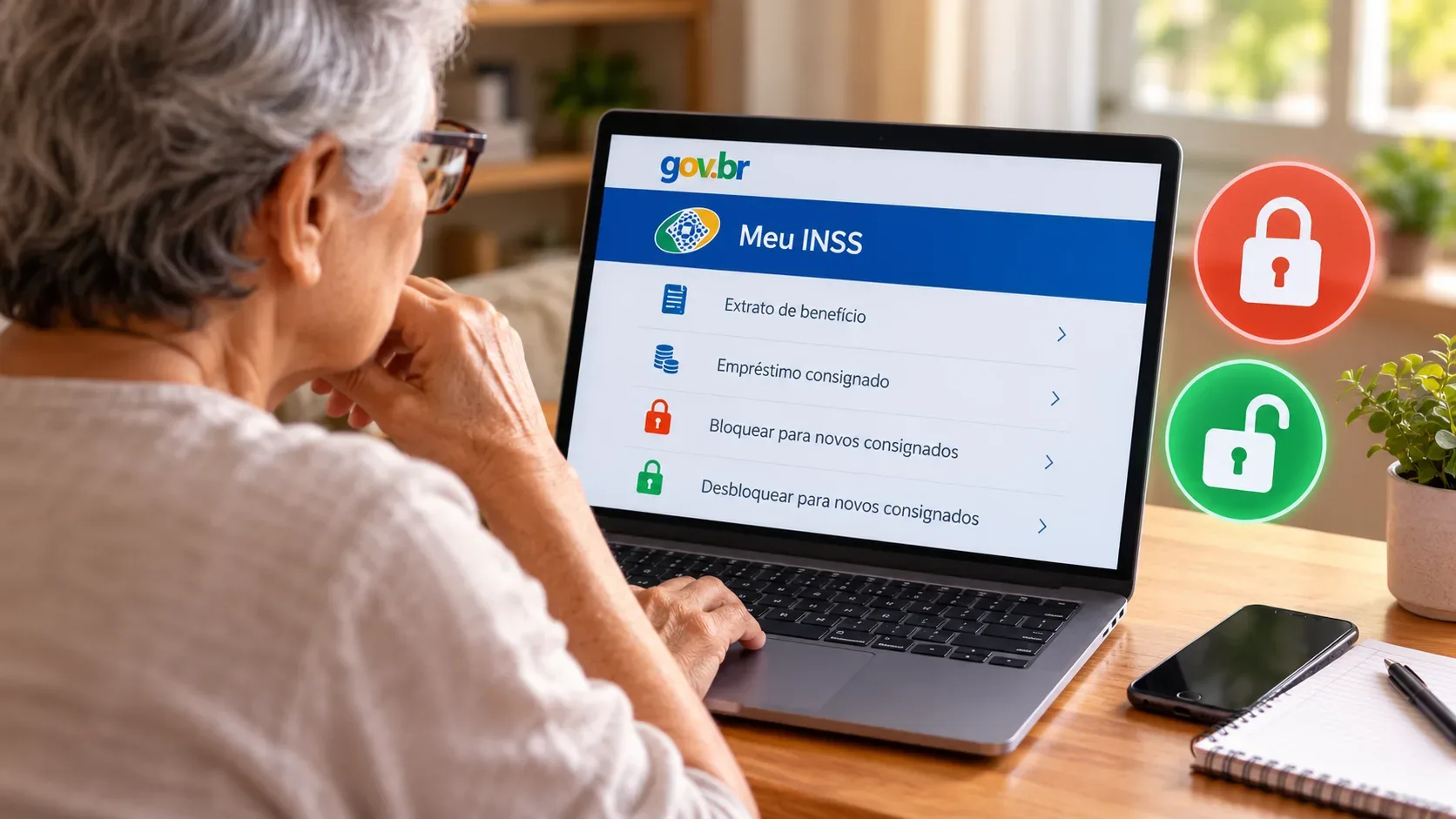
An urban maternity-benefit claim can be started through Meu INSS. The INSS also provides service by phone at 135. After filing, any document requests should be monitored in the same system.
Three scenarios that make the rule clearer
1. Childbirth a few months after dismissal
If the person was an employee and childbirth occurs within the basic period for maintaining insured status, being unemployed does not prevent the benefit. The key is proving that the previous employment relationship existed and that insured status was still maintained on the date of childbirth.
2. Childbirth more than 12 months after contributions stopped
In this situation, loss of insured status should not be assumed automatically. Check whether the contribution history allows an extension to up to 24 months and whether the additional unemployment-related extension applies. Depending on the history, the period may reach up to 36 months.
3. A payment made shortly before childbirth
Because the minimum waiting period is no longer required, the number of contributions is no longer the central obstacle. Even so, the INSS checks whether affiliation, category, and the contribution are valid. A single payment should not be treated as an automatic guarantee of approval.
Rule subject to updates
This article reflects official guidance consulted on September 21, 2026. The subject changed significantly after the Supreme Court judgment and Normative Instruction No. 188/2025. Because service pages may take time to incorporate regulatory changes, check the latest wording on the INSS thematic page before filing a claim.
Official sources: INSS, Maternity Benefit; INSS, Insured Status; INSS, guidance published on August 26, 2026; Federal Supreme Court, ADI 2.110.