
A technical stop, a connection, and a stopover do not describe the same kind of break in a trip. Under the regulatory definition used by Brazil's ANAC, during a technical stop the aircraft lands at an intermediate airport and the passenger continues the same journey without a scheduled deplaning. During a connection, the passenger deplanes and boards again at the same airport to continue the journey, on the same aircraft or another one. A stopover, meanwhile, is a deliberate interruption of the journey at an intermediate point, planned in advance; for international fare construction, IATA uses a scheduled departure more than 24 hours after arrival as a reference, with specific exceptions.
These differences affect total travel time and, more importantly, what must be confirmed about baggage, terminal changes, security screening and immigration. Commercial labels used by airlines and booking sites can vary, so the safest approach is to examine how the itinerary actually works rather than relying only on the word shown in the search result.
Technical stop vs. connection vs. stopover: quick comparison
| Type of stop | What happens | Deplaning | Aircraft change | Checked baggage | Immigration |
|---|---|---|---|---|---|
| Technical stop | The aircraft makes an intermediate stop and then continues the same journey. | Under ANAC's definition, there is no scheduled deplaning. Exceptional deplaning can occur for technical, operational or other unforeseen reasons. | It is not the defining feature of this stop because the passenger remains tied to the same aircraft. | In practical terms, the bag normally remains in the flight flow, but the passenger should follow the airline's instructions in exceptional situations. | There is normally no entry process if the passenger does not deplane, but local procedures and operational exceptions can change the flow. |
| Connection | The passenger deplanes at an intermediate airport and boards again to continue to the destination. | Yes. | It may occur. ANAC's regulatory definition itself allows reboarding the same aircraft or another one. | It may be checked through to the final destination or require collection and re-check, depending on the ticket, airlines, agreements between them and airport rules. Separate tickets require extra checking. | It depends on the country, airport, route and whether the traveler can remain in international transit without formally entering the territory. |
| Stopover | It is an intentional break in the journey at an intermediate city, built into the itinerary. | Yes, usually with the traveler leaving the transit area to make use of the stop. | Yes, on another segment of the journey. | Do not assume the bag will be transferred automatically. Confirm the airport to which it will be tagged and whether it must be collected during the stop. | Because the purpose is usually to enter the country or territory during the stop, the traveler must verify applicable entry, visa and document requirements. |
How each type of stop changes travel time
A technical stop can add ground time without creating a new boarding process for the passenger. Even so, refueling, crew changes, boarding of other passengers or operational procedures can lengthen the scheduled time.
On a connection, it is not enough to look only at the number of minutes between flights. The interval must allow for deplaning, movement between gates or terminals, possible security screening, border procedures when applicable and arrival at the next gate before boarding closes. When an itinerary is sold as a single connection, the airline normally structures the segments according to its connection criteria. With separate tickets, the traveler takes on greater operational risk because baggage collection, a new check-in and the second flight's deadlines may all apply.
With a stopover, the wait is no longer only a technical interval and becomes part of the trip itself. For fare construction purposes, IATA's glossary defines a stopover as a deliberate interruption and, for international travel, uses a departure more than 24 hours after arrival as a reference, subject to regional exceptions. Airline stopover programs may set their own commercial conditions, so the ticket rules should be read before purchase.
Baggage: the decisive question is where the bag is tagged to
The fact that flights appear together in the same search does not, by itself, guarantee that checked baggage will be transferred automatically. What matters is how the transportation was ticketed and which policy applies to the airlines involved.
A practical reference is the baggage tag issued at check-in. If it shows the final airport, that indicates the bag was accepted to continue there, although some countries may still require baggage collection for customs control and subsequent re-routing. If the tag ends at the intermediate airport, the traveler should plan enough time to collect the bag and check it again.
Policies vary. Delta, for example, states that it checks baggage through to the destination when the itinerary is on a single ticket and lists specific situations for separate tickets; outside those exceptions, the bag must be collected at the destination of the first ticket and checked again. This example shows why “same reservation,” “same booking reference” and “single ticket” should not be treated as universal synonyms without checking the carrier that will actually handle the baggage.
Baggage checklist before travel
- Check whether all segments are on one ticket or on independent tickets.
- At check-in, ask which airport the bag will be tagged to.
- Check whether any border requires you to collect the bag for customs even when it is tagged to the final destination.
- If you must collect and re-check it, add baggage-claim time, walking time, check-in queues and baggage acceptance deadlines to the connection window.
- For a stopover, confirm whether the airline releases the bag at the stopover point or keeps it routed to the following segment.
Immigration: an international connection does not always mean staying “outside” the country
Border procedures depend on local law and airport design. In the Schengen Area, for example, there is an airport transit visa for certain travelers who remain in the international transit area during a connection; that visa does not authorize leaving the transit area. If the itinerary requires entry into the Schengen Area, a different rule may apply.
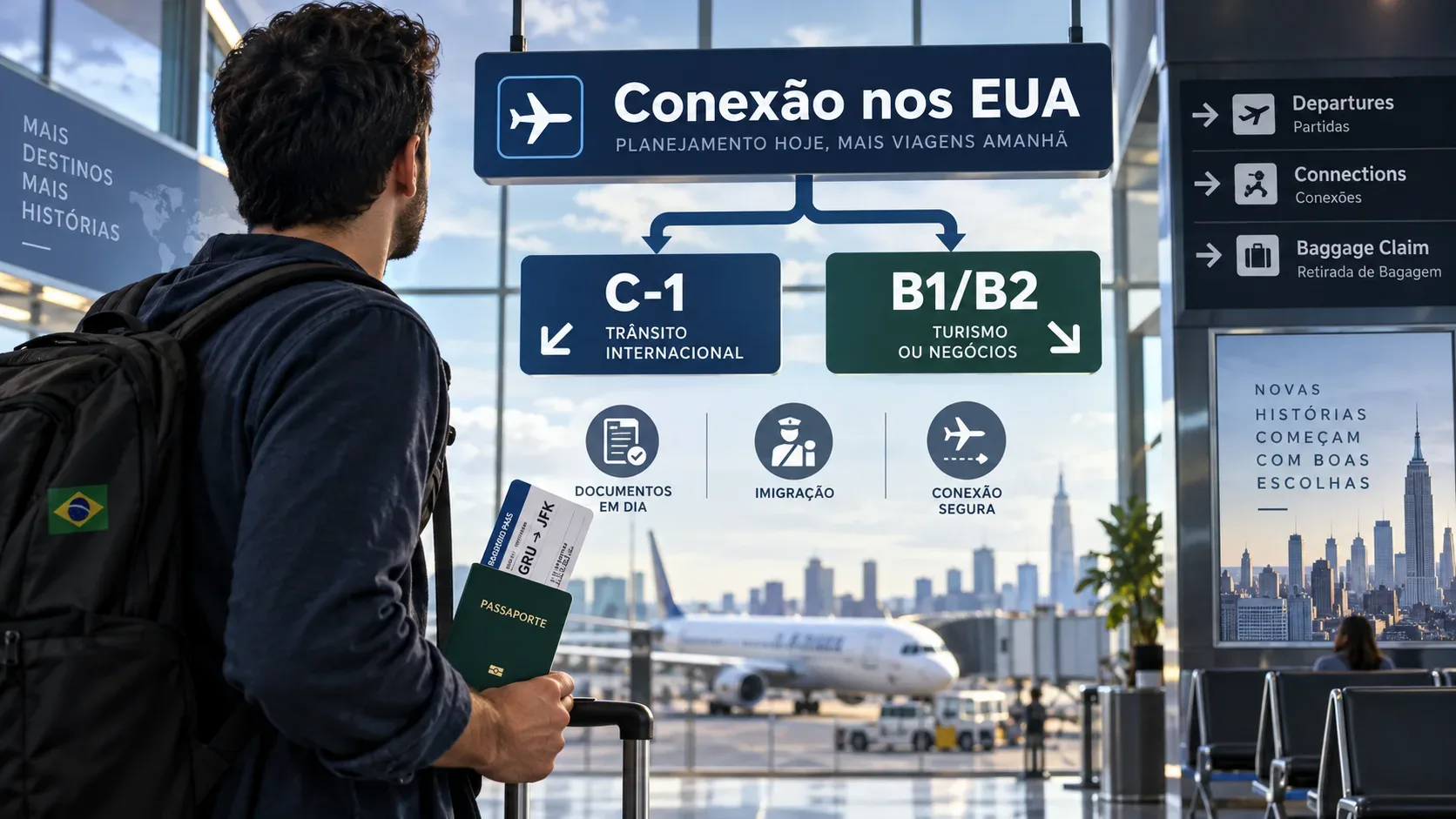
In the United States, the flow is different: the border authority states that arrival processing is normally completed at the first port of entry, including for travelers continuing on a connecting flight. After inspection, major airports provide facilities to re-check baggage for the next flight. A relevant exception exists at foreign airports with U.S. preclearance, where the U.S. inspection is completed before boarding the U.S.-bound flight.
These examples should not be turned into a worldwide rule. Before buying an international connection, check the official government website of the transit country to see whether your nationality requires an airport transit visa, an entry visa or another authorization, and verify whether a terminal change forces you to pass through immigration.
Questions that prevent surprises during a connection
- Is this a single contract of carriage? Separate tickets can reduce protection after delays and may require a new check-in.
- Will I deplane? If not, the stop is closer to the logic of a technical stop. If yes, there is at least a connection flow.
- Do I need to change aircraft or terminals? This changes the amount of time you should allow.
- Will my bag go to the final destination? Confirm it through the airline's policy and the tag issued at check-in.
- Will I go through immigration, customs or security again? The answer depends on the country, airport and route.
- Am I authorized to enter or transit this country? Check the official rule for your nationality and documents.
- Is the long stop intentional? If the itinerary was built so you can stay in the intermediate city before continuing, it follows the logic of a stopover and is subject to the ticket's fare conditions.
The best way to read an itinerary
Instead of trusting only the label “technical stop,” “connection” or “stopover,” read each segment as an operational sequence: where the aircraft lands, whether you deplane, whether there is a new flight number, whether you must change terminals, where the baggage will be checked to and where border control takes place. With those answers, it becomes much easier to estimate the real travel time and decide whether the proposed interval fits your situation.
Sources and references
- ANAC: Resolution No. 432/2017, definitions of connecting and stop passengers
- IATA AIDM Business Glossary: Stopover
- Delta: through-checked baggage policy
- European Commission: Schengen visas and airport transit
- U.S. Customs and Border Protection: guide for international travelers and connecting flights
- U.S. Customs and Border Protection: preclearance