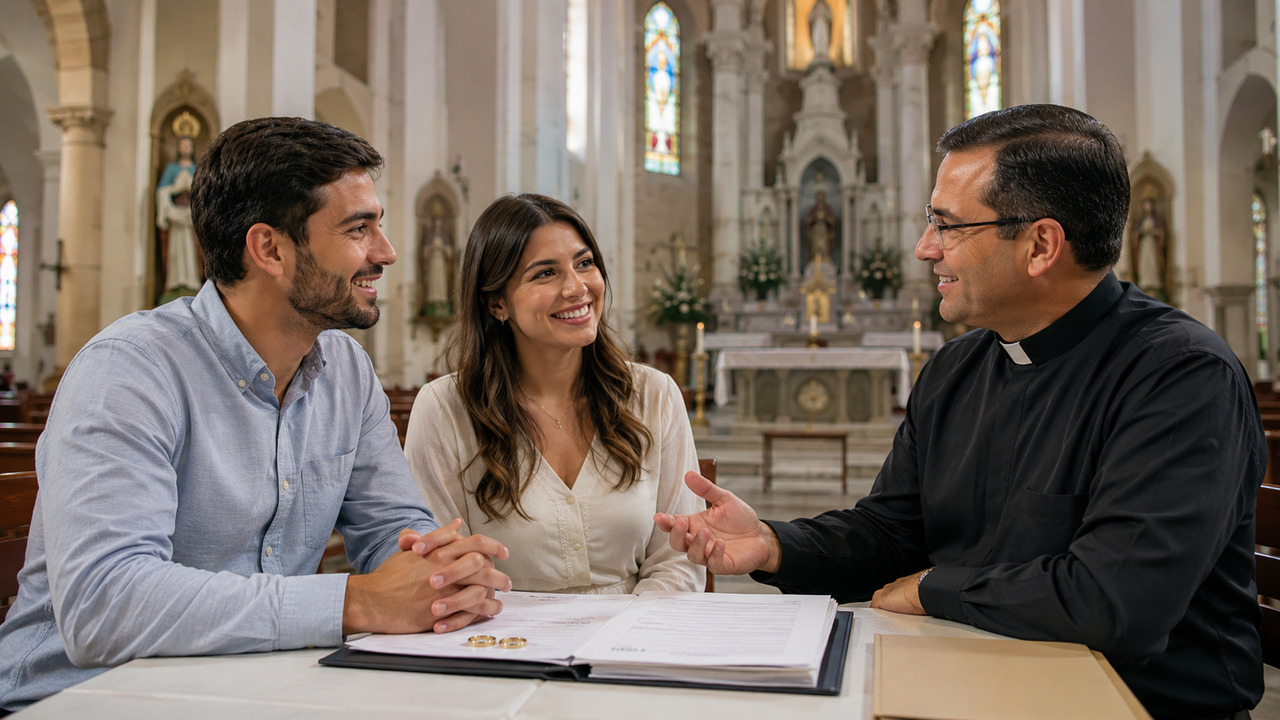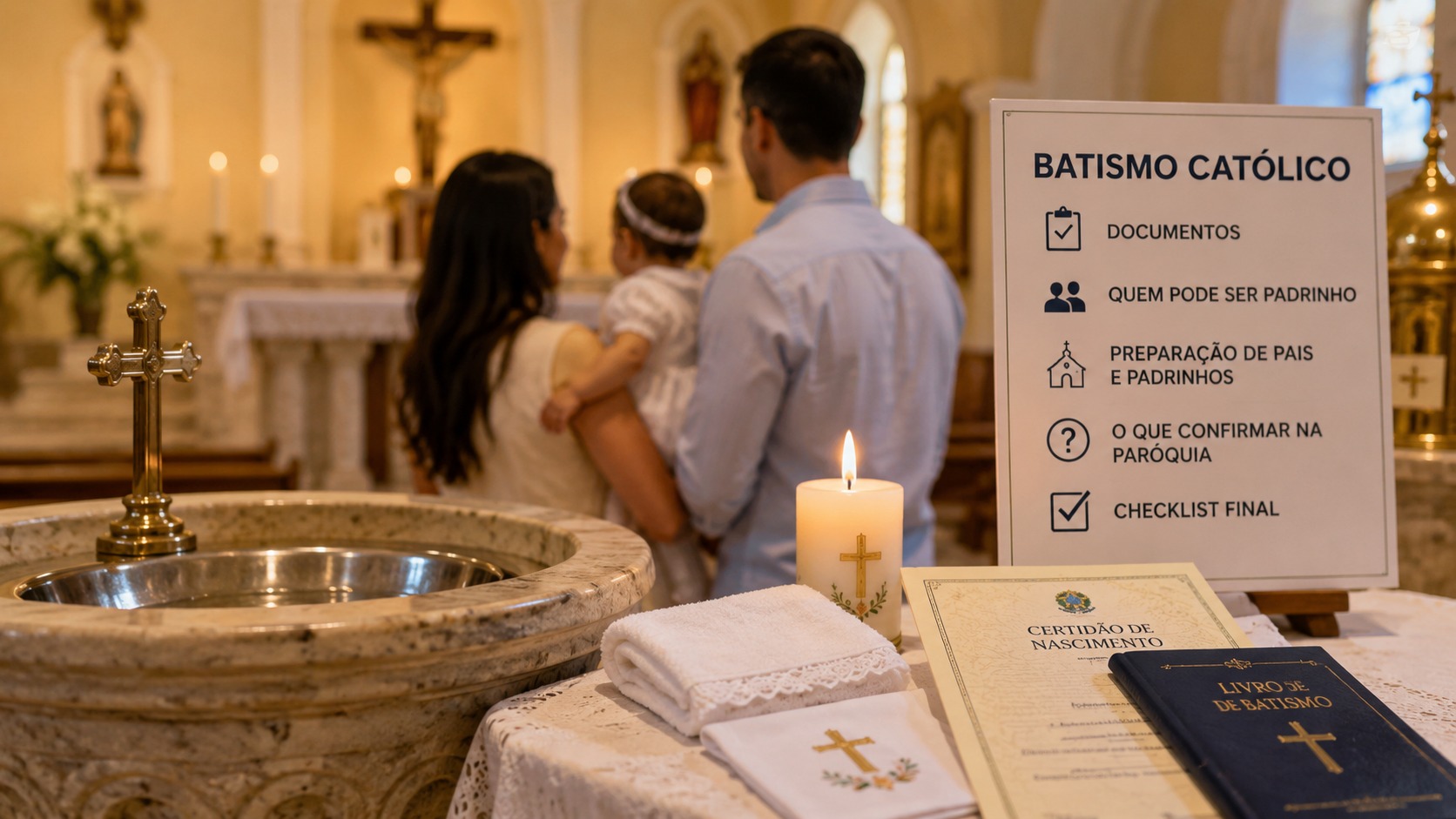
If you want to organize a Catholic baptism in Aracaju without discovering last-minute requirements at the secretariat, it is worth separating what is the general rule of the Church from what depends on each parish. In practical terms, there will almost always be three fronts: training of parents and godparents, delivery of documents and confirmation of the date and conditions in the church where the sacrament will be celebrated.
What the Church considers a general rule
The Code of Canon Law treats baptism as the gateway to the sacraments and determines that parents contact the parish priest as soon as possible to request the sacrament for their child and receive adequate preparation. For the baptism of children, the consent of the parents, or at least one of them, and a well-founded hope that the child will be educated in the Catholic faith are also required. When this basis does not exist, baptism may be delayed until the pastoral situation is clarified.
Preparation is not a bureaucratic detail. Canon Law itself says that parents and godparents must be instructed about the meaning of baptism and the obligations linked to it. This is where meetings or courses for parents and godparents arise in parishes.
Who can be godfather or godmother
The role of the best man is not just to accompany the ceremony. According to the Church, it helps the baptized person to live in accordance with the faith and fulfill the obligations inherent to baptism. Therefore, the choice is not free in the civil sense of the word: there are objective criteria.
As a general rule, there can be only one godfather, only one godmother, or one godfather and one godmother. To assume this role, the person must be at least 16 years old, be Catholic, have already received Confirmation and the Eucharist, lead a life consistent with the faith and not be the child's father or mother. A person baptized from a non-Catholic ecclesiastical community does not enter as a Catholic godfather or godmother; she can only participate as a witness, and then alongside a Catholic godparent.
In parish practice, these requirements usually become documentation. That's why some secretariats ask for baptism or confirmation certificates from the godparents and, when they are married, proof of religious marriage or equivalent declaration from the parish where they got married. Not every community will ask for exactly the same papers, but the reason is usually the same: to check whether the godparent's situation corresponds to canonical requirements.
What a parish in Aracaju already requires today
An official and current example in Aracaju is the page of Paróquia Santa Lúcia, in Jabotiana. It informs that, for the baptism of children under 7 years of age, it requires the child's birth certificate, proof of address, certificate of preparation of parents and godparents and, depending on the godparents, birth certificate if single or religious marriage certificate if married. The same page says that children aged 7 or over need to go through catechesis and that registration is only confirmed with in-person delivery of the original documentation and copies.
This example is useful because it shows two things at the same time. The first is that there is a relatively stable core of requirements: identification of the child, proof of parish connection or address and proof of preparation. The second is that each parish may detail the form of proof of godparents in a slightly different way.
What tends to vary between parishes
In Aracaju, what tends to vary most is not the theology of the sacrament, but the operation. They change the course agenda for parents and godparents, the days of baptism, the registration format, the deadline for submitting documents, the acceptance of proof of preparation made in another community and the need for authorization when the family wishes to baptize outside the parish of residence.
This even appears in recent publications from the communities themselves. In 2026, for example, Paróquia Santa Cruz, in Aracaju, published a course for parents and godparents on its official channels. In other words, preparation remains a real pastoral requirement, and not just old information republished by third parties.
When the family wants to baptize in another parish
Canon Law says that, as a rule, the child must be baptized in the parish of the parents, unless there is a just cause to the contrary. This is why, in practice, many secretariats ask for authorization, transfer or consent when the celebration is to take place in another community.
If the family lives in one neighborhood and intends to celebrate in another due to emotional ties, time, proximity to relatives or preference for a specific chapel, the best way is to ask early if the parish of residence needs to issue any authorization. Resolving this beforehand avoids the most common rework scenario: course completed, documents gathered, but date still stuck due to lack of transfer.
What if the child is already 7 years old or older?
At this point, the family should not assume that the procedure will be the same as for a baby. Canon Law itself dictates that the norms of adult baptism be applied to those who have already reached the use of reason, and parish practice usually reflects this with referral for catechesis or specific preparation.
In Santa Lúcia, for example, the guidance is expressed: children aged 7 or over must undergo catechesis, and parents must obtain authorization from the catechist or priest to define the best time for baptism. Even if another parish adopts a different flow, this is a clear sign that age changes the procedure.
What to confirm before leaving home
Before going to the secretariat, it is worth transforming the doubt into an objective conference. Ask which documents of the child should be taken, which documents of the godparents are accepted, whether the course for parents and godparents needs to be taken there or whether a receipt from another parish will do, whether there is a requirement for authorization for those who live outside the parish territory, what are the dates available for the course and celebration, and whether there is a contribution or administrative fee to be confirmed at the time of registration.
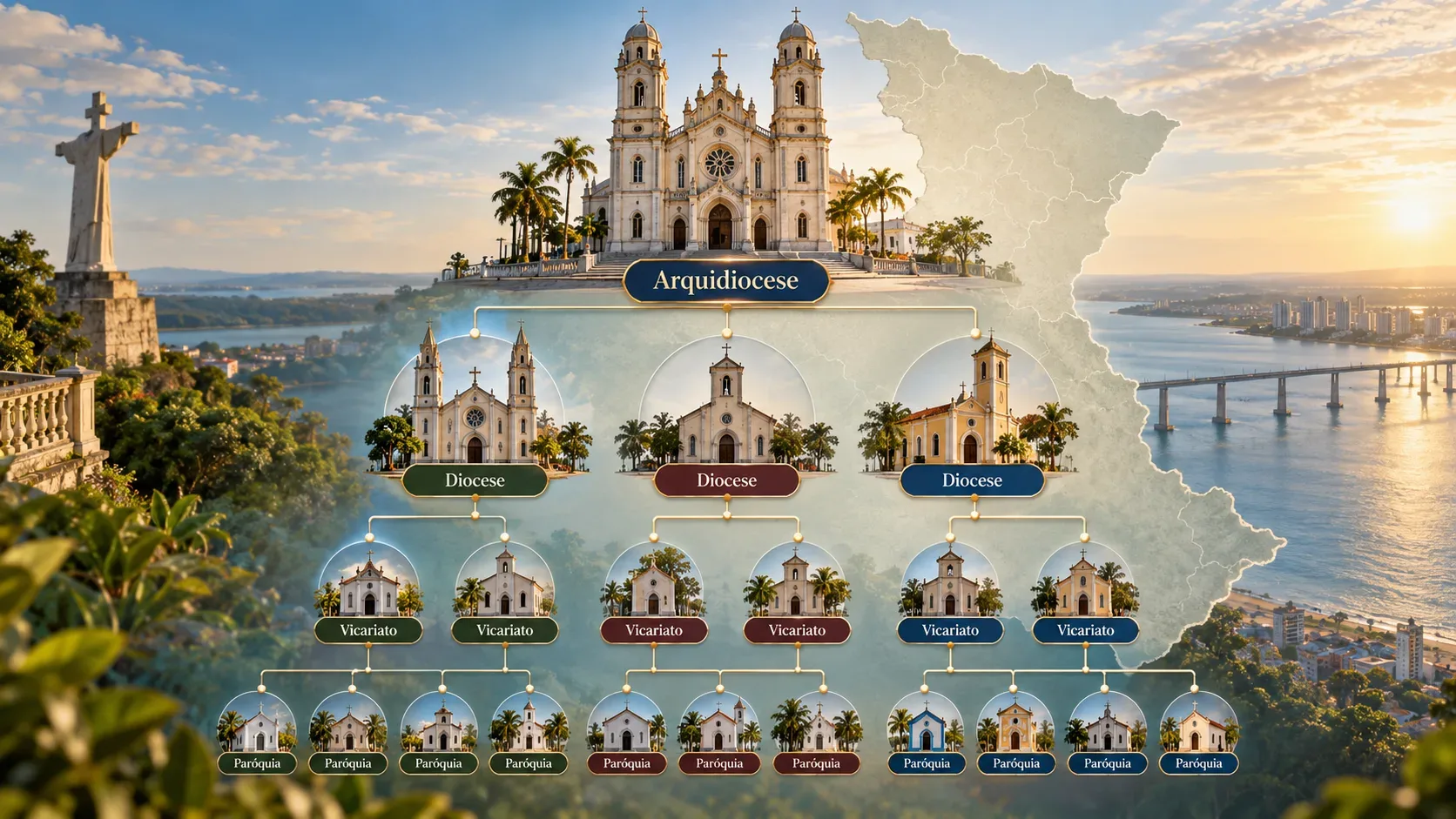
It is also worth checking how to obtain duplicates or ecclesiastical certificates when they are necessary. In the Archdiocese of Aracaju, the Metropolitan Curia provides services linked to registrations and certificates and maintains an official directory of parishes, which helps to locate the right community for each confirmation.
How to use official sources without falling into the wrong rule
The biggest trap with this topic is taking an old poster, a social media capture or a PDF reposted by third parties as if it were a rule for the entire city. This can serve as a clue, but not as a final decision. The safest path is to cross three levels: the general rule of the Church, the current guidance of the Archdiocese of Aracaju and what your parish is actually demanding now.
When these three levels are read together, preparation becomes simpler. You understand what is unlikely to change, identify what tends to vary and come to the office with the right questions, instead of discovering requirements through trial and error.
In summary, to organize Catholic baptism in Aracaju, think on three fronts: canonical criteria, practical documents and local confirmation. The criteria for godparents and the duty of preparation come from the Church; the concrete documents and deadlines come from the parish. By confirming this in advance, the family avoids disagreements, is able to gather the correct papers and arrives at the sacrament with more clarity and less improvisation.