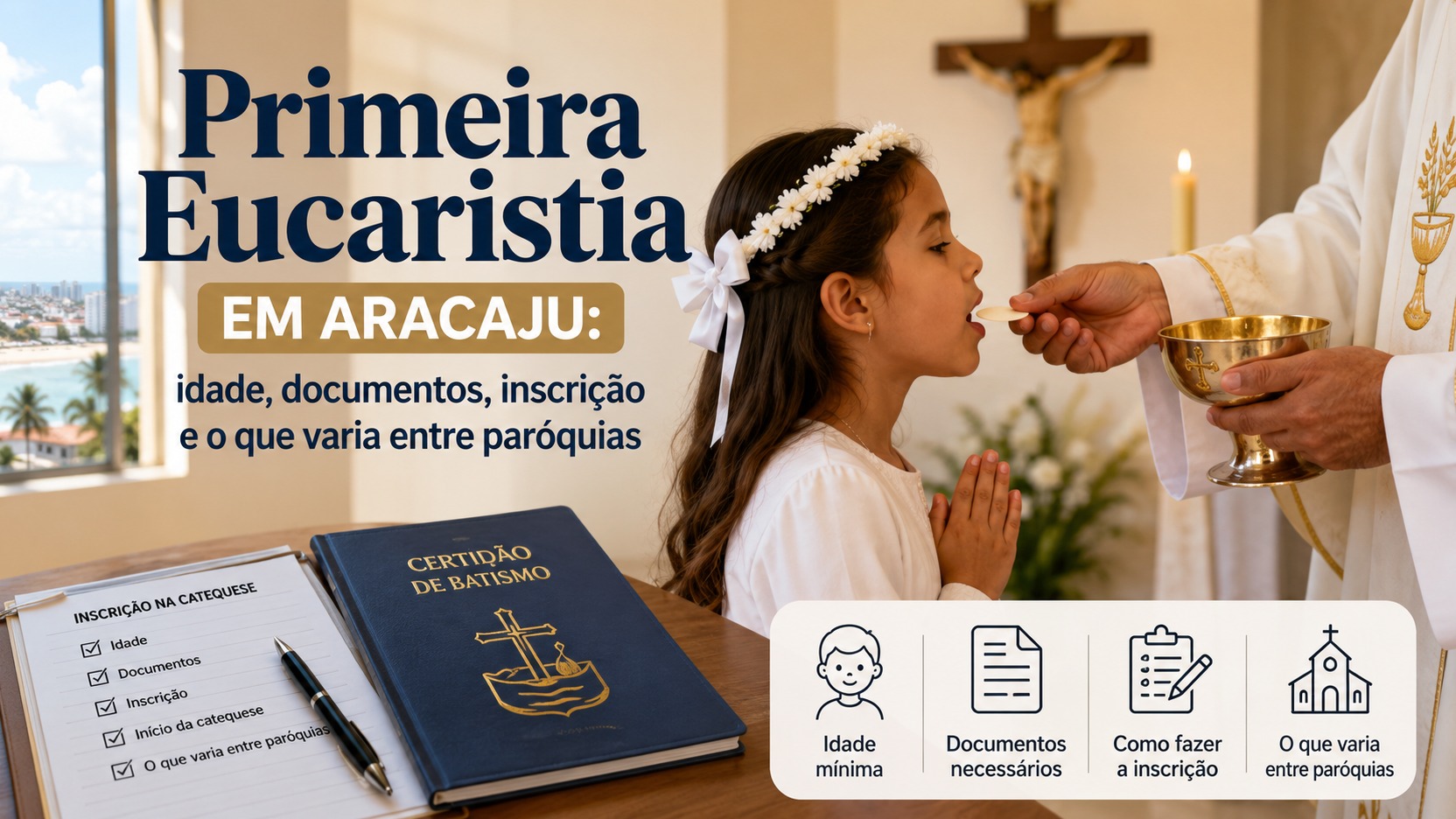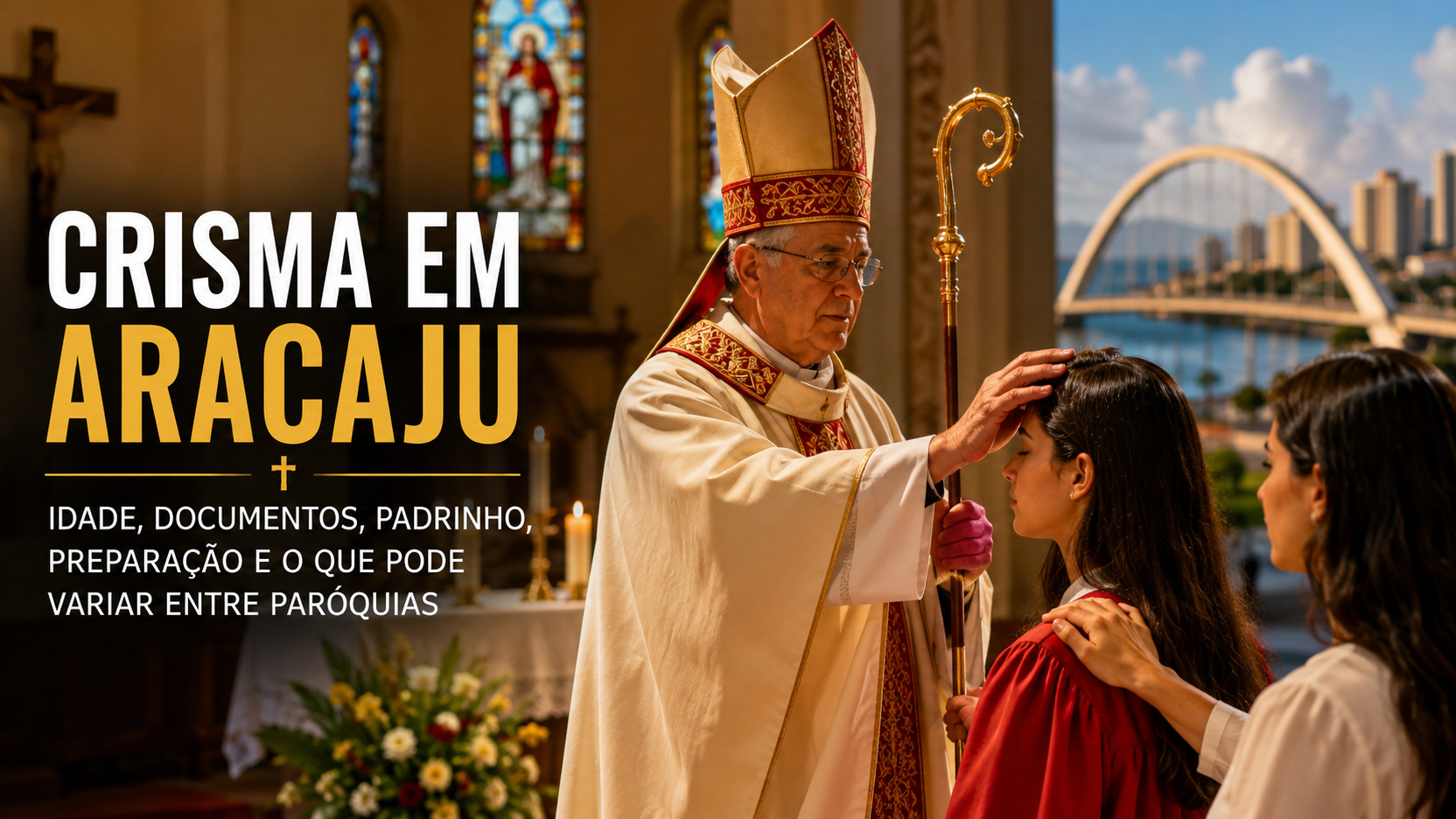
People looking for Confirmation in Aracaju often find information scattered across different places: one parish announces the registration date, another asks for specific documents, while the Archdiocese establishes common rules for preparation and celebration. The safest way to begin is to separate these two layers.
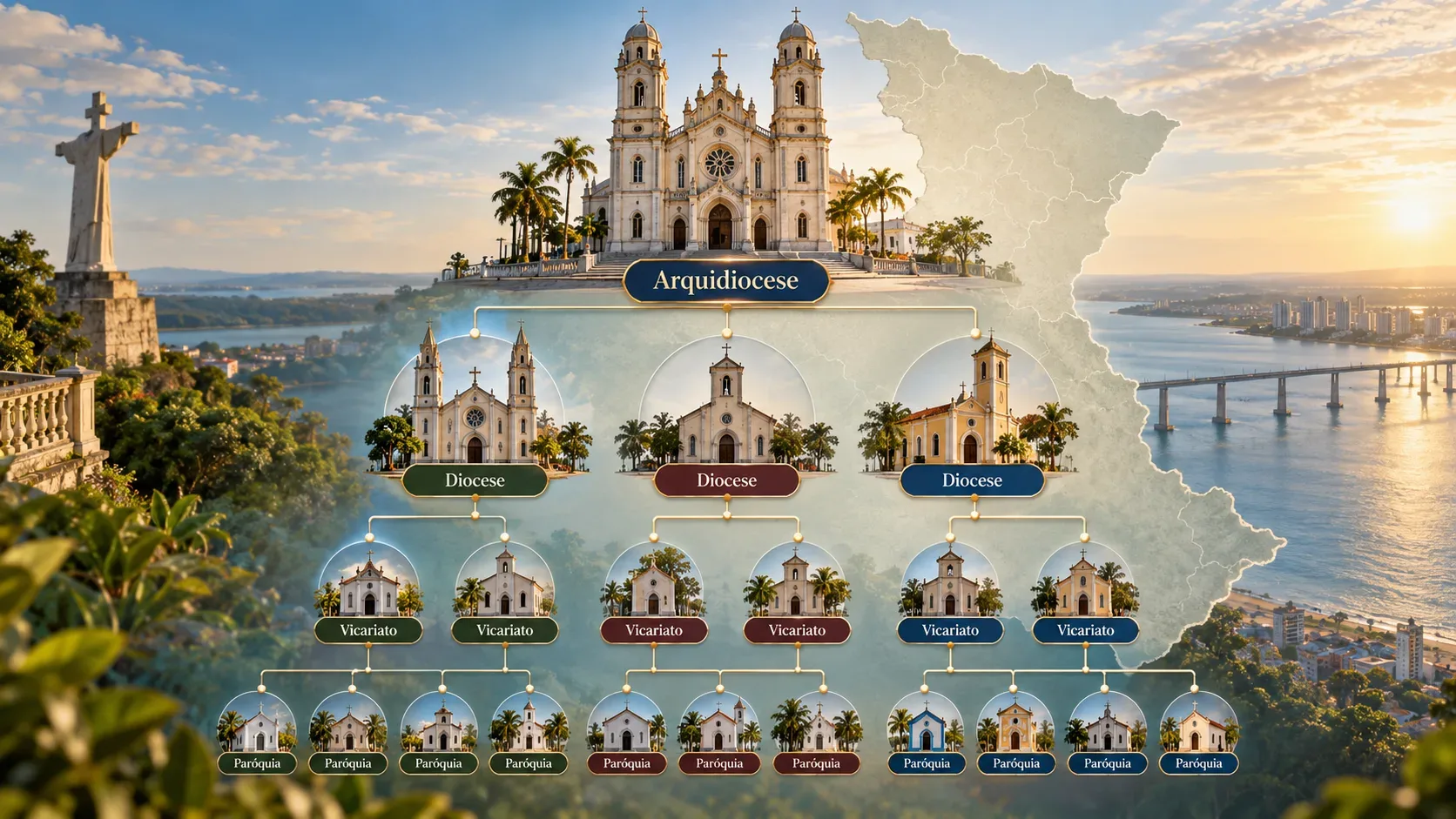
In the Archdiocese of Aracaju, the Liturgical-Sacramental Directory establishes a baseline for the entire local Church. It defines the minimum age to begin the formation journey, the ordinary age to receive Confirmation, proof of Baptism, guidance for adults, and criteria for a sponsor. The calendar, schedules, number of places, format of meetings, and part of the practical documentation may be organized by the parish.
In 2026, this distinction remains important. There are parish Confirmation processes with their own registration dates and limited places, while the Archdiocese also updated its schedule of sacramental fees. For this reason, it is not advisable to use the rule of a single community as though it applied, without verification, to every parish in Aracaju.
What is the age for Confirmation in Aracaju?
The Directory of the Archdiocese of Aracaju makes a distinction that helps avoid confusion: the age to begin preparation is one thing; the age to receive the sacrament is another.
The stated minimum age to begin the Confirmation formation journey is 12 full years of age. To receive Confirmation, the archdiocesan rule provides for 14 full years of age or the calendar year in which the candidate turns 14. The Directory itself allows specific situations to be evaluated by the parish priest, with the bishop's consent.
This means a parish may open a group for adolescents who are still in the preparation stage before reaching the age for the celebration. It also means that the age stated on a local registration form may refer to entry into that group and not necessarily to a different rule for the sacrament itself.
What about people aged 18 or older?
For people over 18, the Directory advises that, when the parish has an adult catechumenate group, the candidate should be directed to that path. The aim is to adapt preparation to the reality of young adults and adults instead of simply placing them in a group designed for adolescents.
Not having been baptized or not having received First Communion should also not be treated, on one's own initiative, as a reason to give up on registration. The Directory provides Christian initiation pathways for those who have not yet received all the sacraments. The parish office and catechesis team need to assess which formation path the person should enter.
Which documents are required for Confirmation?
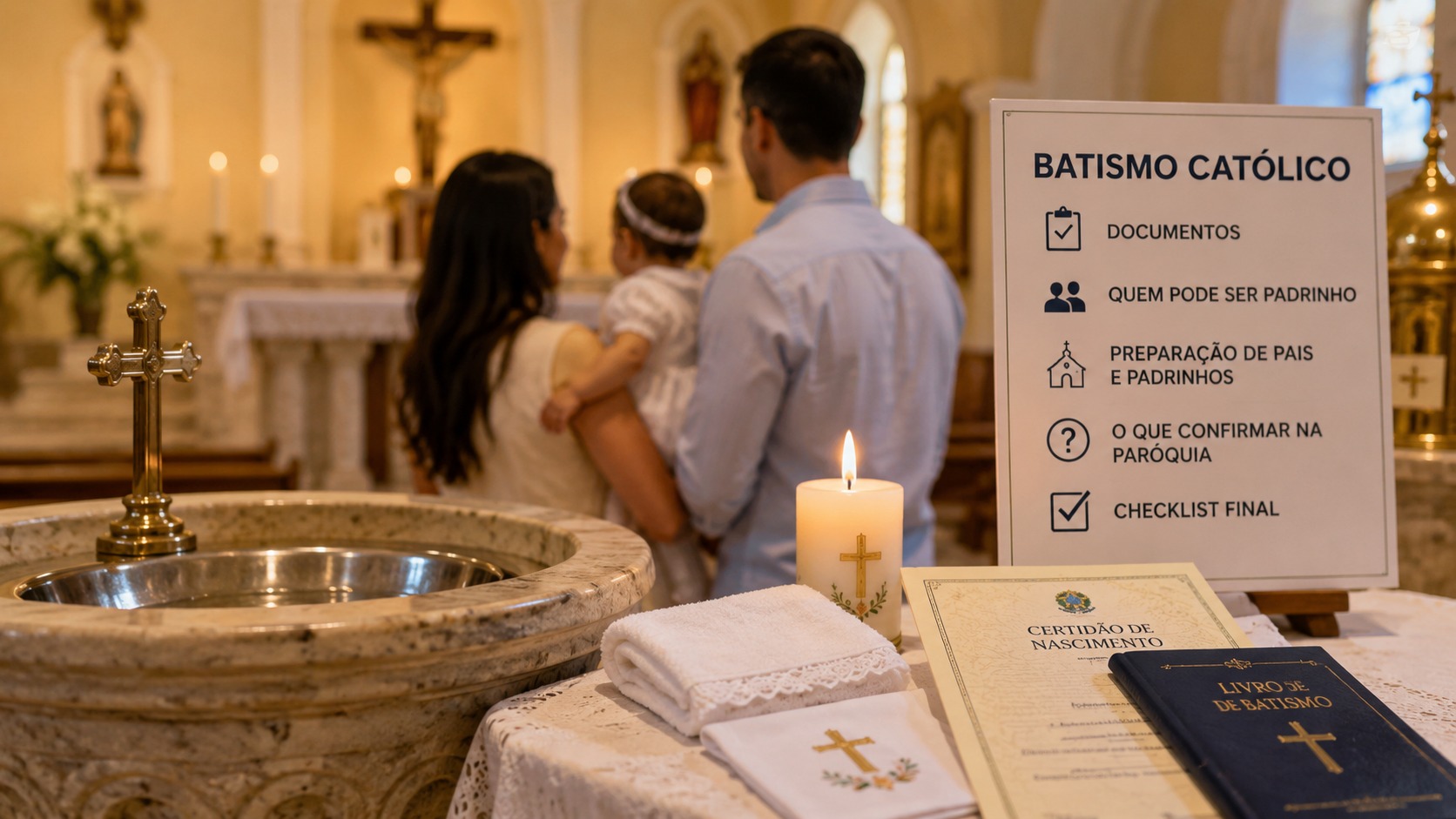
Archdiocesan norms require the registration to record the candidate's information and include proof of Baptism through a certificate. It must also be verified whether the person has already been initiated into Eucharistic life, that is, whether they have received First Communion.
This is the common baseline found in the Directory. A parish may, however, request additional administrative documents to organize the group and its records, such as an identity document, birth certificate, proof of residence, photograph, or its own form. These extra items should not be confused with a universal and unchanging list for all of Aracaju.
The practical guidance is simple: before making copies or requesting replacement documents, confirm with the parish office which items are required for that group and the deadline for submitting them.
What if the Baptism certificate was lost?
The Directory also addresses this situation. When the Baptism certificate has been lost and cannot be presented, there is a procedure to prove Baptism by other means, in accordance with Canon Law. The norm mentions a declaration by a reliable witness or, when the person was baptized as an adult, the
baptized person's own oath. If there is still genuine doubt about the validity or existence of the Baptism, the case should be handled pastorally by the Church.
In practice, this means losing the certificate is not a reason to abandon preparation. The correct step is to contact the parish where the Baptism took place, when possible, or explain the situation to the parish office and parish priest in order to receive appropriate guidance.
How do you choose a Confirmation sponsor?
A sponsor is not merely someone who accompanies the candidate at the ceremony. The Code of Canon Law assigns this person the mission of helping the confirmed person live as a witness to Christ and fulfill the obligations connected with the sacrament. The Aracaju Directory reinforces this role of accompaniment and recommends that the sponsor take part in moments of the formation journey whenever possible.
To serve in this role, the canonical criteria used for sponsors apply. As a rule, the person must be at least 16 years old, be Catholic, have already received Confirmation and the Eucharist, lead a life consistent with the faith, and not be barred by a canonical penalty. The candidate's father and mother cannot serve as sponsor.
The Aracaju Directory also provides for pastoral discernment in the specific case of a person younger than 16 but older than 14 who has already been confirmed. Because this is an exception subject to the parish priest's assessment, it should not be assumed when choosing a sponsor.
Can the Baptism sponsor be the same person?
Yes. Canon Law considers it appropriate for the Confirmation sponsor to be the same person who served in that role at Baptism, and the archdiocesan Directory presents this possibility to candidates and families. However, this is a recommendation, not an automatic obligation.
The main point is the person's suitability to accompany the candidate's Christian life. Choosing someone solely because of an emotional bond, without considering the Church's criteria, can create problems close to the celebration. It is therefore better to confirm the choice with the catechesis team well in advance.
Is it possible to receive Confirmation without a sponsor?
The Code of Canon Law establishes that, insofar as possible, there should be a sponsor for the person being confirmed. The archdiocesan documentation itself provides for situations in which the record may mention a witness when there is no sponsor.
This does not mean the candidate should decide alone that they will not have a sponsor. If there is a genuine difficulty in finding someone who meets the requirements, the situation should be presented to the parish during preparation so that the parish priest and the team can indicate the appropriate solution.
How does preparation for Confirmation work?
The Archdiocese does not treat preparation as a merely bureaucratic course required to obtain the sacrament. The Directory proposes a formation journey inspired by the catechumenal model, connected to the Word of God, the liturgy, community life, service, and growth in faith.
Meetings may include thematic catechesis, liturgical moments, fellowship, community activities, retreats, kerygmatic encounters, and other pastoral experiences. The document also recommends the presence of the parish priest or parochial vicar at moments of the formation journey and emphasizes the parish community's responsibility in accompanying the candidate.
For this reason, the duration and concrete design of preparation may vary. One parish may use weekly meetings; another may organize stages, intermediate celebrations, retreats, or additional activities. What should not disappear is serious preparation for the conscious reception of Confirmation.
What can really vary from one parish to another?
The most common differences are practical matters of organization. The opening and closing dates for registration, number of places, day and time of meetings, duration of the group, retreat calendar, required participation of parents or guardians, deadline for submitting documents, and materials used may be defined locally.
In August 2026, for example, Paróquia São Francisco de Assis, in the Santos Dumont neighborhood, announced a “Festa das Inscrições” for Confirmation 2026 on August 22, with limited places. This type of announcement shows why an interested person should not expect a single registration process for the whole city.
Parish offices may also have their own administrative requirements. If one parish asks for a photo, a copy of an ID, or proof of residence and another does not mention those items, this does not necessarily mean there is a conflict with the Archdiocese. It may simply be an operational need of that community.
What should not be treated as merely a parish rule?
Proof of Baptism, proper preparation for Confirmation, the age reference defined in the archdiocesan Directory, and the canonical criteria for a sponsor are not simply preferences of a particular group.
Likewise, adult preparation follows its own logic of Christian initiation when an adult catechumenate exists in the parish. Exceptional situations should be resolved pastorally, not by informal comparison with what another community did in a different year.
How much does Confirmation cost in Aracaju in 2026?
The Archdiocese of Aracaju published a new schedule of sacramental fees and administrative charges in 2026. For Confirmation, the established amount is R$ 50, effective from June 1, 2026, and valid until a new archdiocesan determination is issued.
This amount should be understood as the sacramental fee established by the Archdiocese. It should not automatically be confused with possible expenses for materials, retreats, formation, or other activities that a community may organize. If there is any additional charge, the parish office should explain what it is for.
To avoid surprises, ask at registration which amount corresponds to the archdiocesan sacramental fee and whether there is any other contribution specifically related to organizing the group.
How to start preparation now
1. Contact the parish where you practice your faith
The Directory assigns the parish a central responsibility for Confirmation preparation. If you already participate in a community, start there. If you do not participate in any parish, contact one nearby and explain that you would like to begin preparing for Confirmation.
2. State your age and which sacraments you have already received
Say whether you have been baptized, whether you received First Communion, and whether you have the corresponding documentation. For adults, this information helps the team determine whether the path will be the regular Confirmation catechesis or a Christian initiation process for adults.
3. Confirm the documents required for that group
Use the Baptism certificate and information about First Communion as your baseline, but ask the parish office for the current list. Do not use an old notice or another parish's list as a guarantee that the documents will be identical.
4. Ask about the calendar, absences, and mandatory activities
Preparation may include regular meetings, celebrations, retreats, and community activities. Knowing this before registering helps avoid joining a group whose schedule conflicts with school, work, or other responsibilities.
5. Choose the sponsor in advance
Do not leave this decision until the week of the celebration. Confirm that the person is Catholic, confirmed, has already received the Eucharist, meets the age requirement, and can genuinely take on the role of accompaniment. If there is any doubt, bring the situation to the catechesis team before formally inviting the person.
The safest rule is to separate norms from local organization
For anyone who wants to receive Confirmation in Aracaju, the answer is not to copy the registration form of a single parish. There is a common archdiocesan baseline, but each community organizes its group within that framework.
The current reference is: the formation journey may begin from 12 full years of age; reception of Confirmation is provided for from 14 full years of age or in the year the person turns 14; registration must provide proof of Baptism and verify Eucharistic initiation; sponsors must meet canonical criteria; adults may be directed to the appropriate catechumenate; and the archdiocesan Confirmation fee has been set at R$ 50 since June 1, 2026.
Everything else needs to be confirmed directly with the parish: when the next group opens, which additional documents will be requested, how preparation will be organized, and which dates the candidate will need to meet. That local contact is the step that turns a general rule into an actually valid registration process.