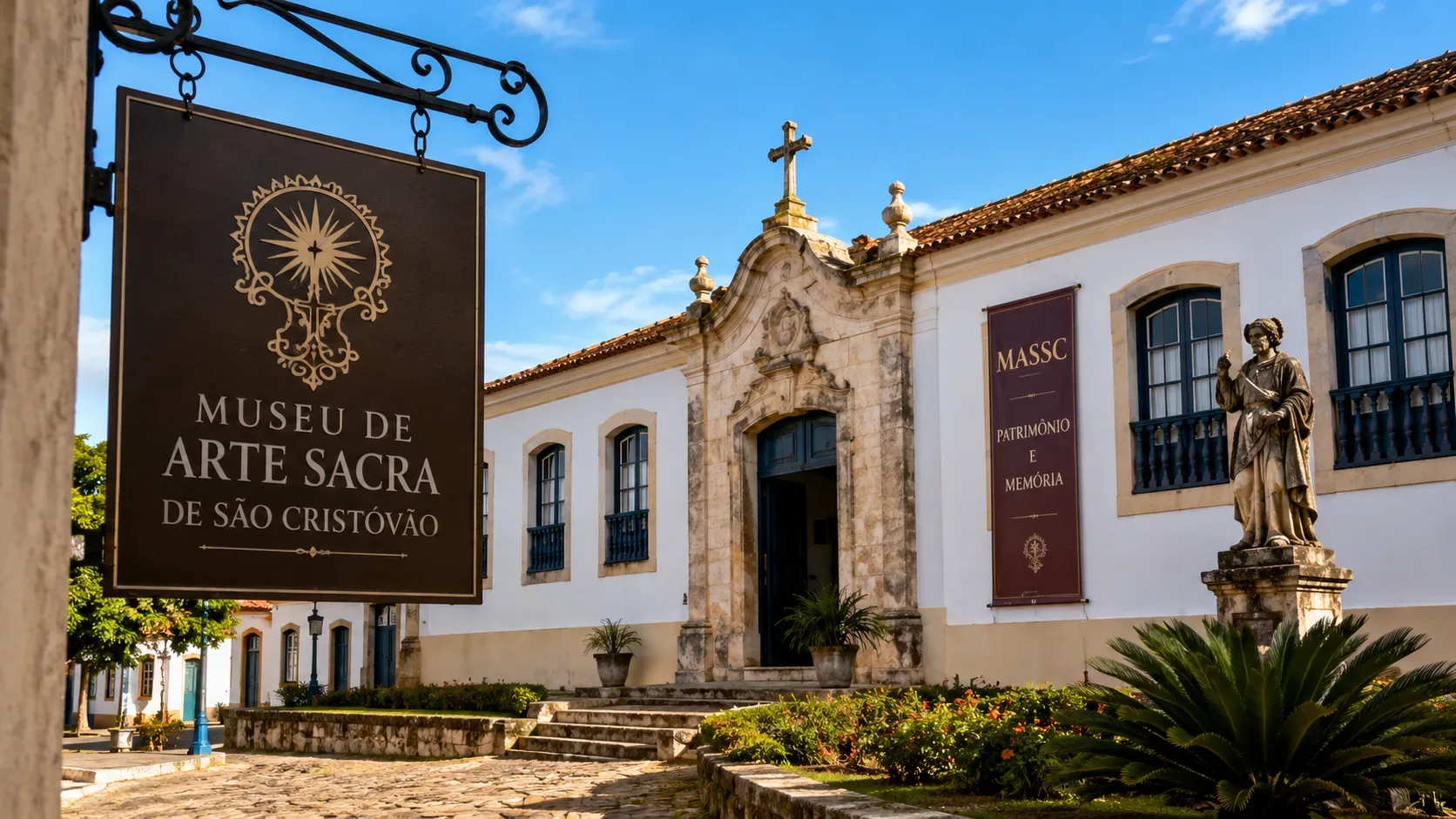
Quick answer: the São Cristóvão Sacred Art Museum (MASSC) is on São Francisco Square in the Historic Center, next to the Franciscan complex. Sources checked on August 31, 2026 are not fully aligned on opening hours: the Visite Museus platform and recent pages from the São Cristóvão city government indicate Tuesday through Sunday, 9:30 a.m. to 5 p.m., while MuseusBr lists Tuesday through Saturday, 10 a.m. to 4 p.m., and Sunday, 9 a.m. to 1 p.m. The most consistently published admission price is R$10 full price and R$5 reduced. Since free-admission rules also differ across public listings, visitors who rely on a specific benefit should confirm before leaving.
What are the opening hours of the São Cristóvão Sacred Art Museum?
At present, the practical information needs an important caveat: public databases that should guide visitors disagree. Visite Museus states that the museum opens Tuesday through Sunday, from 9:30 a.m. to 5 p.m. The municipal tourism website shows the same schedule, and a city notice for July 8, 2026 also listed MASSC as open from 9:30 a.m. to 5 p.m. on that holiday. MuseusBr, however, displays a different timetable: Tuesday through Saturday, 10 a.m. to 4 p.m., and Sunday, 9 a.m. to 1 p.m.
| Source checked | Published hours | Note |
|---|---|---|
| Visite Museus | Tuesday–Sunday, 9:30 a.m.–5 p.m. | National museum-promotion listing with data attributed to the institution |
| São Cristóvão Tourism | Tuesday–Sunday, 9:30 a.m.–5 p.m. | Municipal tourism portal |
| MuseusBr | Tuesday–Saturday, 10 a.m.–4 p.m.; Sunday, 9 a.m.–1 p.m. | National museum registry with conflicting information |
For trip planning, it is not prudent to treat either schedule as “definitive” while the official-facing listings remain inconsistent. If your itinerary has little flexibility, confirm directly with the museum at +55 (79) 98106-6044 or through the institutional profile linked by Visite Museus. Holidays and special programming can also change opening times.
How much is admission?
The most consistent reference price is R$10 for full admission and R$5 for reduced admission. That amount appears on Visite Museus and in a Sergipe state government communication about the museum. The more complicated issue is not the base price, but who qualifies for free or reduced admission.
Who gets free admission?
Public sources do not provide one identical list. Visite Museus lists free admission for children up to age 12, tour guides, people with disabilities, members of the Catholic clergy, teachers accompanying a class, and residents of São Cristóvão. MuseusBr, in turn, mentions public-school students and teachers, tour guides, people with disabilities, and members of the clergy. A 2024 Sergipe state government article says students, seniors and teachers receive reduced admission, while city residents enter free with proof of residence.
In practice, bring the document that supports your claimed benefit — identification, proof of residence, student ID or professional credential — and confirm the current rule if free or reduced admission is important to your visit. The inconsistency is in the documentation; it should not be resolved by assuming that the broadest benefit listed is necessarily the one being applied at the ticket desk.
What to see at MASSC
The museum occupies the wing of the former Third Order Chapel of the São Francisco Convent and houses a collection built from objects originating in churches, chapels and homes across Sergipe. Institutional sources describe hundreds of works, with a strong concentration in the 18th and 19th centuries and some pieces extending into the 20th century. The visit is especially worthwhile because it combines sacred objects with the historic building itself.
- Gilded high altar: one of the chapel's most visually striking features and a useful reference point for observing the decorative language and techniques of the period.
- Ceiling painted by José Teófilo de Jesus: the São Cristóvão city government identifies the 19th-century painting as a depiction of Saint Francis arriving in heaven and being welcomed by angels.
- Old convent bell: municipal documentation describes it as more than 300 years old.
- Ossuary room: a space associated with former Franciscans and people connected to the convent, helping visitors understand funerary practices and religious life in the complex.
- Religious sculpture, furniture, metalwork and liturgical objects: the collection shows how devotion, art, craftsmanship and social life intersected in Sergipe.
- Wood-and-gold altars and articulated religious images: the municipal tourism portal highlights these elements among the displays across the building's two floors.
Temporary exhibitions and cultural activities can change during the year. Visitors who already know the permanent collection may want to check the museum's current programming before returning.
Where is it, and why does the location matter?
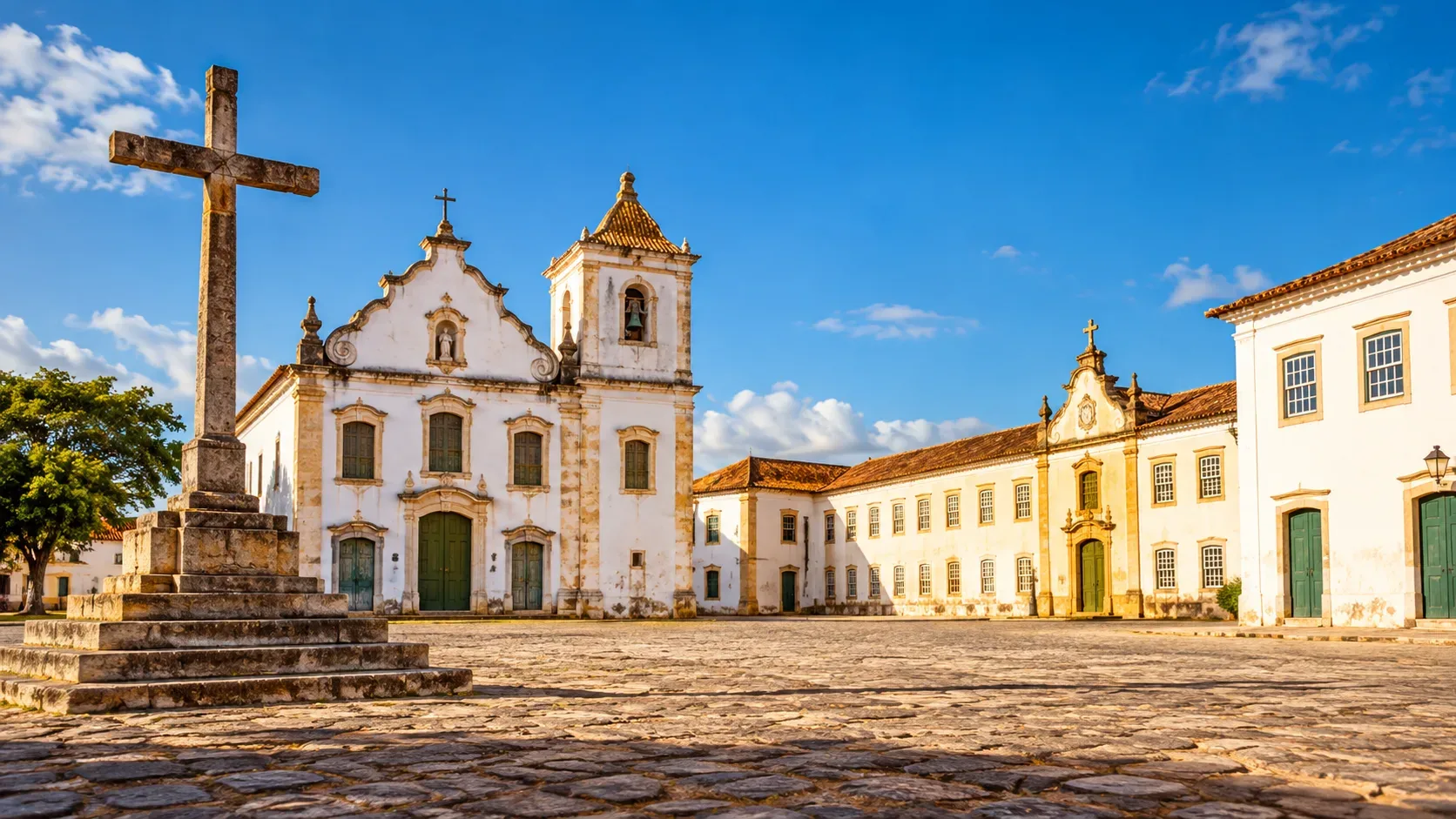
MASSC is located on São Francisco Square, Centro, São Cristóvão, Sergipe. Iphan identifies the Third Order Chapel, which houses the Sacred Art Museum, as part of the square's architectural ensemble. UNESCO inscribed São Francisco Square on the World Heritage List in 2010.
This changes the logic of the visit: the museum is not simply a collection placed inside an old building. It belongs to an urban and religious ensemble that helps explain the historical formation of the city. Allow some time to look at the square, the Church and Convent of São Francisco, and the historic façades around it, but treat MASSC as a visit in its own right if you want to see the collection carefully.
How much time should you allow?
There is no standardized official visit duration in the sources checked. For an unhurried visit, 60 to 90 minutes is a practical estimate, not a time published by the museum. Visitors who read labels, study details in the religious sculpture and furniture, or see a temporary exhibition may need longer. If you are building a Historic Center itinerary, avoid placing the museum in the final minutes before closing, especially because the published opening hours conflict.
Accessibility: what the current registry says
The MuseusBr listing deserves attention for visitors with reduced mobility or specific accessibility needs. It states that the museum does not have an access ramp or specific infrastructure for people with mobility difficulties, and it does not list dedicated resources for hearing or visual disabilities. The same registry mentions visual signage and QR codes with content in English.
Because this is a historic building, physical barriers can be significant. If you need step-free access, mobility assistance or another specific accommodation, confirm conditions directly with the institution before visiting.
How to plan your visit without relying on outdated information
- Check the opening hours the day before or on the day of your visit. Public databases currently disagree.
- Confirm your admission category. Free-admission rules are not presented identically across the listings.
- Bring proof. Residents, students, teachers, tour guides and other eligible visitors may need supporting documentation.
- Avoid arriving close to closing time. This reduces the risk of missing part of the collection if the museum is operating under the shorter schedule.
- Give MASSC its own time slot. The museum is on a square full of attractions, but its collection and chapel justify a dedicated visit.
In short, the São Cristóvão Sacred Art Museum is one of the most relevant visits for anyone interested in religious heritage, art and Sergipe history within the monumental setting of São Francisco Square itself. The main practical issue in 2026 is operational: opening hours and admission benefits should be confirmed because the available public sources are still not harmonized.