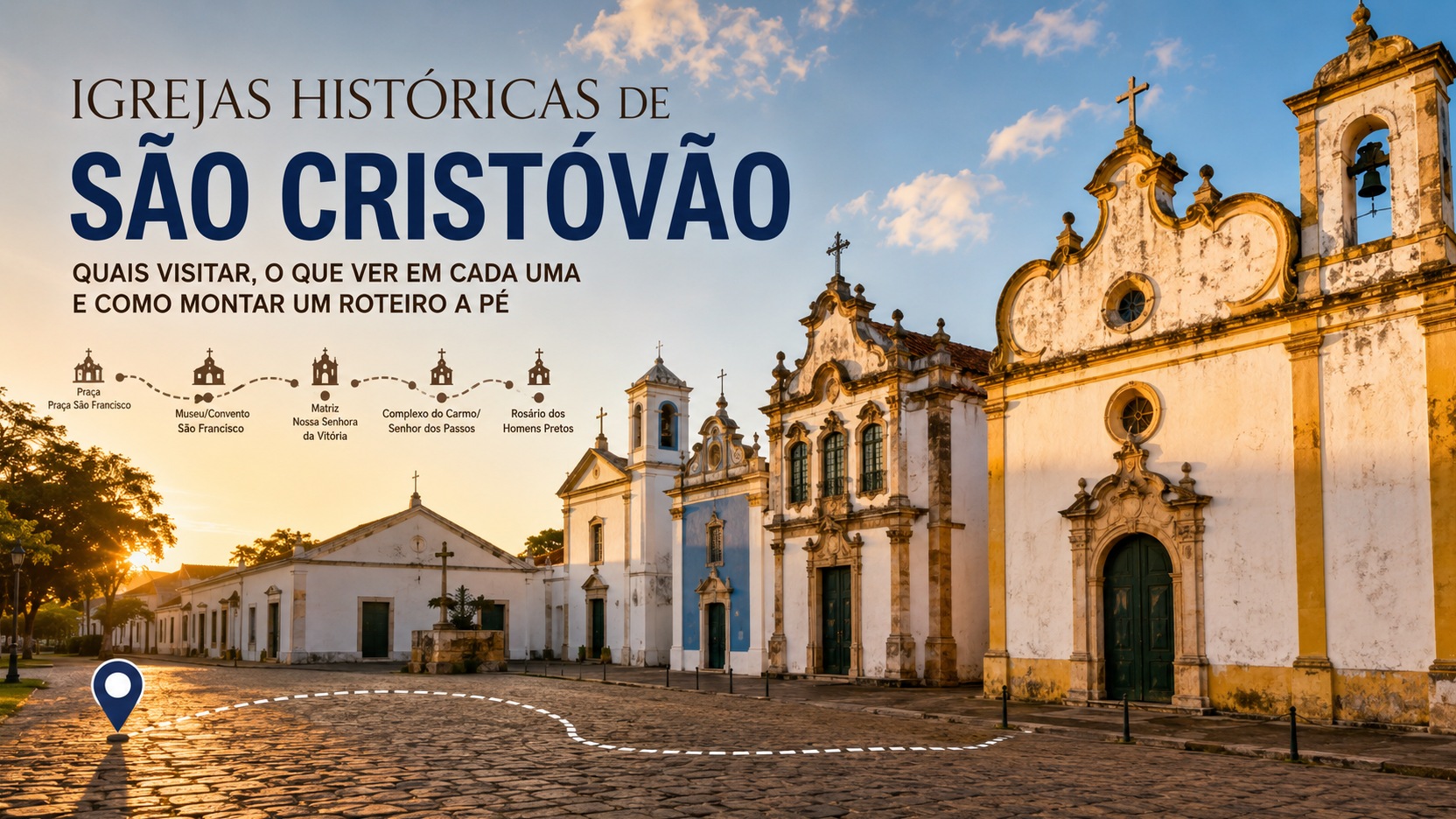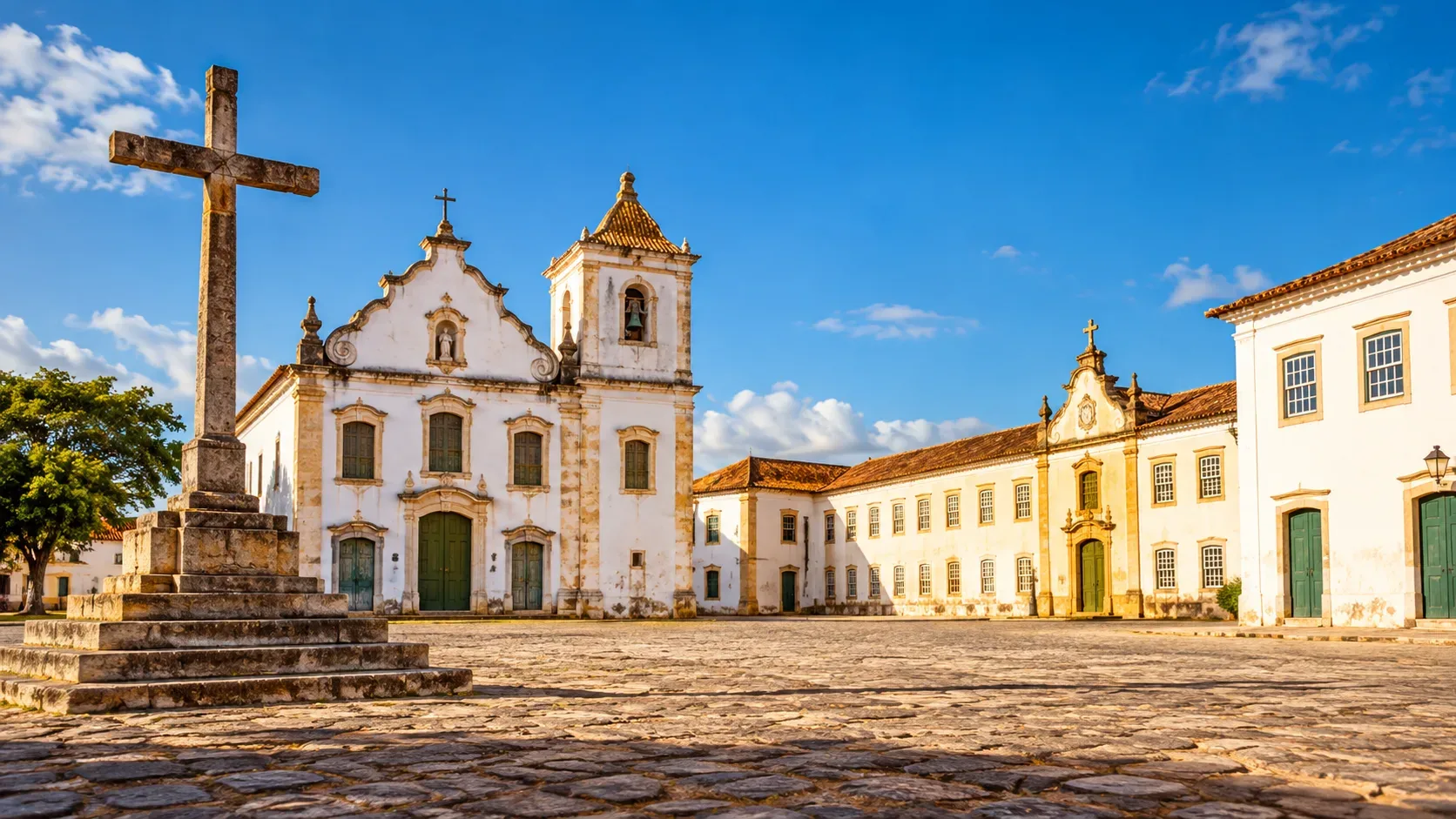
São Francisco Square in São Cristóvão matters for more than its historic facades. Its significance comes from the relationship between the open square and the buildings around it, especially the São Francisco Church and Convent complex, the former Chapel of the Third Order, now associated with the Museum of Sacred Art, and the former Santa Casa da Misericórdia complex with its church. Read together, these buildings show how religion, charity, public administration and urban life overlapped throughout the city's history.
UNESCO inscribed São Francisco Square on the World Heritage List in 2010 under criteria (ii) and (iv). The organization notes that the quadrilateral brings together religious and civic buildings from different periods and that its urban form combines Portuguese settlement traditions with rules associated with towns of the Hispanic world. Iphan also presents the square as evidence of the Iberian Union period, when the crowns of Portugal and Spain were ruled by the same monarch between 1580 and 1640.
Text map of the ensemble: which religious buildings to identify
| Building or group | How it fits into the ensemble | What it helps explain |
|---|---|---|
| São Francisco Church and Convent | It is the square's main religious complex and the element that gives the space its name. | The Franciscan presence, convent architecture and the continuity of religious and institutional uses. |
| Former Chapel of the Third Order of São Francisco | It is part of the Franciscan complex and today houses the Museum of Sacred Art of São Cristóvão. | The role of third orders, formed by laypeople linked to Franciscan spirituality, and the preservation of devotional objects and sacred art. |
| Church of Misericórdia, also called Igreja Santa Izabel in municipal sources | It is associated with the former Santa Casa da Misericórdia complex. | The historical link between religion, charity, hospital care and social assistance. |
| Civic buildings, such as the former Provincial Palace, and the surrounding houses | They are not religious buildings, but they complete the reading of the square. | They show that religious, administrative and residential institutions stood side by side around the same urban space. |
São Francisco Church and Convent: the religious axis of the square
UNESCO identifies the São Francisco Church and Convent complex as the square's principal institutional building and describes it as an example of Franciscan architecture developed in northeastern Brazil. The municipality of São Cristóvão records that the Franciscan establishment dates back to the 17th century and that the complex underwent later interventions.
This continuity matters because the convent did not have a single function. According to the municipality, the building housed activities such as the General Treasury, the Provincial Assembly, a library, an infirmary and the post office, and at another time it was used as military quarters. The religious building therefore also helps tell the city's administrative and political history. A property created for convent life was adapted to different public needs in different periods.
Inside the church, artistic and devotional elements help identify the Franciscan tradition. The municipal source highlights altars, images of Saint Francis and a ceiling painting related to devotion to the saint. It also records important physical changes, including the removal of the original tower in the 19th century because of structural problems. These details are a reminder that historic heritage is not a frozen stage set: buildings are preserved, repaired and altered over time.
The Third Order and the Museum of Sacred Art
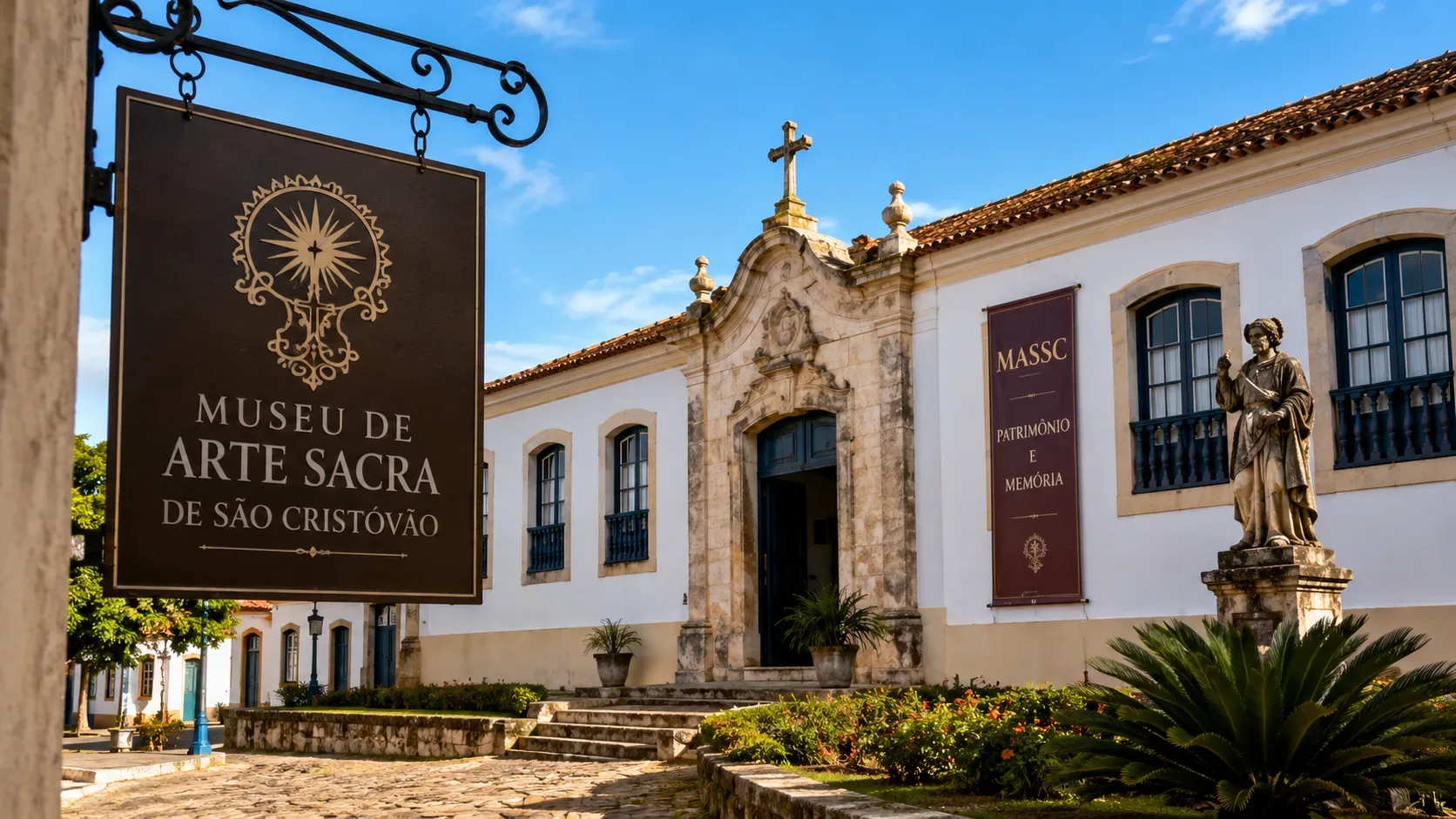
Next to the convent complex is the former Chapel of the Third Order of São Francisco, now occupied by the Museum of Sacred Art of São Cristóvão. The Third Order reveals another layer of colonial religious life: the Franciscan world involved not only friars, but also laypeople connected to Franciscan spirituality.
The museum function adds another chapter to the building's history. The Visite Museus platform states that the museum was founded in 1974 and holds about 500 pieces donated by churches and families in Sergipe. The collection turns the former religious space into a place for reading the material culture of faith, with images, furniture and other objects that help explain devotional practices and artistic production in the state.
The museum's location reinforces the idea that the square should be understood as an ensemble. Architecture, religious practice and museum heritage do not need to be separated completely here because they accumulated in the same physical setting.
Santa Casa da Misericórdia and Igreja Santa Izabel: faith, care and assistance
Another essential group is the former Santa Casa da Misericórdia and its church. UNESCO and Iphan refer to the Church and Santa Casa da Misericórdia, while the municipality of São Cristóvão calls the church Igreja Santa Izabel. The naming difference may confuse visitors, but the sources are referring to the same historic complex associated with the former charitable institution.
Municipal documentation says the Santa Casa served as a hospital and later as an asylum and an orphanage. Its history shows why the religious presence in the square cannot be reduced to worship alone. Catholic brotherhoods and institutions also took part in caring for the sick, the poor, children and other groups served by charitable structures.
The attached church preserves artistic elements from different phases, including Baroque features and a Neoclassical high altar cited by the municipality. The complex therefore brings together architecture, art, assistance and social memory, offering a different perspective from São Francisco Church: one emphasizes Franciscan convent life, while the other highlights the relationship between devotion and works of mercy.
Why the square is a World Heritage property
The importance of São Francisco Square goes beyond the age of its buildings. UNESCO considers the ensemble significant because its urban form combines Portuguese occupation traditions with planning rules associated with Spanish rule. The organization recognizes the property under criterion (ii), related to the interchange of influences, and criterion (iv), which treats the square as an example of a coherent architectural and urban ensemble.
This explains why churches and convents are central to the place's history but are not enough on their own. A complete reading depends on the relationship between the religious buildings, the former Provincial Palace, the houses and the open square itself. That composition turns a group of individual monuments into a historic urban landscape.
In 2026, Iphan marked 16 years since the UNESCO recognition and again highlighted the square as a setting for preservation, heritage education and community participation. The designation therefore does not close the story of the site. It creates ongoing responsibilities for conservation and management.
What to look for during a visit
- The relationship between buildings and open space: notice how the monumental facades use the square as an area of approach and public representation.
- Different religious functions: the convent church, the Third Order and the church connected to the Santa Casa represent distinct ways of organizing Catholic life.
- Signs of change: restorations, changes of use and architectural alterations are part of the history of the buildings.
- The coexistence of religious and civic power: the former Provincial Palace and other buildings show that the square connected several institutions.
- Present-day uses: museums, religious celebrations, cultural activities and administrative functions show that the heritage remains integrated into the city.
Opening hours and access limits: why you should check before visiting
The open square can be seen regardless of access to interiors, but churches, museums and convent areas have their own rules. The Visite Museus platform currently lists the Museum of Sacred Art as open Tuesday through Sunday from 9:30 a.m. to 5 p.m., and it also provides ticket and free-admission information. The platform itself notes that operating information is the responsibility of the institution.
Municipal notices also show that holidays can change schedules. In September 2026, for example, the municipality published special hours for churches and the Museum of Sacred Art on the holiday of Nossa Senhora da Vitória, different from the normal routine. The municipality has also stated that some inner areas of the Franciscan complex, such as the convent chapel, may open only on specific religious occasions.
A responsible itinerary should therefore separate what can be seen from the square from what depends on each site's opening status. Before publishing a route or planning a visit, confirm directly with the museum, the municipality, the Archdiocese or São Cristóvão's official tourism channels. This is especially important on Mondays, holidays, event periods and days with religious services.
Sources and references
- UNESCO World Heritage Centre: São Francisco Square in the Town of São Cristóvão
- Iphan: World Heritage in Sergipe
- Iphan: 16 years of São Francisco Square's World Heritage recognition
- Municipality of São Cristóvão: the São Francisco Convent complex
- Municipality of São Cristóvão: Igreja Santa Izabel and Santa Casa da Misericórdia
- Visite Museus: Museum of Sacred Art of São Cristóvão
- Municipality of São Cristóvão: tourist-site opening hours in September 2026