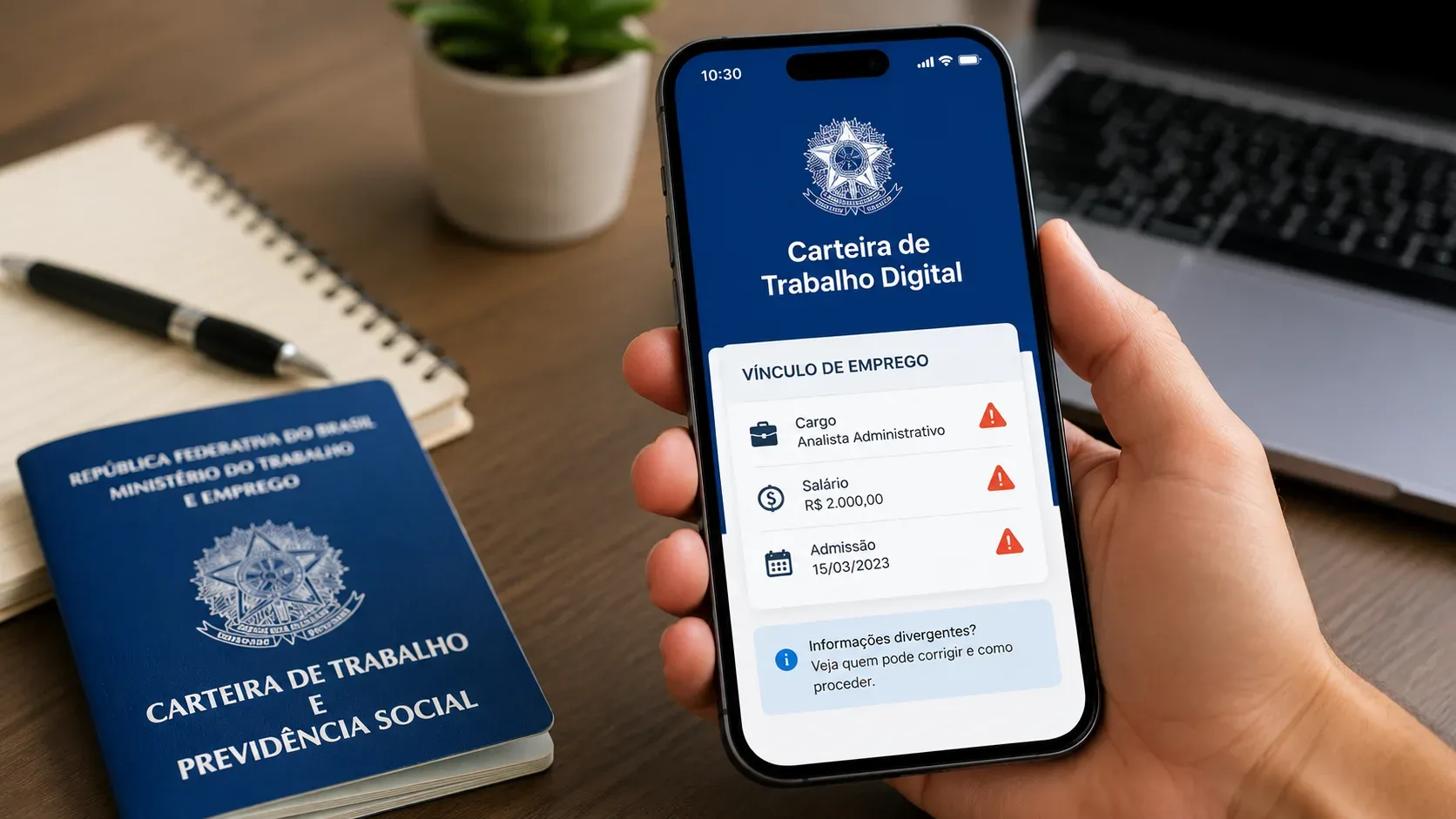
A probationary employment contract in Brazil is a fixed-term contract used at the beginning of employment so the company and the worker can assess their fit for the job. According to Brazil's Ministry of Labor and Employment, it must be in writing, may be extended only once, and may not exceed 90 days in total. This means that 30 + 60 days and 45 + 45 days are possible arrangements, as is a single 90-day term, provided the total limit and the one-extension rule are respected.
How long a probationary contract can last
The general limit is 90 days. The rule appears in article 445, sole paragraph, of Brazil's Consolidation of Labor Laws, or CLT, and is reiterated by the Ministry of Labor and Employment. The contract may start with a shorter period and be extended once, as long as the combined duration does not exceed 90 days.
| Structure | Allowed? | How it works |
|---|---|---|
| 30 + 60 days | Yes | There is an initial 30-day term and one 60-day extension. |
| 45 + 45 days | Yes | There is an initial 45-day term and one 45-day extension. |
| 90 days with no extension | Yes | The contract starts with the maximum permitted term. |
| 30 + 30 + 30 days | Not as a regular probationary contract | This would involve more than one extension. The CLT provides that a fixed-term contract extended more than once becomes an open-ended contract. |
| 60 + 40 days | No | The total would reach 100 days and exceed the legal 90-day limit. |
What the one-extension rule means
An extension changes the originally agreed end date. If a contract was signed for 45 days, for example, it may be extended for another 45 days. After that extension, a second extension cannot preserve its status as a probationary contract. The Ministry of Labor and Employment states that a fixed-term contract extended more than once becomes a contract with no fixed end date.
An extension should also not be confused with continued employment. If the employee keeps working after the probationary period without a new fixed end date, the relationship follows the rules of an open-ended employment contract. The time already worked remains part of the employment relationship.
What happens when the contract ends on the scheduled date
If the company and the worker reach the agreed final day and the employment ends normally, the worker is owed any outstanding salary, proportional 13th-month salary, and proportional vacation pay plus the constitutional one-third supplement. According to the Ministry of Labor and Employment, no notice period and no 40% FGTS termination penalty are due in this situation.
The normal end of a fixed-term contract, including a probationary contract, is a legal basis for withdrawing FGTS funds. The official FGTS website explains how to request the withdrawal. Workers who opted for the Birthday Withdrawal system should note its specific restrictions because the normal expiration of a fixed-term contract does not generate the 40% termination penalty.
What if the employee is kept on after probation?
If the worker remains with the company after the term expires and the employment continues without a new fixed end date, the contract becomes open-ended. In practical terms, there is no longer a previously scheduled termination date, and the rules for open-ended employment apply to any future termination.
That is why the end date written into the probationary contract matters. If both sides continue the relationship, the employer should keep employment records consistent with the change in contract status.
What changes if the contract ends early
Early termination requires more attention because the result depends on which side ends the contract and whether the document includes a clause giving both parties the right to terminate before the fixed end date. Articles 479, 480 and 481 of the CLT address these situations.
| Situation | General rule | Key point |
|---|---|---|
| Normal end on the scheduled date | Outstanding salary, proportional 13th-month salary, and proportional vacation pay plus one third. No notice period or 40% FGTS penalty. | FGTS withdrawal may be available because the fixed-term contract ended, subject to the worker's chosen withdrawal system. |
| Employment continues after probation | The relationship becomes open-ended. | The time already worked remains part of the continuous employment period. |
| Employer ends the contract early without cause and there is no early-termination clause | Article 479 provides compensation equal to half the remuneration the worker would have received through the original end date, in addition to the applicable proportional termination payments. | Labor inspection rules also require the FGTS termination penalty when an employer ends a fixed-term contract early. Notice depends on the clause addressed by article 481. |
| Worker leaves early and there is no early-termination clause | Article 480 allows the employer to seek compensation for losses caused by the employee's early departure. | The compensation is not automatically equal to the remaining contract value and may not exceed the statutory ceiling in article 480. |
| The contract contains a reciprocal early-termination clause | If either side uses that clause, article 481 requires the principles that govern termination of open-ended contracts to apply. | In this arrangement, notice may become part of the termination calculation. |
Brazil's Ministry of Labor Normative Instruction No. 2/2021 states that when an employer terminates a fixed-term contract early, labor inspectors must verify payment of the FGTS termination penalty. This differs from normal expiration of the contract, when the 40% penalty is not due.
How quickly termination payments must be made
The Ministry of Labor and Employment states that the end of the employment relationship should be formalized through the Employment Termination Form and that termination amounts must be paid within 10 calendar days. The reason for termination must be recorded correctly because it affects which amounts are due.
What to check before signing or ending a probationary contract
- Check the written start date and end date.
- Confirm whether an extension is planned and that it will be used no more than once.
- Add the periods together to make sure the total does not exceed 90 days.
- Check whether the contract contains a reciprocal early-termination clause, because it changes the rules if either side ends the relationship before the fixed date.
- At termination, review the stated reason on the termination form, proportional payments, and FGTS records.
- If a collective bargaining agreement, job protection, dismissal for cause, social security leave, or another special circumstance applies, confirm the specific rules for that situation.
In short, a Brazilian probationary employment contract can last up to 90 days and may be extended only once. If it ends on the scheduled date, fixed-term termination rules apply. If employment continues, the relationship becomes open-ended. If the contract ends early, the party that initiated the termination and the existence of an early-termination clause must be checked before the amounts due are calculated.