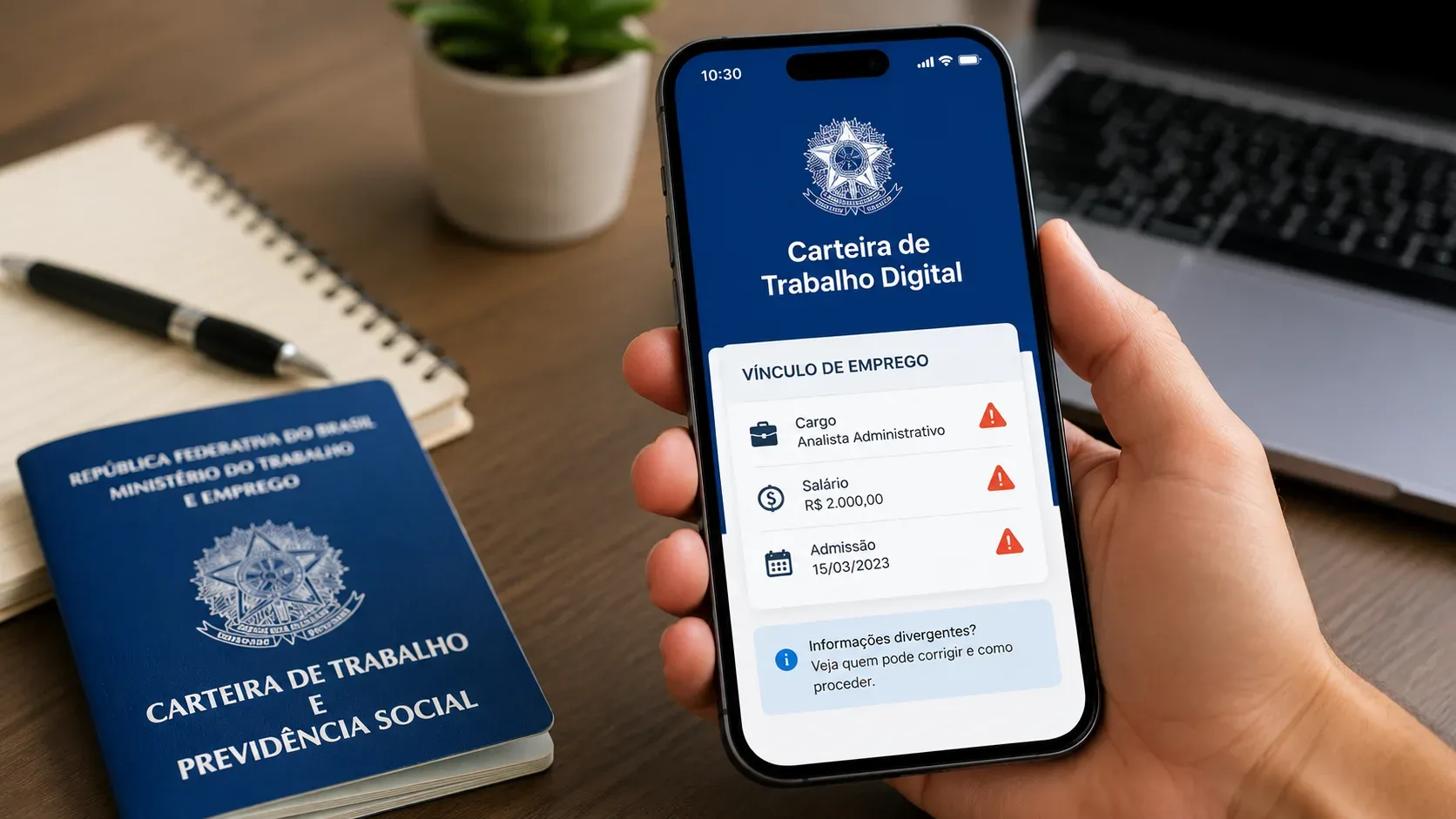
Since July 22, 2026, the practical rule for commerce in Brazil is clearer: work on public holidays requires authorization in a collective bargaining agreement (CBA) for commercial activities in general, except for activities that retain permanent authorization under Annex IV of Ordinance MTP No. 671/2021. The change came with Ordinance MTE No. 1,316/2026, published in the Federal Official Gazette on July 22, 2026.
Sundays are different. Sunday work in commerce does not depend on the same holiday authorization because Article 6 of Law No. 10,101/2000 already authorizes it for commerce in general, subject to municipal legislation. That does not remove weekly-rest rules, labor protections, or conditions that may be set through collective bargaining.
What Ordinance 1,316/2026 changed
Ordinance 1,316 amended Article 62 and Annex IV of Ordinance MTP No. 671/2021. The new text expressly separates two situations:
- Public holidays: the predominant activities listed under item “II – Commerce” of Annex IV have permanent authorization; other commercial activities in general require authorization in a CBA under Law No. 10,101/2000.
- Sundays: in commerce, authorization comes directly from Law No. 10,101/2000. This is why Ordinance 1,316 says the permanent authorization in Annex IV, for the “Commerce” section, applies exclusively to public holidays.
The ordinance also revoked Ordinance MTE No. 3,665/2023, which had taken effect on May 27, 2026 after repeated postponements. Ordinance 1,316 took effect on its publication date, July 22, 2026.
Public holiday vs. Sunday: the difference in one table
| Point | Public holiday in commerce | Sunday in commerce |
|---|---|---|
| Main legal basis | Article 6-A of Law No. 10,101/2000 + Ordinance 671/2021 as amended by Ordinance 1,316/2026 | Article 6 of Law No. 10,101/2000 |
| General rule | Requires authorization in a CBA unless the activity has permanent authorization in Annex IV | Work is authorized by law, subject to municipal legislation |
| Collective bargaining | It is a condition for authorization for activities not covered by the exception | It may set working conditions; the law does not make the CBA the source of Sunday authorization |
| Weekly rest | Labor-protection rules and applicable rest and compensation rules must be observed | Paid weekly rest must fall on a Sunday at least once every three weeks, along with other labor protections |
| Municipal legislation | It must be checked, including because Article 6-A of Law No. 10,101/2000 requires it | It is expressly required by Article 6 |
This distinction avoids a common oversimplification: saying that “Sundays and public holidays follow the same rule.” They do not. Collective bargaining can matter in both situations, but the legal source of the authorization is different.
Which activities have permanent authorization to work on public holidays
Ordinance 1,316/2026 rewrote item “II – Commerce” of Annex IV to Ordinance 671. Permanent authorization for holiday work covers the following activities:
- sale of bread and biscuits;
- retail sale of pharmaceutical products, including compounding pharmacies and prescription handling;
- flowers and wreaths;
- barbershops and beauty salons;
- fuel, lubricants, and automotive-accessory outlets (gas stations);
- retail sale of liquefied petroleum gas (LPG);
- bicycle and similar rentals;
- hotels, restaurants, bars, and similar establishments;
- entertainment venues, including paid-admission sports establishments;
- street markets;
- doormen and elevator operators in residential buildings;
- travel agencies and vehicle and boat rental businesses;
- commerce at fairs and exhibitions;
- laundries and hospital laundries; and
- funeral service establishments.
One detail matters: Article 62 uses the expression “predominant activities”. A company should therefore not assume it is covered merely because it occasionally sells a product that appears on the list. The actual classification of the predominant activity and the applicable union representation need to be checked.
When a CBA is required
For commercial activities in general that are not on the permanent-authorization list, work on a public holiday depends on authorization in a CBA. This requirement does not come only from Ordinance 1,316: Article 6-A of Law No. 10,101/2000 already states that work on public holidays in commerce in general is permitted when authorized in a collective bargaining agreement and when municipal legislation is observed.
In practice, the company should identify the CBA applicable to its category and territorial scope before preparing the schedule. The CBA may include specific conditions beyond permission itself, such as working-hour rules, compensatory time off, benefits, additional payments, or employee-calling procedures. Those conditions vary by bargaining process and should not be assumed to be uniform nationwide.
Where there is no representative union for the professional and economic categories in the locality, Ordinance 1,316 directs the parties to Article 611, paragraph 2, of Brazil’s Consolidation of Labor Laws (CLT). That rule allows federations and, if there is no federation, representative confederations to enter into collective bargaining agreements for categories not organized into unions within their scope of representation.
Why Sunday does not follow the same CBA requirement
Article 6 of Law No. 10,101/2000 authorizes Sunday work in commerce in general, subject to municipal legislation. Its sole paragraph requires paid weekly rest to coincide with Sunday at least once within a maximum period of three weeks, while preserving other labor-protection rules and conditions set through collective bargaining.
That is why a CBA can be very important in defining how Sunday work is organized, but the basic authorization for Sunday work comes from the law. On public holidays, for commerce outside the Annex IV exceptions, the CBA is part of the legal condition for authorization itself.
Timeline: from 2023 to the rule currently in force in 2026
- November 14, 2023: Ordinance MTE No. 3,665/2023 is published, removing permanent authorizations for several commercial activities and seeking to align the regulation with Article 6-A of Law No. 10,101/2000.
- 2024: its effective date is postponed several times while the government promotes negotiations with worker and employer representatives.
- June 17, 2025: Ordinance MTE No. 1,066 moves the effective date to March 1, 2026.
- February 25, 2026: Ordinance MTE No. 356 creates a working group and again postpones the effective date by 90 days.
- May 27, 2026: according to the Ministry of Labor and Employment, Ordinance 3,665/2023 takes effect while the working group finalizes a new proposal.
- July 22, 2026: Ordinance MTE No. 1,316/2026 takes effect, revokes Ordinance 3,665, sets the current list of 15 activities with permanent holiday authorization, and expressly distinguishes the Sunday rule.
The Ministry itself reported in June 2026 that the working group had delivered a proposal after Ordinance 3,665 entered into force. Ordinance 1,316 consolidated the regulatory outcome the following month.
What to check before scheduling employees on a public holiday
- identify the establishment’s predominant activity;
- check whether it is among the 15 activities in item “II – Commerce” of Annex IV;
- if it is not, find the current CBA for the relevant professional and economic categories and confirm whether it expressly authorizes holiday work;
- verify the CBA’s territorial scope and validity period;
- check the municipal rules applicable to commercial opening;
- read the CBA’s specific provisions on working hours, time off, pay, benefits, and employee calling;
- if there are no representative unions in the locality, check the role of the federation or confederation under Article 611, paragraph 2, of the CLT.
What Ordinance 1,316 does not allow you to conclude
The ordinance does not say that every commercial business may open on every public holiday, nor that the listed activities are exempt from all other labor rules. It also does not make Sundays and public holidays legally identical. It defines, within the administrative regulation, which commercial activities retain permanent authorization for public holidays and reaffirms that the others require a CBA.
For a concrete decision, the safest approach is to combine four checks: predominant activity, applicable CBA, municipal legislation, and working-time/rest rules. Ordinance 1,316 provides the national framework, but the actual schedule depends on the establishment’s classification and the valid collective and local rules.
Main sources: Ordinance MTE No. 1,316/2026 (Federal Official Gazette); Law No. 10,101/2000, Articles 6 and 6-A; Ordinance MTE No. 3,665/2023; Ministry of Labor/Agência Gov report on the June 2026 proposal.