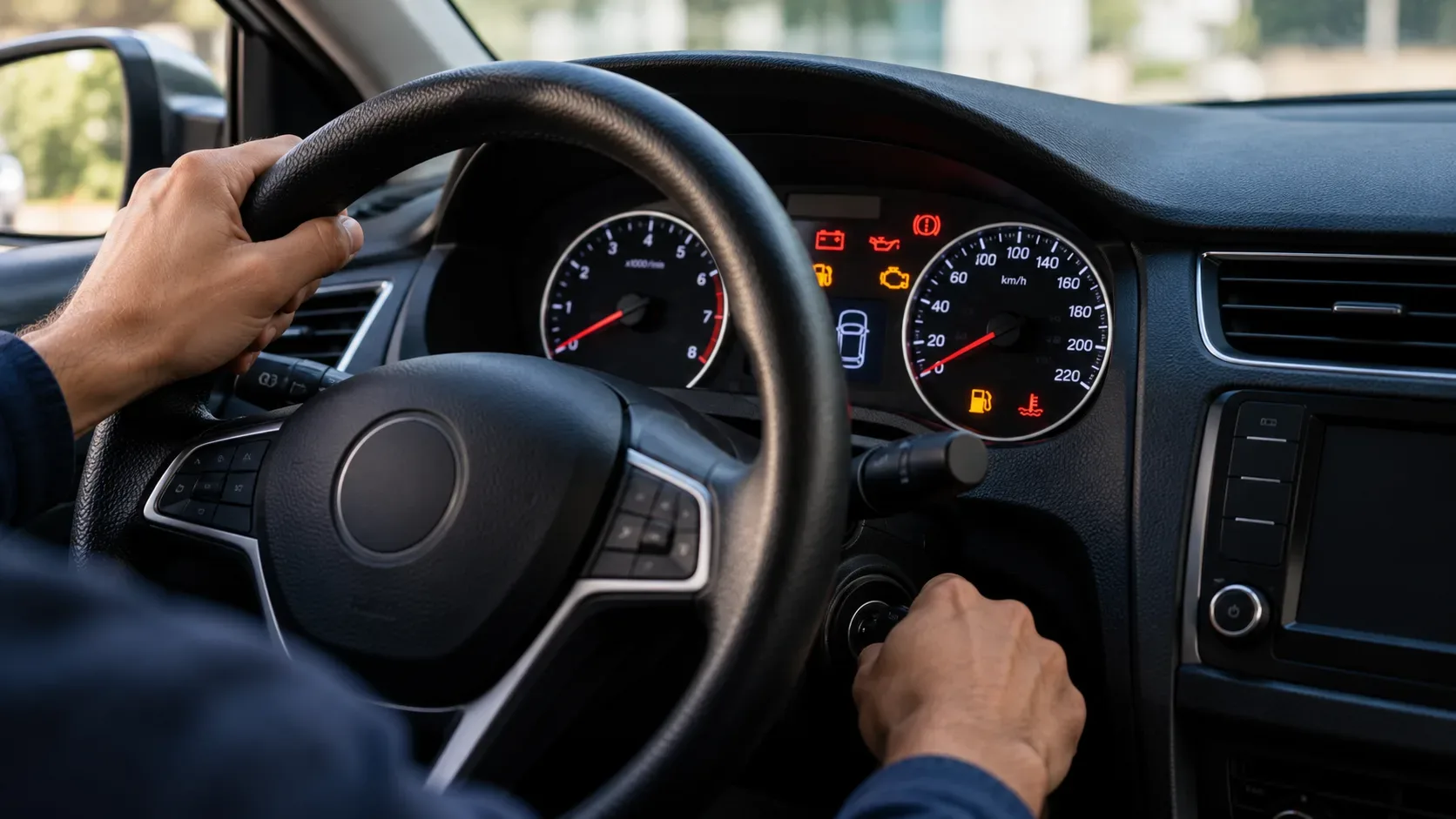
If the dashboard lights come on but the car will not start, that does not prove the battery is healthy. The dashboard needs little current; the starter motor needs much more. So the most useful first clue is not simply “are the dashboard lights on?”, but what exactly happens when you turn the key or press the start button: silence, clicking, slow cranking, or normal cranking without the engine firing.
This symptom-based diagnosis does not replace an electrical test, but it helps separate scenarios and reduces the urge to keep trying the starter unnecessarily. Battery manufacturers and roadside services list the battery, connections, starter motor, ignition, fuel delivery and security systems among the possible causes of a no-start condition. See, for example, guidance from Moura and AAA.
The first diagnosis comes from the sound and cranking speed
| What happens when you try to start | What it often suggests | What still needs confirmation |
|---|---|---|
| Total silence, dashboard still on | Starting circuit, starter motor, relay, key/start button, P/N selector, clutch switch or immobilizer | The battery and connections are not ruled out; voltage and voltage drop still need testing |
| Rapid repeated clicking | Weak battery or voltage drop from a poor connection | Battery condition, terminals, cables and starter feed |
| One solid click and no cranking | Starter motor/solenoid or high-current circuit | A charged battery and good connections should be confirmed before condemning the starter |
| Engine cranks slowly | Weak battery, poor connection or excessive circuit resistance | Abnormal starter or engine load can also be involved |
| Engine cranks at normal speed but will not fire | Fuel, ignition, injection, sensors, immobilizer or timing | The starting system is turning the engine, so the investigation shifts elsewhere |
Dashboard lights do not mean the battery is healthy
A battery can have enough energy to power the dashboard, radio and interior lights while still being unable to provide the current required by the starter motor. That is why “the dashboard lights are on” does not remove the battery from the list.
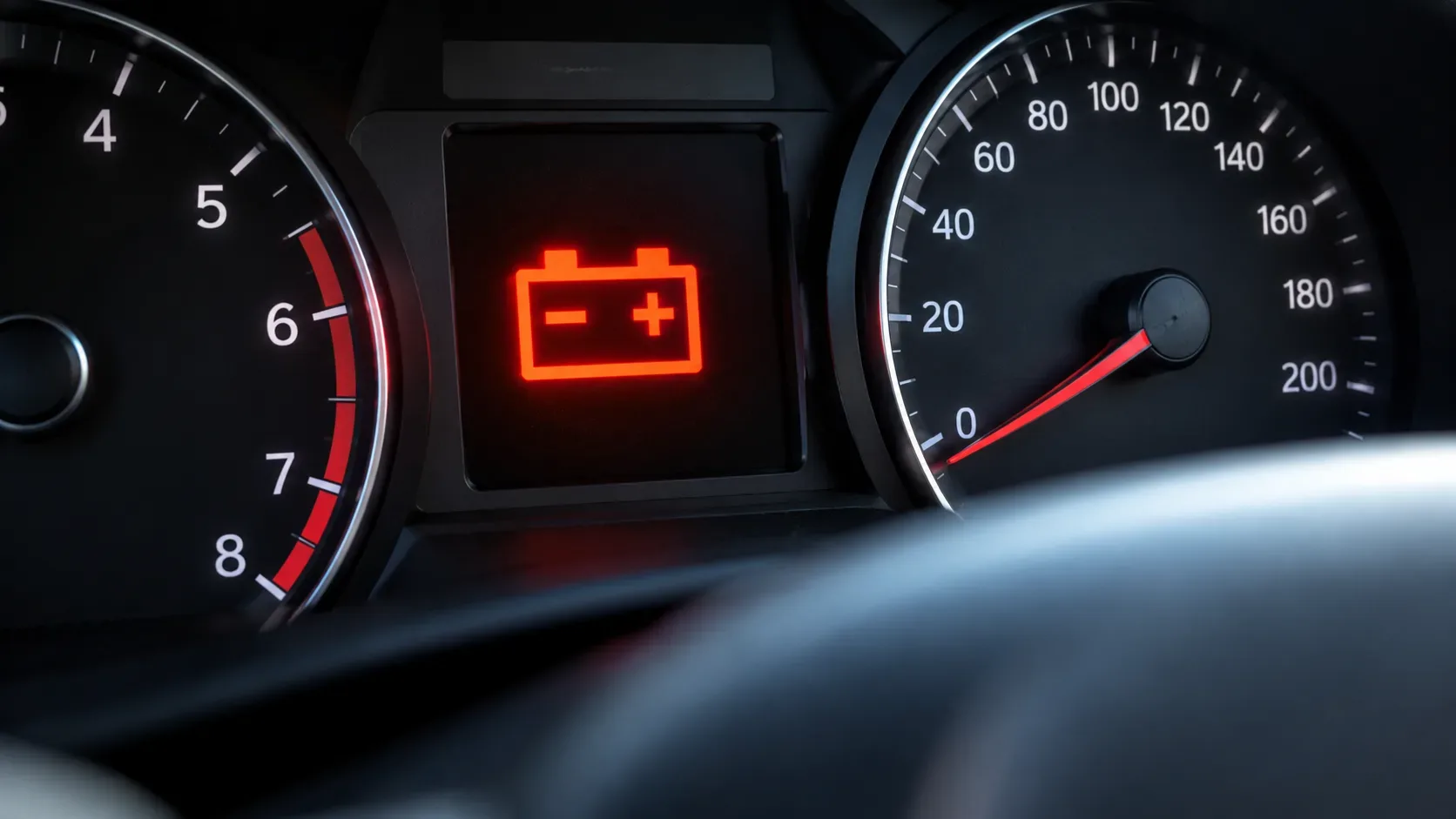
If the lights dim sharply or go out during a start attempt, or you hear rapid clicking, a discharged battery or poor connection becomes more likely. Moura describes weak dashboard lighting, clicking and a drop in brightness as common power-supply clues, while AAA also points to slow starting, flickering lights and clicking as reasons to have the battery tested. See Moura's no-start guidance and AAA's battery warning signs.
Clicks: rapid repeated clicks are not the same as one solid click
Rapid clicking in succession more often fits a voltage drop as the system tries to engage the starter. That can result from a weak battery or excessive resistance at terminals and cables.
One solid click while the dashboard remains bright shifts suspicion toward the starter motor, solenoid or the circuit delivering high current to it. Even then, it is not safe to conclude “the starter is bad” from the sound alone: an internally failed battery or a poor connection can imitate the same symptom. The correct diagnosis compares the battery, cables and starter as a system.
If the engine cranks slowly, watch what the lights do
Heavy, slow cranking is consistent with insufficient current. If the dashboard and headlights lose brightness at the same time, the battery and connections move higher on the list. If the battery tests good, a technician can then check voltage drop in the cables and starter current draw.
Do not turn this observation into repeated attempts. Long, back-to-back cranking can discharge the battery further and heat the starter motor without identifying the cause.
If the engine cranks normally but will not fire, the logic changes
When the engine is audibly being cranked at an apparently normal speed, the starter is performing its basic job. The possible causes then include lack of fuel, a fuel-delivery problem, no spark in spark-ignition engines, injection or sensor faults, an immobilizer issue or a timing fault.
This does not guarantee that the battery is perfect; some vehicles can crank while voltage is still too low for certain control modules. But normal cranking with no start is different from “no crank”: the diagnosis is no longer simply battery versus starter.
Total silence with the dashboard on: first look for start authorization clues
Before assuming a component has failed, observe items that require no disassembly. In an automatic car, confirm that the selector is fully in P or N. In a manual car, confirm that the clutch pedal is fully depressed if the model requires it for starting. Also look for a key-not-recognized, immobilizer or security-system warning on the dashboard.
These are observational checks only. If the dashboard remains on but there is no crank and no click, the fault may involve a relay, ignition switch, transmission/clutch position input, wiring, immobilizer or the starter itself — all of which call for electrical diagnosis.
What about the alternator?
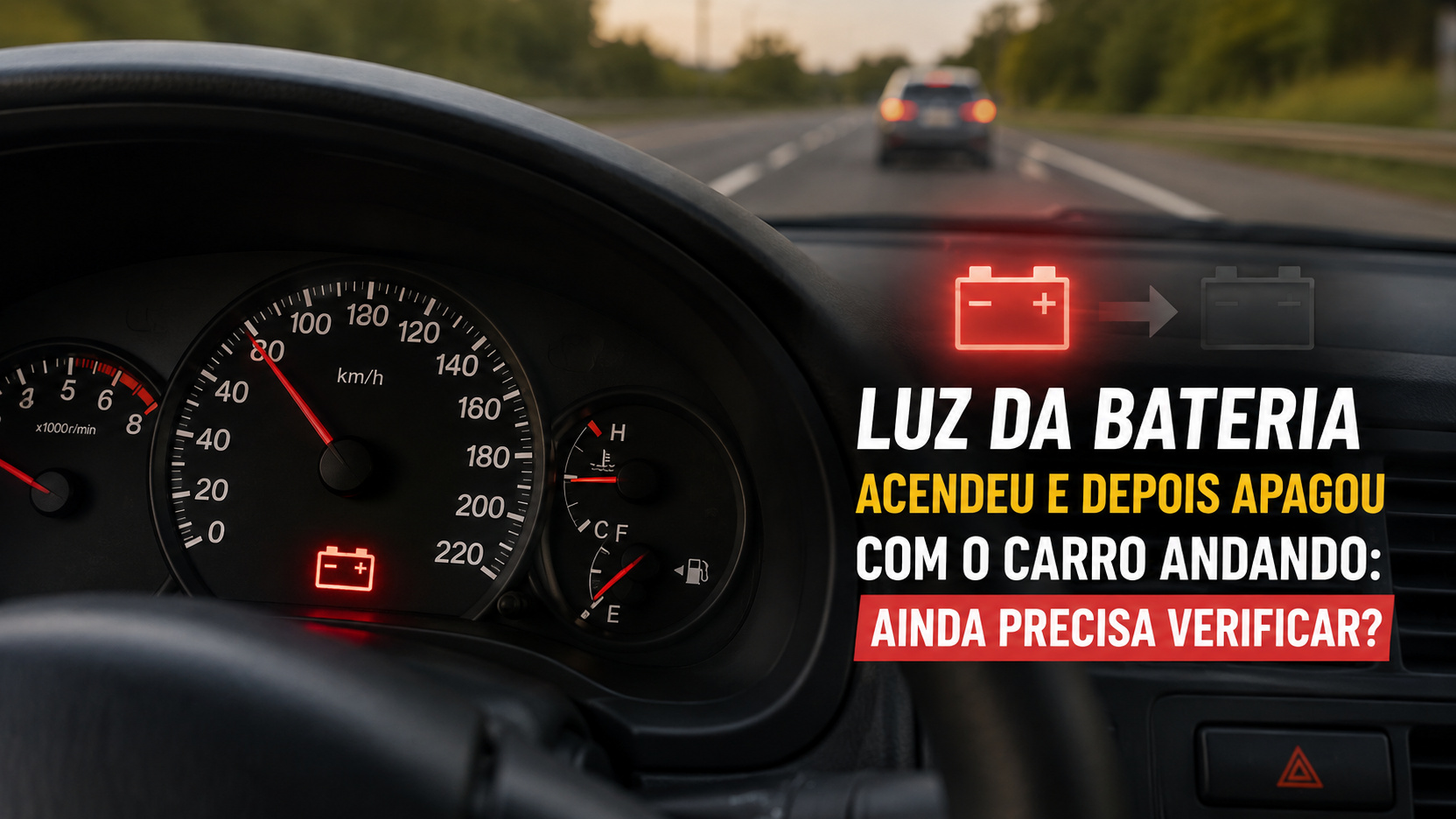
The alternator is not what turns the engine during the first start attempt; that job depends on the battery and starting system. However, a failed alternator may have discharged the battery before the no-start event. The clue is usually in the history: a battery warning light while driving, headlights weakening in use, repeated need for jump-start assistance or a battery that goes flat again soon afterward.
That is why, when a discharged battery has no obvious explanation, the charging system should also be tested once the vehicle is running again.
When to stop trying and call for assistance
- Burning smell, smoke, a very hot cable, or a swollen/leaking battery: stop trying to start the car and keep clear of the affected area.
- Abnormal metallic noise or a hard impact during the attempt: do not keep trying until the vehicle is evaluated.
- The engine stopped while driving and then began cranking very differently from normal: avoid further attempts; mechanical or timing faults need to be ruled out.
- Several attempts with no change in symptom: continued cranking only drains the battery and heats the starting system.
- You cannot identify the behavior with confidence: roadside assistance or a repair shop is the more prudent choice.
What a professional test can separate
An electrical diagnosis can measure battery condition and voltage, voltage drop across the cables, the command reaching the solenoid and starter current draw. If the engine cranks normally, the investigation moves to fuel supply/pressure, ignition, injection fault codes, sensors and the immobilizer. This sequence helps avoid replacing a battery or starter based on guesswork.
Practical summary
- Dashboard on + rapid clicks + lights dim: battery or an electrical connection becomes a stronger hypothesis.
- Bright dashboard + one click + no cranking: the starter/start circuit becomes more suspicious, but the battery still needs testing.
- Slow cranking: start by thinking about electrical supply and voltage drop.
- Normal cranking with no start: fuel, ignition, injection, sensors, security or timing become more likely.
- Total silence: in addition to the battery and starter, consider start authorization, relays, the key/switch, selector and immobilizer.
Hybrid, electric and vehicles with model-specific starting architectures can behave differently. In those cases, follow the owner's manual and prioritize qualified assistance.