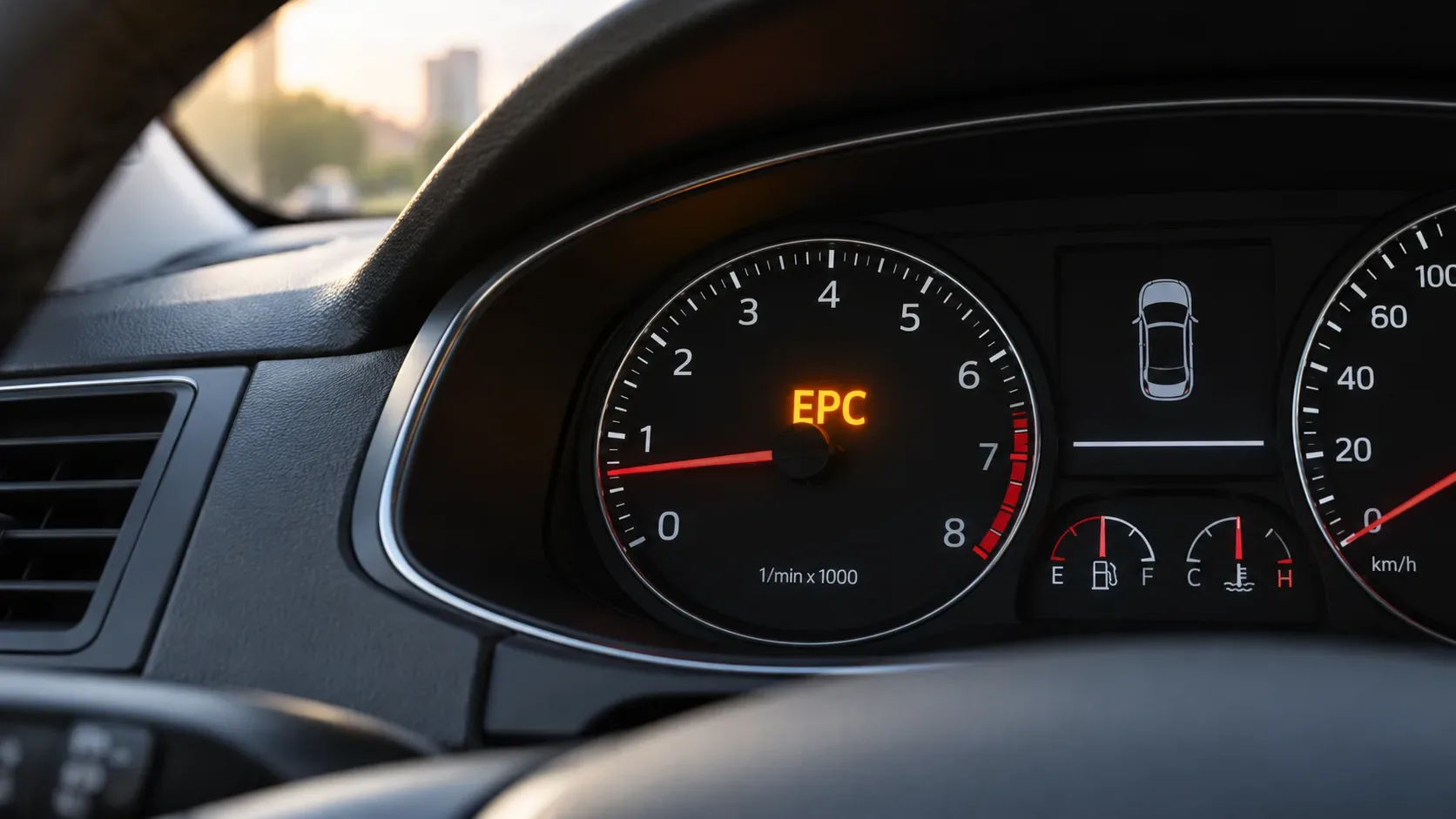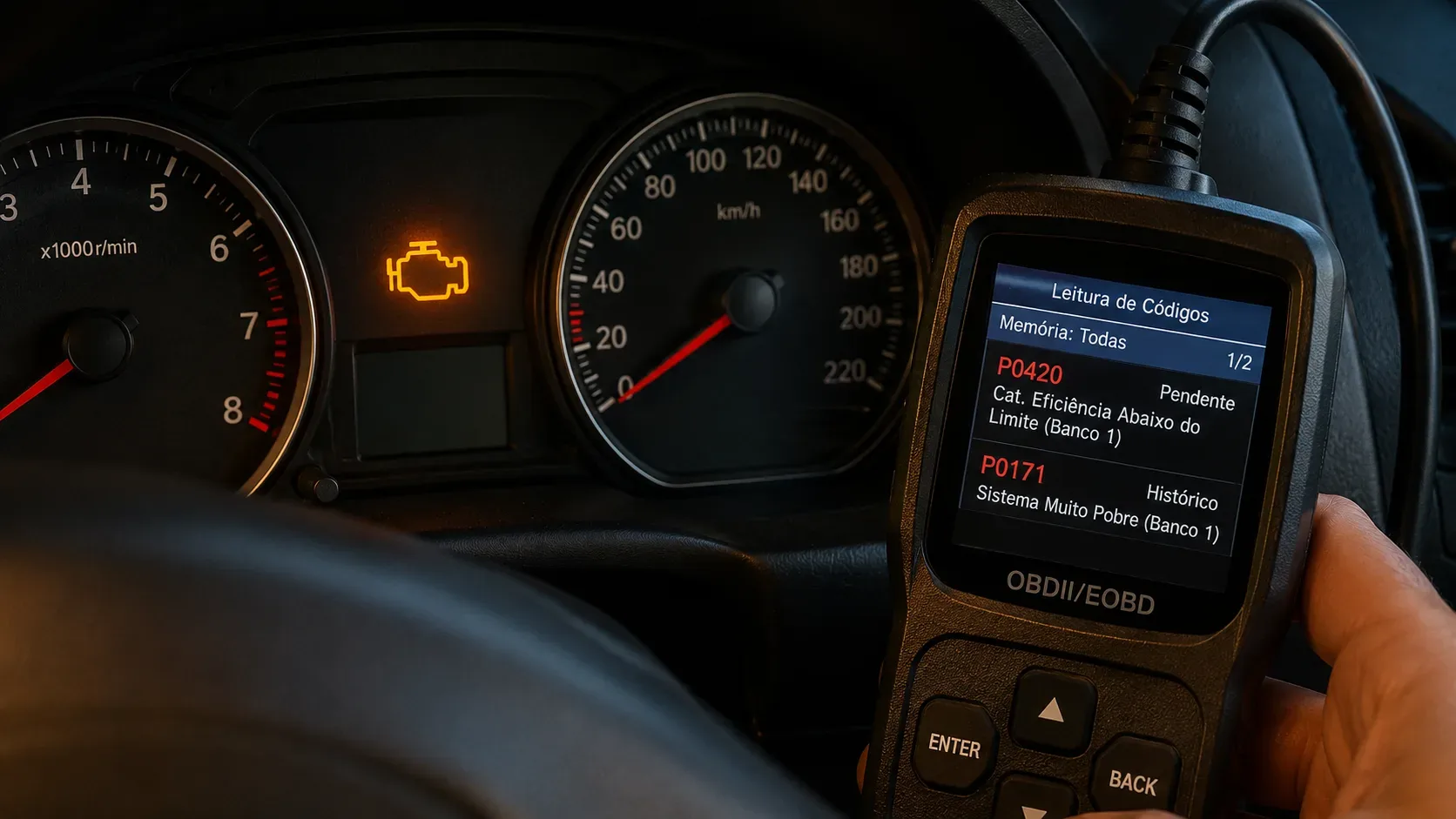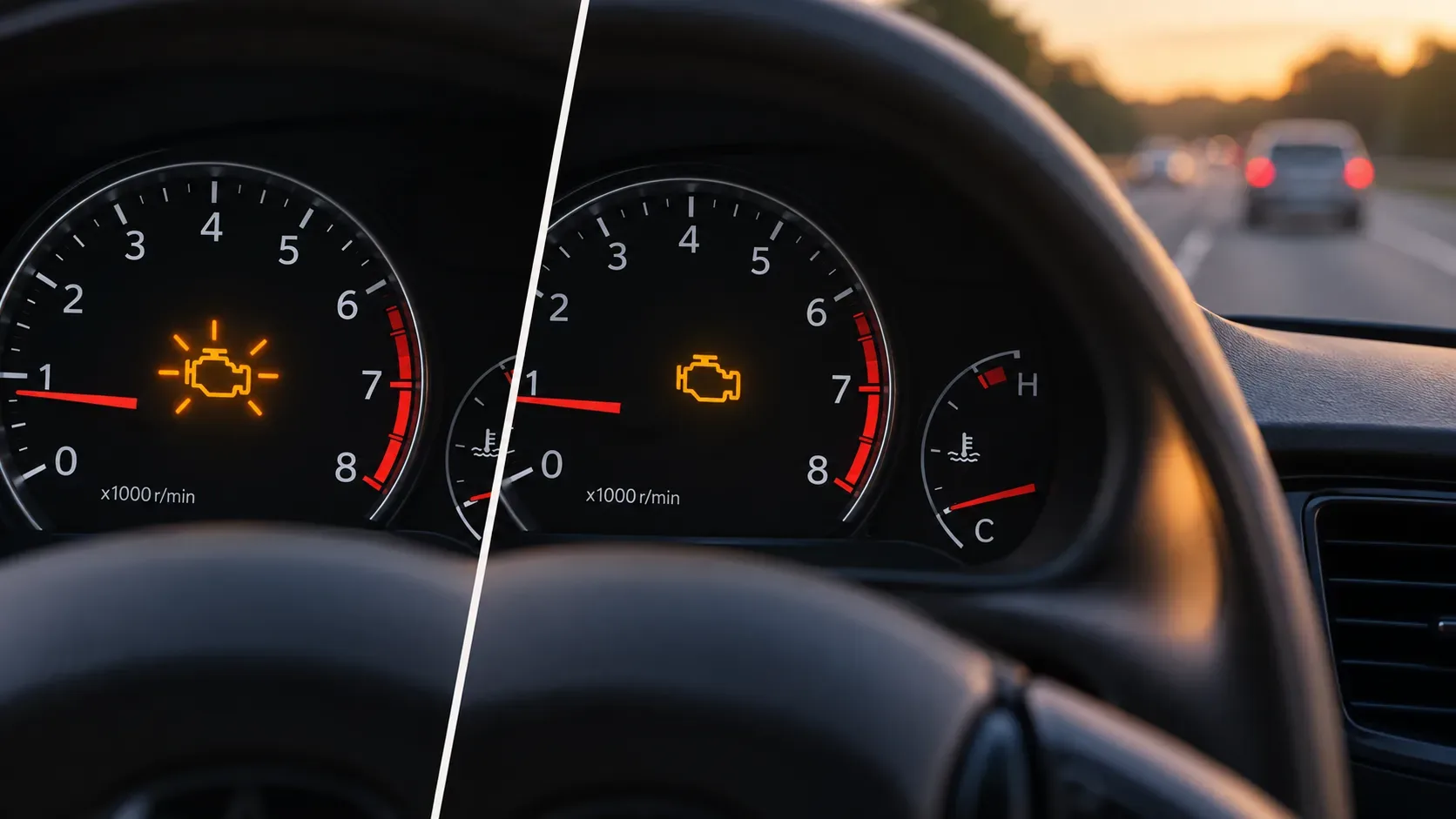
A flashing check engine light is more urgent than one that stays steadily lit. In Ford owner’s manuals, a malfunction indicator lamp that flashes while driving is associated with a fault that can damage the catalytic converter and reduce performance; the guidance is to avoid hard acceleration and high speeds and have the vehicle inspected immediately. When the light stays continuously on with the engine running, the onboard diagnostic system has detected an emissions-related fault and the vehicle also needs inspection, but that pattern does not, by itself, carry the same immediate catalyst-risk warning. Your vehicle’s specific owner’s manual always takes priority. See an example of Ford’s guidance.
Flashing vs. steady: what changes in practice
| Light pattern | What the pattern indicates | Prudent response |
|---|---|---|
| Flashing | It may indicate a misfire or another condition capable of raising exhaust temperature and damaging the catalytic converter. | Reduce engine load: avoid hard acceleration, high revs and high speed. Seek inspection immediately. If the vehicle is running very poorly or is unsafe to continue driving, stop in a safe place. |
| Steady | The OBD system has detected an engine/emissions-related fault, but the light alone does not identify which part failed. | Do not postpone diagnosis. If the vehicle is operating normally and no other critical warning is present, drive moderately only as needed to obtain diagnosis, following the vehicle manual. |
This difference explains why two drivers seeing the same amber engine symbol can receive different advice. What matters is not only which symbol appeared, but how it is illuminated and how the vehicle is behaving.
Quick decision tree
- Is the light flashing? Ease off the accelerator, reduce engine demand, and avoid hard acceleration or high speed. Do not treat it like an ordinary amber light that can be ignored indefinitely.
- Is the engine shaking badly, misfiring, losing substantial power, or becoming difficult to control safely? Find a safe place to stop. Trying to maintain speed under those conditions can worsen damage and create a traffic hazard.
- Did a separate critical warning also appear, such as low oil pressure or excessive coolant temperature? Follow that warning’s procedure. In Ford manuals, those alerts can require stopping the vehicle as soon as it is safe and shutting the engine off. See the guidance for critical warnings.
- Is the light only steady and the vehicle still feels normal? Arrange diagnosis soon, avoid aggressive driving, and watch for any change in behavior.
- Did the light change from steady to flashing? Treat the situation as more urgent from that moment and follow the response for a flashing light.
Why a flashing light raises the urgency
The central issue is heat. A combustion misfire can send unburned fuel into the exhaust. When that fuel reacts in the catalytic converter, it can drive exhaust-system temperatures very high. Ford warns that while the malfunction indicator lamp is flashing, excessive exhaust temperatures can damage the catalyst and other components; some manuals also warn of a fire risk.
That is why slowing down is not the whole idea: the real goal is to reduce load and avoid conditions that demand a lot of power. A gear, hill, or passing maneuver that forces the engine can matter more than the exact number on the speedometer. “Avoid hard acceleration and/or high speeds” is more useful than inventing a universal speed limit, because vehicles and situations differ.
When to slow down and when to stop
Reduce engine demand when
- the check engine light is flashing but the vehicle still responds predictably;
- there is no separate critical warning requiring a stop;
- you can safely continue a short distance to an appropriate service location, consistent with the owner’s manual.
Stop as soon as it is safe when
- driving becomes unsafe because of severe power loss, very rough running, or unpredictable response;
- there is smoke, a strong fuel or burning smell, or another sign suggesting immediate risk;
- an independent oil-pressure, overheating, brake, or other critical warning instructs you to end the trip;
- your model’s owner’s manual requires stopping for the combination of warnings shown.
A steady light does not automatically turn every trip into an emergency stop, but it is also unwise to normalize a flashing light and “see if it clears.” The priority is to keep engine load low and choose a safe place for diagnosis or assistance.
A steady light does not mean “replace this part”
The check engine light, technically the malfunction indicator lamp (MIL), is part of the onboard diagnostic system. It tells you the computer detected a condition outside the expected range, but the dashboard symbol does not condemn a specific sensor, spark plug, ignition coil, catalytic converter, or any other part.
The useful next step is to read diagnostic trouble codes (DTCs) and the information stored by the system. The U.S. Environmental Protection Agency (EPA) explains that an OBD scan tool retrieves codes that help pinpoint the problem and that repairs should follow manufacturer-recommended procedures. In other words, the code is a technical clue for diagnosis—not automatic permission to replace the component named in a code description. See the EPA’s guidance on the Check Engine light and OBD diagnosis.
Avoiding “parts swapping by guess” therefore means separating three stages: dashboard warning, data retrieval, and confirmation of the cause. Skipping confirmation can replace a good part while leaving the real fault active.
What to note before diagnosis
- whether the light was steady from the start or began flashing;
- whether the pattern changes at idle, under acceleration, uphill, or at cruising speed;
- whether there is shaking, misfiring, power loss, hard starting, or an obvious increase in fuel consumption;
- whether fueling, maintenance, or another event happened immediately before the warning;
- whether other dashboard warnings appeared at the same time;
- if an OBD code has already been read, write it down without clearing memory before evaluation.
These details help a repair shop reproduce the condition and interpret the code in the correct context.
What to avoid
- Continuing to accelerate hard with a flashing light just to see whether performance returns.
- Buying a part solely from the code name without testing the actual cause.
- Clearing codes before diagnosis when the goal is to understand the fault; doing so can erase useful information and change OBD monitor readiness status.
- Ignoring separate critical warnings because the check engine light is amber. An oil-pressure or temperature warning may require more urgent action.
Quick questions
Can I keep driving with a steady check engine light?
If the vehicle is operating normally and no other critical warning is present, it is often possible to drive moderately for the time needed to obtain diagnosis. That does not mean the fault can be ignored. Check your model’s manual and avoid long trips or demanding driving until the cause is known.
What if the light is flashing?
Treat it as more urgent. Reduce engine load, avoid hard acceleration and high speeds, and seek immediate inspection. If the vehicle runs very poorly, loses severe power, or shows another risk sign, stop as soon as there is a safe place.
Does a cheap scanner complete the diagnosis?
It can be useful for reading codes, but a code by itself does not prove which component needs replacement. The code must be interpreted with symptoms, vehicle data, tests, and manufacturer procedures.
Can a steady and a flashing light have the same underlying cause?
Some causes can overlap, but the illumination pattern matters because the system may flash the MIL when it detects a condition with greater immediate damage potential, especially a misfire. The practical response should therefore follow the more urgent pattern being displayed.
Decision summary
Flashing: immediately reduce engine demand, avoid hard acceleration and high speed, and arrange inspection without delay. Steady: obtain diagnosis soon; the light indicates a detected fault, not a specific part. Severe symptoms or another critical warning: stop in a safe place and follow the vehicle manual. The goal is to protect the catalytic converter, prevent the fault from worsening, and avoid replacing parts by guesswork.