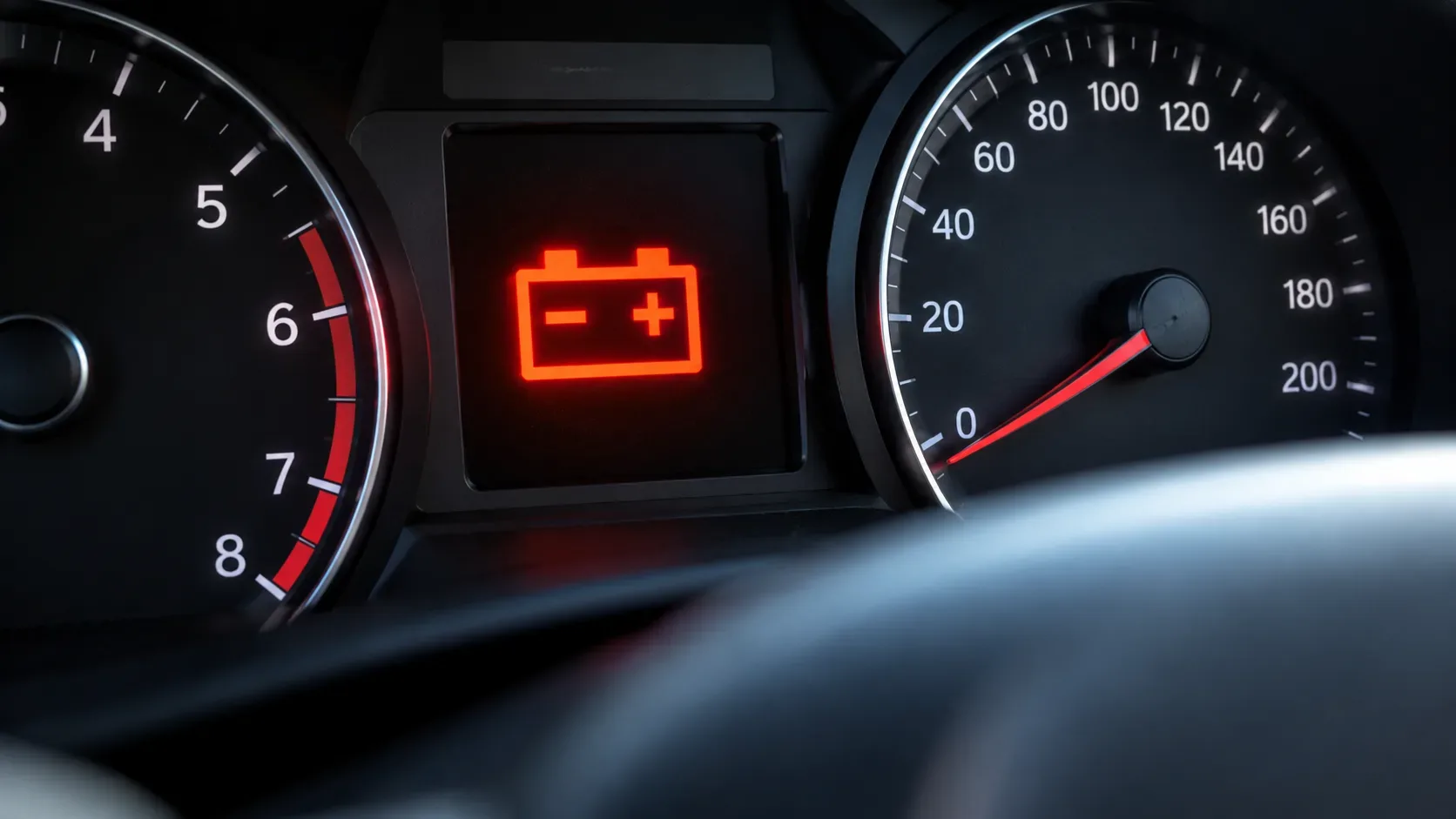
If the battery warning light stays on while the engine is running, treat it as a possible charging-system fault, not proof that the battery simply needs replacing. Find a safe place to stop, switch off only nonessential electrical loads while doing so, and arrange inspection or roadside assistance. The car may keep running for a while on stored battery power, but there is no reliable distance or time before a breakdown.
What does the light mean with the engine running?
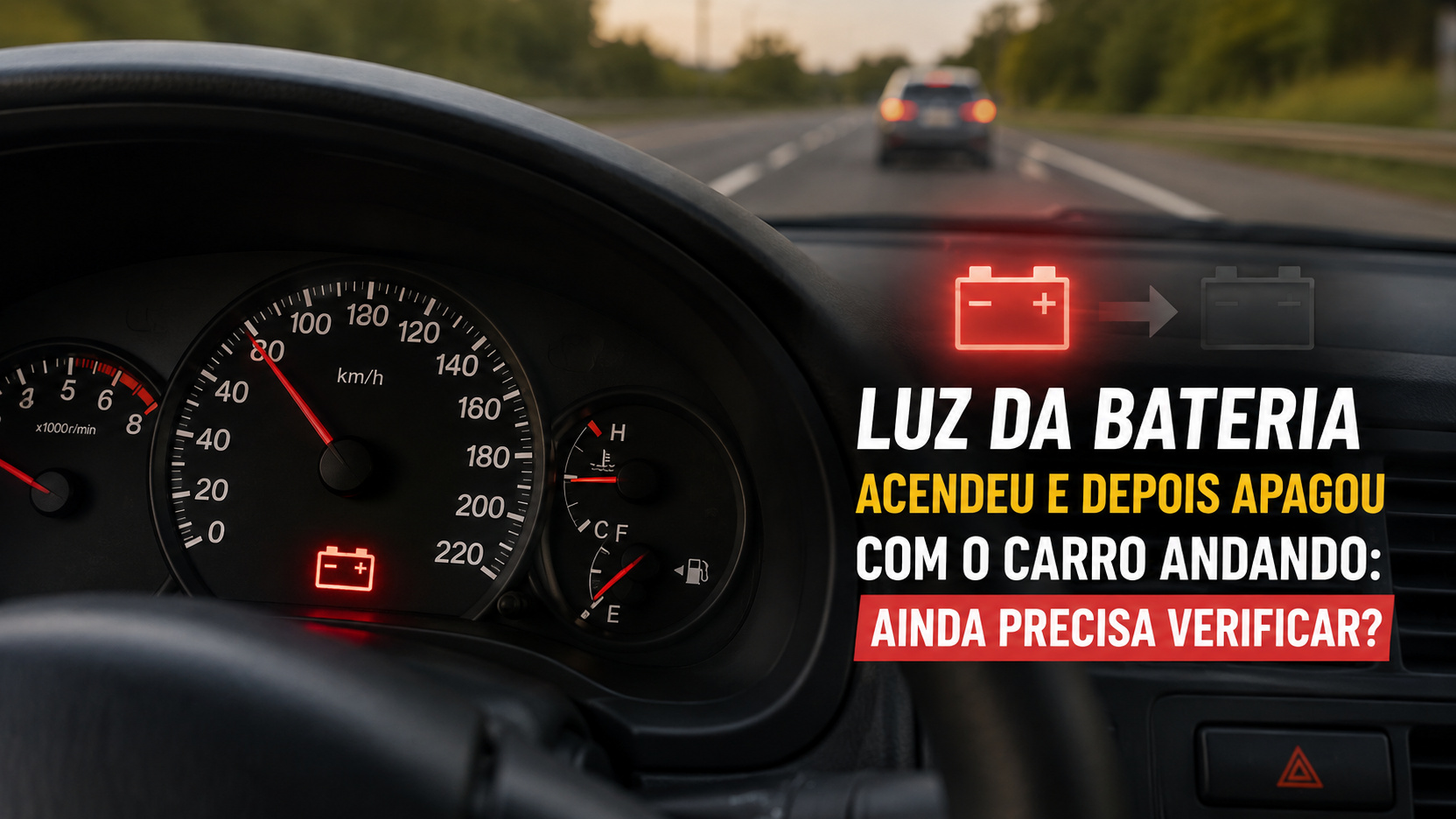
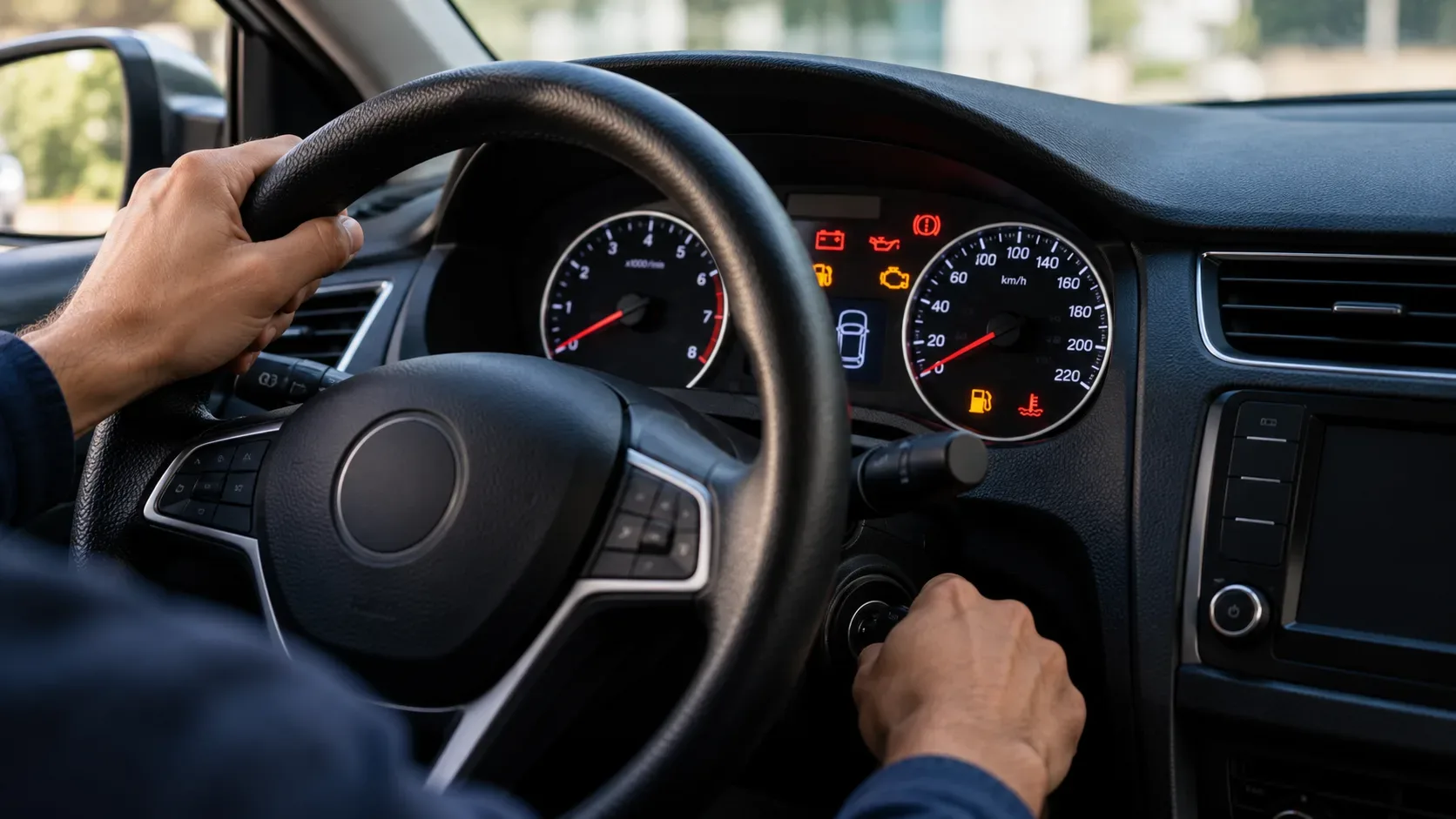
The battery icon normally appears during the ignition warning-light check and goes out after the engine starts, as described in the vehicle manual. A light that stays on, appears while driving, or repeatedly returns with the engine running is a concern. It generally indicates insufficient electrical charging or a detected charging-system problem. A battery-shaped icon does not identify the failed component by itself.
With the engine running, the alternator, where fitted in the vehicle's architecture, helps supply electrical equipment and recharge the battery. If generation or an electrical connection fails, the battery's reserve may temporarily support the system. As that reserve falls, electrical functions can fail and the engine may stall. The precise meaning of messages and the recommended procedure differ by model; consult the owner's manual.
What to do as soon as you notice the warning
- Keep control of the car and find a safe stopping place. Signal normally and avoid stopping in a traffic lane or unprotected location. Do not try to reach a distant workshop simply because the car still moves.
- Switch off nonessential loads if you can do so without distracting yourself. Air conditioning, the rear-window defogger and audio may be dispensable; keep lighting, signals and all other safety-critical functions operating.
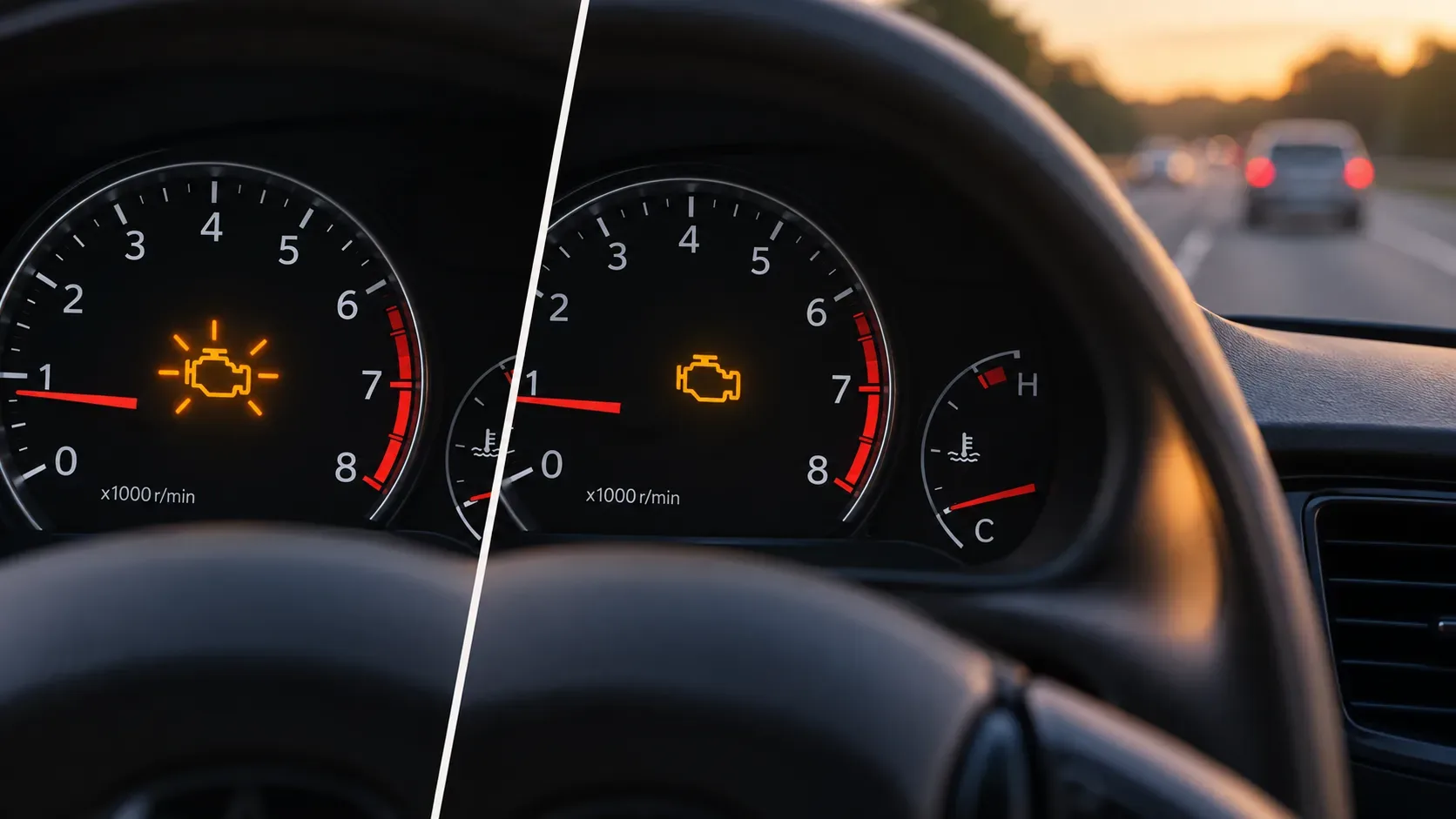
- Watch for other alerts and symptoms. A temperature warning, overheating, belt noise, burning smell, dimming headlights, failing instruments or loss of operation increases the urgency. If the engine overheats, stop as soon as it is safe and turn it off.
- Once safely parked, turn off the engine and request assistance. If the warning remained on while driving, recovery for diagnosis is the prudent option rather than risking another journey. The car may not restart.
On a motorway or another hazardous road, follow local road-safety and assistance instructions. Do not open the hood in an unsafe location, touch belts or fans, or attempt repairs while the engine is running.
Battery, alternator or connection: how can you tell?
| Possible cause | Signs that may occur | What establishes the cause |
|---|---|---|
| Weak or deteriorated battery | Slow cranking, needing a jump-start, or difficulty starting after parking. | A battery-condition test together with a charging check; these symptoms alone do not rule out alternator failure. |
| Alternator or regulator | Light on while running, fluctuating or dim headlights, accessory faults and possible engine stalling. | Testing charging-system output to the manufacturer's specifications. |
| Drive belt | Unusual noise or a missing, loose or damaged belt, on designs where a belt drives the alternator. | Professional inspection of the drive and its components. On some engines the belt drives other systems too. |
| Cables, terminals and connections | Poor contact, visible corrosion or an intermittent warning. | Inspection and electrical testing of connections, grounds and the charging circuit. |
These are clues, not a definitive diagnosis. AAA lists the alternator, regulator, belt, battery and wiring among possible causes and notes that symptoms overlap. Replacing a battery without checking charging may leave the original fault unresolved.
What to check once the car is stopped
Without taking anything apart, note when the warning appeared, whether it stayed on or flashed, what other lights appeared, and any electrical loss or unusual noise. With the car off in a safe location, a visual-only check may reveal an obviously loose cable, corrosion or belt damage if those items are accessible. Do not touch hot components, moving parts, exposed terminals or high-voltage systems. Hybrids and electric vehicles may use different charging architectures; follow the manufacturer's instructions strictly.
Ask the workshop to assess the battery and charging system together: battery condition, charging voltage and operation against model-specific specifications, alternator drive if applicable, regulator, connections and grounds. One voltage reading, or the mere fact that the engine restarts, does not finish the diagnosis. Do not disconnect a battery terminal with the engine running to “test the alternator”: this can cause electrical problems and is not an appropriate test.
When should you stop and request a tow?
If the battery light comes on and stays on while driving, stop at the first safe location and seek inspection; recovery is the safer choice to avoid an unexpected stall in traffic. If there is a high-temperature warning, burning smell, smoke, loud noise, lighting or instrument faults, or the engine begins to misfire or stall, ending the journey is even more urgent. There is no universal rule such as “another 10 km is fine”: remaining range depends on available charge and electrical demand.
Even if the light goes out by itself or after restarting, a recurring episode calls for testing. Jump-starting may get a car running without correcting a charging fault, and the breakdown can recur. Your vehicle's manual takes precedence for model-specific warnings and procedures.