An approved precautionary report is a useful part of the decision, but, as a rule, it does not eliminate taking the car to a trusted mechanic. The reason is simple: each assessment answers a different question. A document can help identify structural, cadastral or origin signs within the contracted scope, while the mechanical inspection looks for defects, wear and actual functioning of the systems. The history check, transfer inspection and test drive add other evidence that none of these steps provides alone.
The best way to interpret an "approved" is to ask: approved in what, with what criteria, on what date and based on what data? Without these answers, the word can convey greater security than the document actually offers.
Short answer: approved report does not terminate the purchase
The guidance material from consumer protection agencies separates these checks. The used vehicle buying guide published in 2026 by Detran-SP and Procon-SP recommends evaluating the car, if possible, with a trusted professional mechanic, requesting a test drive and, separately, investigating the vehicle's background on official portals. Procon-PR also warns that expressions such as "inspection", "expertise" and "precautionary report" can cover different scopes and advises the buyer to demand clarity about what was actually examined. Even when there is previous expertise, the agency's recommendation is to consult a trusted mechanic before purchasing.
This does not make the precautionary report useless. It can reduce important risks. The mistake is to treat it as a universal certificate that the car is good in every way.
Do not confuse a precautionary report with a transfer inspection
The vehicle identification inspection used in transfer processes has regulatory purposes. Contran Resolution No. 941/2022 establishes that this inspection verifies the authenticity of the vehicle identification and documentation, the legitimacy of the ownership, the presence and functioning of mandatory equipment and the regularity of changes to the original characteristics and aggregates.
This scope is relevant to the regularization of the vehicle, but is not equivalent to a complete purchase evaluation. The transfer inspection is not designed to estimate clutch life, diagnose oil consumption, measure engine compression, identify intermittent suspension noise, or tell you how much the buyer is likely to spend on maintenance in the coming months.
The operational procedure varies between Detrans, although the national normative basis is common. Therefore, whoever is closing a deal should consult the state agency where the transfer will be made and not assume that a commercial report presented by the store replaces the inspection required in the administrative process.
Evidence matrix: what each assessment really delivers
Precautionary report
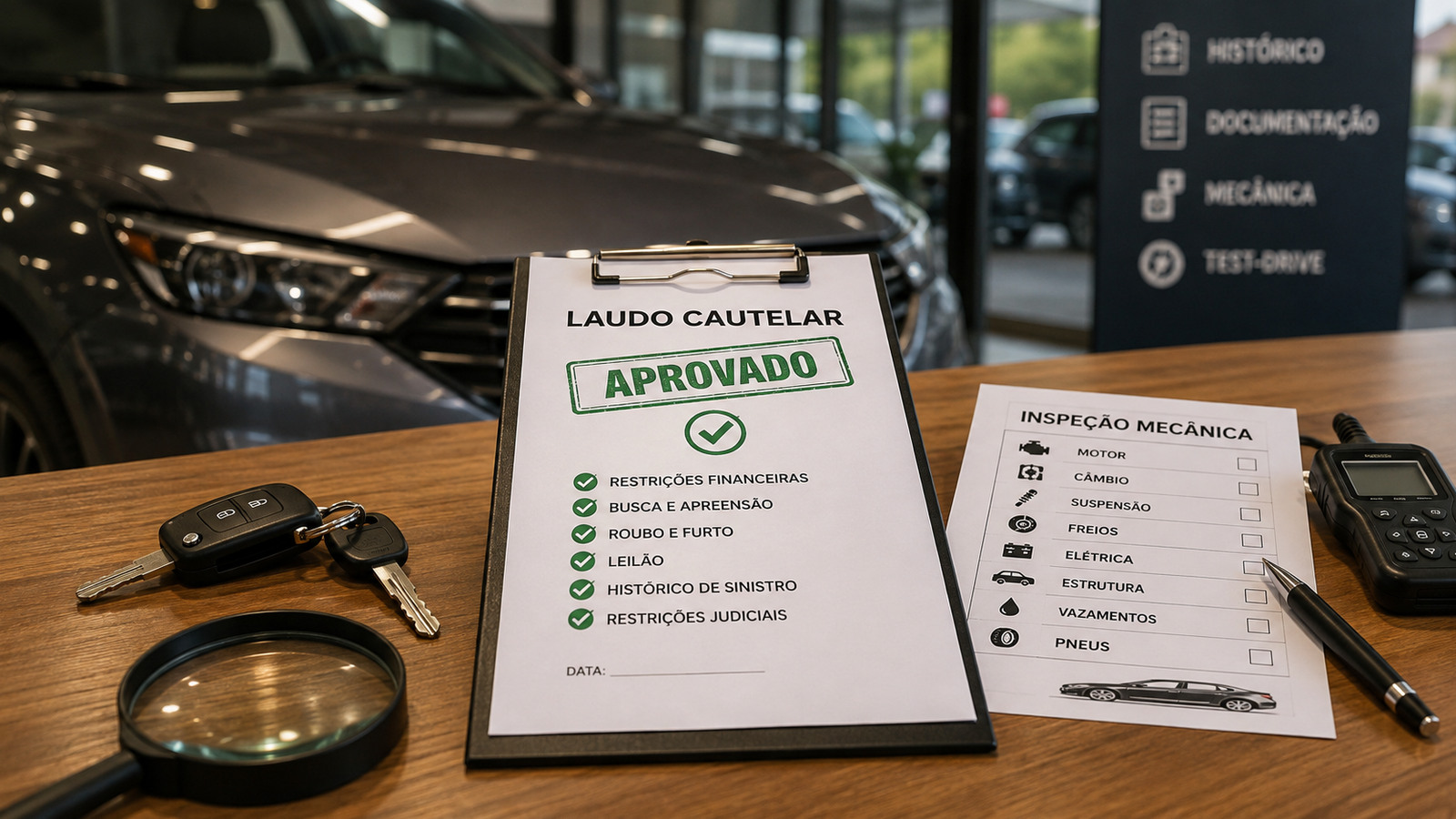
The so-called precautionary report is used in the market as a pre-purchase assessment, but the name alone does not tell you exactly what was examined. Depending on the company and the contracted package, the service may include checking identifiers, visual analysis of the structure and bodywork, painting measurements, database research, photographic records and other items. In other cases, the scope may be much more limited.
For this reason, the document is only valid as evidence on the points it claims to have verified. Before
accept the "approved" conclusion, check the date, vehicle identification, issuing company, evaluated items, reservations, photos, methodology and origin of the queries. A report without a description of the scope should not be interpreted as proof that everything important was examined.
What it does not automatically prove is the complete mechanical condition of the car. It also does not guarantee that a fault will not appear later, that there has never been an unrecorded repair, that all events in the vehicle's life are on some consulted basis, or that any item outside the company's methodology is in good condition.
History and debt consultation
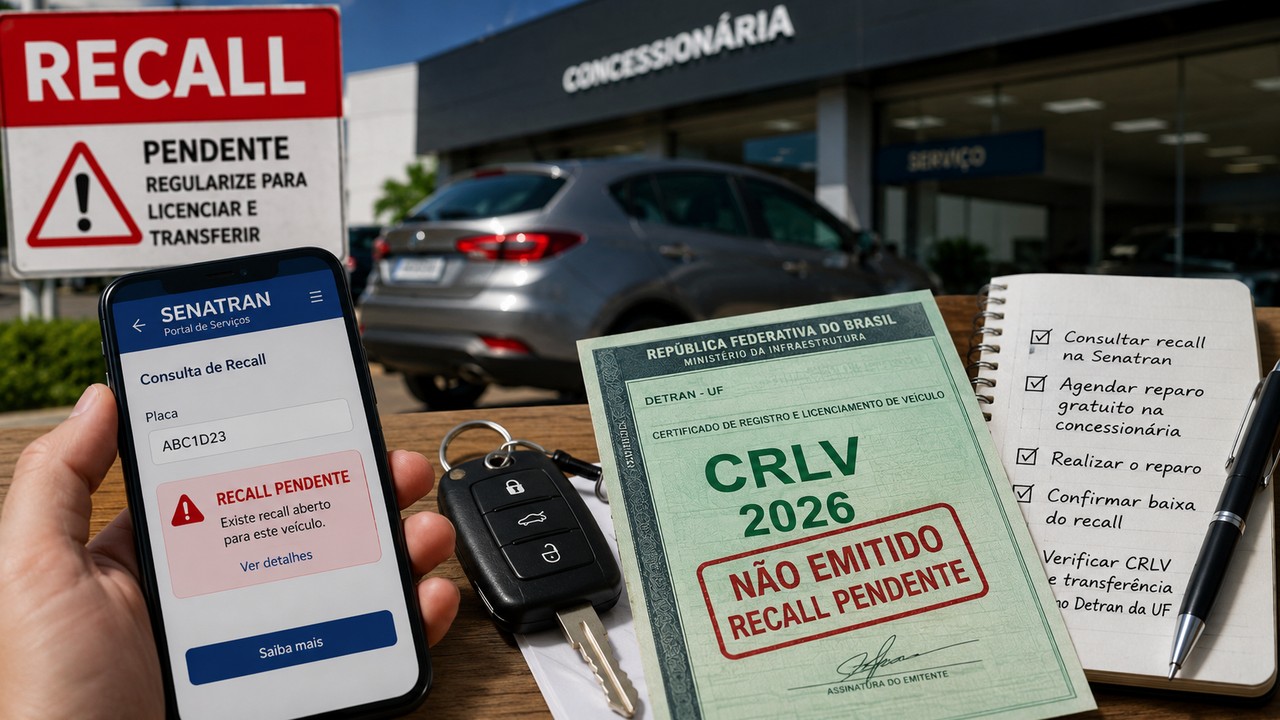
The history consultation answers registration and documentary questions. In São Paulo, the Detran-SP/Procon-SP guide instructs consumers to check background information on official portals and informs that restrictions, reports of theft or theft, recalls, Renainf fines, sales reports and other available information can be checked. The state debt and restrictions service also shows administrative, financial and judicial pending issues, as well as fines, IPVA and licensing status.
This consultation is particularly useful at the beginning of the negotiation, because it can reveal impediments before the buyer spends on other evaluations. It is also worth repeating it close to payment, as the registration situation may change.
The limit is that the database does not physically examine the car. A record without notes does not tell you if the engine is burning oil, if the suspension knocks, if there was a bodywork repair that was never registered or if the air conditioning is about to require maintenance. Absence of record should also not be confused with proof that a certain event never occurred.
Transfer inspection
The transfer inspection is a regularization stage. Its strength lies in checking identification, documentation, ownership, mandatory equipment and relevant changes to traffic rules. In state processes, the report issued by a qualified company is used to continue the transfer when required.
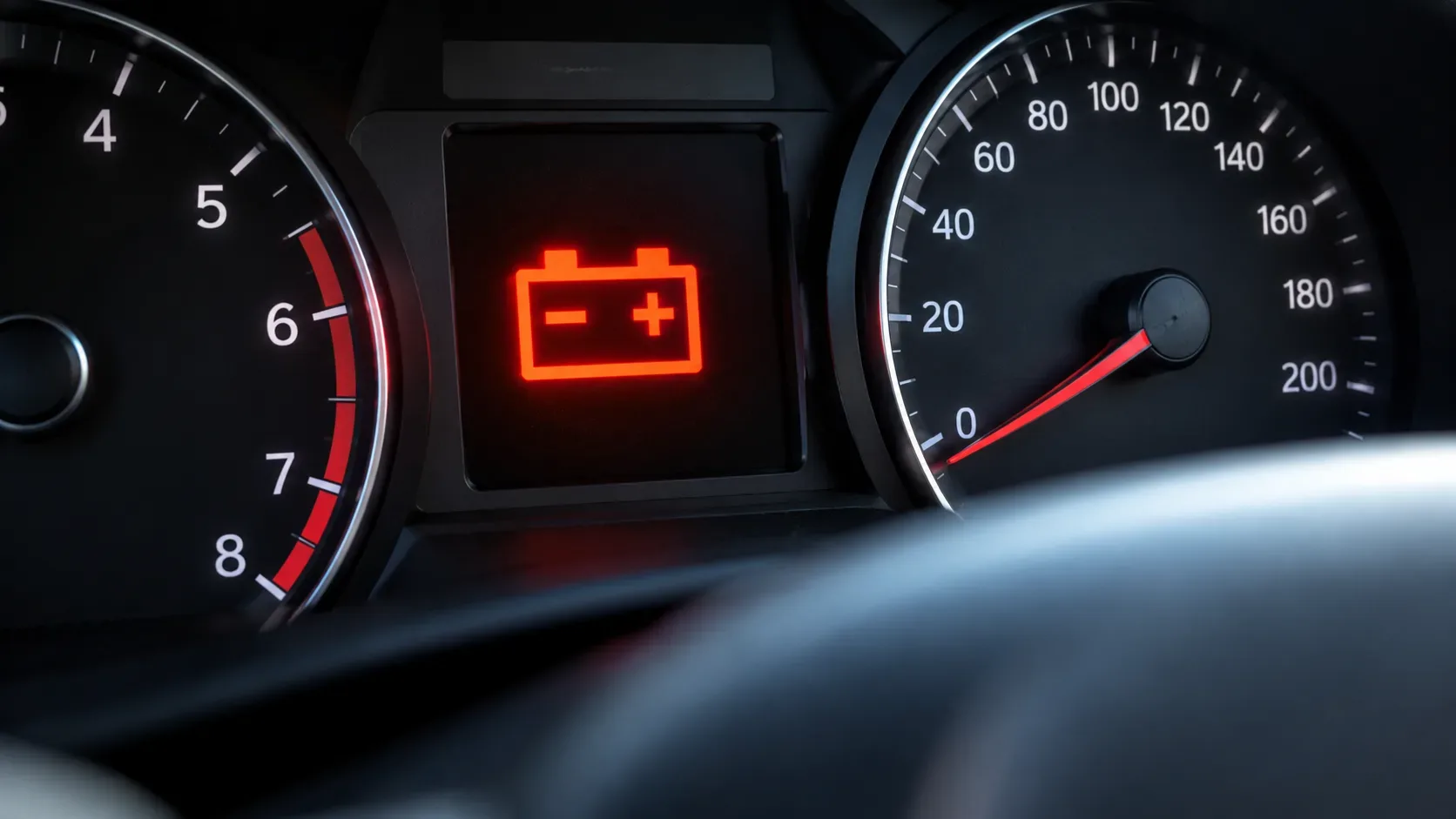
It does not replace the pre-purchase inspection because the question is different. A vehicle may be suitable for transfer and still have delayed maintenance, high wear, leaks, tires at the end of their useful life, weak battery or components that generate expenses soon after purchase.
Independent mechanical inspection
Mechanical inspection is the step that seeks to answer whether the car works well today and whether there are signs of defects, wear or poor maintenance. Procon-PR guides a check of the mechanical, hydraulic, electrical and bodywork parts and draws attention to the engine, fluids, brakes, clutch and safety items. The 2026 Detran-SP/Procon-SP guide also recommends the presence of a trusted professional when evaluating the vehicle.
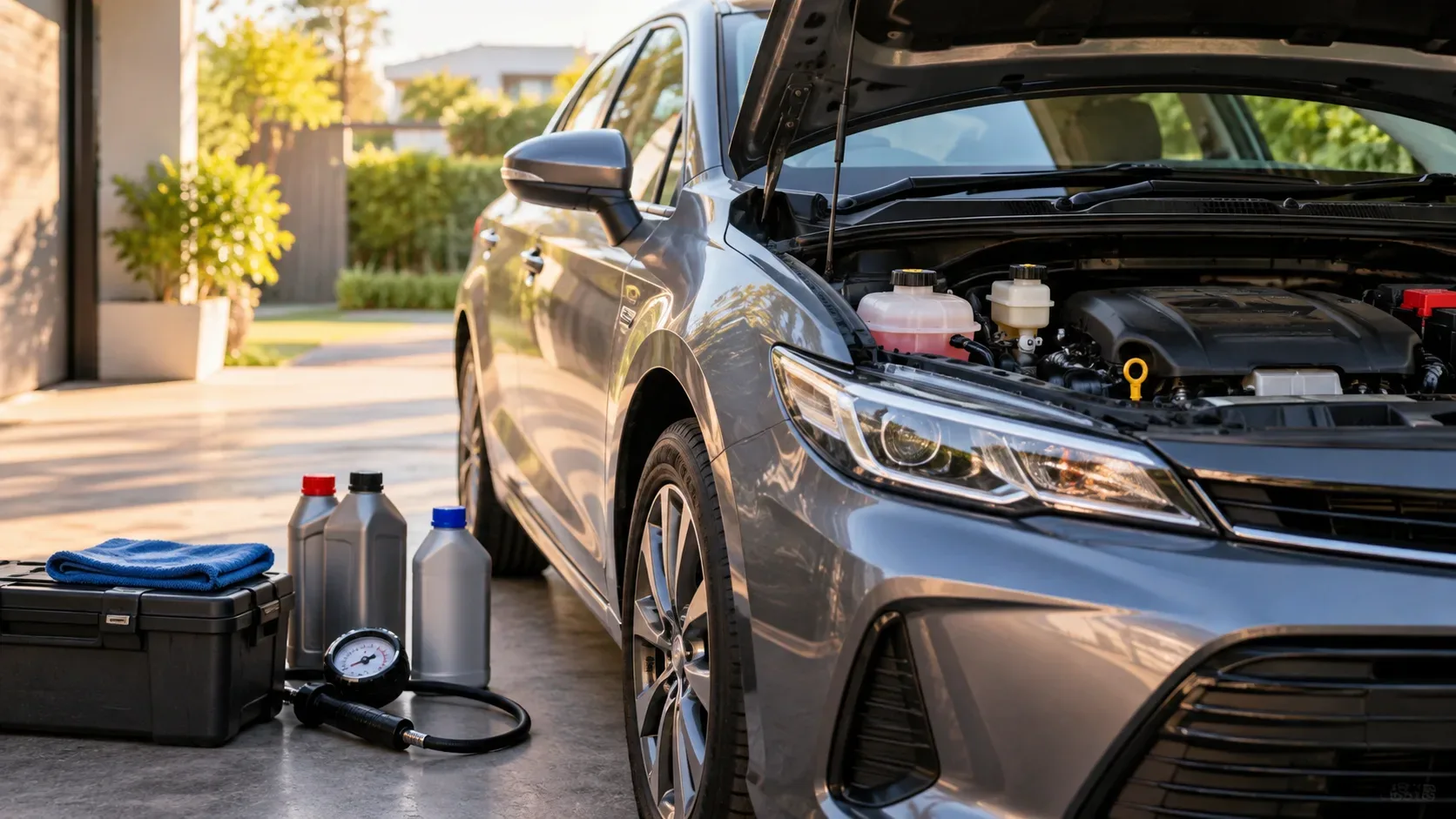
In practice, a good pre-purchase inspection may include cold starting, noises, leaks, condition of fluids, cooling, belts, battery, electrical system, brakes, steering, suspension, tires, underbody, signs of repair and, when it makes sense, reading modules with a scanner. The scope must be agreed beforehand, as not every workshop offers the same level of diagnosis.
Ideally, the professional is chosen by the buyer and has the freedom to examine the car. When the evaluation is carried out exclusively by someone indicated by the seller, the
independence of evidence is reduced, even if the professional is technically competent.
A mechanical inspection is also not an absolute guarantee. Intermittent faults may not appear on the day, components may break later and some diagnostics require disassembly that is not part of a pre-purchase. The difference is that it directly attacks the risk that a documentary or structural report cannot eliminate: the functional state of the vehicle.
Test drive
The test drive transforms part of the evaluation into real behavior. The Detran-SP/Procon-SP guide recommends this test to observe, among other points, clutch, gearbox, brakes, tires, balancing and steering alignment.
During driving, vibrations, pulling, difficulty engaging, noises under load, response failures, suspension noises or braking behavior may appear that do not appear when the car is stationary. It's valuable evidence because it puts different systems to work at the same time.
But the test drive does not replace an elevator, scanner, checking fluids, history or inspection. A car can run seemingly well for a few minutes and still hide expensive problems. Testing should complement inspection, not compete with it.
Approved report: what this does not guarantee
The word "approved" needs to be read within the document. It means that, according to the methodology applied and the criteria of that evaluation, a condition that would lead to failure was not found. It does not automatically mean "car without accident", "car without repainting", "never been to auction", "perfect mechanics", "no maintenance to be done" or "no risk of future defect".
If the report states that it consulted a certain database and did not find a record, the correct conclusion is that there was no such entry in the database consulted at that time. This is different from claiming that the event never happened. Likewise, a structure considered adequate does not, by itself, inform how much clutch, shock absorbers, tires, battery or other wear components remain.
It is also important to verify the authenticity of the document. The 2026 Detran-SP/Procon-SP guide recommends that antecedents be consulted directly on official portals and warns of the difficulty of confirming the authenticity of paper reports or reports delivered by third parties. When there is a commercial report, look for means of validation with the issuing company itself, such as code, online consultation or contact through official channels.
Which combination to use before payment
In a common used purchase, the evidence works best in sequence. The official consultation of debts, restrictions and antecedents must happen early, because it can eliminate an unviable business at no mechanical cost. Afterwards, the precautionary report can be analyzed as a technical document within the declared scope. An independent mechanical inspection and test drive then checks the functional status. The inspection required for transfer is part of the regularization process and should not be confused with these decision stages.
If the store already delivers a precautionary report, it can be used as information, but it does not need to be the only source. The higher the purchase price, the more important it is to separate the evidence produced by the seller from the evidence chosen by the buyer. A recent, detailed, verifiable report issued by an independent company is more useful than a generic sheet with just the word "approved".
If the vehicle has a price well below the market, mileage discrepancies, signs of repairs, noises, warning lights, incomplete documentation or the seller's resistance to an independent evaluation, the solution is not to reduce checks. These signs require further investigation before making any payment or irreversible commitment.
And the store warranty, doesn't it resolve later?
When the used vehicle is purchased from a commercial establishment, there is protection under the Consumer Protection Code. The 2026 Detran-SP/Procon-SP guide informs the 90-day legal guarantee for durable products and deals with the purchase of a vehicle in a store within this protection. This is important, but it does not make the warranty a substitute for a pre-purchase inspection.
Discovering a problem later can mean immobilizing the car, time in the workshop, discussion about the origin of the defect and loss of use while the solution is sought. The inspection exists to reduce the chance of voluntarily entering into a problematic purchase; the guarantee exists to protect rights when a defect appears. They are different functions.
A practical order to decide without duplicating work
Start with the data that can be checked without disassembling anything: vehicle identification, documents, debts, restrictions and official records. Then, read the entire precautionary report and mark what it actually covered and what was left out. Next, take the car for an independent mechanical inspection and test drive it. Only after gathering this evidence does it make sense to treat the "approved" as part of a coherent set and move on to payment and transfer.
This order avoids two common mistakes. The first is to pay for a mechanical assessment of a car that already had a visible documentary impediment. The second is to approve the purchase only because a previous document found no problems within a scope that did not include complete mechanics.
The bottom line: don't look for one document that answers everything
Buying a used car safely does not depend on finding the "most complete" report and ending the analysis. It depends on combining questions and evidence. The precautionary report helps to investigate what was included in the expertise. The history query shows available records and pending issues. The transfer inspection meets identification and regularization requirements. The mechanic examines the functional status. The test drive shows how the car behaves in use.
Therefore, the answer to the initial question is no: an approved precautionary report, in itself, is not sufficient reason to waive the mechanical inspection. It should be read as a layer of information. The more clearly each step responds to what the previous one cannot prove, the less chance that the word "approved" hides a false sense of security.