The smell of sewage in the bathroom does not automatically point to a single defect. The odor can arrive through the drain, the sink siphon, a poor seal on the toilet connection or a problem with the network ventilation system. The most useful way to investigate is to locate where the smell is strongest, observe when it appears and just carry out simple checks, without dismantling fixed parts.
The technical point that unites these hypotheses is water closure: a layer of water maintained in siphons and other disconnectors to prevent pipeline gases from returning to the environment. Sanitary ventilation also participates in this control because it helps protect these closures and conducts gases into the atmosphere. When the odor appears, the main question is whether this water barrier has disappeared, whether there is accumulated residue, whether a seal has lost its tightness or whether the network is suffering from a problem that is not visible inside the bathroom.
Start by locating the point where the smell is strongest
Close the door for a few minutes, leave the bathroom unused and then enter again. Without touching your face to the openings, compare the odor in the vicinity of the floor or shower drain, the sink basin and siphon, and the base of the toilet. If there is more than one drain, compare each one. The goal is not to find absolute certainty by smell, but to reduce the number of suspicions.
It is also worth observing the moment in which the odor appears. If it becomes evident after a period in which the bathroom has hardly been used, a water lock that has lost water gains strength as a hypothesis. If it worsens immediately after flushing, draining a large volume of water or using other bathrooms, the investigation changes: sealing and ventilation of the network begin to deserve more attention. If the odor is constant and very concentrated in a single point, residues or local seal failure are also included in the diagnosis.
Drain: differentiate dry drain from siphoned drain
Not every drain blocks gases. The dry drain receives water, but does not have its own water protection. The siphoned drain includes a disconnector and maintains a layer of water that acts as a barrier. In many bathrooms, the floor can drain into a siphoned box, and this is where the water seal is located.
If the smell seems to be coming from the drain and the space has not been used for several days, pour clean water slowly and wait. If the odor clearly decreases after the drain receives water, this is compatible with loss of water closure due to lack of use. The improvement, however, does not prove that the entire system is correct: if the smell returns quickly even with normal use, the cause could be something else.
Without dismantling the piping, just remove the removable grille and check whether there is hair, soap, slime or other residue accessible in the surface area. These materials can produce bad smells on their own. Clean whatever is within reach and reinstall the grill. If the siphon box has removable internal components suitable for cleaning, follow the manufacturer's manual; do not force glued or locked parts.
Sink trap: water from the closure and dirt tell different stories
The siphon under the sink is a disconnector: its geometry keeps water in the sewer path. If the sink is rarely used, this water may decrease over time.. If there is frequent use and the odor still concentrates in the bowl or on the furniture, look for simple signs such as a leak, a loose fit, a poorly closed siphon cup or visible dirt accumulation on the valve and in the accessible section.
A safe test is to run water for a few seconds, turn off the tap and see if the smell reduces over the next few hours. If there is dripping or moisture in the trap, stop there: retightening or dismantling connections without knowing the type of seal can create a bigger leak. The useful diagnosis for the plumber is to inform that the odor is concentrated in the sink, whether it changes after using the water and whether or not there is apparent humidity.
Toilet bowl: observe the base, stability and timing of the odor
The toilet also connects to the sewer through a system that must remain sealed. In conventional installations, a sealing ring is used between the basin outlet and the drain point on the floor. Therefore, a concentrated odor near the base deserves attention, especially if the vessel seems to move, if the external seal is broken or if there are signs of humidity.
Do not use visible silicone around dishes as the only criterion. It helps with the finishing and fixing of certain models, but the sealing of the sewage connection depends on the set being installed correctly. If the odor becomes stronger near the base or appears after flushing, avoid removing the toilet to check. This disassembly requires access to the connection and may require replacement of the sealing ring.
Health ventilation: it is not the same thing as a window or extractor fan
Health ventilation belongs to the sewage network. It is made up of tubes that allow air circulation, protect water closures and conduct gases to the atmosphere, normally through terminations above the roof. Therefore, a window, a room ventilation grill or a bathroom exhaust fan cannot replace this system.
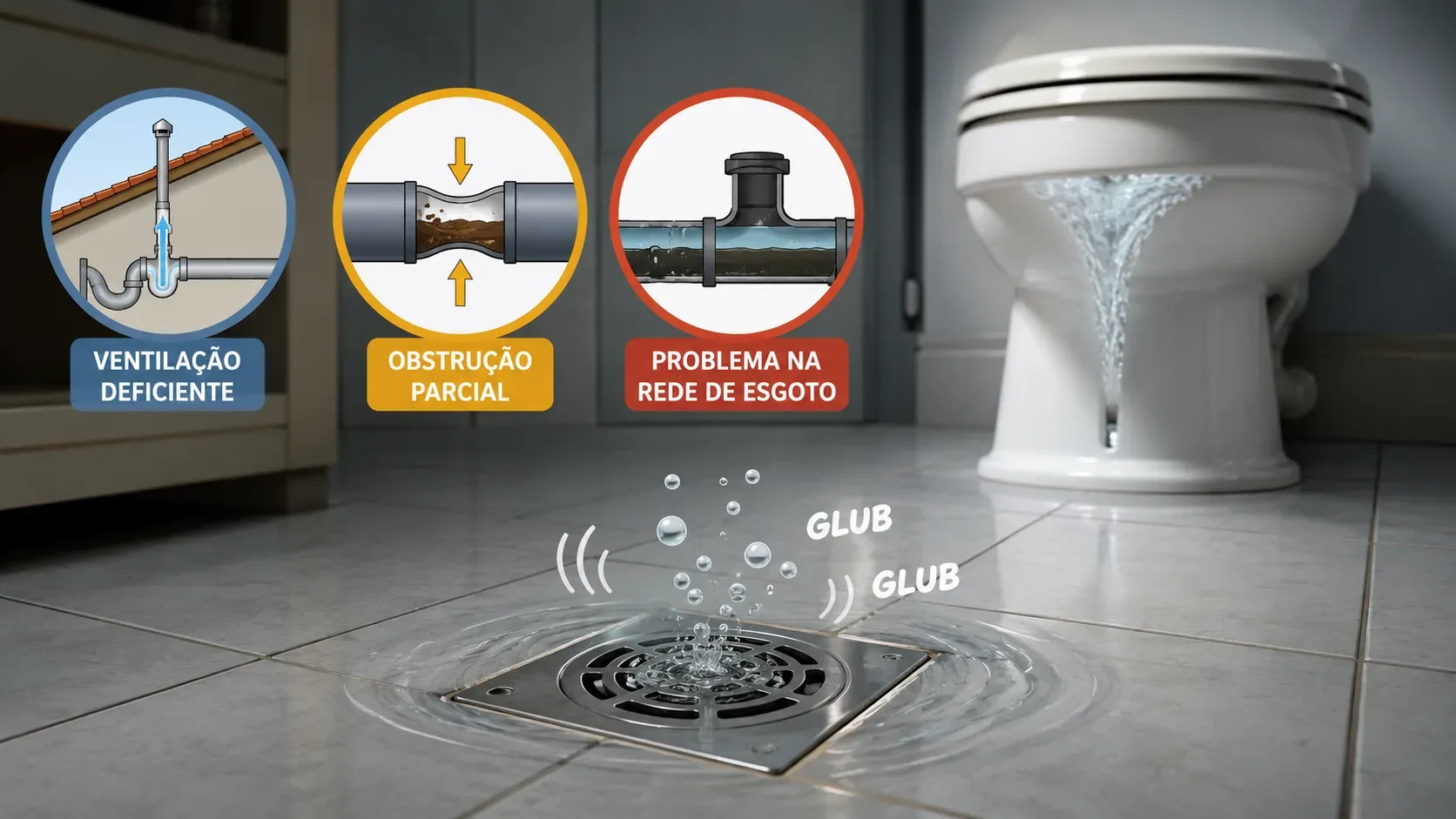
The suspicion of ventilation grows when the smell is not limited to a drain, when it appears together with bubbling noises, when a water shutoff seems to lose water despite normal use or when the problem coincides with discharges and drains at other points. These signs do not allow you to confirm on your own where the fault is, because the ventilation pipes are usually embedded or run up to the roof.
In an apartment, notify the condominium or building maintenance when the odor appears in more than one unit, in several bathrooms in the same area or after interventions on the roof and in technical areas. An obstruction, improper connection or ventilation change may be outside the unit and will not be resolved by cleaning the bathroom drain alone.
Use the sequence of symptoms to separate hypotheses
Smell after not using the bathroom for a long time
Start with the drain and siphon. Replace water and see if there is any improvement. If the odor disappears and only returns after another long period of non-use, the loss of water from the water shutoff is a plausible explanation. If you return on the same day, with normal use, do not treat water replacement as a permanent solution.
Strong smell near the drain even with daily use
Check accessible waste, condition of the grate and, if there is a siphon box, whether it holds water. Persistence of odor may indicate internal component out of position, faulty closure or connection that requires professional inspection.
Concentrated smell under the sink
Note the siphon and visible connections. Use of water that temporarily improves the odor points to the water closure region; moisture and dripping suggest seal or connection failure. If the part needs to be disassembled to confirm, terminate the home inspection.
Stronger smell at the base of the pot
See if the basin is firm and if there is moisture. Odor that appears or worsens after flushing makes toilet plugging an important suspect. Checking the sealing ring requires removing the basin and should be left to those with the appropriate tools and experience.
Smell in several spots or accompanied by bubbling
This combination weakens the idea of a single dirty drain and increases the suspicion of a ventilation problem or other condition in the network. In condominiums, record the times and ask if other units noticed the same. At home, tell the plumber which appliances were in use when the symptom appeared.
What is reasonable to do at home - and where to stop
Home inspection should focus on what is visible and reversible: locate the point of greatest odor, replace water in drains and siphons that may have been left unused, clean accessible waste and observe leaks or toilet movement. It is not necessary to pour aggressive products, mix chemicals or improvise seals to make this diagnosis.
Stop when the check requires removing the basin, opening the wall or floor, accessing the roof, dismantling glued pipes, moving condominium columns or intervening in a network that is returning sewage. In these cases, the risk of turning an odor into a leak, clog or finish damage is greater than the gain of continuing to test alone.
What to report to the plumber or the condominium
An objective description shortens the investigation. Inform where the smell is strongest, when it started, if the bathroom has been left unused, if the odor changes after pouring water into the drain, if it appears after flushing, if there is bubbling, if there is a visible leak and if other bathrooms or apartments have the same symptom.
Also say if there has been recent work, changing of crockery, work on the roof, cleaning of siphoned tanks or any changes to the network. For the professional, this sequence of events helps to decide whether to start with the water shutoff, sealing the vessel, inspecting the siphon and siphon box or ventilation of the installation.
The quick answer: drain, siphon, toilet or ventilation?
If the smell appears after lack of use and improves with water, first think about water closure. If it is concentrated in a drain used daily, look for residue and the condition of the siphon box. If it comes from the sink, look at the siphon, connections and signs of moisture. If it remains close to the base of the toilet or worsens after flushing, the basin seal deserves inspection. If it appears in several points, accompanies bubbling or seems related to the use of other devices, ventilation and the network itself become stronger hypotheses.
The objective of this script is not to replace a technical evaluation, but to avoid random attempts. With the likely origin and pattern of the symptom well described, you can decide what can be resolved with a simple cleaning, what just deserves observation and when it makes sense to call a plumber or contact the condominium.