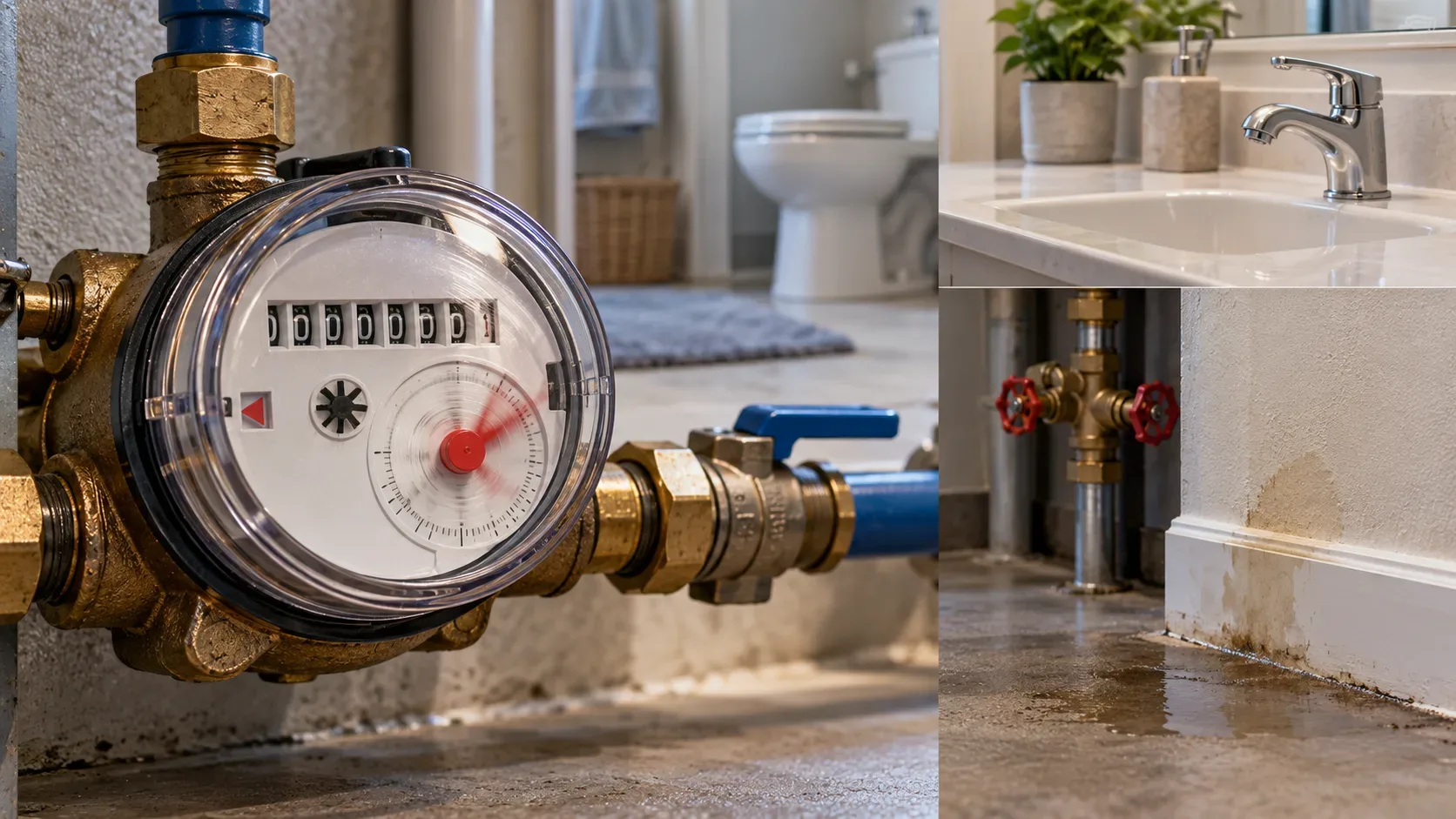
If the water meter keeps recording flow while taps and appliances are idle, there is water use that needs explaining. Before considering opening a wall, check that the storage tank is not refilling, rule out automatic uses, and compare two meter readings. If movement persists without expected consumption, isolate accessible sections and first inspect toilet flushing mechanisms, the tank float valve, overflow outlet, and visible fixtures. The test shows that water is passing through the meter, but it cannot locate the fault on its own.
First, confirm there is no legitimate water use
Close taps and showers and temporarily stop the washing machine, filters that discharge water, irrigation, and other equipment connected to the supply. Tell everyone in the property not to flush toilets or open taps during the observation. If there is a storage tank, check that its float valve is not replenishing it. No open tap does not mean no consumption: the tank may be filling or a toilet may be leaking silently.
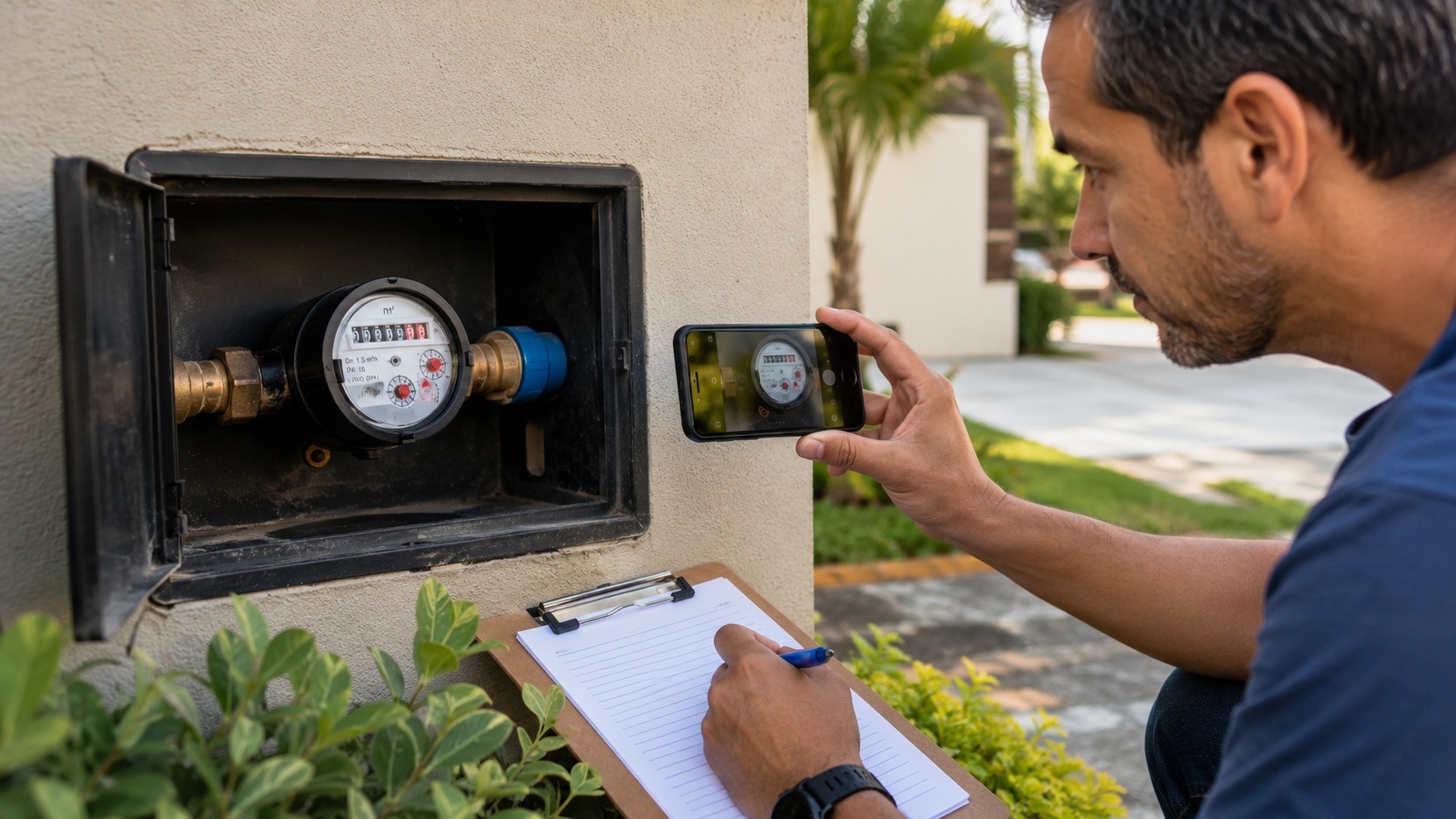
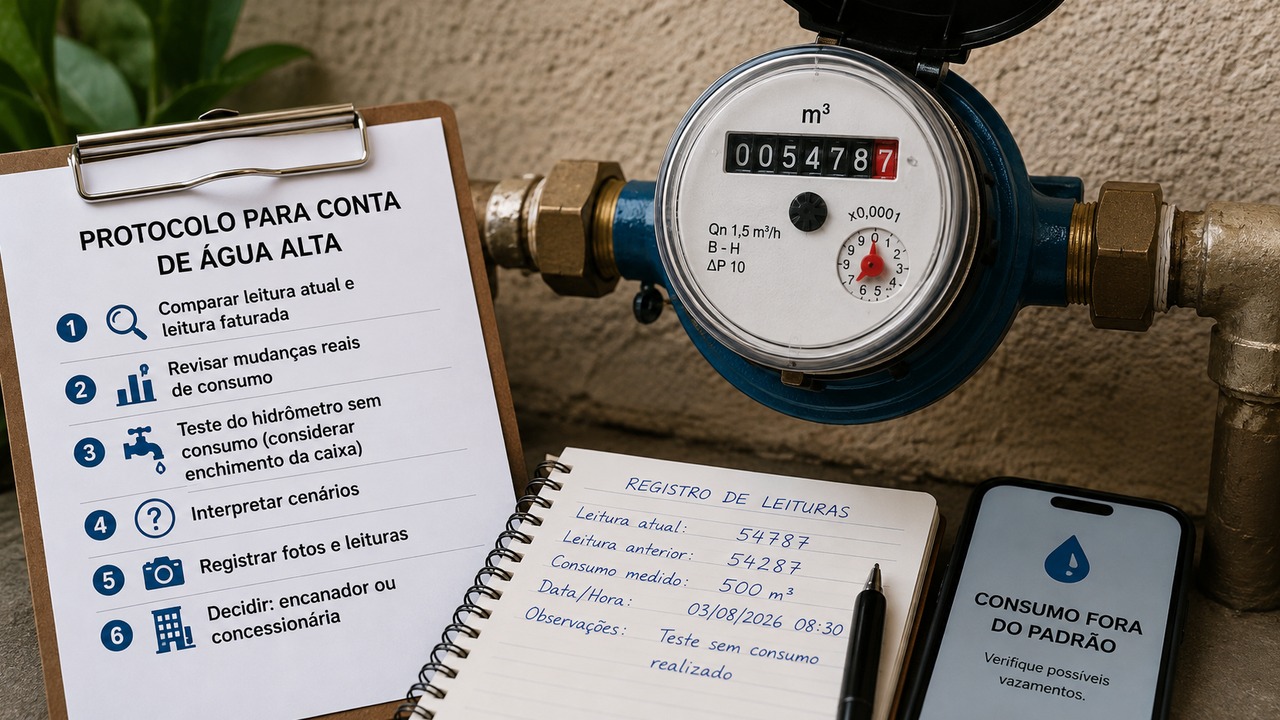
Do not remove seals or dismantle the utility water meter or its mounting assembly. Record or photograph the reading and flow indicator without handling the device. Observe it again after a period without use, for example one hour; for a longer check, the EPA recommends comparing readings after two hours without consumption. A changed reading means measured water passed during the interval, but one test cannot distinguish a leak, tank refilling, and unnoticed use.
How to separate the pipe before the storage tank from the system after it
In properties with a water storage tank and an accessible inlet shutoff valve, close the tank inlet or keep the float valve securely closed without forcing fragile parts. Leave the supply valve by the meter open and suspend all water uses. Record the meter reading and compare it after about one hour. If it advances, suspicion falls on the pressurized section still supplied by the mains, including direct-feed branches and connections. SAMAE Cocal do Sul describes this procedure for the pipe between the meter and the tank.
If the meter stays still under these conditions, that does not rule out loss at outlets fed by the tank: stored water can escape without passing through the meter again at that moment. To examine the downstream circuit, safely prevent refilling, mark the tank water level, and do not use any fixtures. If the level drops after at least one hour, look for leakage from the tank itself, the overflow, or the pipes and fixtures it supplies. The level test is a clue, not a pipe locator.
In apartment buildings and systems with booster pumps, heating, cisterns, mixed water supplies, or unlabelled valves, the layout may differ. Do not shut off shared valves or handle float valves in unsafe locations; ask the property manager or a plumber to identify the circuit.
Check locations that do not require opening walls
- Toilet with a tank: look for continuous incoming water or water running into the bowl. Add a few drops of food coloring to the tank and wait about ten minutes without flushing. If color appears in the bowl, water is leaking through; flush afterwards to prevent staining. This test applies to tank-type toilets and does not replace an inspection of an in-wall flush valve.
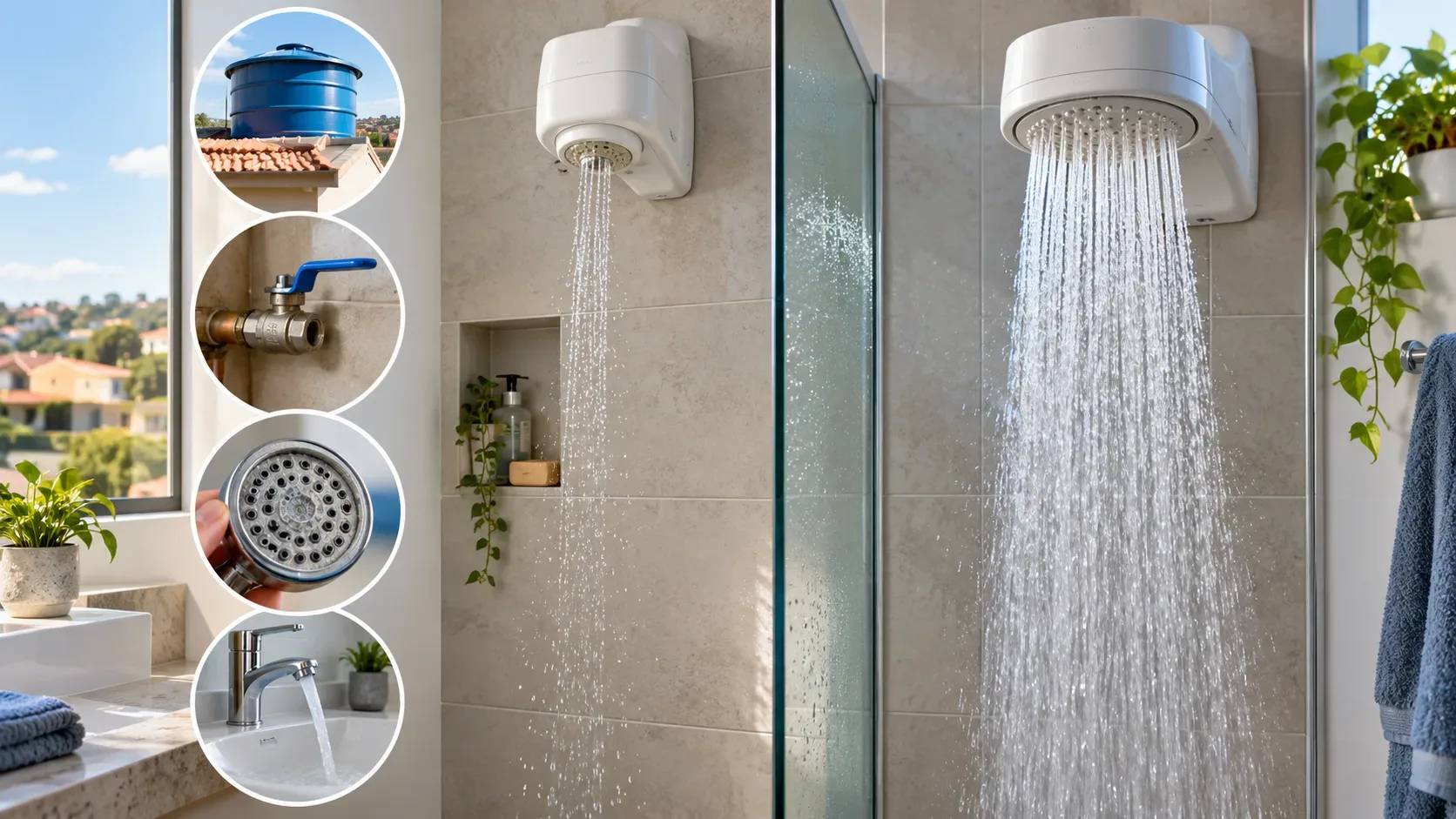
- Water storage tank: check whether the float valve shuts off properly and whether water exits through the overflow. Inspect the visible cover, exterior, base, and connections without climbing onto an unprotected roof.
- Sinks and laundry areas: check taps, flexible hoses, shutoff valves, connections, filter bases, and appliance feeds. Use dry tissue on accessible joints to spot new moisture without taking anything apart.
- Outdoor areas: inspect garden taps, hoses, irrigation, and exposed pipes. A persistently wet patch, even without rain or cleaning, merits investigation but does not prove its source.
How to interpret signs of a possible concealed leak
Moisture reappearing at a baseboard, blistering paint, localized mold, the sound of water with every fixture closed, or a permanently damp area of flooring can help guide inspection. None proves a plumbing leak in isolation: condensation, rainwater ingress, and failed waterproofing can look similar. Record photographs, location, time, and meter readings, preferably repeating the test under comparable conditions.
If a known zone valve stops the meter reading from advancing, the suspected area becomes smaller, but the exact leak location remains unconfirmed. Do not force seized valves. Do not drill, cut, or demolish based solely on a stain or a moving meter pointer; a professional can test the circuit and select a locating method before any opening.
When to call a plumber or the water utility
Call a plumber if the meter continues advancing after you rule out consumption and control tank inflow, if the tank level falls without use, if zone valves are unclear, or if persistent moisture has no visible source. Request an assessment that identifies the affected section before authorizing invasive repairs. If water is near outlets, electrical panels, or equipment, avoid contact and call qualified professionals; do not touch wet electrical components.
If the loss or damage appears to be at the meter, its utility assembly, upstream of the delivery point, or in the street, contact the water utility and follow local guidance. Responsibility boundaries vary with the provider and installation; do not interfere with sealed components. After repairs, repeat the meter check with all fixtures idle to confirm that unintended flow has stopped.