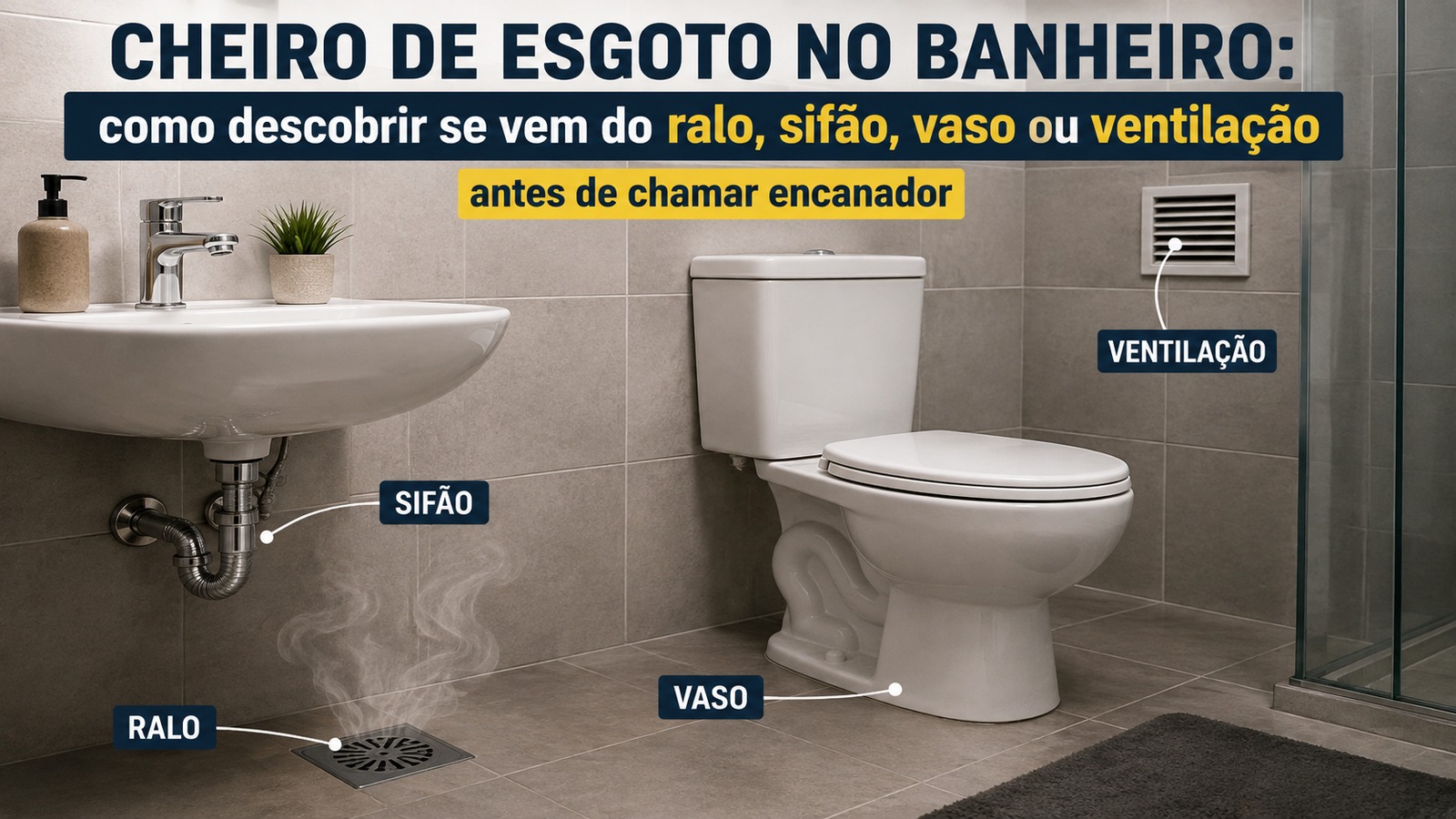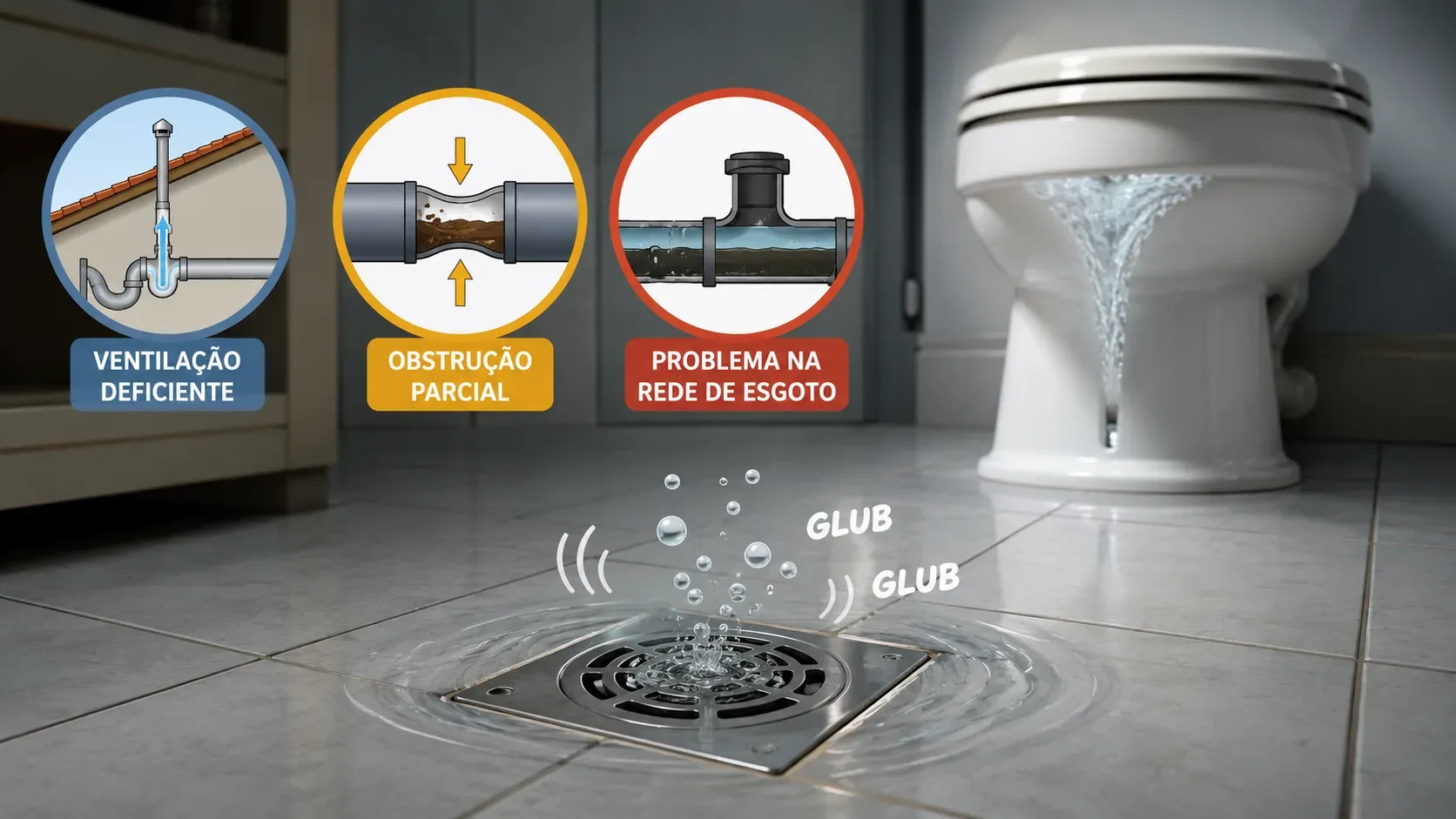
If a floor drain makes a “glug-glug” sound exactly when the toilet is flushed, the most useful clue is not the noise by itself but the interaction between two fixtures. A flush sends a large volume of water into the drainage piping in a few seconds. If air cannot enter or leave through the intended path, or if wastewater flow is partially restricted, the resulting pressure change may show up at the drain as bubbles, moving water, or gurgling.
This does not automatically mean “the pipe is clogged.” The same symptom can point to poor sanitary venting, a partial blockage in a branch or internal building drain, or, in some cases, a problem farther downstream, including the service connection or public sewer. The safest home triage is to observe when it happens, which other fixtures react, and whether there is slow drainage or actual backup.
Why does a toilet flush make another drain gurgle?
Floor drains, sinks, showers, and toilets connect to piping that carries wastewater and must also handle moving air. The water seal held in a trap or trapped floor drain acts as a barrier against sewer gases. Venting helps keep pressures balanced so that this water seal is not siphoned out or pushed by backpressure.
As a technical reference for how these systems work, the International Plumbing Code explains that vent systems allow air to enter or leave the drainage system and protect trap seals against pressure differences. This describes the physical principle; actual design and compliance requirements depend on the codes and standards applicable where the property is located.
When a flush passes through a shared pipe and meets resistance, it can pull or push air through the path of least resistance. If that path is the floor drain, air crosses the water seal and creates the gurgle. In other words, the drain may only be where the problem becomes audible, not where the fault is located.
Diagnostic tree: venting, blockage, or sewer?
| What you observe | What becomes more likely | Safe next step |
|---|---|---|
| The drain gurgles with a flush, but the toilet, sink, and shower all drain normally | Venting deficiency or pressure imbalance | Call a plumber to check venting, trap behavior, and branch configuration |
| The noise comes with slow drainage, rising water, a weak flush, or progressive worsening | Partial blockage | Avoid repeated use and request clearing/inspection of the line |
| Several drains or fixtures react, especially the lowest ones in the building | Restriction in a shared or farther-downstream section | Check an accessible private inspection point and contact a professional or sewer utility depending on which side is affected |
| Wastewater backs up, the inspection point is full without indoor water use, or neighbors have the same problem | Service connection or public sewer | Reduce water use and contact the sewer utility |
| The problem appears or gets worse during heavy rain | External surcharge or improper stormwater connections may be contributing | Record the timing and conditions and report them to the sewer provider |
When venting is the leading suspect
Venting moves higher on the list when the system is not clearly draining slowly, yet flushing causes noise, suction, or water movement in another fixture. A blocked vent terminal, poorly connected vent, insufficient venting, or a change made during renovation can prevent air from entering or leaving fast enough.
Other compatible clues include:
- the drain gurgles mainly when a high-flow fixture discharges;
- water in the floor drain or trapped drain moves even though no water is entering that fixture;
- the symptom began after renovation, a toilet replacement, or piping changes;
- more than one fixture makes noise without consistent slow drainage.
No sewer smell does not rule out a venting problem. Odor is more likely after a trap loses part of its water seal or sewage backs up, while pressure imbalance can create noise before either of those happens.
Do not climb onto a roof to inspect a vent terminal or insert objects into vent piping unless you know the system and can do so safely. This is better handled by a plumber who can assess vent terminals, branches, traps, and any air admittance valves that may be present.
When a partial blockage is more likely
A partial blockage usually adds a second symptom to the gurgle: water starts moving more slowly. The restriction may be near the toilet, in a bathroom branch, or in a shared internal building drain. Because some passage remains, the system may not be fully stopped; it simply has to move water and air through a reduced opening.
Watch for:
- a toilet that drains more slowly or needs another flush;
- water rising in the floor drain or trapped drain when the toilet is flushed;
- a shower or sink that became slower around the same time;
- gurgling that becomes more frequent;
- several fixtures in the same bathroom or stack reacting together.
If the signs point to a blockage, a drain-clearing company is often the most direct choice when mechanical cabling, jetting, or camera inspection may be needed. A plumber is more appropriate when the cause is still uncertain or when venting, installation errors, traps, slope, or repairs need to be evaluated.
When to suspect the service connection or public sewer
An external problem becomes more likely when the issue no longer appears limited to one bathroom. Backup at low fixtures, a full inspection chamber, sewage overflowing outdoors, or similar reports from neighboring properties suggest that the restriction may be beyond the internal drainage system.
Brazilian public utilities use inspection points as a practical clue for separating responsibilities. For example, Copasa guidance published by the Minas Gerais government notes that a dry connection/inspection point while sewage backs up inside the property indicates an internal problem, and it distinguishes the private building drain from portions under utility responsibility. SAAE Ambiental uses a similar concept, with public responsibility up to the connection point and user responsibility on the private side. The exact boundary varies by city and utility, so the local provider should be consulted.
If sewage is backing up, stop or sharply reduce the use of toilets, showers, washing machines, and sinks until the cause is located. Continuing to discharge water can increase the volume that returns through the lowest fixtures.
A safe observation test without dismantling pipes
- Flush only once and watch the drain. If water rises in the toilet or drain instead of falling, do not keep repeating the test.
- Check for slow drainage. Compare the toilet, sink, and shower. Noise without slow drainage favors venting; noise plus poor flow favors a blockage.
- Run fixtures separately. If the floor drain also reacts to the shower, sink, or washing machine, the problem may be in a shared section.
- Look at the inspection point only if it is safely accessible and belongs to the property. Do not enter chambers, open public manholes, or move heavy covers. A full chamber without indoor water use suggests a downstream restriction; a dry chamber during an indoor backup suggests a restriction before that point.
- Ask whether neighbors have the same symptom. Simultaneous problems strengthen the case for an external sewer issue.
- Write down when it occurs. Flushes, washing-machine discharge, heavy rain, and time of day can help a professional reproduce the condition.
What not to do as a “test”
Avoid pouring caustic soda or homemade chemical mixtures into the drain just to see whether the noise disappears. They may not reach the real cause — especially when the issue is venting or the public sewer — and they can create a chemical hazard. The Rio Grande do Sul Toxicological Information Center warns that drain cleaners based on sodium hydroxide are corrosive and can cause severe burns. Brazil’s Anvisa also advises against homemade mixtures of cleaning products and recommends following product labels strictly.
Do not use repeated flushes to try to “push” a restriction through. If water is already rising or sewage is backing up, every additional discharge increases the overflow risk.
Who should you call: plumber, drain cleaner, or utility?
- Plumber: when drainage seems normal but gurgling is recurrent; after renovation; or when venting, traps, floor-drain assemblies, slope, and piping configuration need to be checked.
- Drain-clearing company: when there are clear restriction signs — slow drainage, rising water, progressively worsening flow — and mechanical cleaning, jetting, or camera inspection may be required.
- Sewer utility/provider: when the inspection point indicates a problem beyond the private system, backup is widespread, there is external overflow, or neighbors are affected.
If the property is not connected to a public sewer and uses a septic or other onsite system, the third branch changes: a full tank, filter, outlet line, or disposal area may require an onsite wastewater specialist.
When to treat it as urgent
Get help promptly if there is raw sewage backing up, overflow, water rising at several fixtures, an unusable toilet, or contamination of indoor areas. Keep children and pets away and avoid direct contact with contaminated water.
In short, the “glug-glug” is a sign of abnormal air and pressure movement, not a ready-made diagnosis. If everything drains normally, investigate venting; if water is slow or rising, suspect a partial blockage first; if several fixtures and the inspection point indicate a problem beyond the property, contact the sewer provider. That sequence helps you call the right professional without dismantling the system or turning a small symptom into a larger hazard.