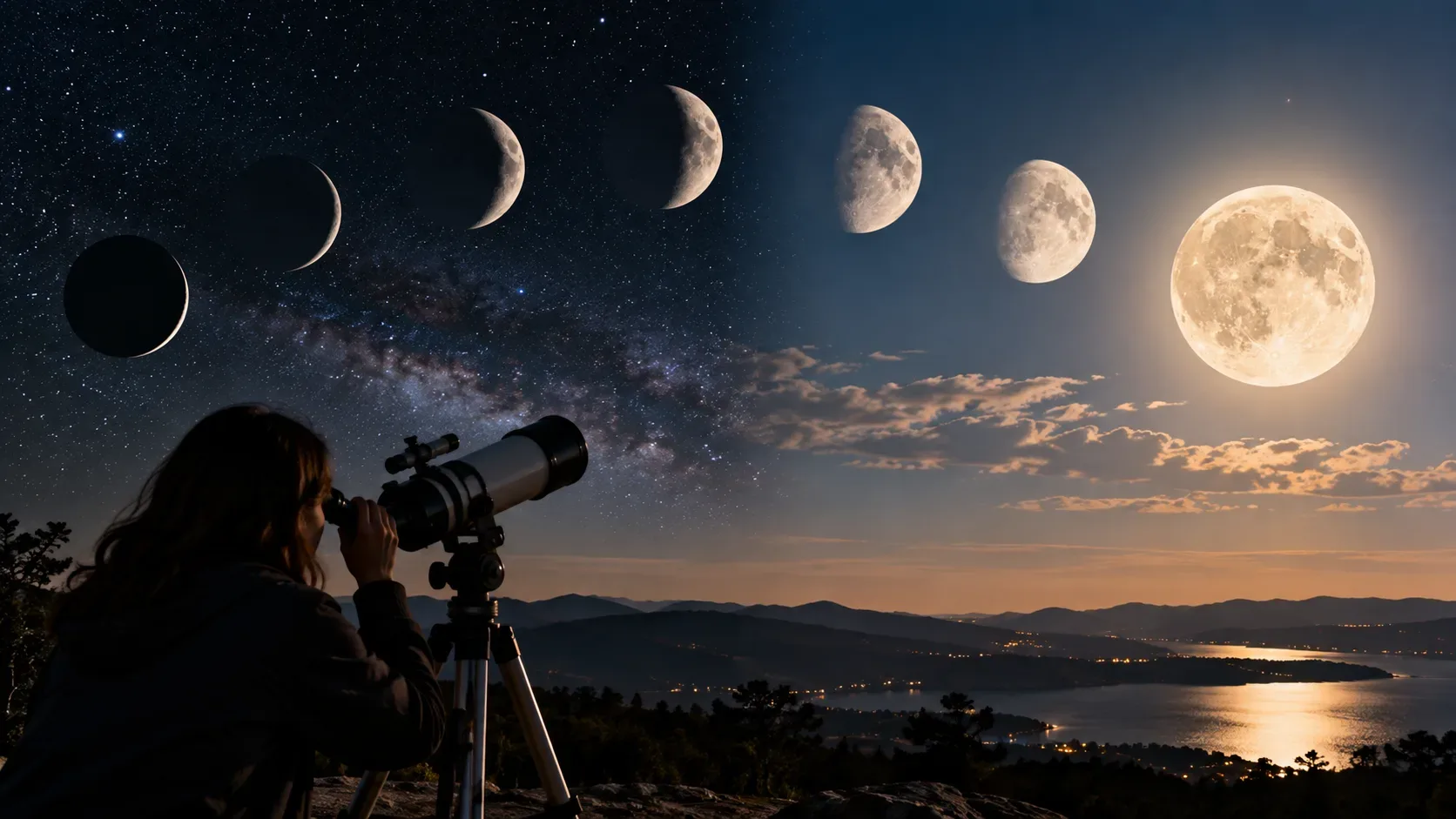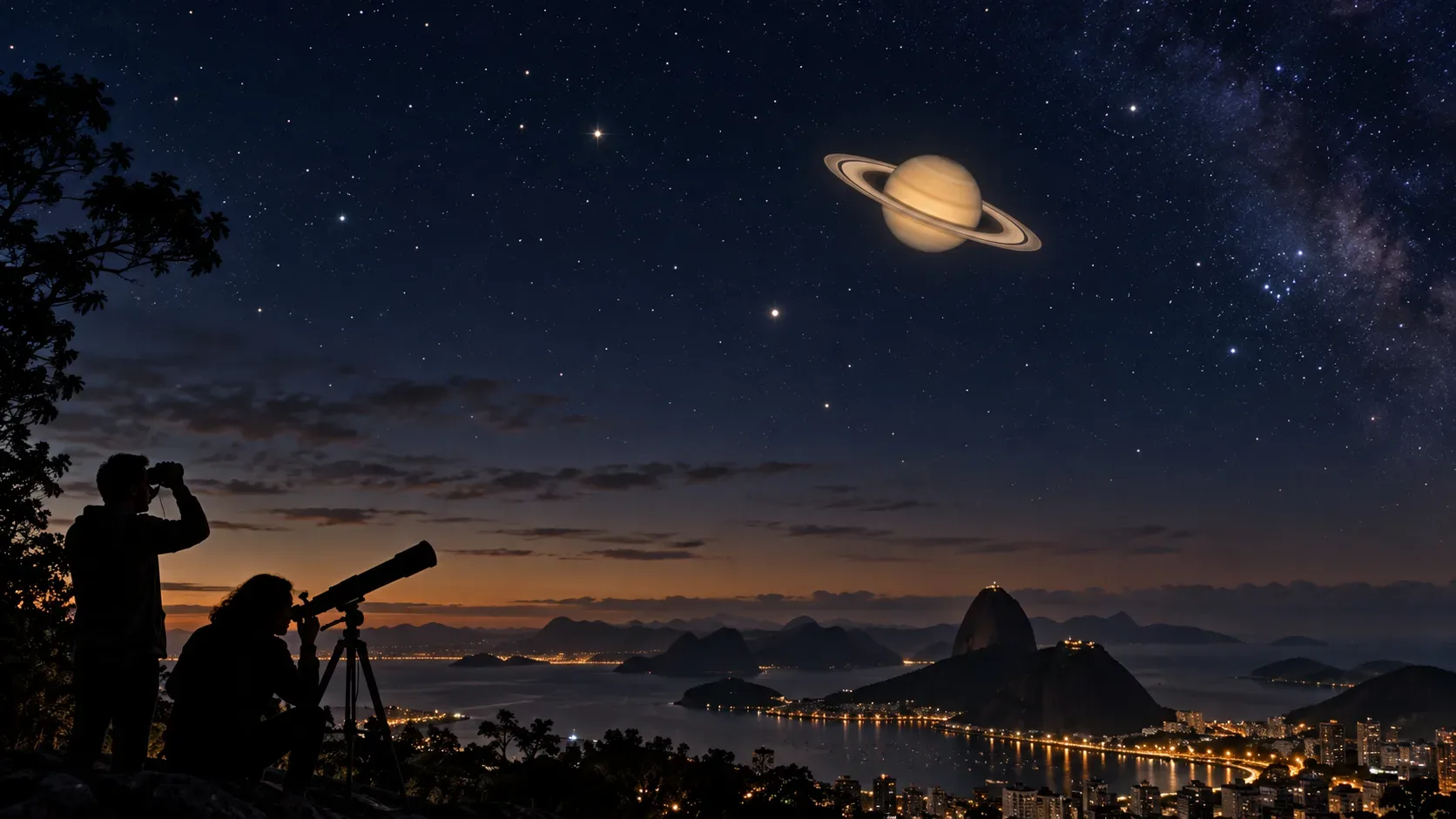
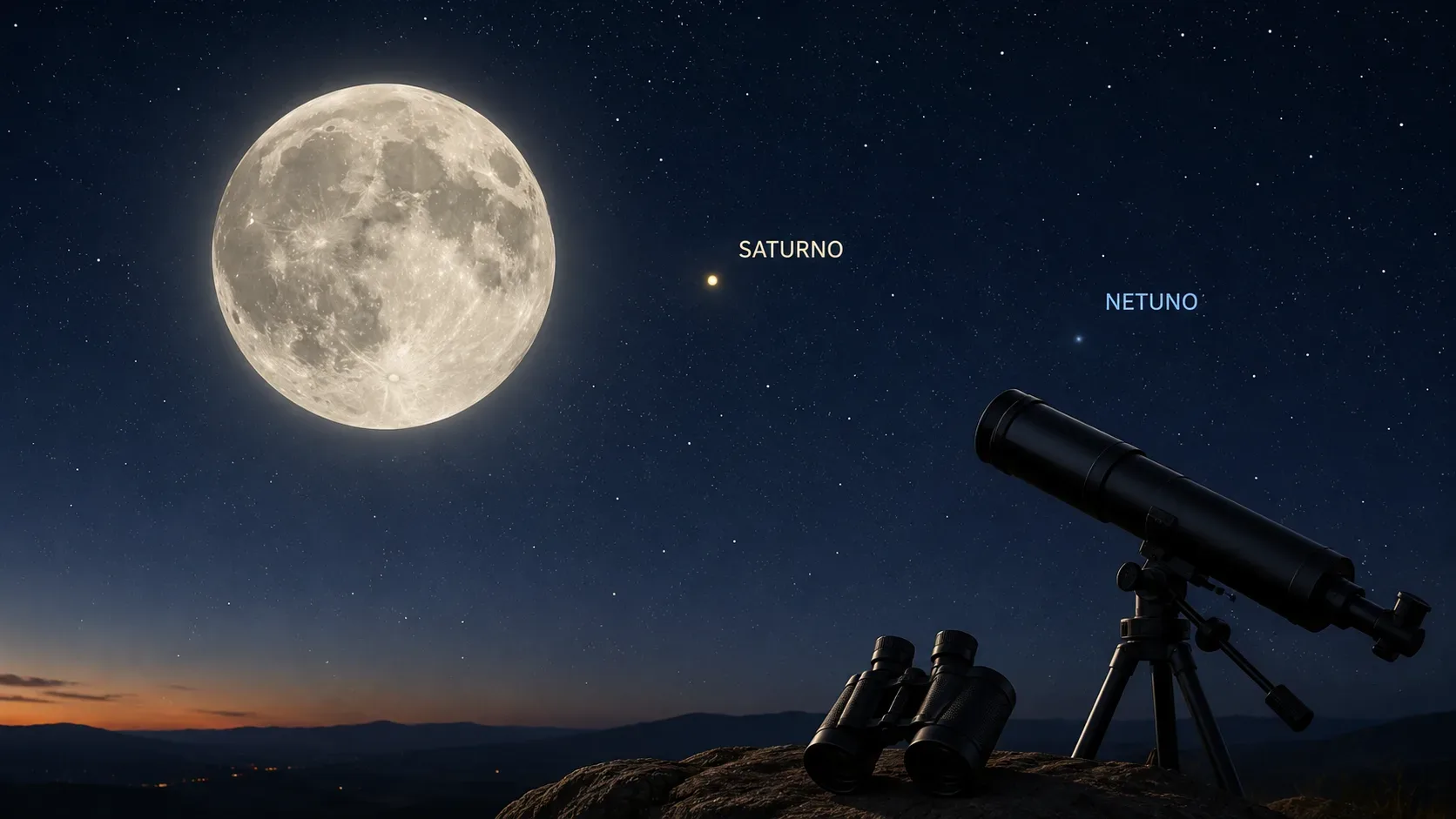
On September 26, 2026, the full Moon will be the easiest reference point for finding a region of the sky that also contains Saturn and Neptune. The key difference is visibility: Saturn can be seen with the unaided eye, while Neptune is too faint for naked-eye viewing and requires binoculars or a telescope. NASA describes the three objects as forming a wide triangle in the sky on that date.
The essentials for the night of September 26
| Target | Naked eye | With binoculars | With telescope | What to expect |
|---|---|---|---|---|
| Full Moon | Yes | Yes | Yes | It is the dominant object and serves as the reference for the area of sky. |
| Saturn | Yes | Yes | Yes | It appears as a bright point to the unaided eye; a telescope adds detail that cannot be seen without magnification. |
| Neptune | No | Possible in good conditions | Yes | It is very subtle and tends to look like a small point; identifying it requires care and a positional reference. |
What happens on September 26
According to NASA's September 2026 skywatching guide, the full Moon rises in the east shortly after sunset and appears near Saturn, while faint Neptune completes a wide triangle. NASA emphasizes the difference between the two planets: Saturn is the easy target; Neptune, at about magnitude 8, is too faint to see without optical aid.
The Moon reaches full phase at 16:49 UTC on September 26, according to the U.S. Naval Observatory lunar phase table. In Brasília time, that is 1:49 p.m. (UTC−3). That does not mean you must observe at that exact moment: the Moon will still look full throughout the night.
Saturn: the planet you can see without equipment
Saturn is one of the five planets traditionally visible to the unaided eye. NASA notes that it is the farthest planet from Earth known since ancient times through naked-eye observation. On September 26, therefore, you do not need binoculars to confirm that a bright planet is near the Moon.
Without magnification, Saturn does not show its rings: it looks like a bright point. Binoculars can make the search steadier and help separate the planet from nearby stars, but the bigger jump in experience comes with a telescope, which can reveal the ring system when conditions and equipment are suitable.
Neptune: why the Moon does not make it visible to the naked eye
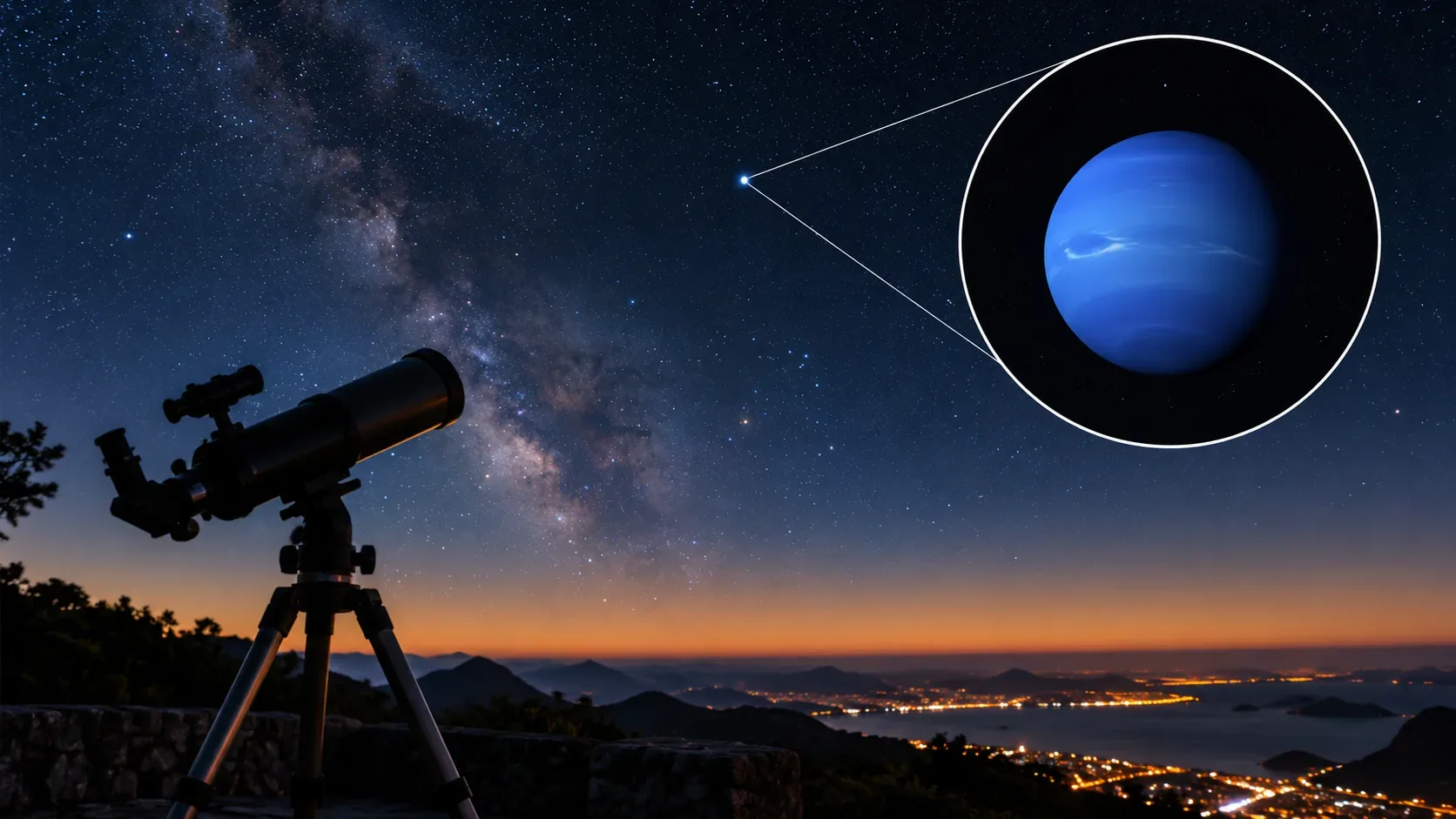
Using the Moon as a reference helps you know where to look, but it does not change the planet's brightness limit. NASA's Neptune facts page is explicit: Neptune is the only major planet in the Solar System that is not visible to the naked eye.
For the September 26 gathering, NASA puts Neptune at around magnitude 8. That is below the normal naked-eye limit. Binoculars can reveal the planet under favorable conditions, and a telescope makes the search more reliable. Even then, do not expect a tiny blue globe like spacecraft images: NASA notes that Neptune appears as a subtle point in many amateur telescopes. A star chart or planetarium app helps confirm which point is actually the planet.
How to use the Moon as a reference without getting lost
- Start with the Moon. After nightfall, look for the full Moon rising in the eastern part of the sky.
- Find Saturn with your eyes. It is the most obvious planetary member of the trio and works as a second reference point.
- Check an updated chart for your location. The apparent orientation of the triangle changes with latitude, time and observing location.
- Only then look for Neptune with optical aid. Sweep the charted area with binoculars or a telescope instead of guessing which faint point is the planet.
- Confirm the position. Because Neptune can be confused with faint stars, compare the observed field with a sky chart or software.
What can interfere with the view
The apparent proximity of the three objects does not guarantee the same observing quality everywhere. Clouds, haze, light pollution, horizon obstructions and atmospheric turbulence can all reduce visibility. For Neptune, NASA recommends darker skies and good observing conditions.
There is also a practical detail: the Moon itself will be full and very bright. That helps you locate the area of sky, but it can reduce perceived contrast nearby. Treat the Moon as a positional beacon, not as a promise that Neptune will be obvious.
Do I really need a telescope?
Not for the Moon or Saturn. Both are visible without equipment. For Neptune, some form of optical aid is required. NASA mentions binoculars or a telescope; in practice, a telescope gives you more margin to separate the planet from faint stars and confirm its position.
If you only have your eyes, the observation is still worthwhile: the full Moon and Saturn make an easy-to-recognize scene. Optical instruments add the third member of the gathering — Neptune — and, with a telescope, let you explore Saturn in more detail.
Summary
- Full Moon: visible to the naked eye and the easiest reference point.
- Saturn: visible to the naked eye; binoculars help and a telescope adds detail.
- Neptune: not visible to the naked eye; binoculars or a telescope are required.
- Best strategy: find the Moon and Saturn first, then use a sky chart to position Neptune.
- No universal guarantee: weather, sky brightness and local conditions can substantially change the result.