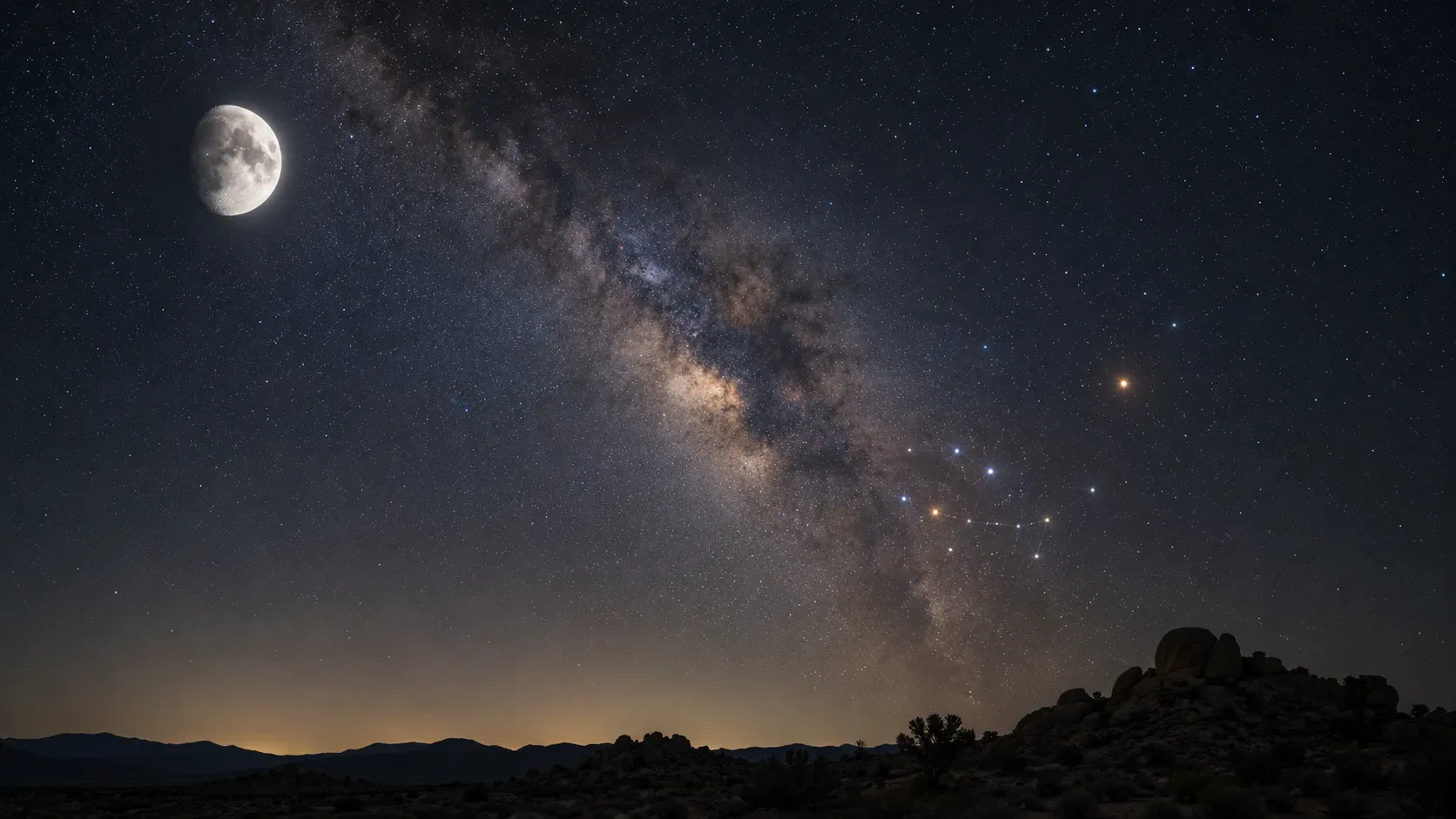
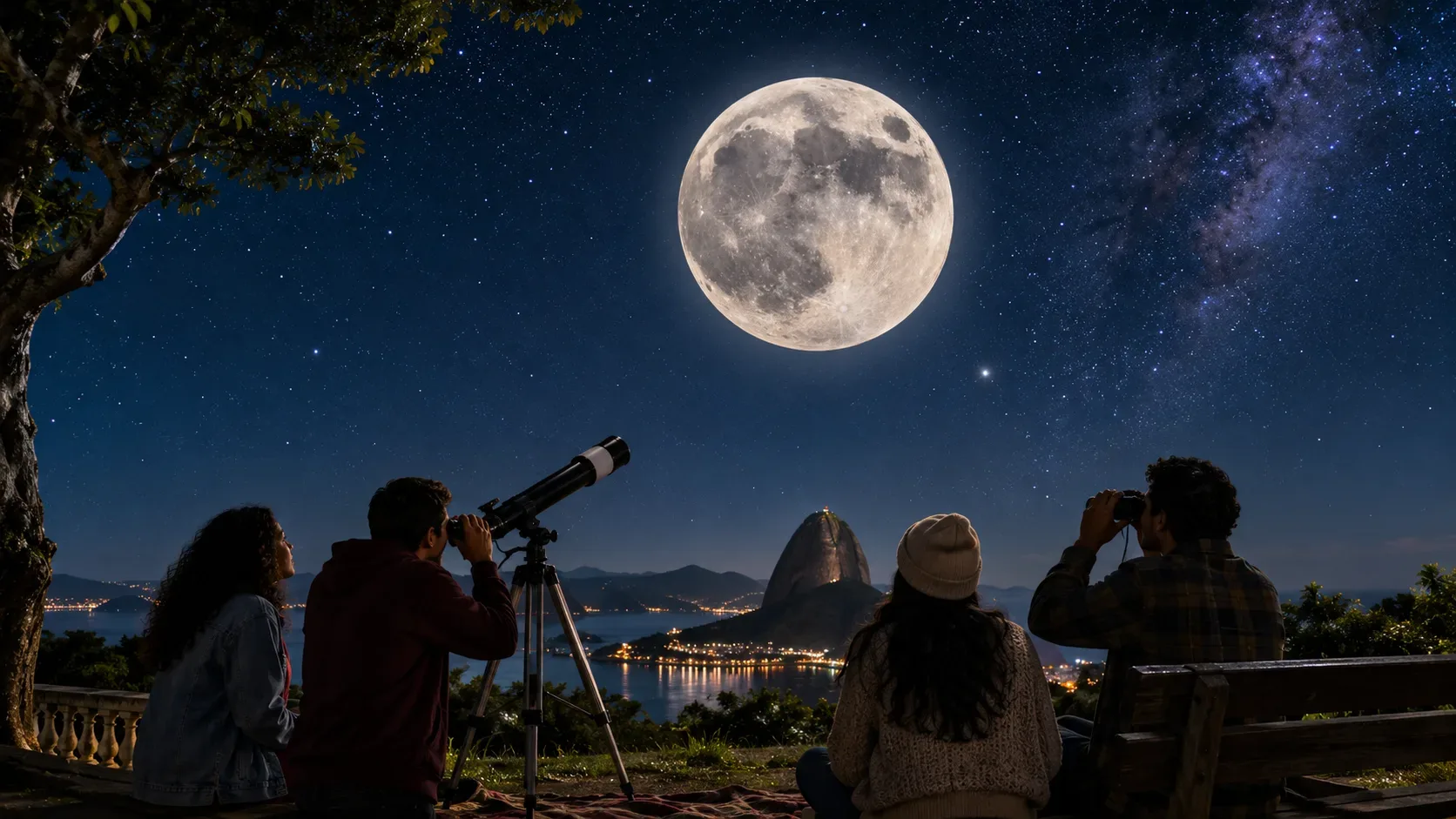
International Observe the Moon Night 2026 officially takes place on Saturday, September 19. The NASA-led initiative brings Moon observers together worldwide, but no advance registration is required simply to take part: in Brazil, you can attend an in-person event, join a virtual activity, host a gathering, or observe the Moon on your own. The date is selected near first quarter, a phase well suited to late-afternoon and evening viewing because shadows near the terminator make craters and other terrain stand out.
September 19 is the official date, but events have a wider window
NASA designates September 19, 2026 as the official date for International Observe the Moon Night. For event hosts, the registration system accepts activities held between September 12 and September 28, 2026. This gives organizers flexibility for local calendars, venue availability, or weather without changing the main date of the global observance.
There is no single global start time for Brazil. Each event sets its own schedule, and NASA recommends checking the date, time, and format on the individual event listing. The Moon’s phase near first quarter makes afternoon and evening observation especially convenient.
How to find an event in Brazil
The official starting point is NASA’s Find an International Observe the Moon Night Event page. It lists registered in-person and virtual activities. To search from Brazil:
- open NASA’s event finder;
- search by city, state, country, or related terms in the available field;
- open a result and confirm the date, time, address, or virtual link;
- check again closer to September 19 because additional events may be added.
NASA notes that the search feature may require different attempts while the page is being adjusted. If a location query does not return what you expect, try the city, state, and “Brazil” separately in the details field.
You can also host an observation
An event does not need to be large or based at an observatory. NASA says it can range from a gathering of friends or family to a virtual program for a large audience. Hosts who want to appear on the global map can register their activity through the official form. Registration helps promote the event and connects organizers with updated program materials.
In practice, a simple gathering can work with an open view of the sky, a short introduction, naked-eye viewing, and binoculars or a telescope if available. Planning resources are collected on the Event Materials page.
How to participate from home without a telescope
A telescope is optional. NASA says the Moon offers worthwhile targets for the naked eye, binoculars, and telescopes. With your eyes alone, the dark areas of the lunar maria are already visible. Binoculars add terrain contrast; a telescope reveals smaller details in craters, valleys, and impact structures.
| Tool | What to focus on September 19 |
|---|---|
| Naked eye | The Moon’s illuminated shape and the large dark patches of the lunar maria. |
| Binoculars | Areas near the terminator, where shadows make relief easier to see. |
| Telescope | Craters, mountains, and other details highlighted on the 2026 map. |
General guidance is available in NASA’s Moon Viewing Tips. For a first observing session, the key is simply to have an unobstructed view of the Moon and spend a few minutes comparing what you see with the correct map.
Which map to use in Brazil: choose the Southern Hemisphere version
NASA published dedicated 2026 maps showing how the Moon will appear from the Northern and Southern Hemispheres on September 19. For observers in Brazil, the appropriate reference is the 2026 Moon Map for Southern Hemisphere, available on the 2026 Moon Maps page.
Using the Southern Hemisphere version avoids the common confusion of comparing the Moon in Brazil with a chart oriented for northern observers. Keep the map nearby — printed or on another screen — and start with the largest regions rather than trying to identify many small details at once.
What the 2026 map helps you locate
- 15 lunar maria on the near side, broad plains of solidified basaltic lava that can be identified with binoculars and, in several cases, with the naked eye;
- four Apollo landing-site regions located on the visible portion of the Moon during the event;
- lunar landforms favored by the lighting, especially features near the terminator.
The landing sites are not visible as physical objects from Earth; the map helps you identify the regions where the missions landed. A practical approach is to begin with the large dark maria and move to smaller features once you are oriented.
Why the terminator is the best clue for beginners
The terminator is the boundary between the illuminated and dark portions of the Moon. Near it, sunlight strikes at a low angle and creates long shadows. That effect boosts the contrast of craters, mountains, and uneven terrain, which is why a phase near first quarter is so useful for a public observing night.
Rather than searching only for the “largest crater,” sweep along this light-and-shadow boundary. With steady binoculars or a basic telescope, it often shows more apparent relief than areas lit more directly.
If it rains or stays cloudy, you can still participate
The event uses a broad definition of “observe.” NASA maintains a Rain or Shine collection with hands-on activities, virtual exploration, tactile models, videos, animations, and data visualizations. The Observe the Moon at Home page also offers options that do not depend on clear skies.
That means a gathering in Brazil does not have to be canceled automatically because of clouds. Indoor activities can continue, and direct observing can be added if the sky opens up.
Quick checklist for September 19
- decide whether you will attend an event, host a gathering, or observe from home;
- if attending an event, confirm its time and location in the official listing;
- download the 2026 Southern Hemisphere Moon Map;
- start with the naked eye and use binoculars or a telescope only if available;
- prioritize lunar maria and the terminator region;
- have a backup activity ready for clouds or rain.
The main International Observe the Moon Night page brings together the event finder, maps, and official resources. For participants in Brazil, the simplest plan is to confirm a local activity, use the Southern Hemisphere map, and remember that special equipment is not required to join in.