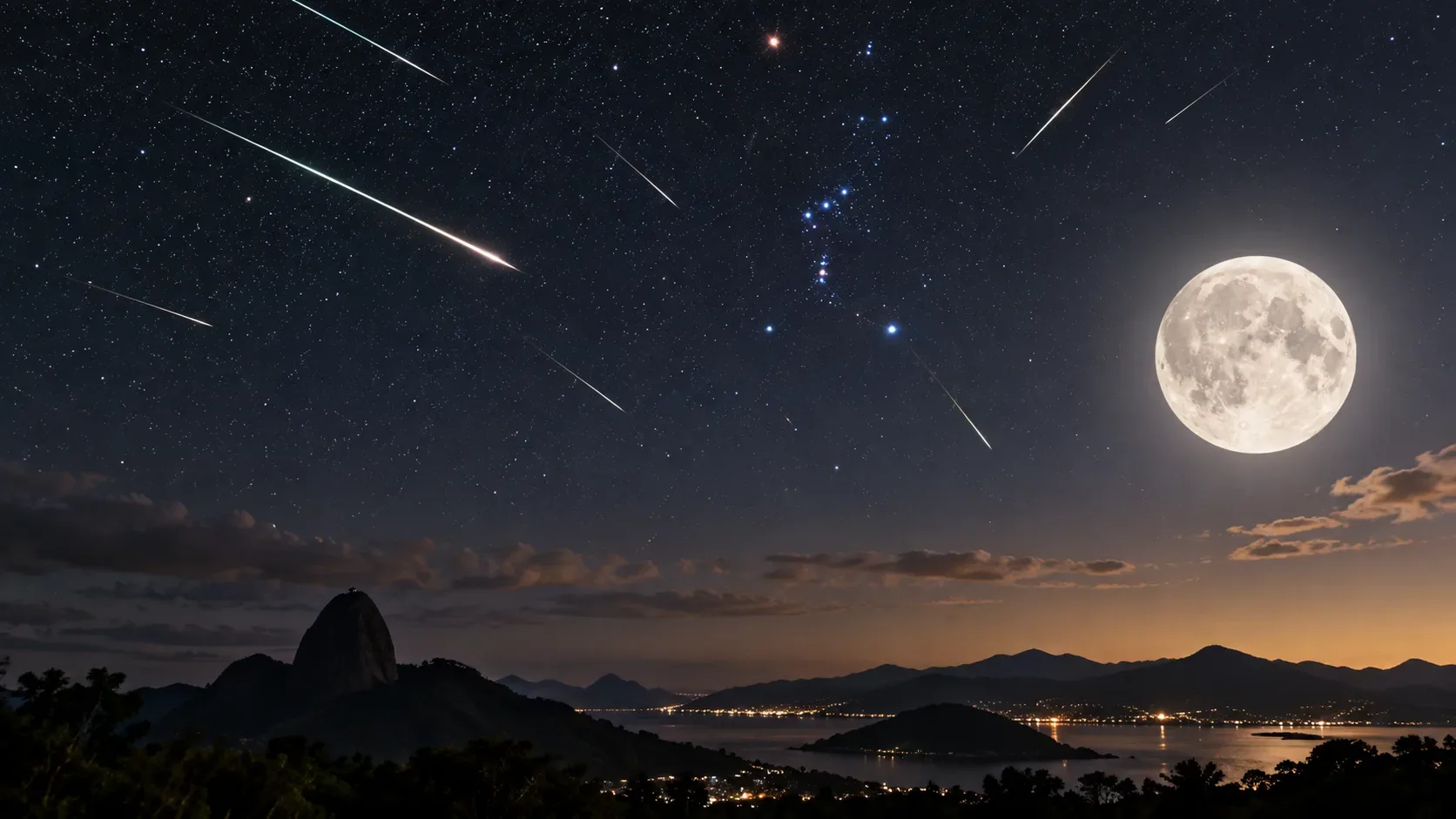
To watch the 2026 Orionids from Brazil, the nominal peak night is October 21–22, but the best observing stretch does not begin at midnight. The American Meteor Society (AMS) expects a waxing gibbous Moon at roughly 80% illumination around the peak, washing out many faint meteors. The most efficient strategy is to wait for moonset and use the interval before astronomical twilight begins. Depending on the city, that moonless window lasts from just over one hour to almost two hours.
When the 2026 Orionids peak
According to the American Meteor Society meteor shower calendar, the Orionids are active from October 2 to November 7, 2026 and peak on the night of October 21–22. AMS lists a ZHR of 20 and says that, in a normal year, the shower usually produces 10 to 20 shower members per hour at maximum under favorable conditions. ZHR, however, is a standardized rate for a very dark sky with the radiant at the zenith; it is not a promise of how many meteors one observer will actually see.
The shower comes from particles left by comet 1P/Halley. AMS gives a velocity of about 66 km/s, while NASA notes that Orionids are fast and can leave persistent glowing trains.
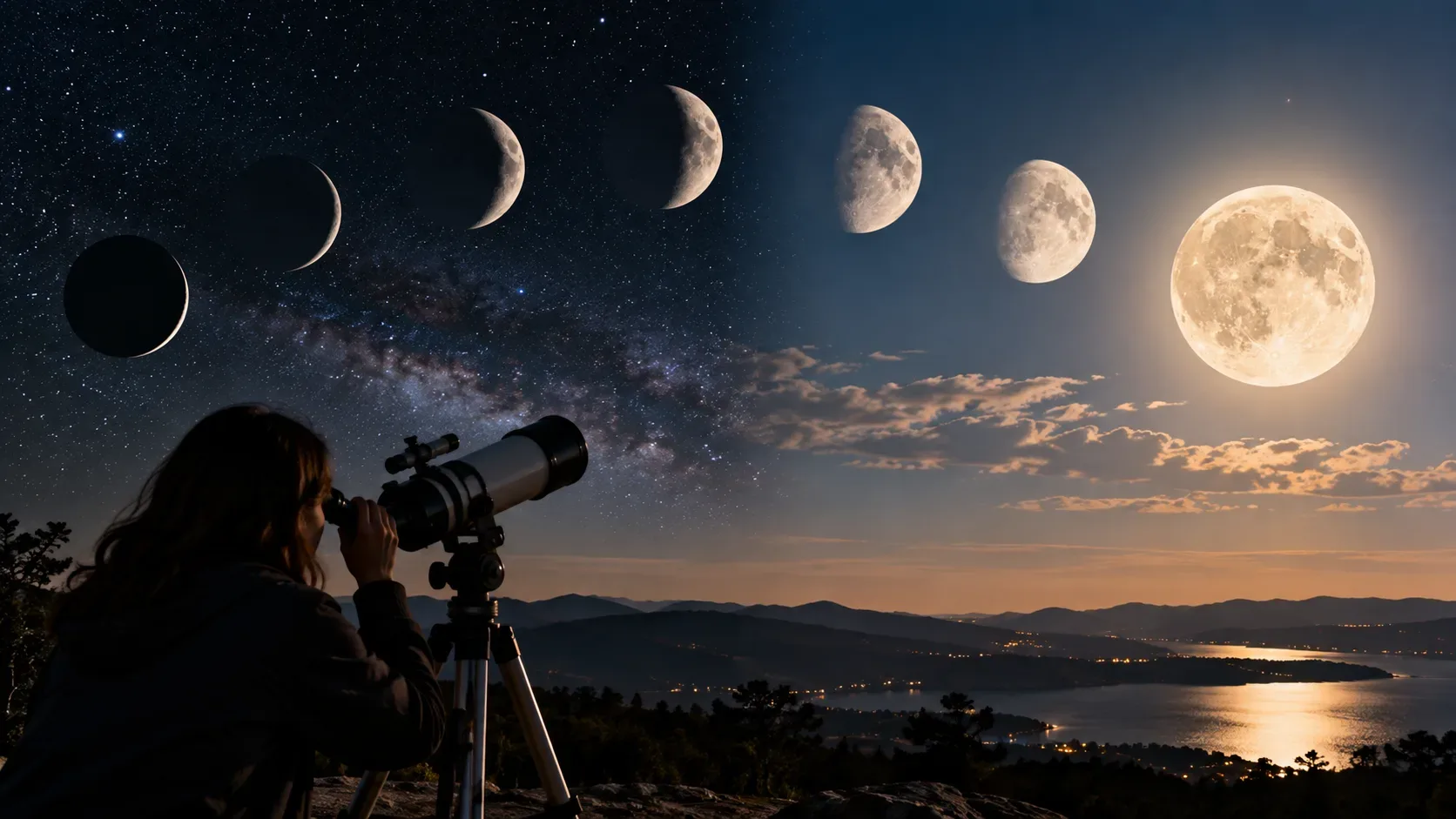
Why an 80% Moon is such a problem
The Moon does not block one particular part of the sky; instead, it raises the background brightness. A brighter sky lowers contrast and makes faint meteors disappear from view. For 2026, AMS itself notes that only a few hours of dark sky will be available between moonset and dawn around the peak.
This is also why the ZHR should not be treated as an expected head count. The AMS glossary defines ZHR as the rate a shower would produce under clear, dark skies with the radiant at the zenith. In real observing, light pollution, moonlight, clouds, obstructions and radiant altitude all reduce the number seen.
The dark window in Brazil
The table compares two mornings: October 20–21, immediately before the nominal peak, and October 21–22, the official peak night. Local times combine moonset with the start of astronomical twilight published by Timeanddate. They are useful for planning, but should be checked again close to the date.
| City | Oct 20→21: moonless | Length | Oct 21→22: moonless | Length |
|---|---|---|---|---|
| Recife | 1:20–3:43 a.m. | 2h23 | 2:00–3:43 a.m. | 1h43 |
| Manaus | 1:58–4:28 a.m. | 2h30 | 2:41–4:28 a.m. | 1h47 |
| Brasília | 2:21–4:26 a.m. | 2h05 | 2:58–4:26 a.m. | 1h28 |
| São Paulo | 2:24–4:10 a.m. | 1h46 | 2:57–4:09 a.m. | 1h12 |
| Porto Alegre | 2:30–4:16 a.m. | 1h46 | 3:11–4:15 a.m. | 1h04 |
Ephemeris sources: Moon in Recife and Sun in Recife; Moon in Manaus and Sun in Manaus; Moon in Brasília and Sun in Brasília; Moon in São Paulo and Sun in São Paulo; Moon in Porto Alegre and Sun in Porto Alegre.
Nominal peak or the previous morning: which is more worthwhile?
If skies are clear on both nights, the best plan is to try both. The morning of October 22 contains the nominal peak, but its fully moonless period is short. The morning of October 21 offers roughly 35 to 50 extra minutes of darkness in the cities listed, while the shower is already close to maximum. This is a practical comparison, not a guarantee that the earlier night will produce more meteors: real activity varies and the maximum is not necessarily a perfectly sharp instant.
If you can choose only one night, prioritize October 21→22 when the cloud forecast is favorable and you can stay out after moonset. If clouds threaten that morning, October 20→21 is a particularly useful alternative because it combines near-peak activity with a longer dark interval.
Which direction to face
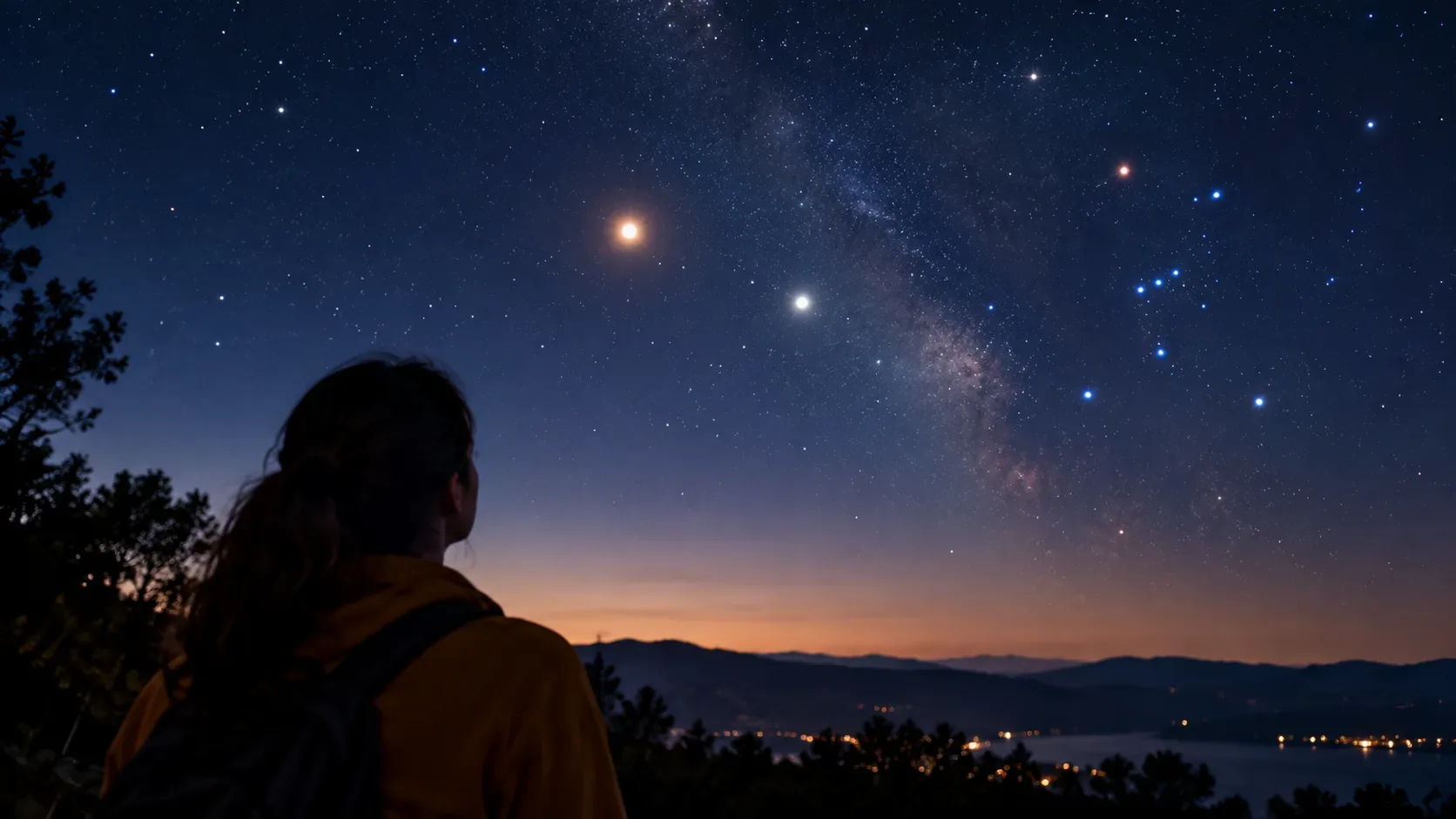
The Orionid radiant lies in the region of the constellation Orion, but there is no need — and no advantage — to stare directly at it. NASA says that in the Southern Hemisphere a comfortable setup is to lie down with your feet pointing roughly northeast and take in as much sky as possible. Meteors viewed 45° to 90° away from the radiant tend to show longer trails.
In 2026, while the Moon is still above the horizon, choose a field of view well away from the Moon and block direct glare with a tree, wall or terrain feature. After moonset, favor the darkest, most open part of the sky, avoiding streetlights, bright façades and large obstructions.
How to prepare your eyes and observing site
- Get away from city lighting: a dark rural or peri-urban site matters more than binoculars or a telescope.
- Use the naked eye: the shower spans a large area of sky; optical instruments make the field of view too narrow.
- Allow time for dark adaptation: NASA says eyes begin adapting in less than 30 minutes; AMS notes that full dark adaptation can take longer. Avoid screens and white light.
- Use dim red light: if you need to check a map or clock, keep illumination to a minimum.
- Stay comfortable: a reclining chair, blanket and suitable clothing make continuous watching easier.
What to expect realistically
The Orionids are not a shower where observers should expect dozens of meteors per minute. AMS describes them as a medium-strength shower and gives 10–20 shower members per hour at maximum in a normal year under favorable conditions. In 2026, strong moonlight will make most of the night less favorable for faint meteors. Even during the moonless window, an individual's count will depend on sky transparency, light pollution, clouds and the amount of time actually spent watching.
That is why the key decision is not to arrive at an exact “peak minute,” but to combine clear weather, a dark site and the interval after moonset. In Brazil, the early hours of October 22 remain the main reference; the early hours of October 21 are a strong backup and, in several cities, provide a noticeably longer dark window.