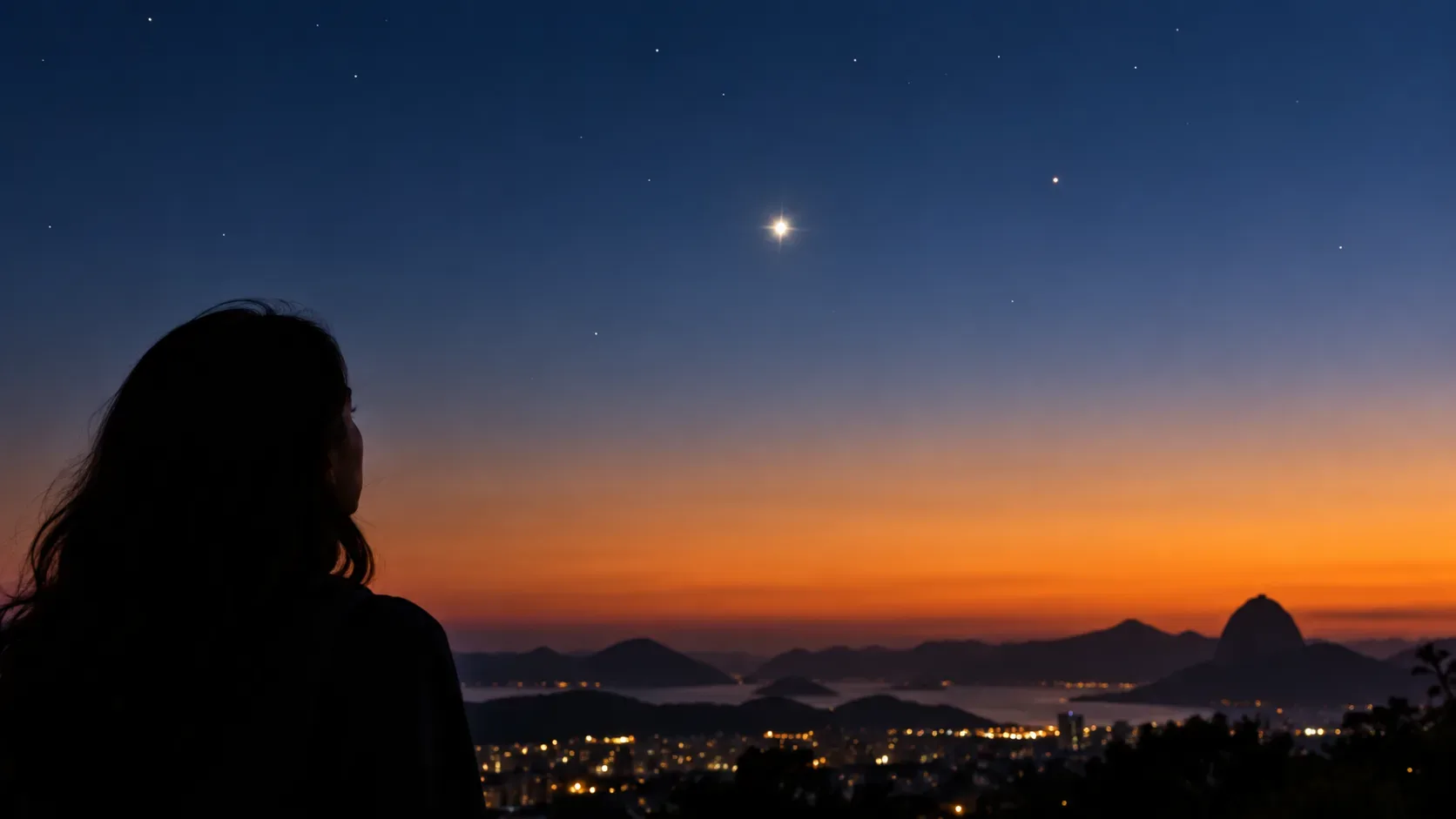
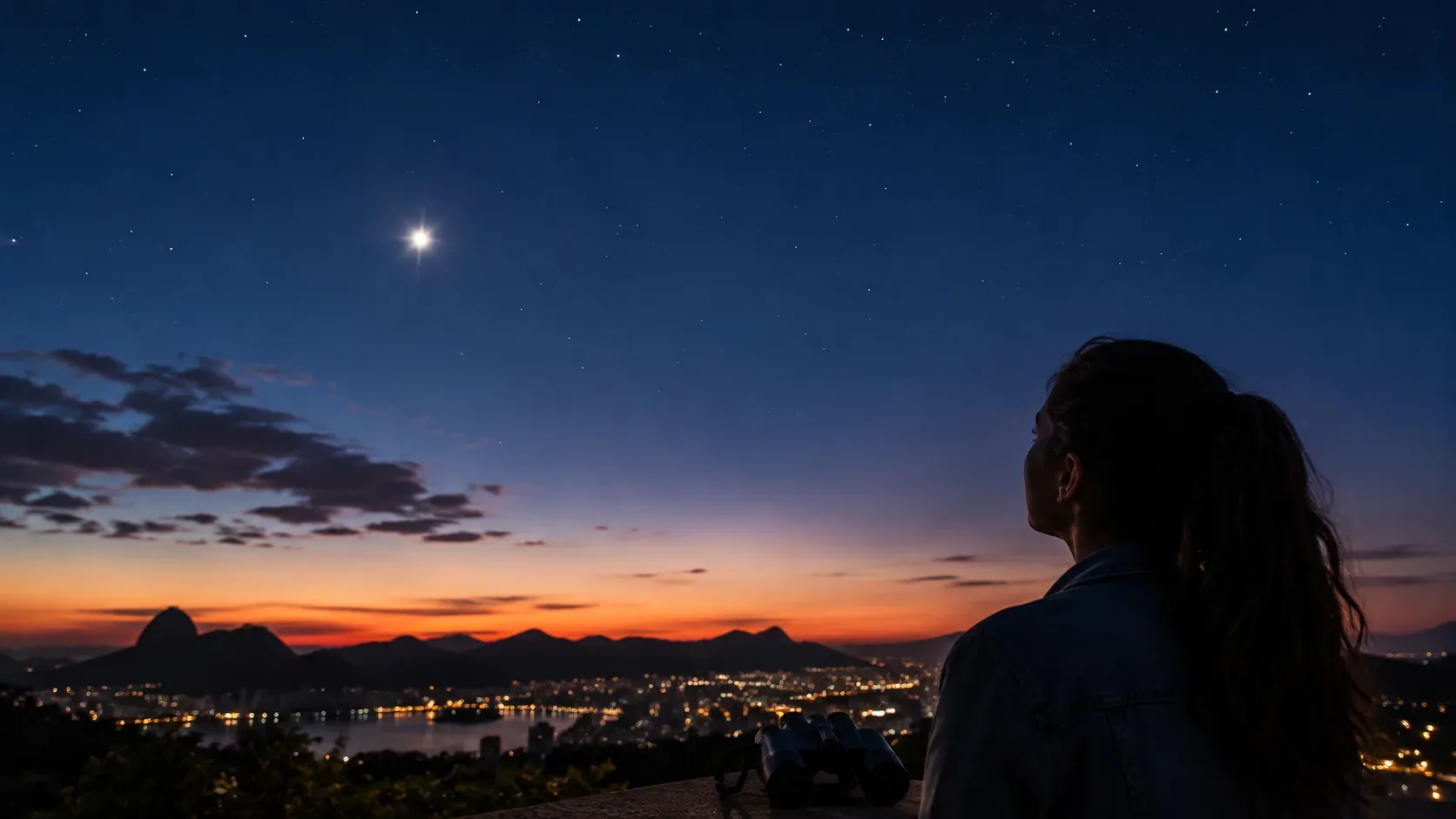
On September 18, 2026, Venus reaches the peak brightness of this evening apparition. For observers in Brazil, the practical guidance is simple: look for the planet shortly after sunset, low above the western horizon. NASA notes that Venus will be bright enough to outshine every star around it, but the observing window is limited because the planet sets not long after the Sun.
What “peak brightness” means on September 18
Peak brightness does not mean that Venus is “full” like a full Moon. Seen from Earth, the planet shows phases. During this evening apparition, it moves closer to us, its apparent disk grows, and the illuminated fraction shrinks. Peak brightness occurs when the combination of apparent size and illuminated portion produces the greatest total brightness in our sky.
This happens after Venus reached greatest eastern elongation in mid-August 2026. At that stage of the apparition, the planet was farther from the Sun in angular separation; by September it appears closer to the horizon after sunset, but even brighter. For observers, the benefit is that September 18 is an excellent date to identify Venus without equipment.
When to look from Brazil
There is no single clock time that works for the whole country because sunset varies by city, latitude, and time zone. The safest reference is your local sunset.
- Start shortly after sunset. Do not wait for the sky to become fully dark.
- Look west. NASA describes Venus as low above the western horizon on this date.
- Prioritize the first part of twilight. As the sky darkens, Venus becomes easier to recognize, but it is also moving closer to the horizon and to the time when it sets.
- Use a local landmark. A distant building, hill, or pole can help you return to the same part of the sky a few minutes later.
The “peak” is a calculated astronomical maximum, not an instant flash. In practice, Venus remains extremely bright on evenings around September 18. If clouds interfere on the exact date, it is worth trying again on the immediately preceding or following evenings.
How to find Venus without mistaking it for a star
First identify the direction where the Sun has just set. Venus will be in that general part of the sky, low and very bright. It tends to look like an intense white point with relatively steady light. Stars may twinkle more, although objects very low above the horizon can also flicker because of atmospheric turbulence.
If the western view is blocked, change position before sunset and choose a place with an open horizon. A beach, field, overlook, or other elevated location with an unobstructed view can help, as long as the site is safe.
Naked eye, binoculars, or telescope: what each adds
| Instrument | What to expect | When it helps |
|---|---|---|
| Naked eye | Enough to locate Venus and notice its exceptional brightness. | The best way to begin the search in twilight. |
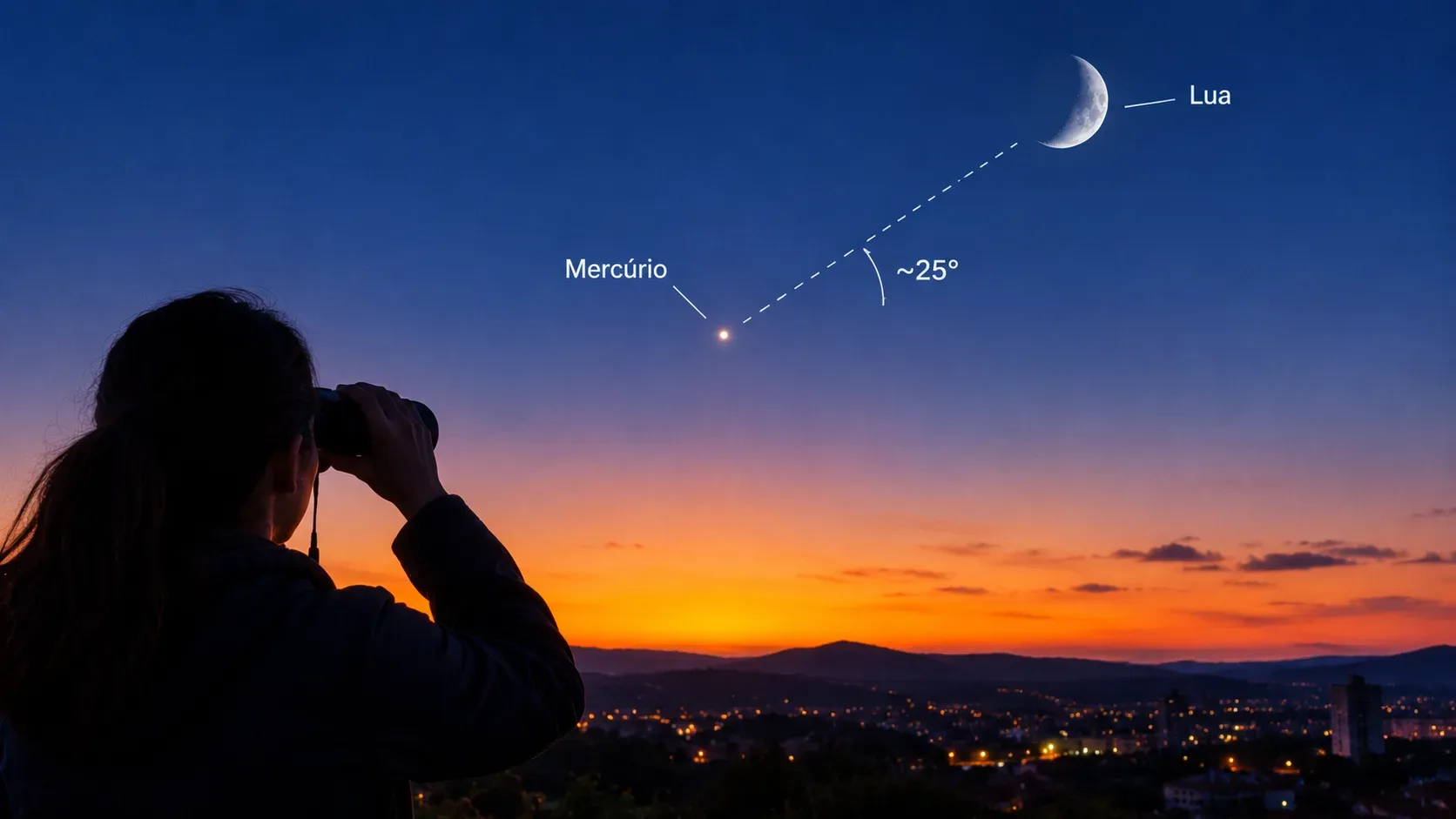
| Binoculars | Can help the planet stand out against bright twilight or haze near the horizon, but usually will not show clear surface or disk detail. | After the Sun has set and you know exactly where to point. |
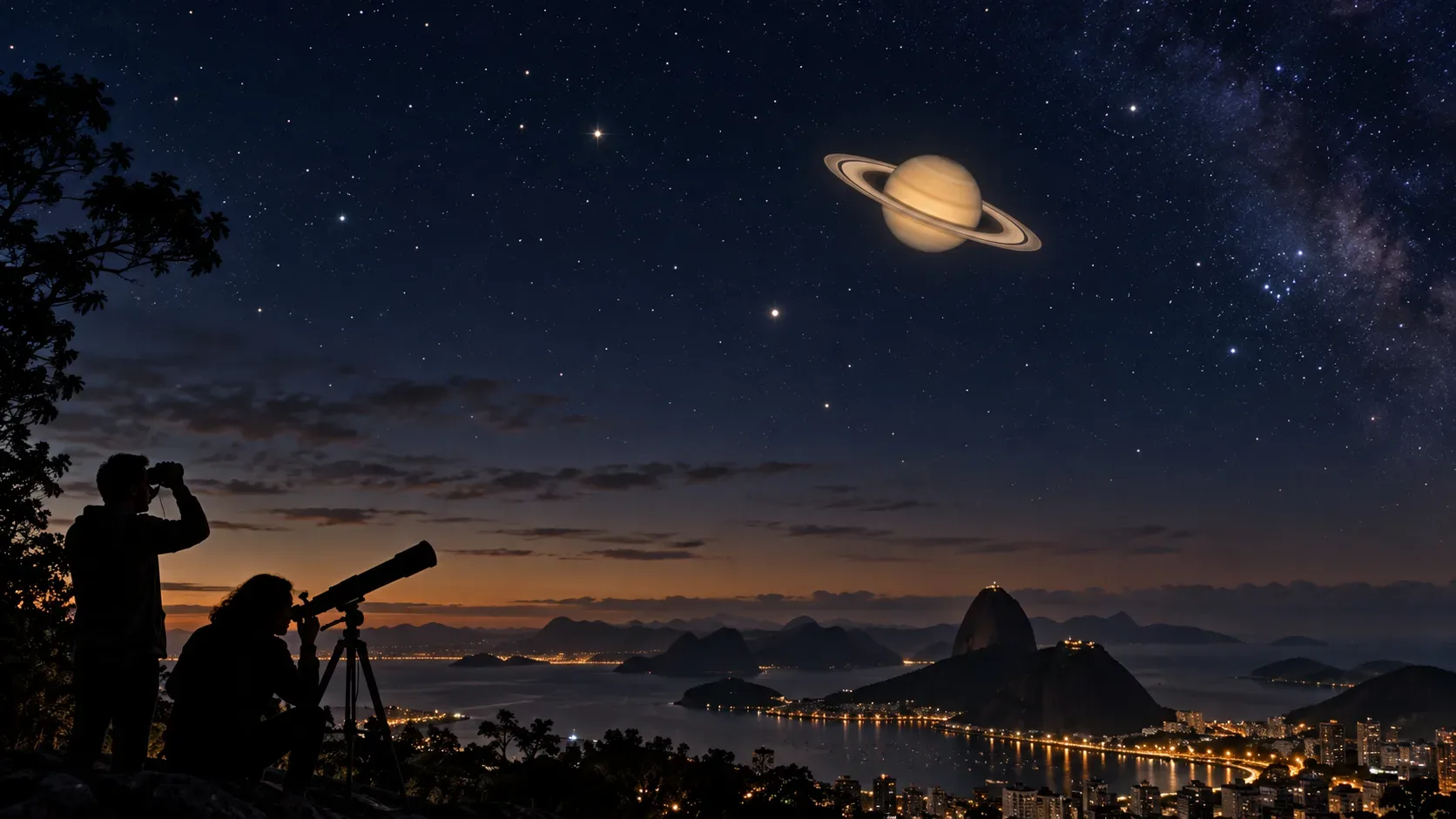
| Telescope | Can reveal the phase of Venus, which at this stage of the apparition is no longer a fully illuminated disk. | Once the planet is identified and the sky is dark enough for comfortable observing. |
Take care with binoculars and telescopes near sunset
Venus appears in the same general area of sky where the Sun has just set. That makes one safety rule essential: never point binoculars, a telescope, or a long-lens camera near the Sun while it is still above the horizon unless the equipment has proper solar filtration. NASA warns that viewing the Sun through unfiltered optics can cause severe eye injury.
For this observation, the simplest procedure is to wait until the Sun has completely disappeared, locate Venus with the naked eye first, and only then use binoculars or a telescope.
Why a clear horizon matters so much
On September 18, the main challenge is not Venus’s brightness but its low altitude in the sky. Buildings, trees, hills, and clouds near the horizon can hide the planet during much of the short observing window. NASA specifically recommends a clear view of the western horizon.
Haze, smoke, and humidity can also reduce contrast when an object is low. Because Venus is extremely bright, it may still shine through thin haze or cloud, but a dense band of cloud in the west can block the view completely.
Quick checklist for September 18
- Find out approximately where the Sun sets from your location.
- Choose a safe spot with an open view to the west.
- Arrive before sunset, but wait for the Sun to disappear before using optical instruments.
- Shortly after sunset, look for the brightest point low in the west.
- Confirm it with the naked eye first; use binoculars only if twilight glare or haze makes the search difficult.
- If you have a telescope, observe Venus’s phase after locating the planet safely.
- If the horizon is cloudy on the 18th, try nearby evenings as well: Venus will still be extremely bright.
Sources and references
- NASA — What’s Up: September 2026 Skywatching Tips: date of peak brightness, direction, and guidance for finding Venus after sunset.
- NASA — What’s Up: August 2026 Skywatching Tips: Venus’s greatest eastern elongation in August and context for the evening apparition.
- EarthSky — Venus brightest in the evening sky: explanation of how phase, apparent size, and maximum brightness are related.
- NASA — Eclipse Viewing Safety: safety guidance for using binoculars, telescopes, and cameras near the Sun.