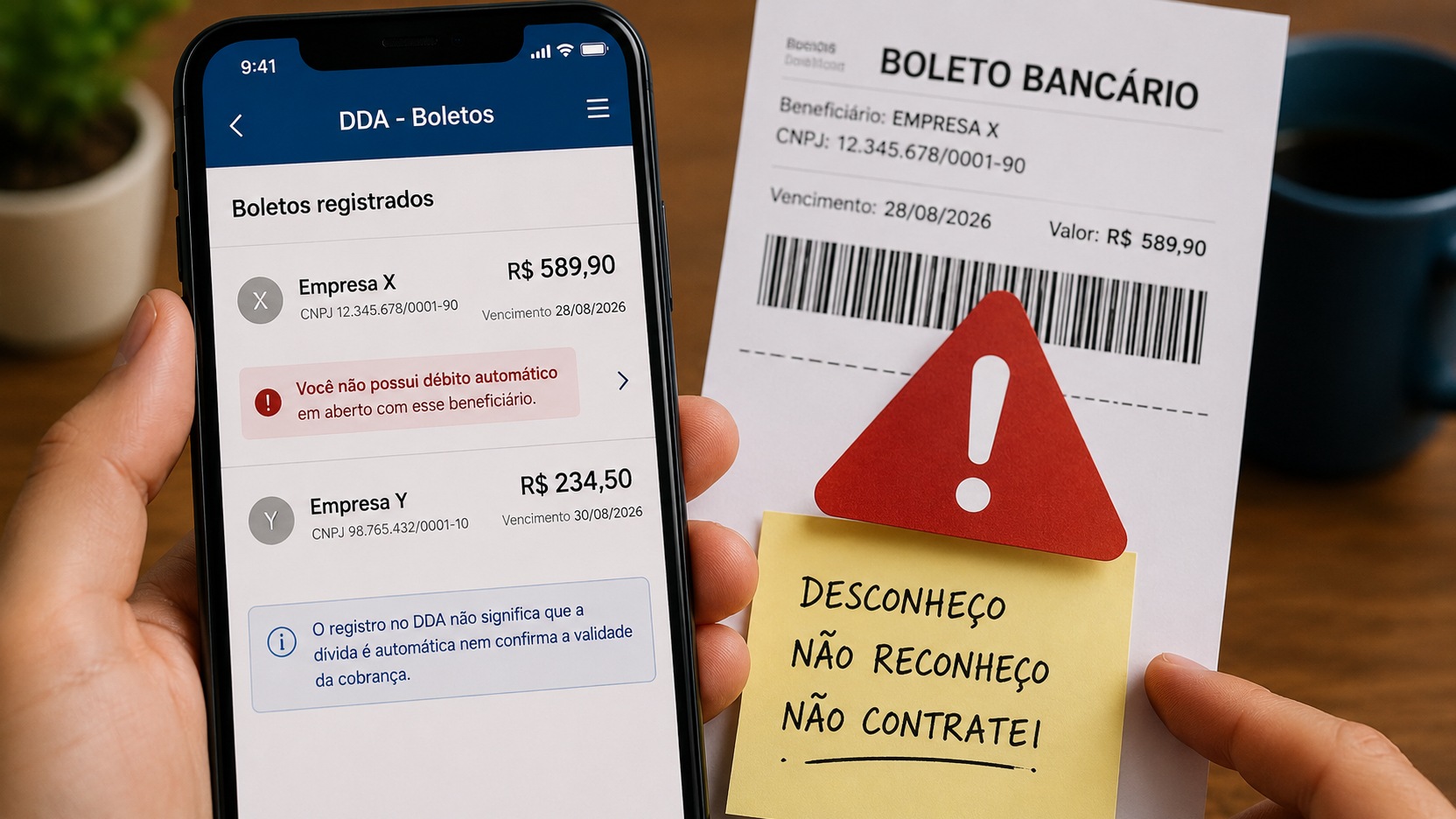
If a bill you do not recognize appears in your banking app, the first conclusion should not be "it is a scam," but it also should not be "if it is in DDA, then the debt must be genuine." DDA shows a bill that has been registered in the billing system and linked to your CPF or CNPJ as the payer. That is different from proving the commercial origin of the charge, the existence of a contract, or your obligation to pay.
The confusion is common because two statements circulate at the same time. The first is that DDA makes bills safer. The second is that an unfamiliar charge should be checked before payment. Both can be correct because they address different risks.
Short answer: DDA registers the charge, it does not validate the debt for you
Brazil's Central Bank explains that bills are registered in a centralized billing database operated by Nuclea and that electronic presentation to the payer takes place through DDA. In practice, when a bill appears there, there is a banking record with information such as payer, beneficiary, amount, and due date.
That registration matters. It reduces the risk that you are looking only at an altered PDF or a payment code changed outside the banking environment. But it does not replace the main question: do you recognize the purchase, service, contract, subscription, or other obligation that supposedly gave rise to the charge?
The banking infrastructure can verify the data of the registered bill. As a rule, it does not participate in the commercial relationship that supposedly created the debt. Therefore, the presence of the bill in DDA, by itself, should not be treated as sufficient proof that you contracted something or that the amount is actually owed.
What DDA actually proves
The safest way to understand DDA is to separate banking registration from the underlying commercial relationship.
What the screen proves is that there is a bill registered in the centralized database and electronically presented to the CPF or CNPJ identified as the payer. Brazil's Central Bank states that the institution receiving the payment must send the information for each bill for registration and that the bill is presented after that registration.
This also means that a bill shown in DDA is not merely an image sent by email or WhatsApp. The data comes from the banking billing ecosystem. Febraban highlights this point when recommending DDA as a safeguard against bills altered somewhere between issuance and payment.
What DDA does not prove on its own is that a valid purchase occurred, that you signed a contract, that you received a product, that you acknowledged a subscription, or that a disputed charge is legally enforceable. That verification depends on the origin of the obligation and the documents or records of the transaction.
Why DDA can be safer and still display an unfamiliar charge
This is where seemingly contradictory answers arise.
When Febraban says DDA helps prevent fake bills, the focus is especially on tampering with payment details. The Centralized Receivables Platform allows the institution receiving the
payment to check whether the beneficiary, amount, and other data match the registered bill. This makes the classic fraud in which a legitimate document is altered to divert money to another account more difficult.
But a charge may be unfamiliar for other reasons. The displayed name may not be the commercial name you expected; there may be a third-party enabler or another company involved in issuing the bill; there may be an error in identifying the payer; or the charge itself may be improper. The DDA screen alone does not automatically distinguish among these possibilities.
The practical difference matters. An "altered bill" and a "registered bill I do not recognize" are not exactly the same problem.
DDA is not automatic debit
The Portuguese name Débito Direto Autorizado, commonly rendered in English as Authorized Direct Debit, creates another source of confusion. Brazil's Central Bank is explicit: DDA and automatic debit are different services.
In DDA, bills are made available for viewing and wait for your authorization before payment. The mere fact that a charge appears in the app does not mean the amount will be withdrawn from your account on the due date.
With automatic debit, by contrast, there is authorization for certain payments to be made automatically. Banks may also offer additional scheduling or automation features, but those involve a specific agreement or setting and do not change the basic rule of DDA.
Therefore, if you simply found an unfamiliar bill in the DDA area and did not authorize or schedule payment, the presence of the charge is not equivalent to an already scheduled debit.
The name shown may not be the name you know
Before classifying the charge as fraud, open the full bill details.
Current rules require identification of the payer, the issuing institution and, when applicable, a third-party enabler, as well as identification of the beneficiary, amount, and due date. Depending on how the app organizes this information, the first screen may highlight an institutional name that is different from the brand you dealt with.
This can happen, for example, when companies use billing platforms, payment institutions, or other participants to issue and process bills. There are also arrangements in which identifying the original beneficiary or other participants in the charge is relevant.
A different name is therefore a reason to investigate, not automatic proof of fraud. What you need to determine is who will receive the money and which transaction, contract, order, or service supposedly generated the bill.
How to verify before paying
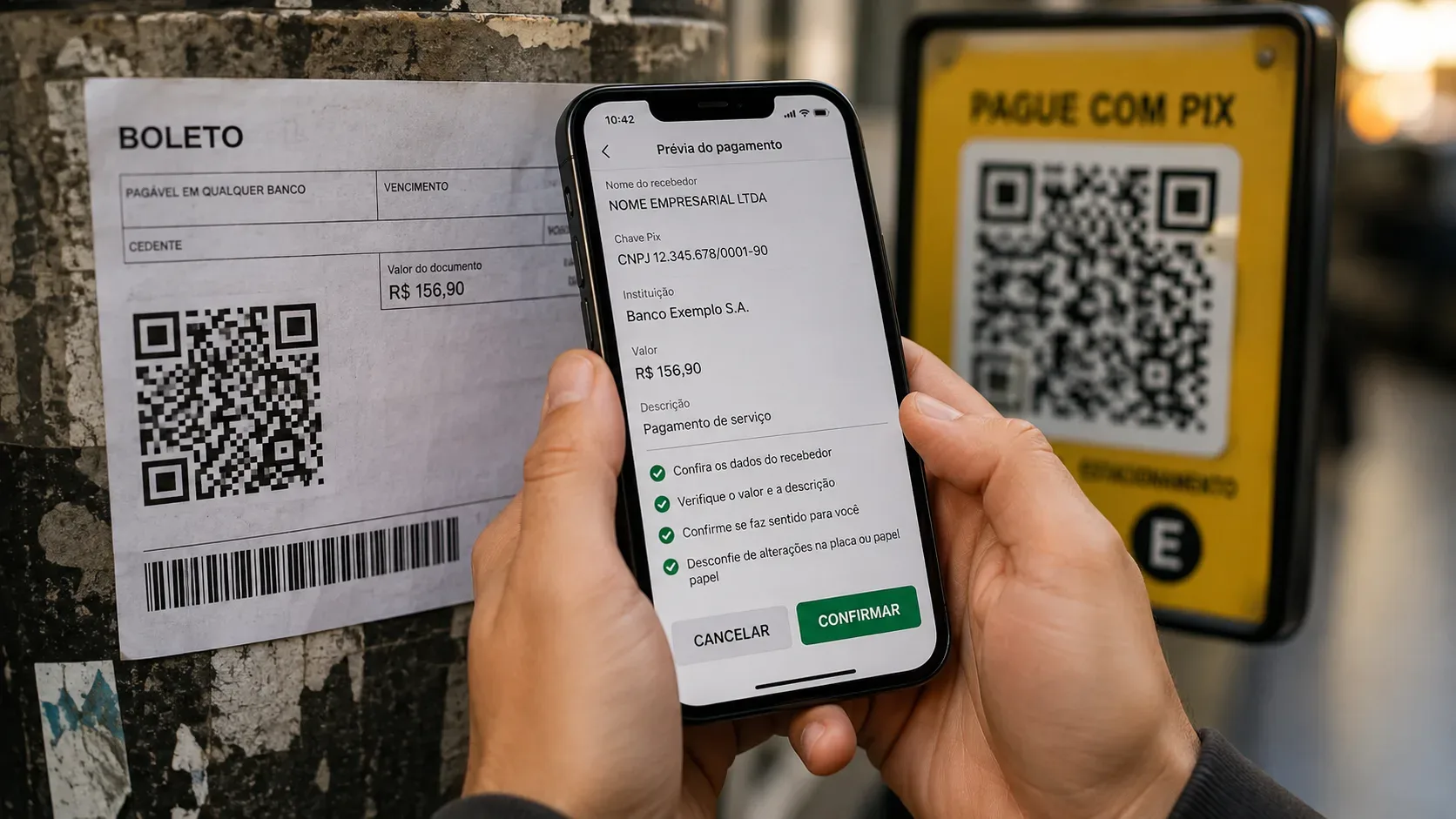
The first check should take place inside the banking app itself. Open the bill and note the beneficiary's name and CPF or CNPJ, the issuing institution, any listed third-party enabler, the amount, the due date, and any available description. If the app displays additional payer or billing information, check whether it matches you.
Next, compare this information with recent purchases, subscriptions, contracts, renegotiations, memberships, fees, or services that may have been contracted. Do not rely only on the name highlighted on the screen. Look for the CNPJ and legal name in the documents for the transaction you actually recognize.
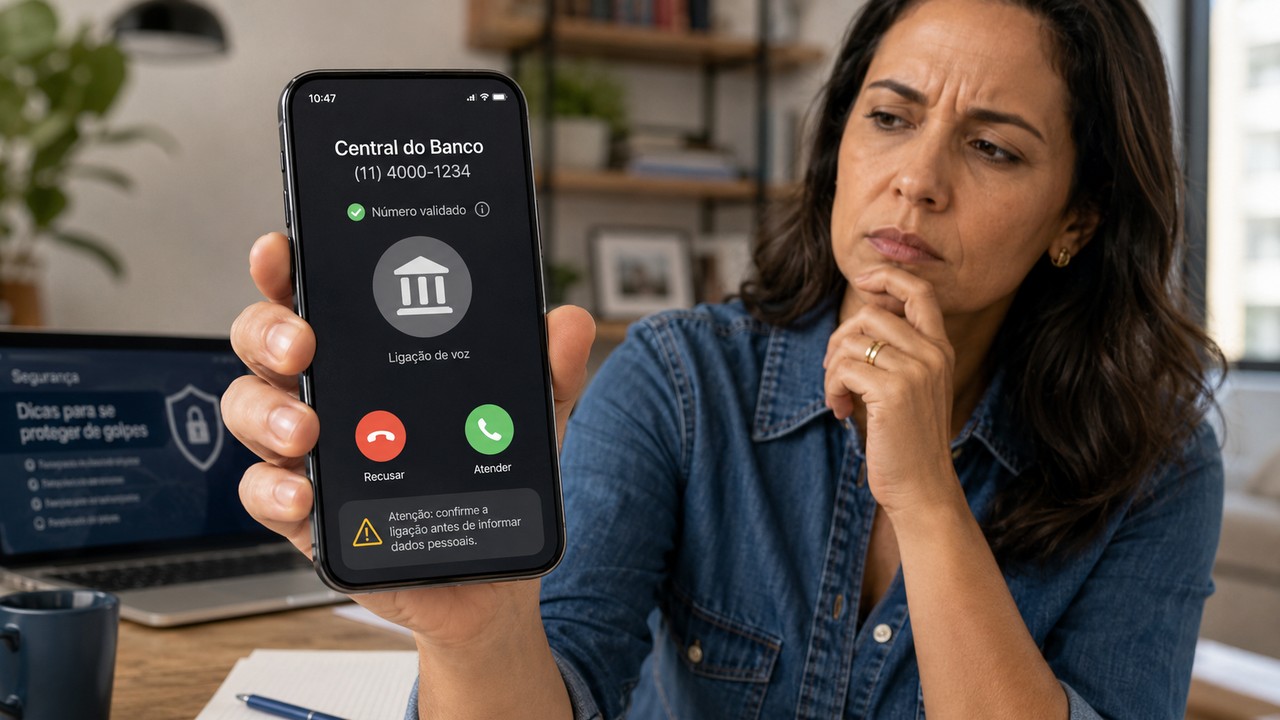
If you are still unsure, contact the company supposedly responsible through an official channel obtained independently. Use the official app, a website address you enter yourself, the contract, the invoice, or a support channel you already know. Avoid relying on a phone number, link, or message that arrived together with a suspicious charge.
Ask the company to identify the exact origin of the bill. A useful answer should allow you to link the charge to an order, contract, invoice, enrollment, subscription, or another verifiable event. If the company says it uses an intermediary, ask for that participant's identification and check whether it matches the information shown by the bank.
If no one can explain the charge or the data does not correspond to any relationship you recognize, do not authorize payment simply because the bill is inside DDA.
"I do not recognize it" and "hide" do not mean the same thing as canceling a debt
Some banks offer commands such as hide bill, reject account, or mark "I do not recognize this." Itaú, for example, provides the option "Não Reconheço a dívida" in its DDA bill management.
These tools are useful for organizing the screen and, in some workflows, communicating non-recognition. But it is important not to assign them a larger effect than they actually have. Marking a bill as unrecognized does not, by itself, resolve a possible contractual dispute and does not erase a debt that is in fact valid.
Likewise, hiding a bill only changes how it appears to you. If the charge has a legitimate origin, the obligation will have to be handled directly with the creditor. If it is improper, the goal is to clarify and correct the source of the charge, not merely remove the item from the app list.
What if I did not even remember activating DDA?
Brazil's Central Bank states that a payer must enroll in the service with an institution that offers DDA in order to view and pay bills in this way. Febraban has also warned that people who registered many years ago may continue receiving bills electronically and, if they do not remember enrolling, should confirm the situation with their bank.
For that reason, finding the DDA area active does not necessarily mean someone activated the service recently. If you do not remember enrolling, check the app settings or contact your financial institution to find out when the service was enabled and how to disable it if you do not want to use it.
Disabling DDA, however, is not a solution for a charge whose origin needs to be clarified. The service is only the electronic form in which bills registered in your name are presented.
What if the charge is a proposal bill?
Brazil's Central Bank also provides for the so-called proposal bill, intended for an offer of a product or service, a proposed contract, or an invitation to join an association. In this specific
type, payment is optional and the presentation must make that clear. Failure to pay a proposal bill should not lead to protest, judicial or extrajudicial collection, or the inclusion of the person's name in a credit restriction database because of that proposal.
This rule cannot be applied to every unfamiliar bill. Before concluding that "it is only a proposal," you need to confirm the type and information on the bill. The reason to mention this category is to show that the word "bill" does not describe a single legal situation.
If you already paid and only later realized something was wrong
If the problem is noticed only after payment, the priority changes. Gather the receipt, the beneficiary's details, and anything that shows why the charge is not recognized. Contact your financial institution and the company identified as beneficiary immediately through official channels.
Brazil's Central Bank recommends checking, before payment, whether the beneficiary shown by the bank matches the person or company that should receive the money. If there is a discrepancy, the guidance is not to complete the transaction. After payment has been made, the sooner the case is reported to the institutions involved, the better the chance of receiving guidance on the measures available for that specific situation.
When there is an indication of fraud, it may also be necessary to file a police report and use official consumer protection channels. The appropriate procedure depends on how the charge was created, who received the money, and what the institutions are able to determine.
The practical rule for deciding
When faced with an unfamiliar bill in DDA, treat the screen as an important piece of information, but not as a verdict on the debt.
DDA indicates that there is a registered bill associated with your CPF or CNPJ. It does not make the payment automatically and it does not replace verification of the relationship that supposedly gave rise to the charge. At the same time, because it works with data registered in the billing platform, it provides a safer reference for checking the beneficiary and amount than an isolated bill received in a message.
The decision to pay should come after three confirmations: you recognize the obligation, the beneficiary data makes sense for that obligation, and the amount corresponds to what was actually contracted or owed. If any of these answers remains uncertain, stop the payment and clarify the origin through official channels before authorizing any debit.