
A few drops of saline solution can change a cocktail without making it “taste salty.” The goal is not to salt the drink, but to use a small dose of sodium chloride to shift the perceived balance among bitterness, sweetness, and acidity. Sensory studies show that sodium can reduce the intensity of some bitter stimuli; more recent research indicates that the effect is not identical for every compound. In bar practice, this helps explain why a tiny dose can make citrus, herbs, and other components seem more distinct without adding a new aroma to the glass.
What saline solution does to flavor
The best-documented effect is the partial suppression of bitterness. In sensory studies, sodium salts reduced the perceived bitterness of several substances, although the magnitude varied by compound and concentration. A classic study published in Nature described salt as a kind of “filter” that can reduce unpleasant tastes more than some pleasant ones; later work has reinforced that the interaction depends on the substance and may involve both sensory processing and, for some receptors, effects at the peripheral receptor level.
This does not mean salt “creates” sweetness or aroma. When some bitterness is reduced, sweetness already present may seem clearer, while citrus, herbal, or fruity notes may become more prominent in the overall profile. At higher doses, however, saltiness itself starts to dominate and the effect stops being a subtle adjustment and becomes a noticeable ingredient. The useful range sits below that threshold.
Base recipe: 20% saline solution
A common cocktail reference is a 20% solution by weight. It is concentrated enough to work in a few drops and easy to reproduce at home.
- 20 g salt;
- 80 g water;
- a clean dropper bottle.
Stir until the salt is fully dissolved and transfer the solution to the bottle. If needed, use slightly warm water to speed dissolution, then let it cool before use. Measure by weight: “20%” here means that salt is 20% of the total mass of the solution. That is 20 g of salt plus 80 g of water, not 20 g of salt added to 100 g of water.
For consistency, use a plain salt without seasonings or added flavorings. Salt type matters most when recipes are measured by volume; weighing in grams makes the concentration much more reproducible.
How to dose it without making the drink salty
There is no universal drop count because drop size changes with the dropper, solution viscosity, temperature, and even how the bulb is squeezed. The safest way to find the right amount is to treat drop count as a testing range.
| Step | What to do | What to watch for |
|---|---|---|
| 1 | Make the cocktail normally and taste it before adjusting. | Bitterness, acidity, sweetness, and finish. |
| 2 | Add 2 drops of the 20% solution and mix. | Whether bitterness softens and other flavors become more defined. |
| 3 | If it still makes sense, add 1 drop at a time. | Stop when the improvement is no longer clear. |
| 4 | Use about 5 drops only as an initial practical comparison limit, not as a rule. | If saltiness becomes obvious, you have passed the useful point for that drink and dropper. |
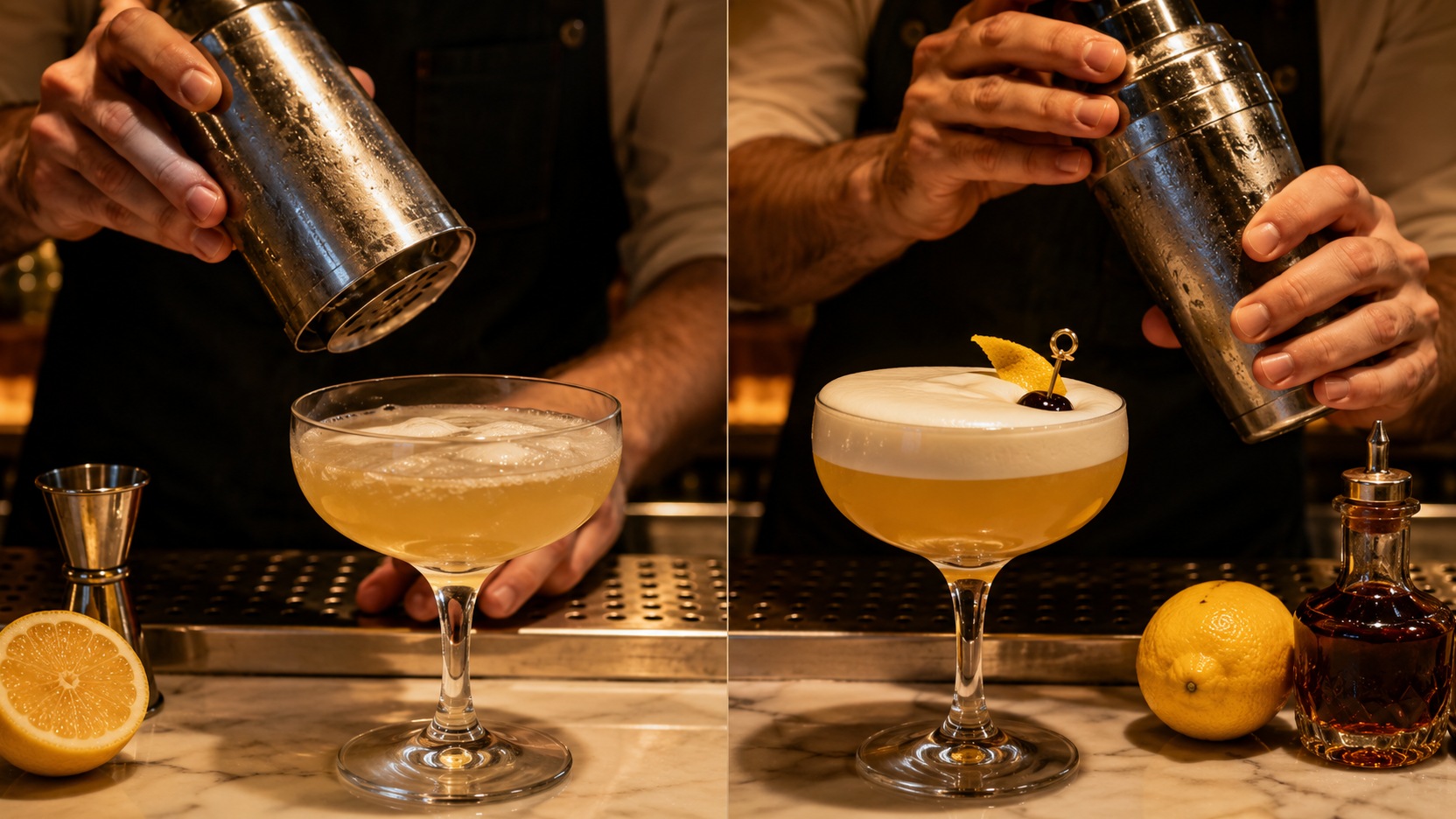
Professional examples cited by Liquor.com use four drops in a Daiquiri and often work around five drops of a 20% solution. That is a practice reference, not a scientific dose and not a promise that every cocktail improves with the same amount.
The best test: the same drink with and without saline
To notice the effect without relying on taste memory, run a controlled comparison. Make one base batch and divide it into two small equal portions. Leave one unchanged and add saline only to the other. Taste in small sips, alternating between the samples.
Watch four things: bitterness, perceived sweetness, clarity of citrus or herbal notes, and finish. For drinks served over ice, it can be useful to compare again after some dilution, because water and temperature also change balance. This method is more informative than simply putting salt into every drink.
If you want to limit alcohol consumption while testing, work with mini portions or use a nonalcoholic version built around the same flavor structure. The technique is about sensory adjustment; it does not require drinking more.
Which cocktails tend to benefit most
Saline is especially useful when one component can become aggressive or cover up the rest of the recipe:
- citrus drinks and sours: a small dose can soften bitter edges and make the whole drink feel more integrated;
- cocktails with amari, tonic, or herbal ingredients: salt can reduce part of the bitterness and make other notes easier to read;
- very sweet drinks: saline may help rebalance perception, although it does not replace fixing a recipe with too much sugar;
- savory or vegetal recipes: the solution allows fine adjustment without the texture of salt crystals.
Epicurious likewise highlights small amounts of salt as a way to tame bitterness and make other flavors more noticeable. Bartenders interviewed by Liquor.com also stress that not every cocktail needs it. In some drinks, bitterness is central to the drink’s identity, and reducing it can make the recipe feel overly smoothed out.
When to reduce the dose or skip it
- When the cocktail already contains naturally salty ingredients such as brine, pickle liquid, or some premixed components.
- When bitterness is intentional and acts as the backbone of the drink.
- When a recipe is already balanced: adding salt just because the technique exists can make it worse.
- When the real problem is too much sugar, acid, or alcohol. Saline can shift perception, but it cannot fix structurally incorrect proportions.
People who need to limit sodium intake for health reasons should also remember that the solution adds sodium even when obvious saltiness is not perceived.
How to diagnose the adjustment
The drink tastes salty
The dose went too far for that recipe. You cannot remove dissolved salt; the practical fix is to dilute it with an unsalted portion of the same drink. Next time, back off by one or two drops.
Nothing changed
Add one more drop, mix, and taste again. If there is still no improvement, accept that the drink may not need saline. Do not keep adding it indefinitely.
The result changes from one day to the next
Use the same dropper, weigh the solution, and mix the batch thoroughly. Drops are not a standardized unit; if precision is critical, especially in professional service, measure the solution by mass or volume rather than relying only on drop count.
What the science supports — and what it does not
The evidence supports the conclusion that sodium can suppress perceived bitterness, but not that there is a magic dose for every beverage. A 2024 study of human bitter taste receptors found that sodium chloride reduced signaling for some receptor-compound pairs while others were not affected in the same way. That reinforces an important practical point: saline is an adjustment tool, not a universal formula.
The best approach is still to combine a reproducible concentration with comparative tasting. A 20% solution provides a simple base; starting with two drops and moving up one at a time toward roughly five creates a useful home testing range for finding the point below obvious saltiness.