
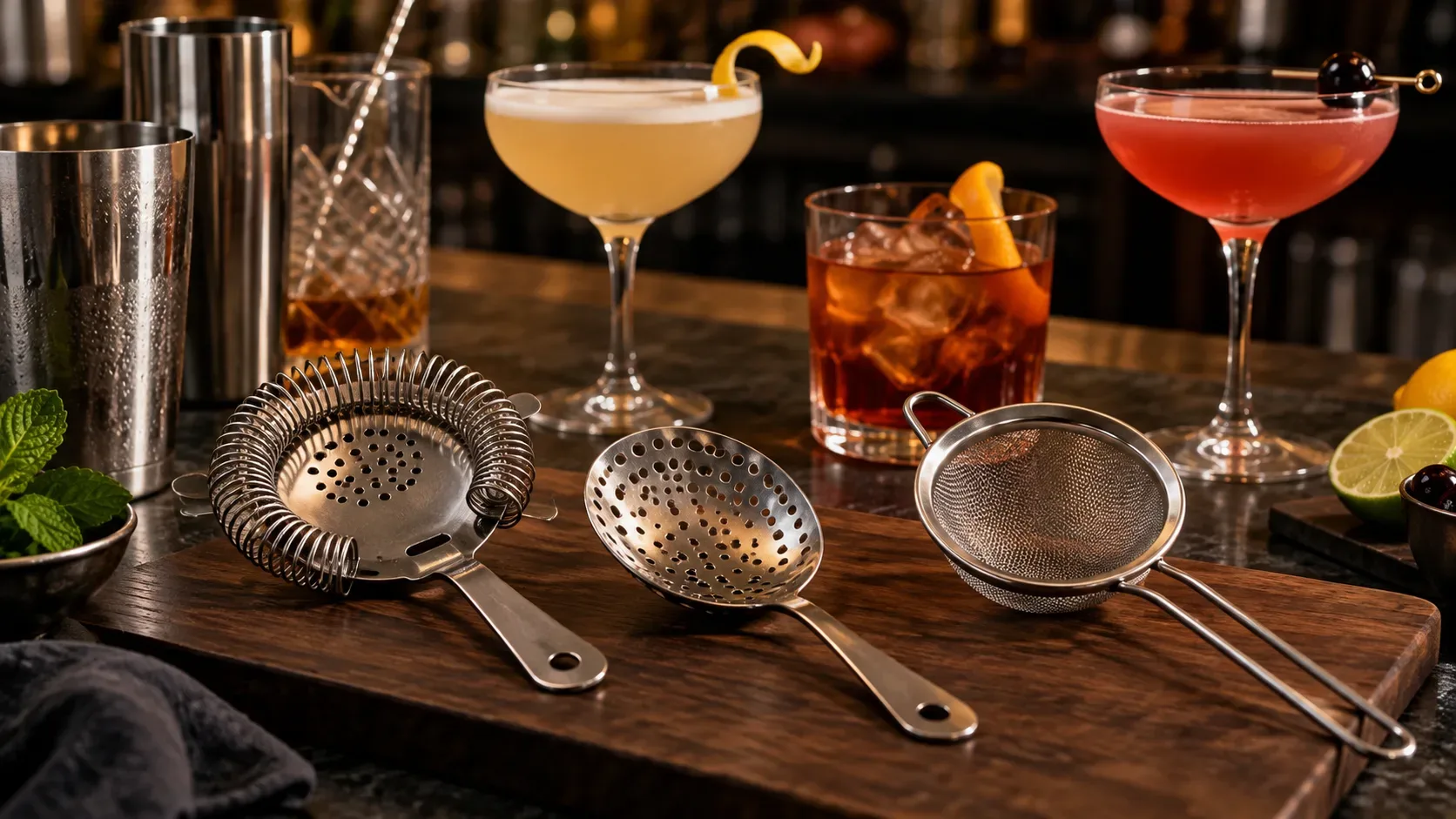
Hawthorne, Julep or fine-mesh strainer: which one should you use for each cocktail?
Hawthorne, Julep and fine-mesh strainers solve different problems. Learn how to choose by technique, ice, debris and the texture you want.
Read articleGlass & Method helps adults make better drinks with testable recipes, clearly explained techniques, documented histories, and alcohol-free alternatives.
Hawthorne, Julep and fine-mesh strainers solve different problems. Learn how to choose by technique, ice, debris and the texture you want.
Read article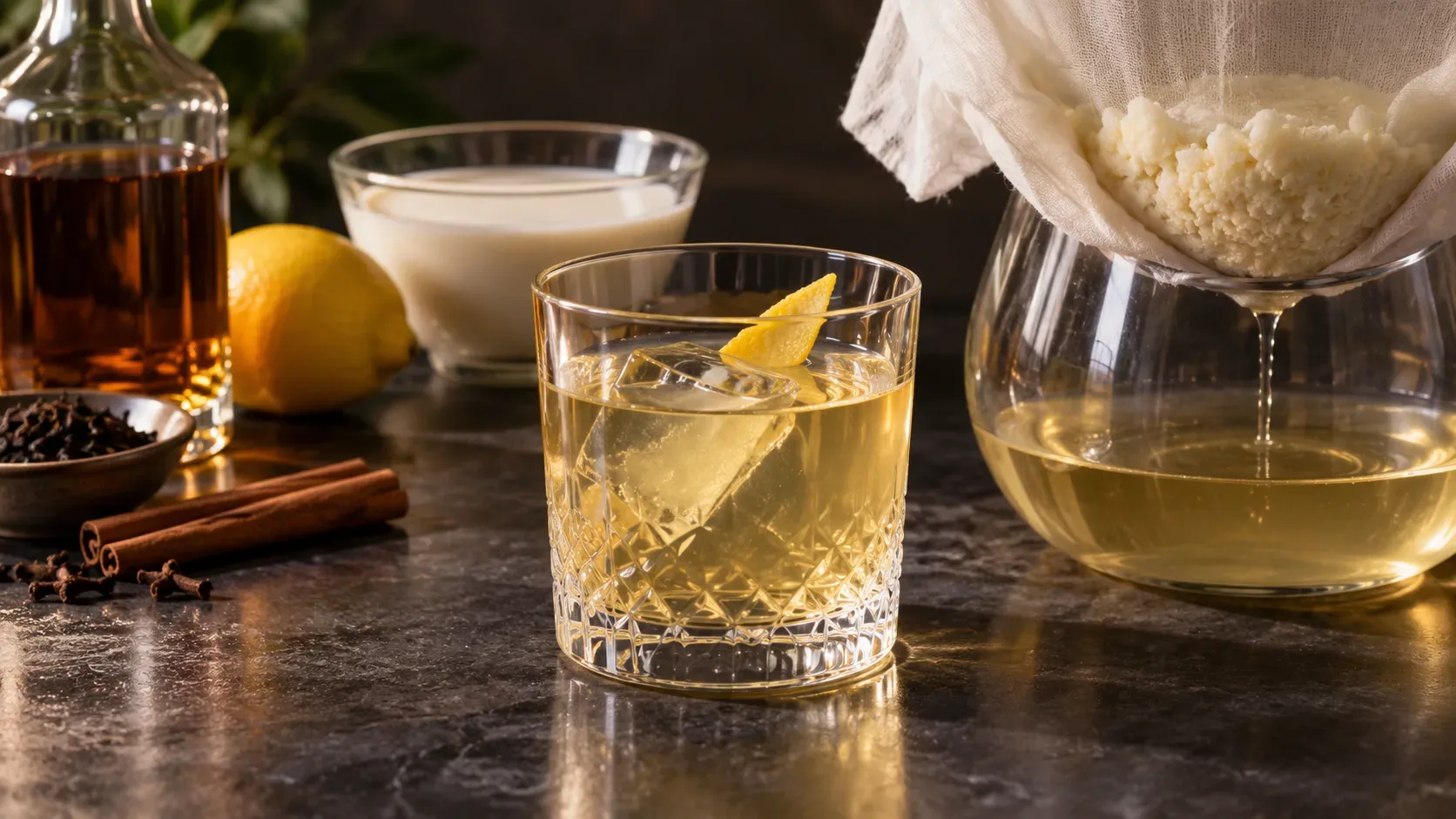
Learn how acidity coagulates casein, what it can remove from a cocktail, and why the curd bed and recirculation are crucial for clarity.
Read article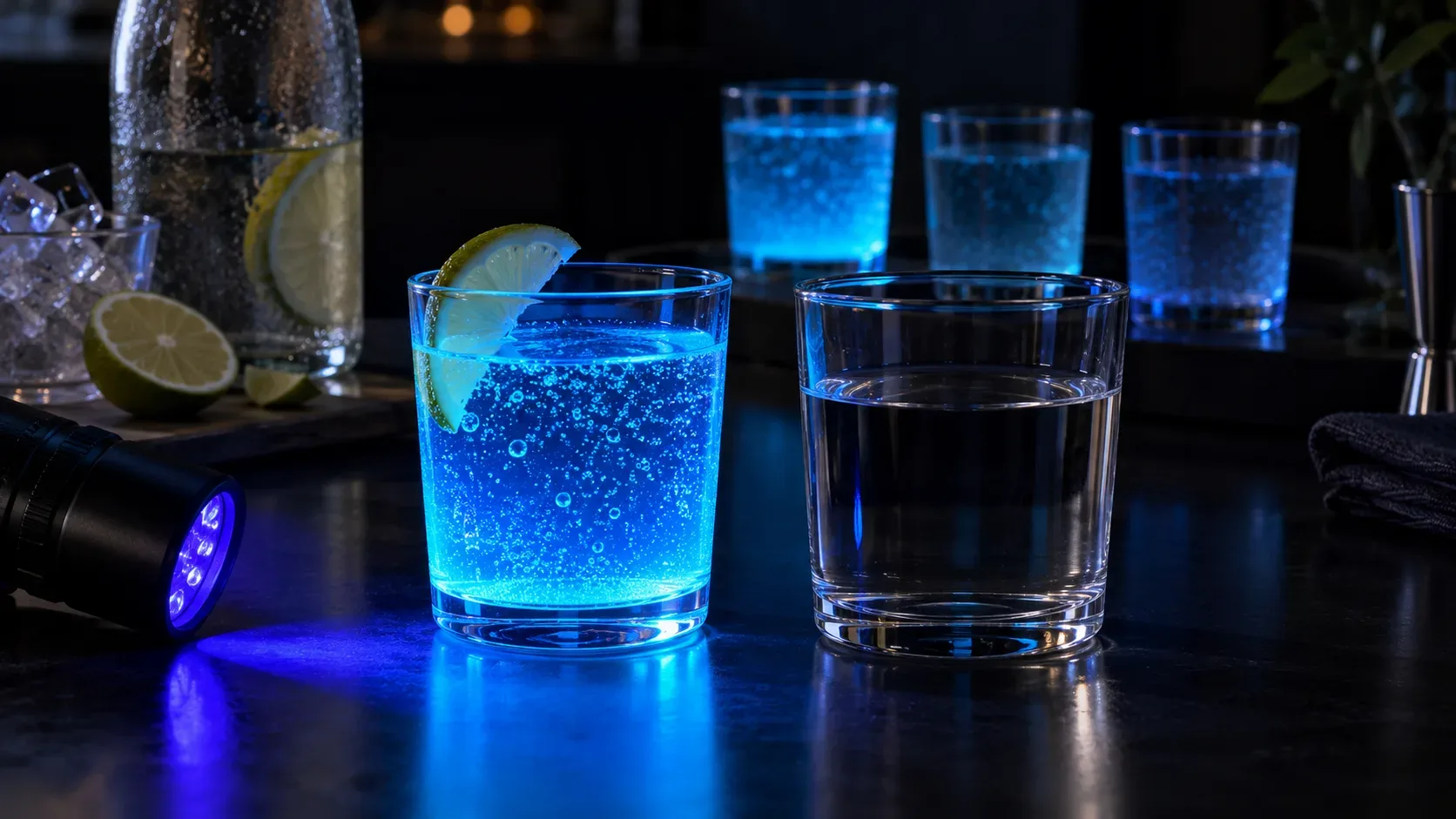
Quinine absorbs ultraviolet radiation and re-emits part of that energy as visible blue light. The effect makes a simple experiment, but visual brightness alone does not measure con...
Read article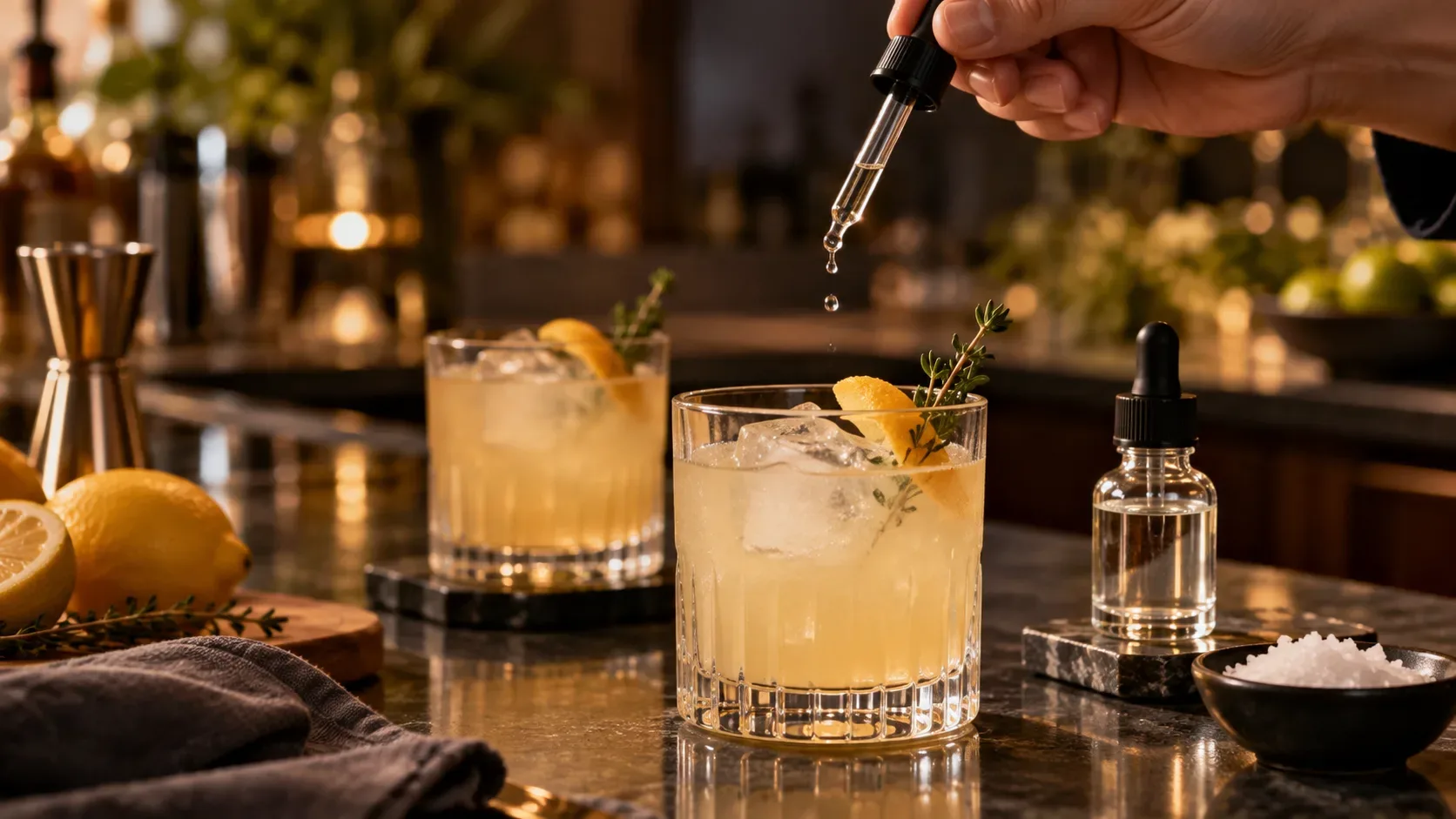
Learn how saline solution can reduce bitterness, make other flavors stand out, and how to test a 20% solution without making a cocktail taste salty.
Read article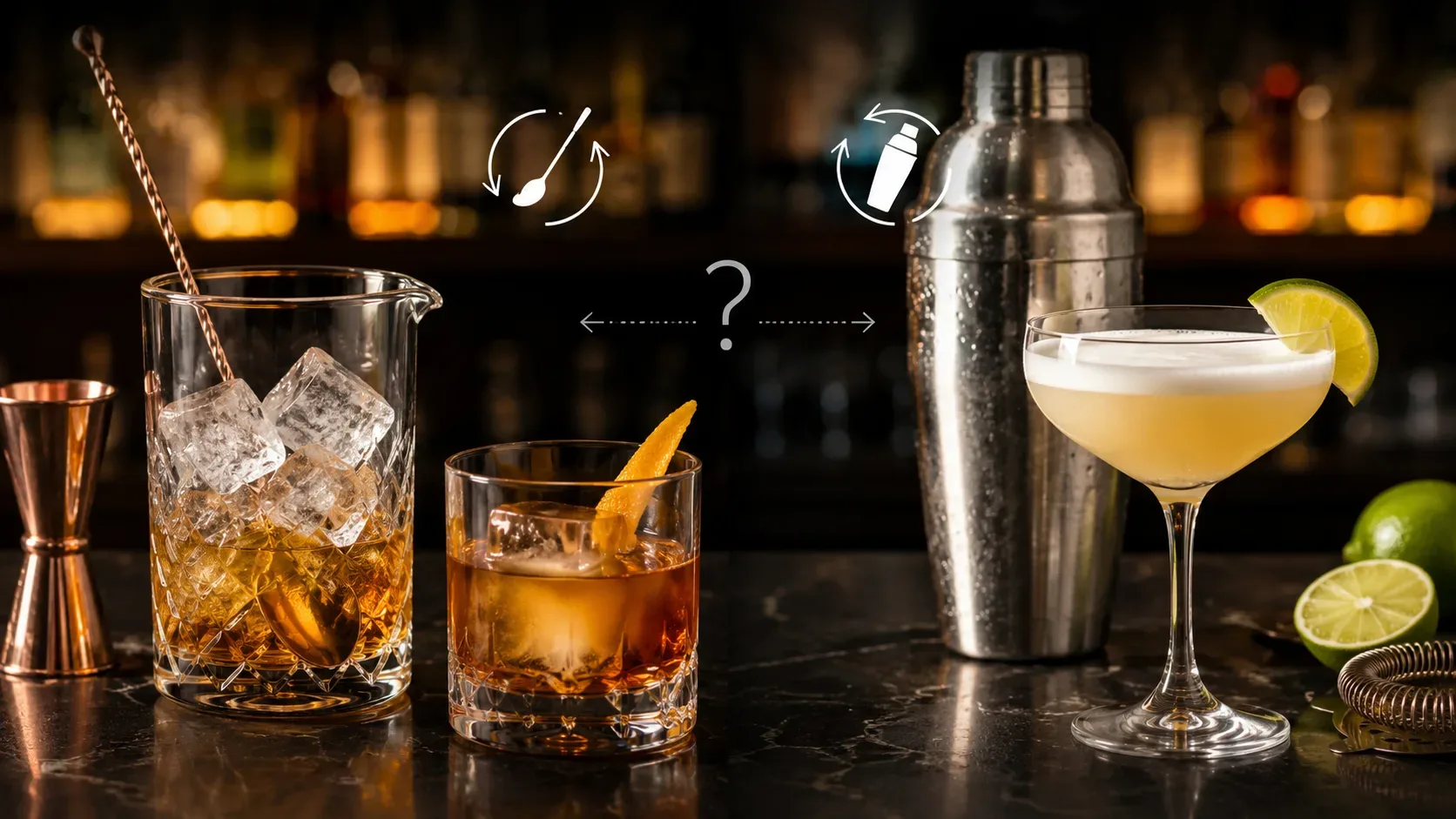
Learn when to stir or shake a cocktail and how citrus, spirits, egg white, dairy, aeration, and dilution affect the choice.
Read article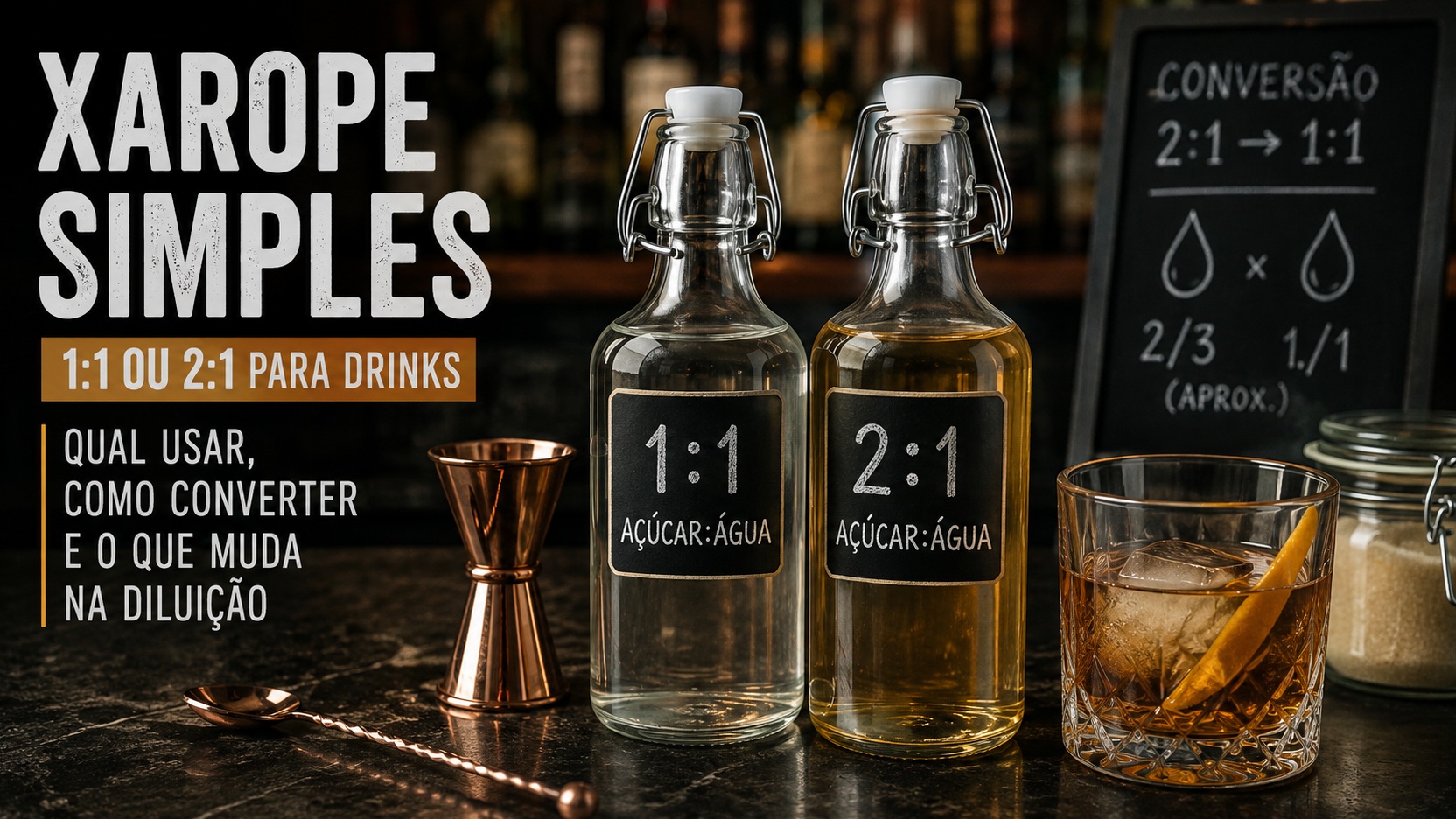
The conversion changes depending on whether you weigh or measure by volume: by mass, 1:1 -> 2:1 uses 75%; in a jigger, it is close to 70%. See how to adjust the water too.
Read article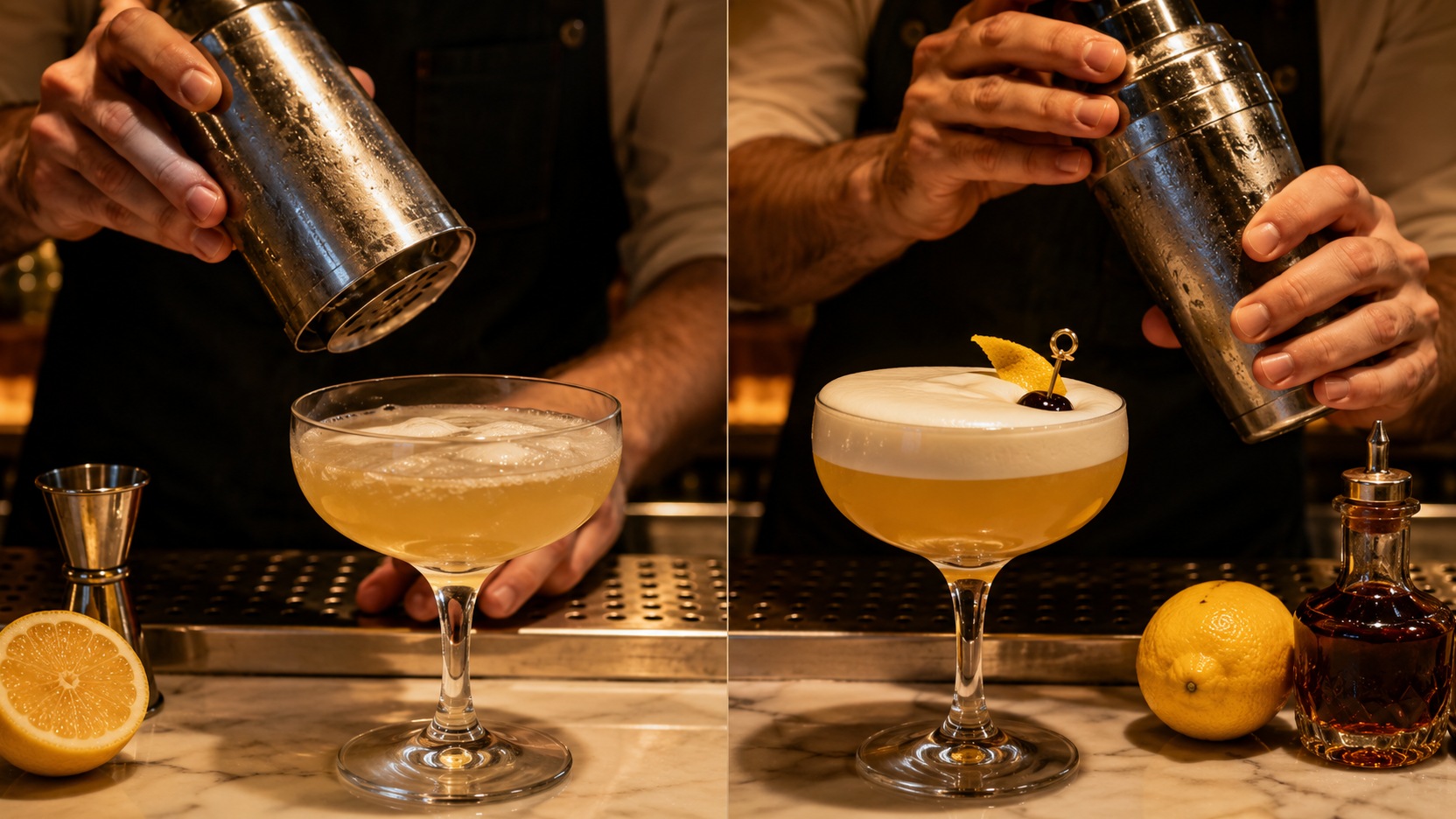
Reverse dry shake often favors a taller foam layer, but it does not fix everything. Learn what changes in the technique and how to diagnose foam that will not hold.
Read article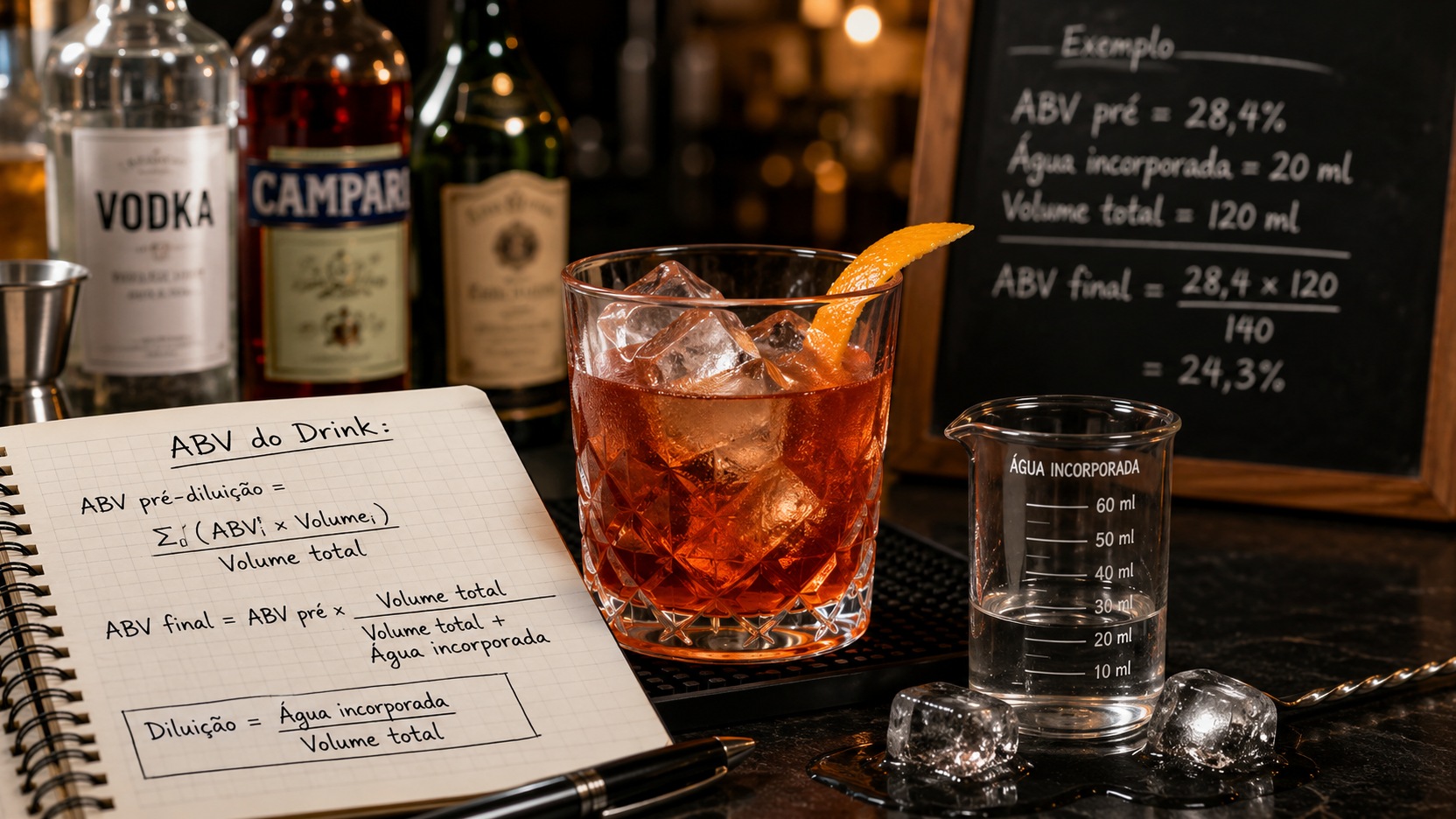
Calculate the estimated ABV of a cocktail by adding the alcohol from each ingredient and using the water actually incorporated by the ice, with a practical method and clear precisi...
Read article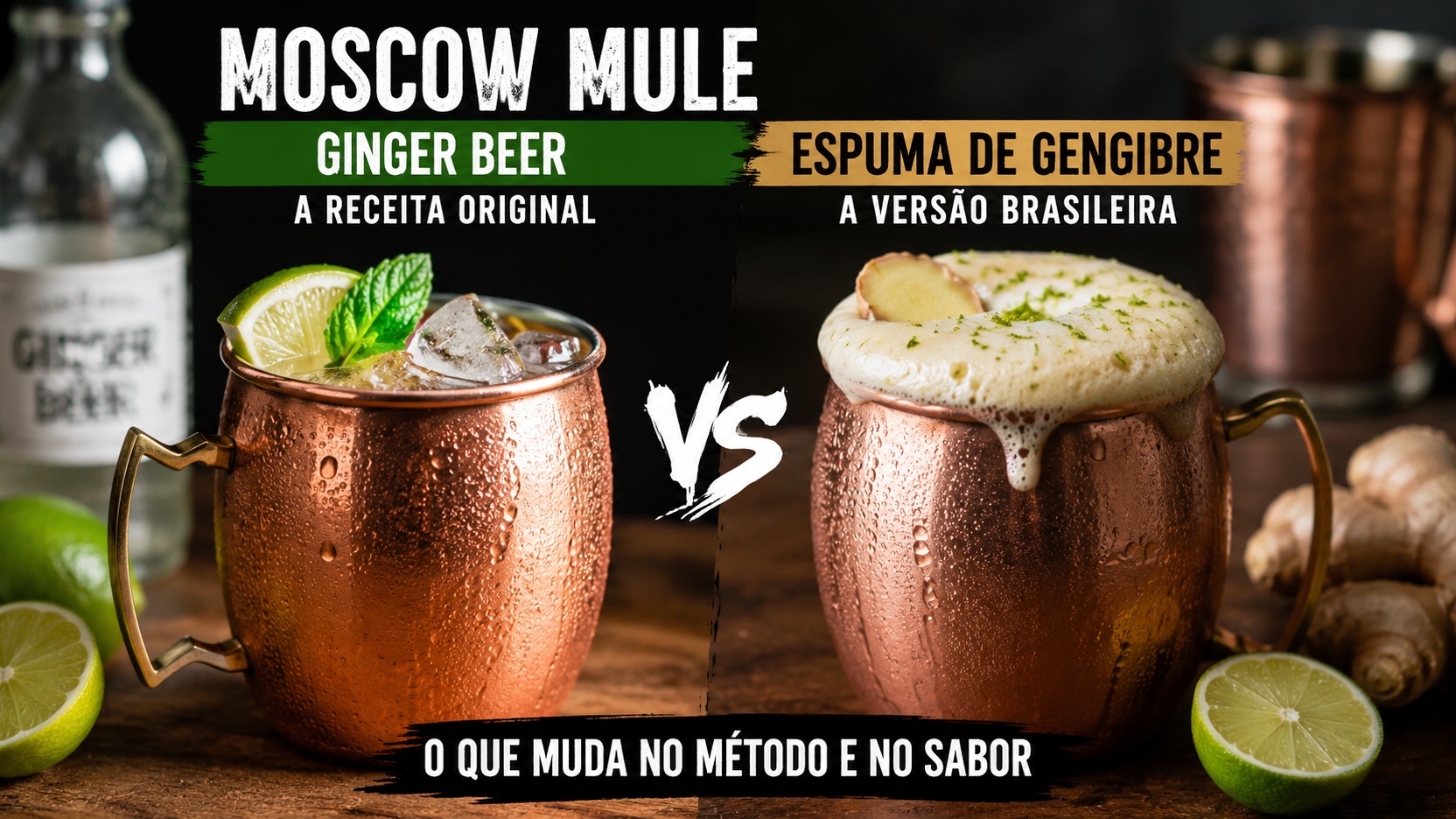
The classic recipe uses carbonated ginger beer; the Brazilian reinterpretation changes the construction of the drink to a whipped base and ginger foam. See how this changes texture...
Read article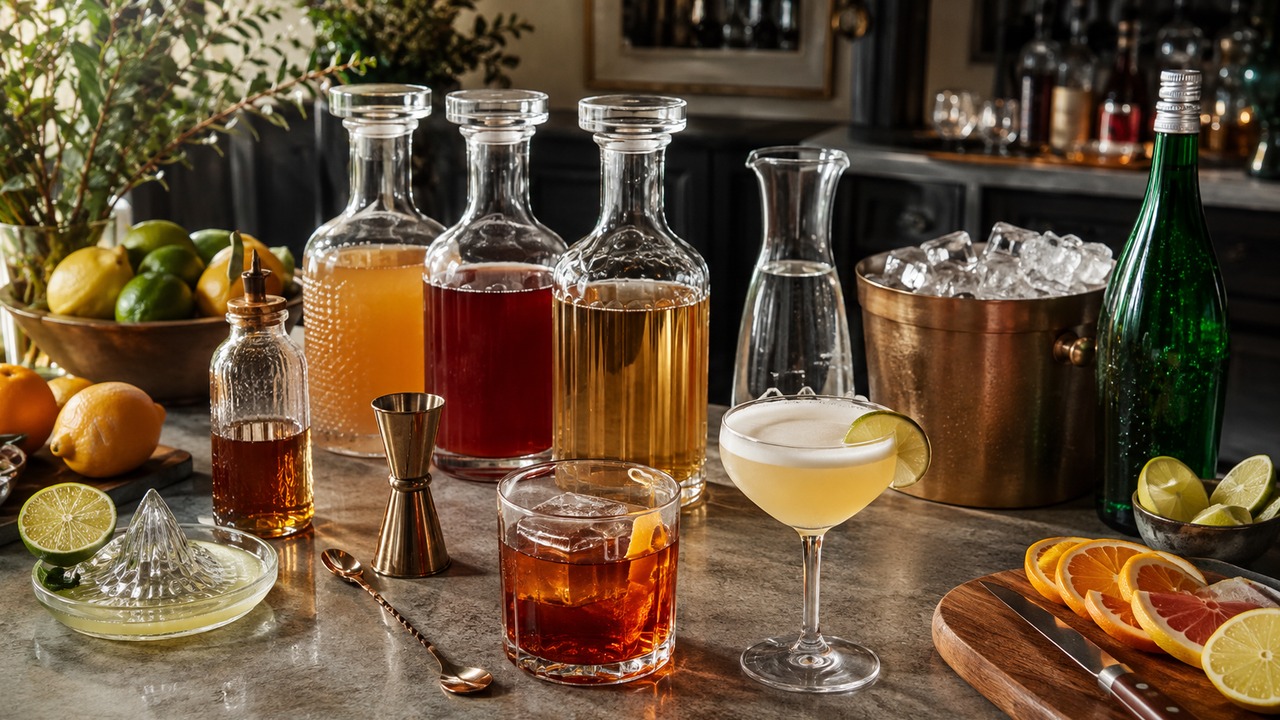
Learn how to transform an individual recipe into a balanced batch, measure the water incorporated by the ice and separate what can be pre-mixed from what needs to be put into servi...
Read article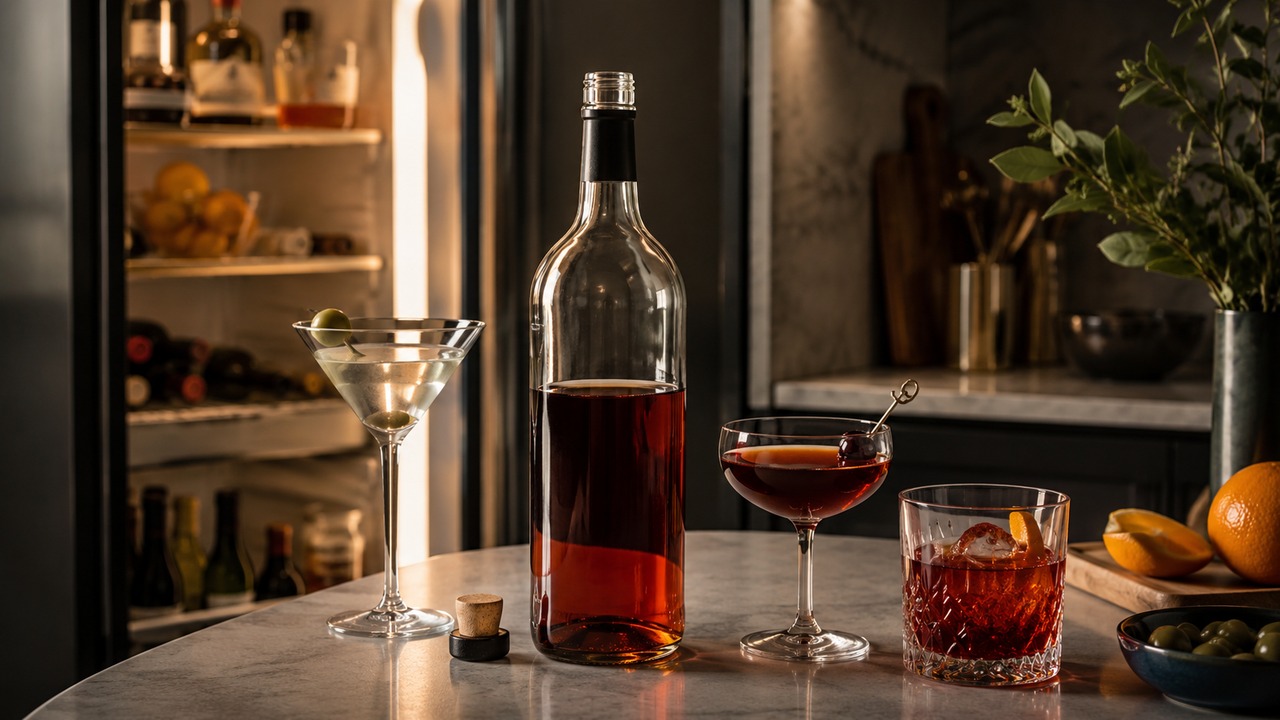
Once opened, the vermouth must be refrigerated. A month is a good control point, but aroma, flavor, sealing and exposure to air decide the actual quality.
Read article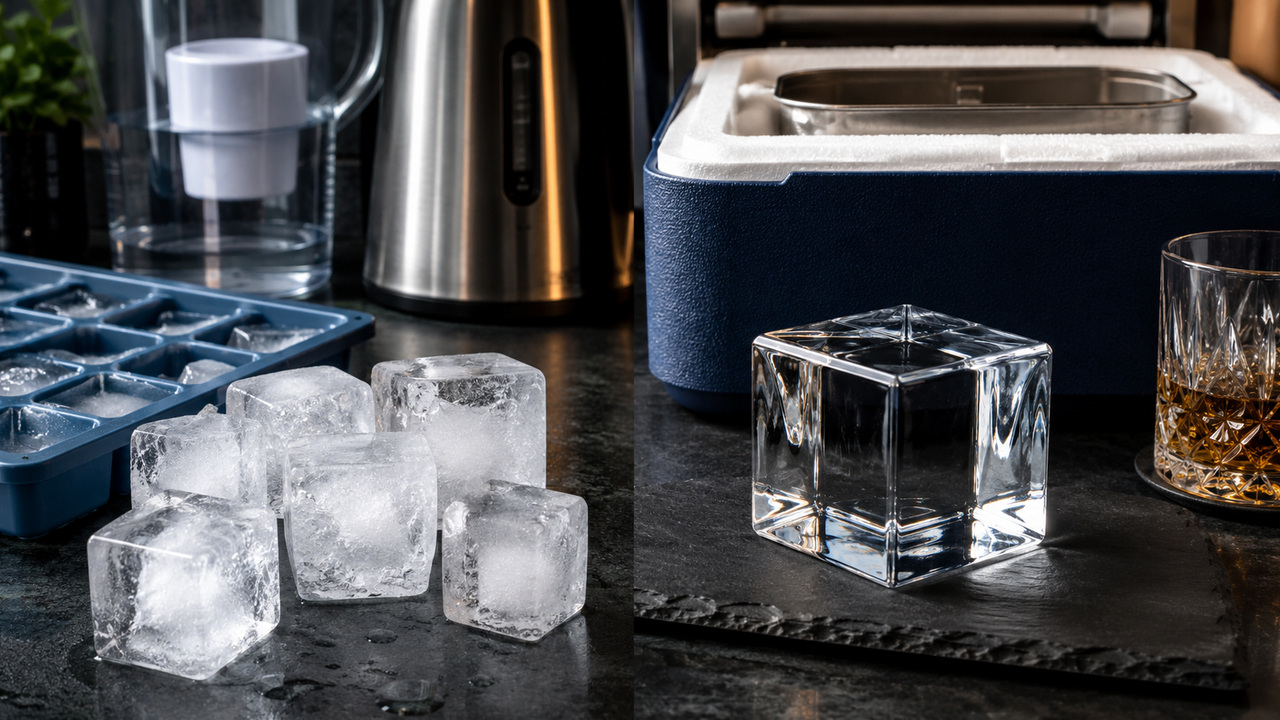
Boiled or filtered water can change gases and impurities, but does not control how it freezes. Understand why directional freezing is the most reproducible method.
Read article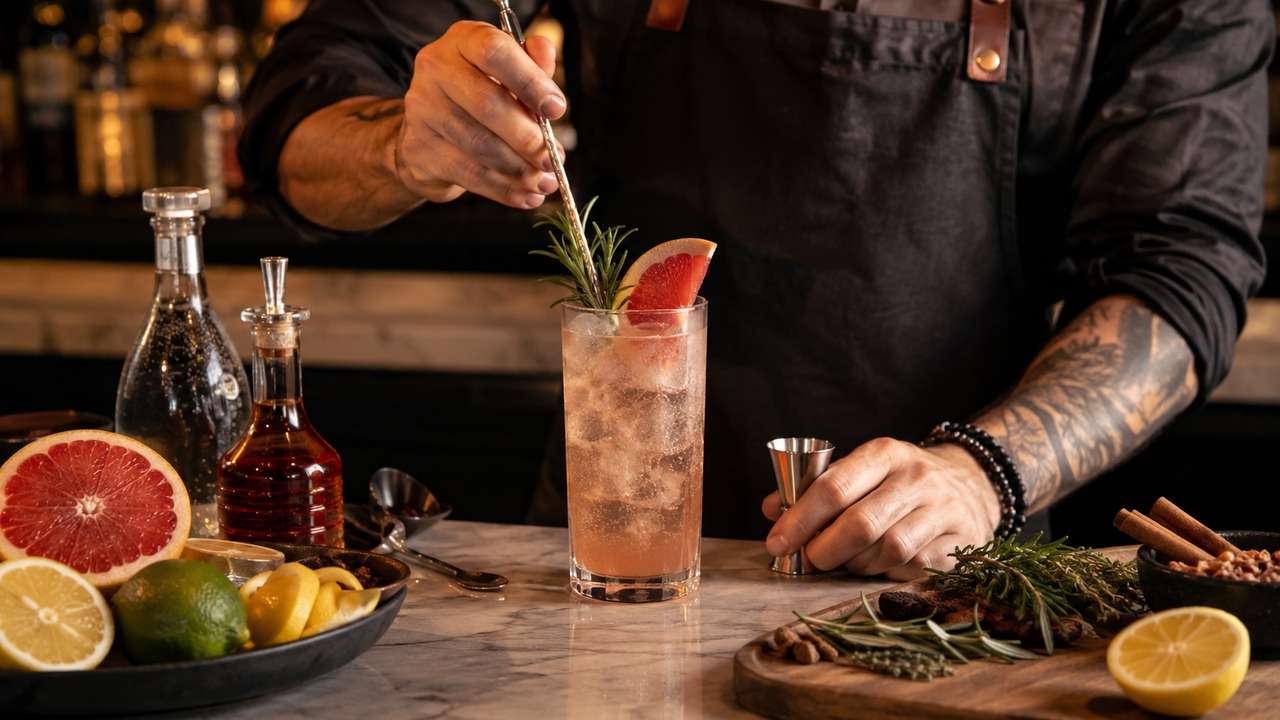
A practical method to correct mocktails for acidity, bitterness, body, aroma and dilution, with incremental testing and attention to what 0.0% really is.
Read article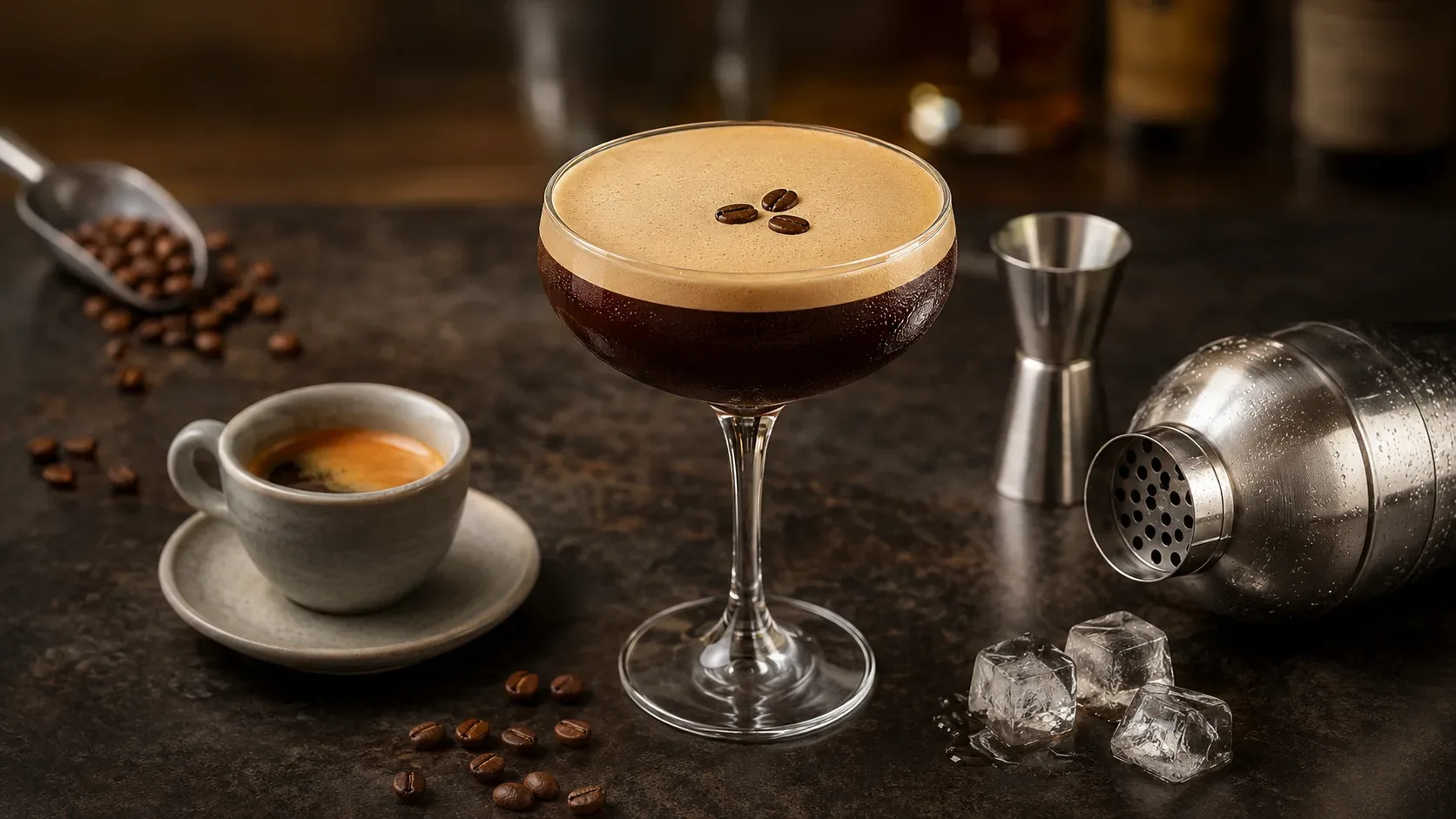
Poor foam on an Espresso Martini rarely has just one cause. See how fresh espresso, cold coffee, dilution and stirring change texture and stability.
Read article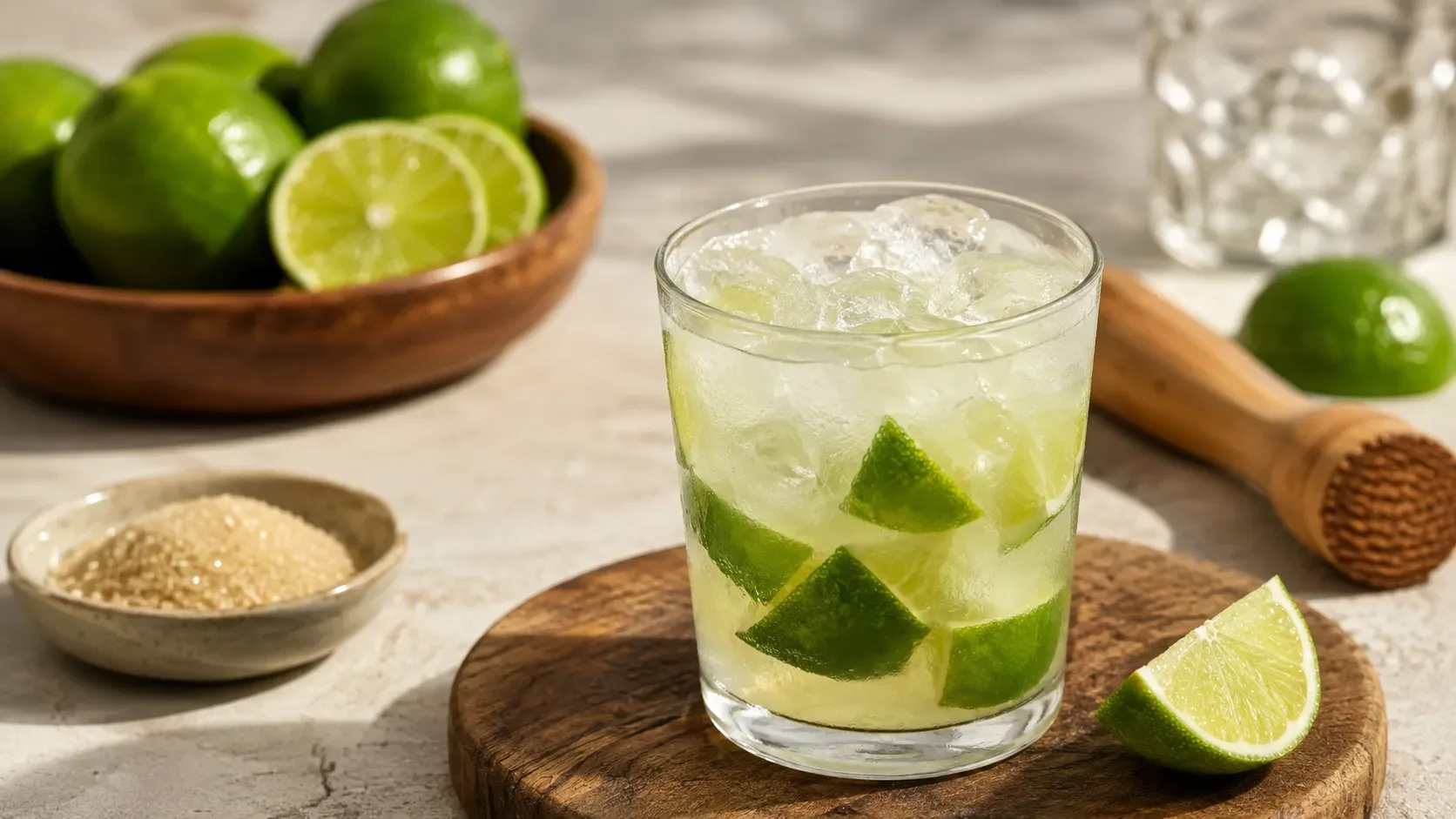
A Brazilian symbol, the caipirinha combines cachaça, lemon, sugar and ice. Discover the versions of its origins, the evolution of the drink and the classic recipe.
Read article
Scale the Old Fashioned to 1, 2 or 4 glasses, control the water per dose and prepare a 0.0% alternative that preserves sweetness, bitterness and aroma.
Read article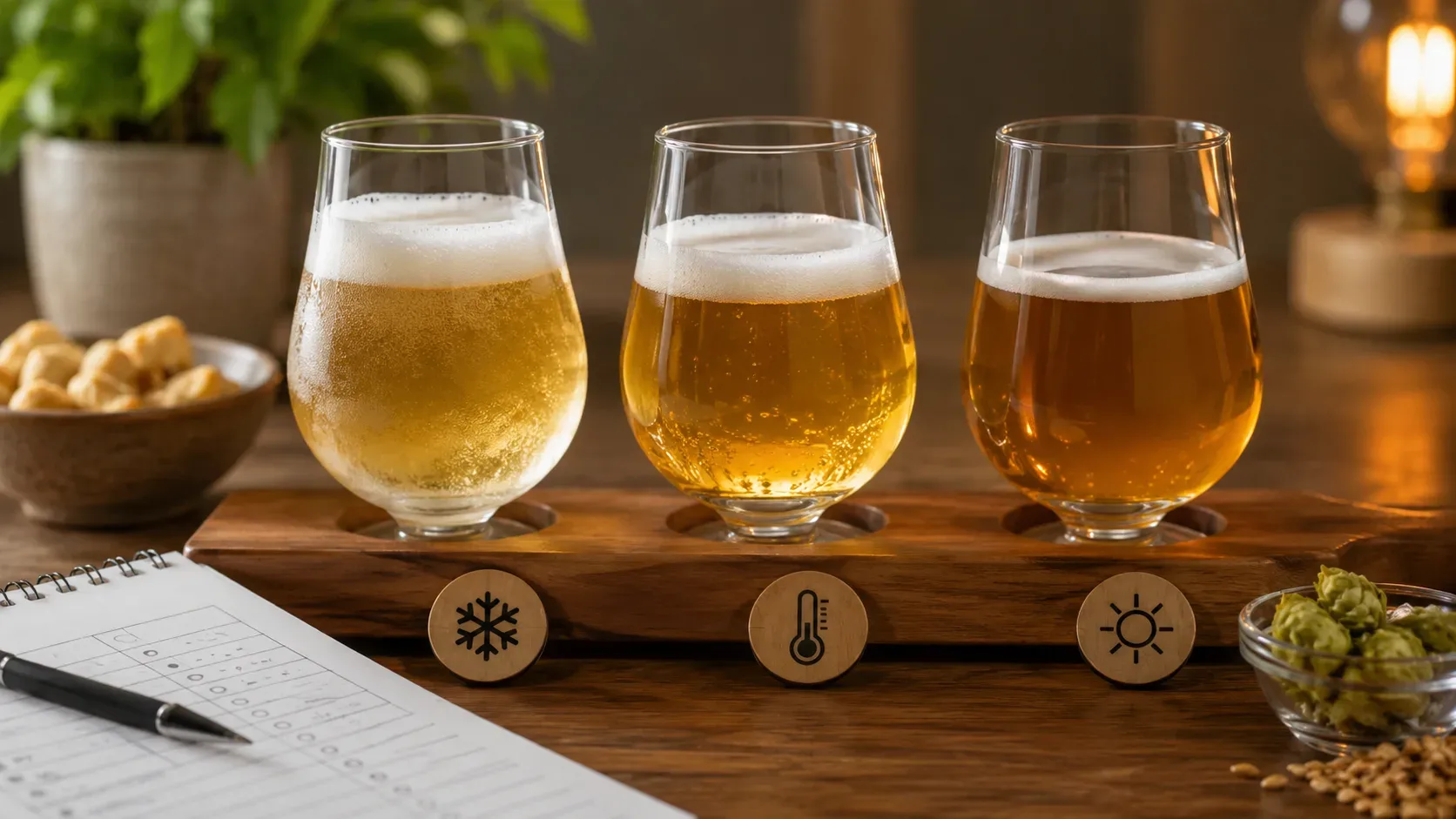
A blind protocol, with three temperatures and small doses, to compare aroma, bitterness, gas and preference without turning personal choice into a rule.
Read article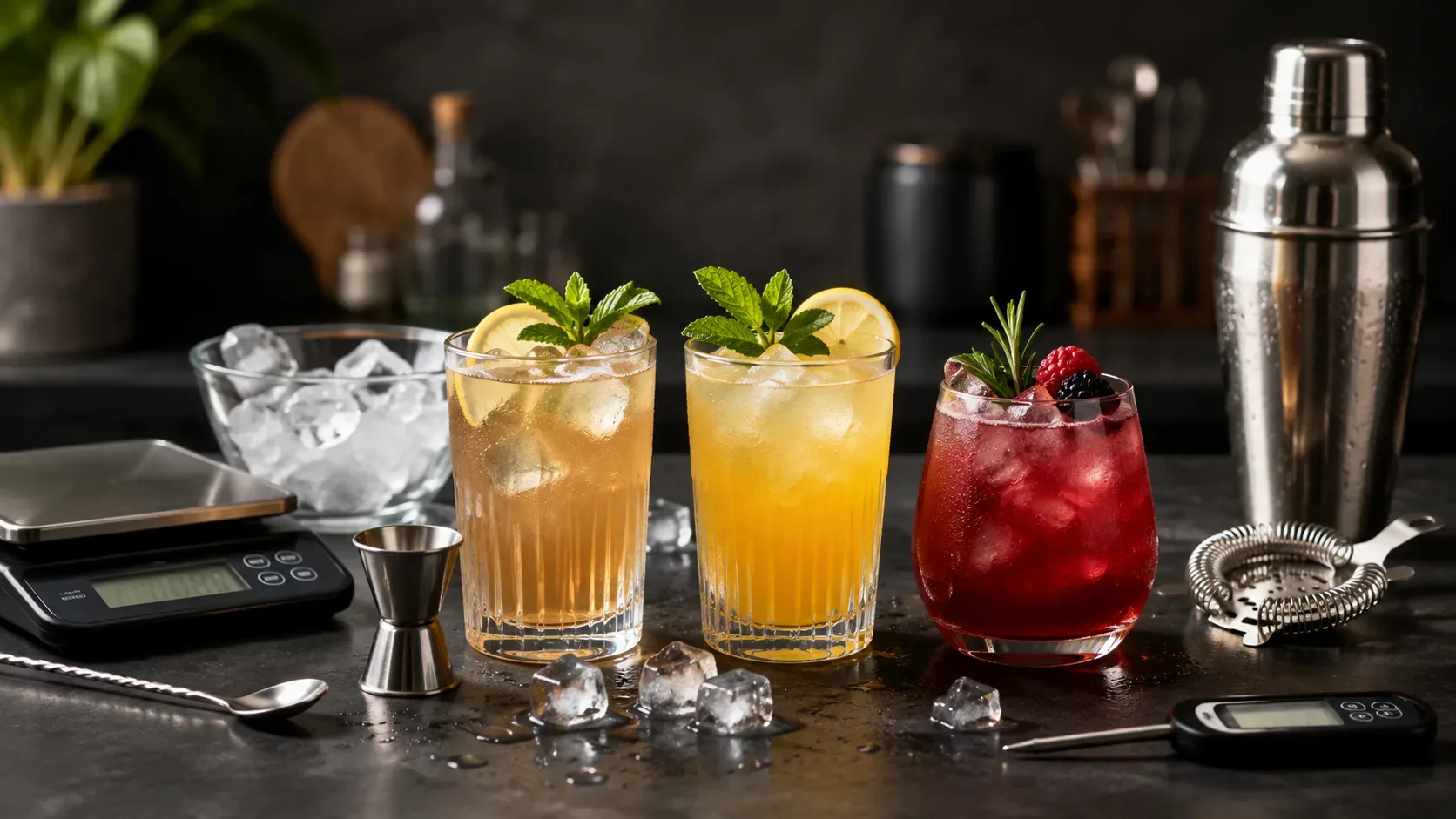
Weighing before and after also works for non-alcoholic cocktails, but sugar, temperature and technique change the result and the target needs to be recalibrated.
Read article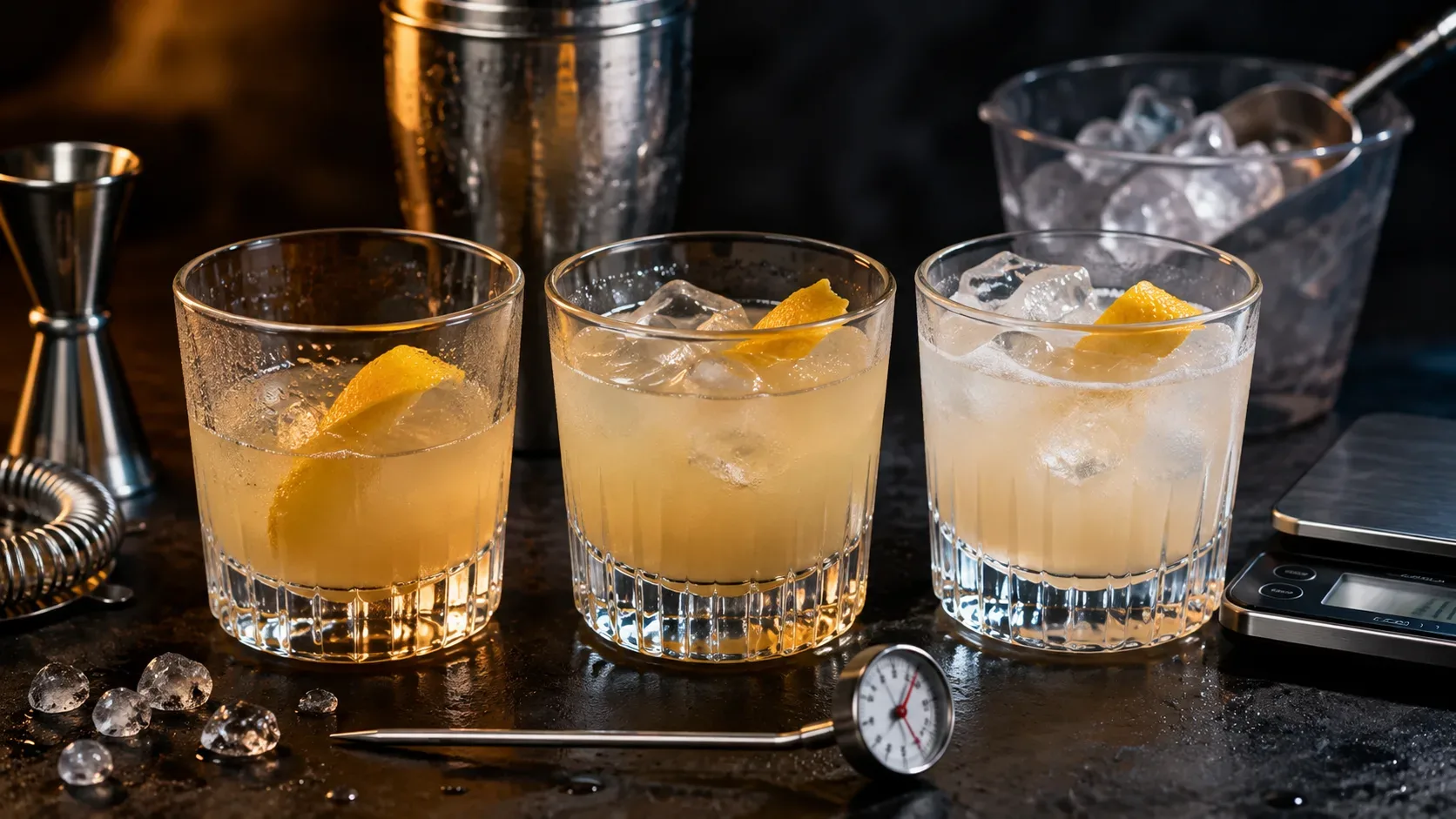
Dilution and temperature define the strength, aroma and texture of the cocktail. See how to measure the effect of ice with a scale, thermometer and controlled times.
Read articleNo articles match this search.