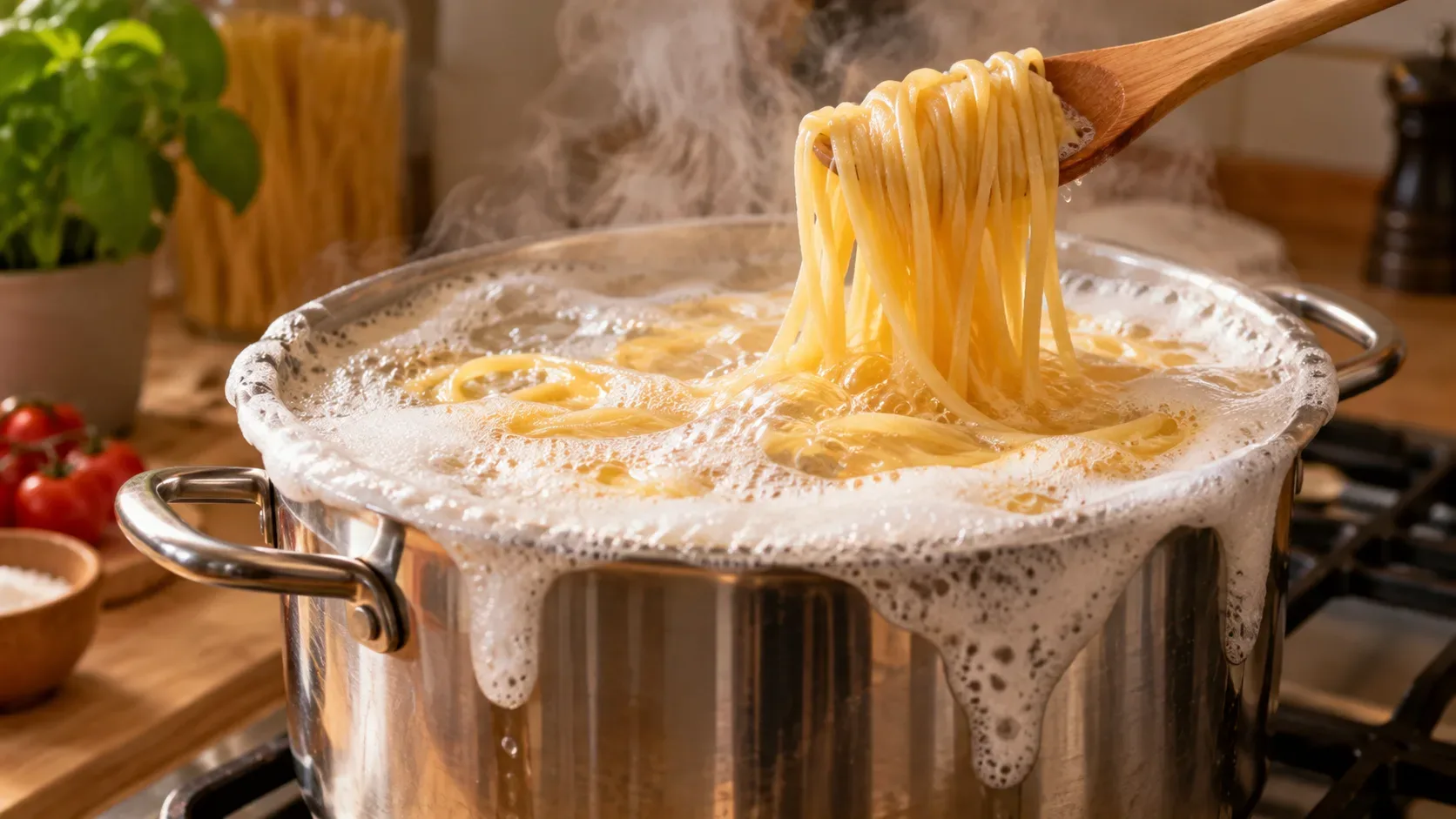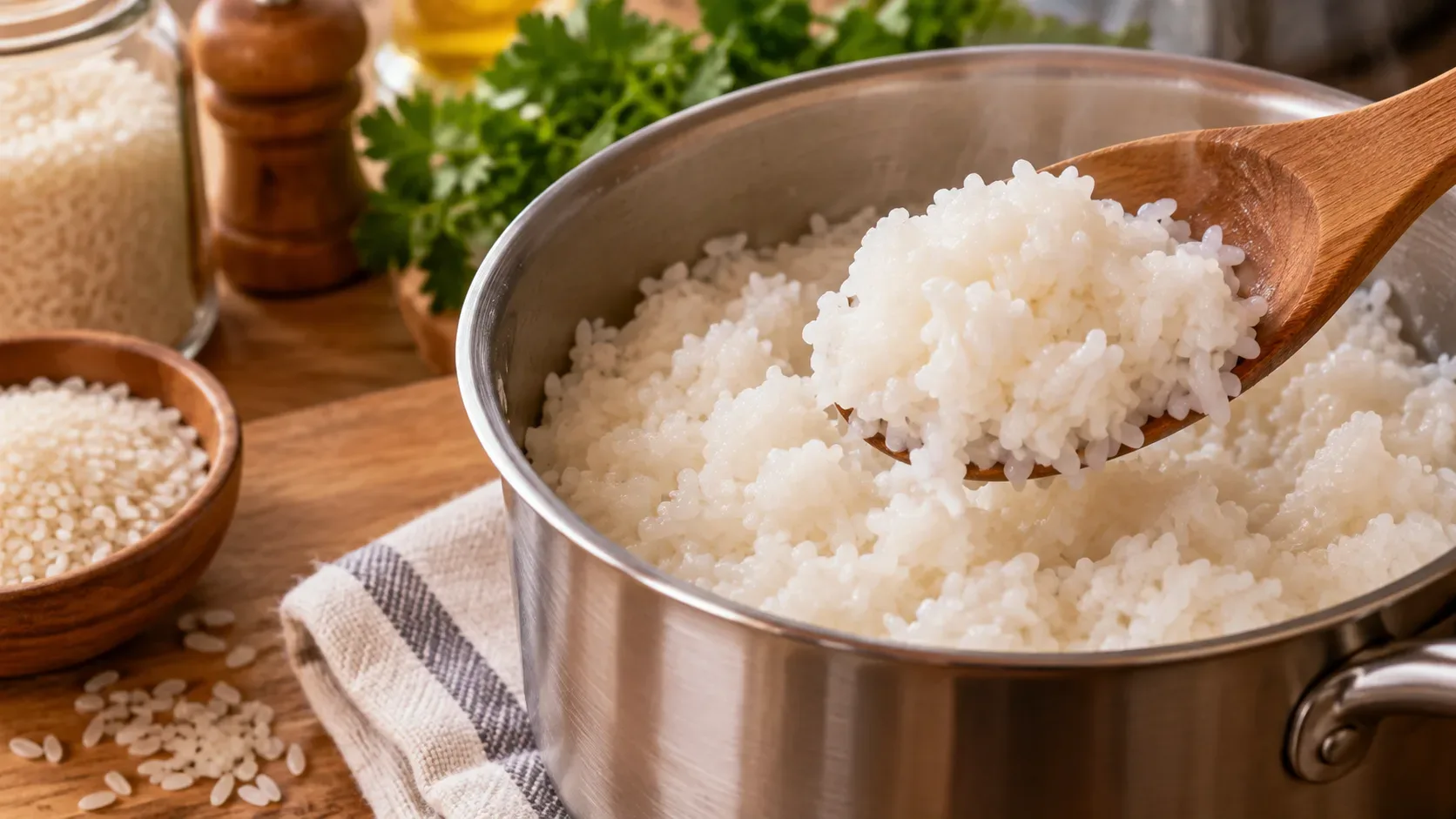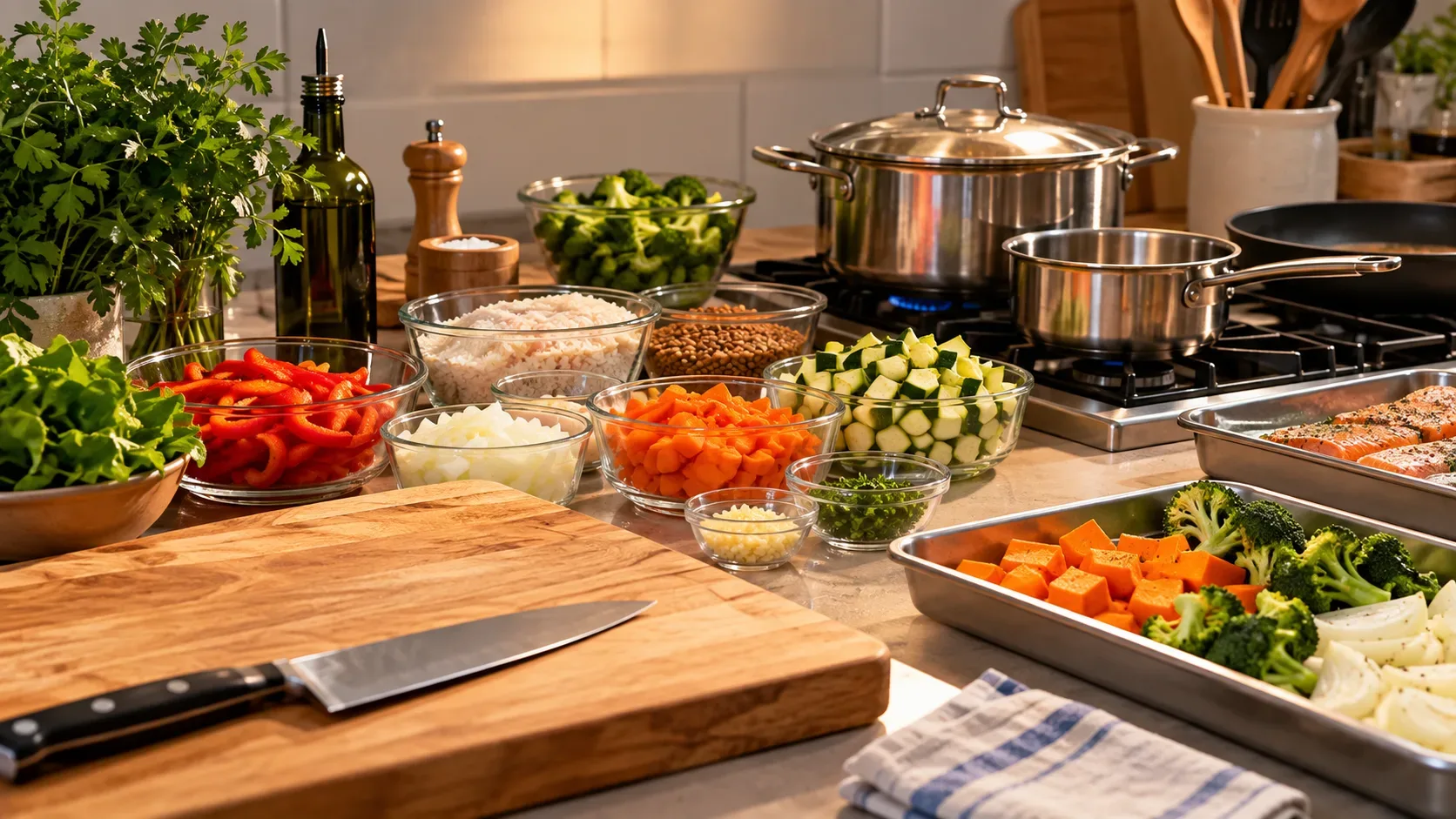
When you cook several meals in one session, mise en place stops being only about “setting out ingredients” and becomes an execution plan. The goal is to identify what multiple recipes share, complete those tasks once, and order the work according to dependencies between steps. In practice, the most efficient sequence is often: organize recipes and equipment, wash and prepare produce, complete shared cutting tasks, preheat the oven or water when it will soon be needed, start the longest steps first, and leave quick or delicate finishing work until the end.
In professional culinary training, mise en place means having ingredients and equipment in the right place at the right time. With several recipes, the same idea gains an extra layer: instead of building a separate workstation for each dish, you create one workflow for the entire cooking session.
Start with a dependency map, not one recipe at a time
A common mistake in a multi-meal session is to finish one recipe completely before looking at the next. This puts the knife, cutting board, pan, and oven through repeated cycles of use, washing, heating, and cooling. A dependency map helps remove that duplicate work.
Before cutting anything, read every recipe and mark four types of tasks:
- Shared tasks: onion, garlic, herbs, carrot, lemon, stock, rice, or another ingredient used in more than one preparation.
- Long tasks: roasting, cooking grains, reducing sauces, cooking pre-soaked legumes, or making something that must cool before the next step.
- Time-sensitive tasks: leafy greens, fresh herbs, fried foods, quick-cooking pasta, and finishes that lose texture if completed too early.
- Cross-contamination tasks: handling raw meat, poultry, seafood, or eggs, which should be kept separate from ready-to-eat foods.
Then turn that list into a physical order for the workstation. The question changes from “which recipe do I cook first?” to “which action unlocks the most dishes with the fewest tool changes?”.
A practical order for the whole session
| Step | What to do | Why it belongs here |
|---|---|---|
| 1. Read and group | Lay out the recipes, ingredients, and equipment. Add together quantities of repeated ingredients. | Prevents cutting or measuring the same ingredient several times. |
| 2. Clean the station and wash hands | Start with clean counters, utensils, and hands. | Reduces the chance of spreading contaminants at the start. |
| 3. Wash fresh produce | Rinse fruits and vegetables under running water and dry them when appropriate. | Gets produce ready for shared cutting tasks. |
| 4. Make the “clean” cuts | Cut items that will be eaten raw or are already ready to eat first, then vegetables that will be cooked. | Makes it easier to keep the board and knife away from raw animal foods. |
| 5. Divide by recipe | Distribute prepped ingredients into bowls, containers, or trays by dish. | Prevents searching and measuring again while cooking. |
| 6. Preheat when useful | Turn on the oven, heat water, or heat a pan only when a ready step will soon use that heat. | Avoids idle hot equipment and synchronizes the start of long tasks. |
| 7. Start the longest items | Begin roasts, grains, sauces, and other long cooking steps. | Short tasks can be completed while those items cook. |
| 8. Handle raw proteins | Cut, season, and portion them in a separate area and with separate or freshly cleaned utensils. | Protects ingredients that will not return to heat. |
| 9. Cook and reuse equipment deliberately | Use the same oven or pan for compatible steps while respecting safety, flavor, and temperature. | Reduces washing and repeated heating cycles. |
| 10. Finish, portion, and chill | Do herbs, greens, cold sauces, and other finishes last. Refrigerate perishables and leftovers promptly. | Preserves texture and keeps storage safe. |
How to share cutting tasks without mixing up the recipes
If three dishes use onion, there is little benefit in peeling and chopping one onion for each recipe at three different moments. Add the total quantity, make the cut once, and only then divide the portions. The same applies to garlic, carrot, celery, herbs, or other repeated ingredients when the required cut is compatible.
When cuts differ, there is still a shared workload. Cleaning, peeling, and trimming can be done as one block before ingredients are divided by shape. A carrot that will become dice and another that will become slices still share the first half of the work.
It also helps to separate “shared prep” from “final prep.” Herbs can be washed and dried early, then chopped close to service when a recipe depends on fresh aroma and appearance. Leafy greens can be washed and dried ahead, but dressed only at the end.
Cutting-board order: ready-to-eat foods before raw proteins
In a session with salad, vegetables, and raw chicken, cutting-board order matters. USDA and FDA guidance recommends keeping raw meat, poultry, and seafood separate from ready-to-eat foods. One simple strategy is to finish fruits, vegetables, breads, herbs, and other items that will not be cooked first, put them away, and only then work with raw proteins.
If possible, use different cutting boards. If you must use the same one, wash it with hot, soapy water between food groups and sanitize the surface according to guidance appropriate for the board material and the product you are using. Do the same with knives, tongs, and counters that contacted raw animal foods.
Fruits and vegetables should be rinsed under running water before preparation. Washing raw meat or poultry, however, is not recommended by USDA because splashes can spread microorganisms around the sink and counter. Safety comes from preventing cross-contamination and cooking properly.
When to preheat and when to wait
Preheating too early also creates waste. The appliance consumes energy while you are still cutting and measuring. Preheating too late creates a queue of ingredients waiting for heat.
The solution is to turn on the oven or heat the water when the preceding prep is nearly ready. If a roast needs 45 minutes and a salad needs 10, the oven should be in operation before the salad is assembled. If two recipes use similar oven temperatures, check whether they can share the heating window on separate trays. If they need very different temperatures, it is usually better to order them from the longest cook to the shortest while also considering what can rest without losing quality.
How to reuse pans without creating extra work or risk
A pan can serve more than one step when flavor, texture, and safety are compatible. Cooking grains and then using the same washed pan for a sauce can reduce dishes. In some cases, a second preparation can intentionally use the browned bits left in a pan, as long as that flavor is desirable and all raw ingredients involved are cooked safely.
Equipment reuse should not override food safety. Utensils or containers that held raw meat, poultry, seafood, or eggs should not touch cooked or ready-to-eat food again without proper washing. Likewise, a spoon used to stir a raw food should not automatically become the serving spoon for the finished dish.
Use waiting time as a production window
The best time to advance another preparation is when a step has entered “passive time”: oven time, controlled simmering, rice cooking, chilling, or resting. Use that window for short, low-risk tasks such as setting up storage containers, measuring final seasonings, preparing garnishes, or washing tools that are no longer needed.
Do not fill every gap with another task. If a pan needs frequent attention, such as a sauce that can scorch or a preparation that requires constant stirring, it is not truly passive. Mise en place should reduce decisions during those moments, not create excessive multitasking.
Temperature and cooling rules still apply to batch cooking
With several meals, volume increases but food-safety rules do not change. FoodSafety.gov recommends using a food thermometer to verify safe internal temperatures. As U.S. federal references, poultry should reach 165°F (74°C), ground meats 160°F (71°C), and whole cuts of beef, pork, lamb, and veal 145°F (63°C) with a three-minute rest. Fish has a 145°F (63°C) reference or the equivalent doneness characteristics described in the official guidance.
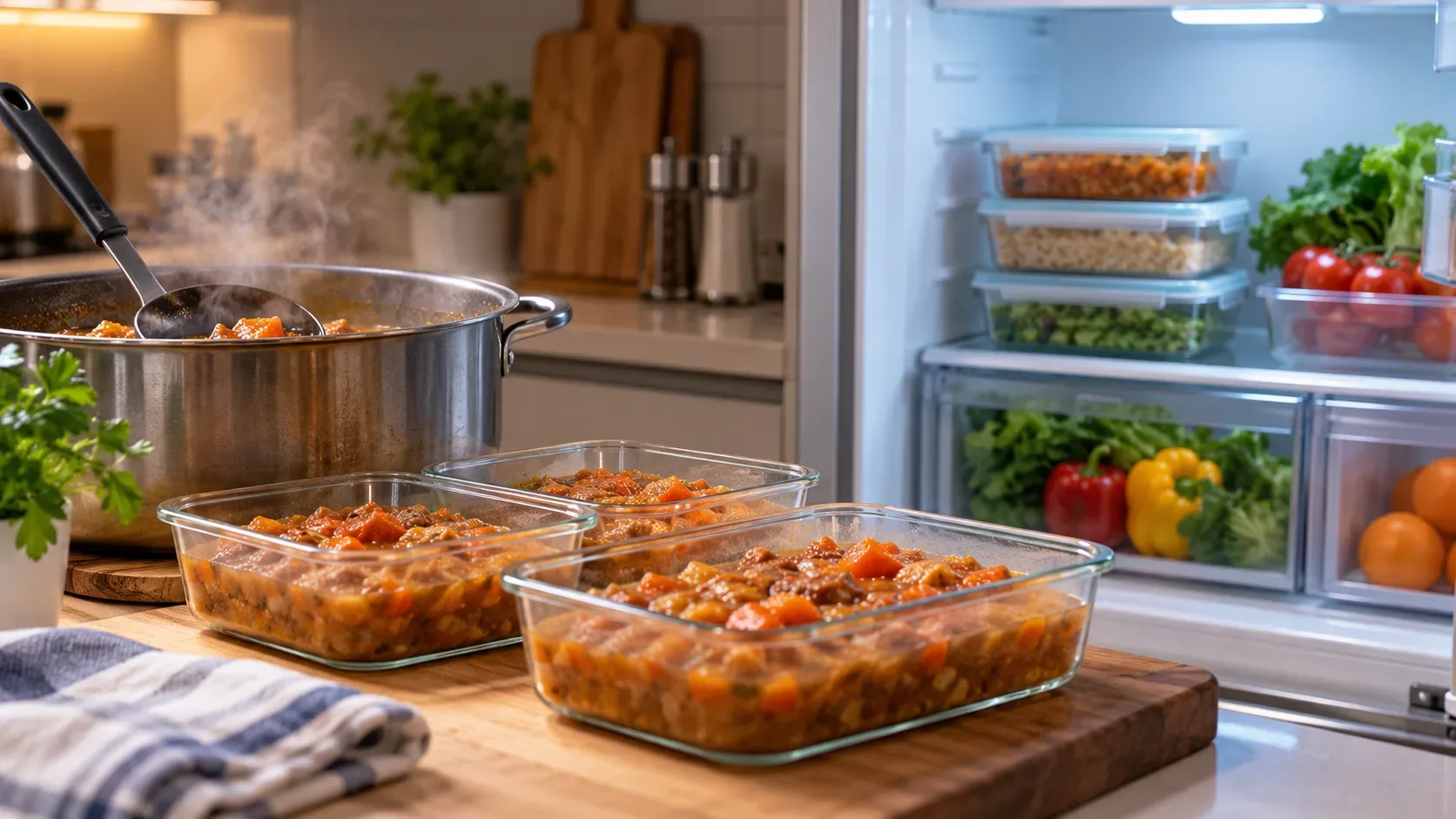
Finished perishable foods should also not sit forgotten on the counter while the remaining dishes cook. FDA guidance says to refrigerate perishables, prepared foods, and leftovers within two hours of preparation or eating. During a long cooking session, portion and refrigerate finished foods instead of waiting for the last dish to be done.
Example: three meals on one workstation
Imagine a session with roasted chicken and vegetables, herbed rice, and a leafy salad with tomato. An efficient order would be:
- Read all three recipes and set out the roasting tray, rice pot, bowls, knives, cutting boards, and final storage containers.
- Wash hands, clean the counter, and rinse the greens, tomatoes, carrots, zucchini, lemon, and herbs under running water.
- Dry the greens and herbs. Cut tomato, lemon, and salad ingredients first. Store the salad undressed.
- Cut all vegetables for roasting and divide the quantities.
- Chop once the herbs that tolerate holding, then reserve the portion for the rice and the portion for finishing.
- Turn on the oven and start the rice once the ingredients are ready for those steps.
- On a separate board, or after properly washing the board already used, portion and season the raw chicken.
- Put chicken and vegetables in the oven in appropriate containers, respecting cooking times and preventing raw juices from contaminating ready-to-eat foods.
- While the rice and roast cook, wash tools that are no longer needed and make the salad dressing.
- Verify the chicken with a thermometer, finish the rice, and only then dress the salad.
- Serve what will be eaten and promptly refrigerate the portions intended for later meals.
The advantage does not come from “doing everything at once.” It comes from reducing unnecessary task switching and using the right dependencies. The knife moves through compatible ingredients in sequence, the oven receives the longest items first, and delicate finishes stay close to the moment when they matter.
Short checklist before you begin
- Have I read every recipe all the way through?
- Which ingredients appear in more than one recipe?
- Which cuts can be batched?
- Which steps take longest and need an early start?
- Which preparations can wait without losing texture?
- What should be left until the end?
- Do I have a separate board, knife, and containers for raw animal foods?
- Is there enough refrigerator space for finished portions?
With this approach, mise en place for several meals works like a dependency system: prepare shared work once, start long tasks early, protect ready-to-eat foods from raw ingredients, and use cooking time to advance only the tasks that truly fit that window. The workstation stays less congested and the session requires fewer repeated decisions.