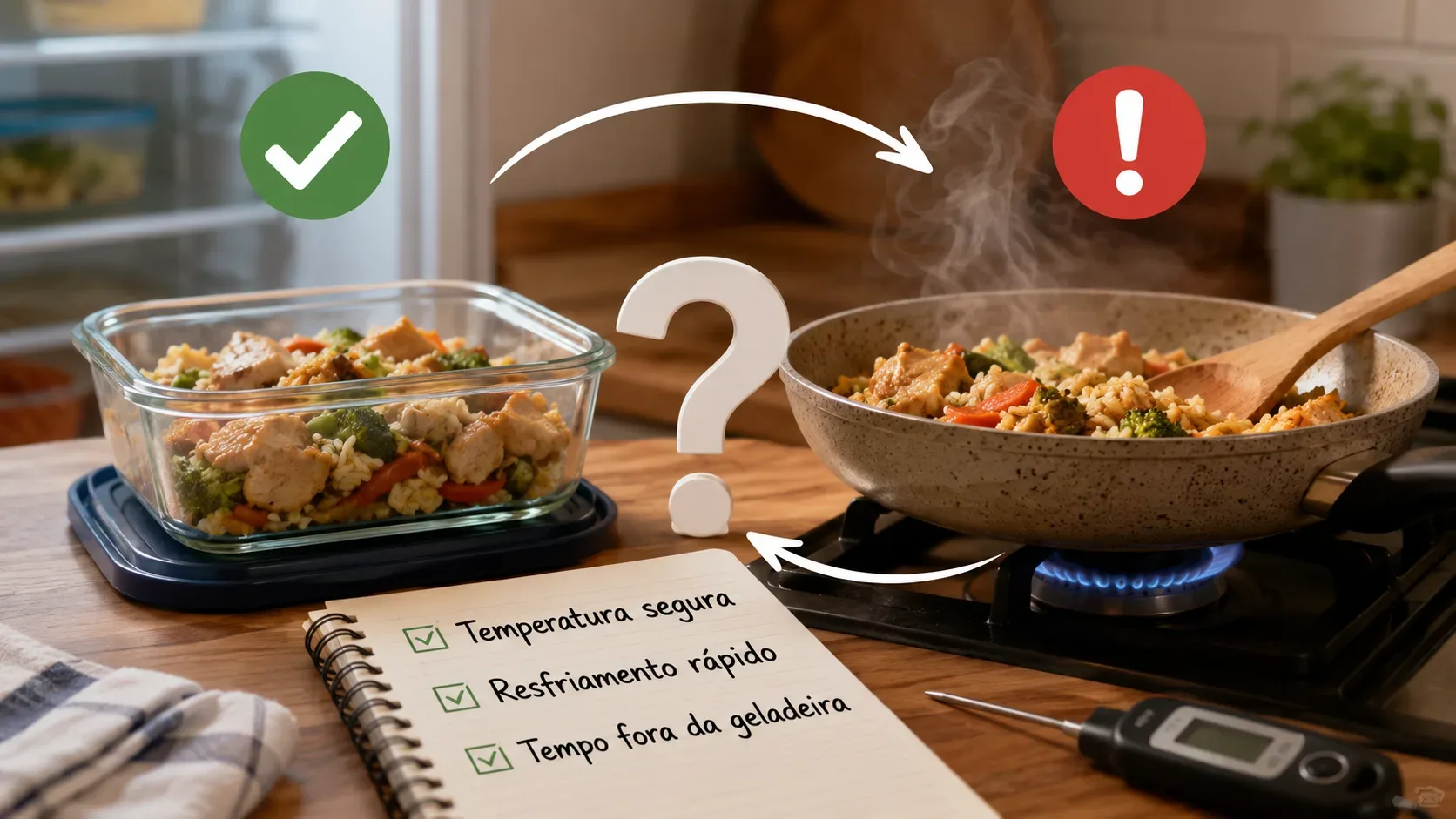
Short answer: if you want the more conservative household approach, reheat each batch of leftovers only once and, ideally, heat only the portion you plan to eat. The UK Food Standards Agency (FSA) explicitly advises reheating leftovers only once. The U.S. Department of Agriculture's Food Safety and Inspection Service (USDA/FSIS), however, allows previously reheated leftovers to go back into the refrigerator and be reheated again, as long as they are refrigerated immediately and brought back to a safe temperature.
That does not mean one agency considers automatically dangerous what the other considers safe. They use different operating rules to manage the same issue: microbial growth when food repeatedly passes through temperature ranges that favor bacterial multiplication. For home use, the simplest and more conservative rule is to keep those cycles to a minimum.
What the FSA says: reheat only once
In its official Cooking your food guidance, which applies to England, Northern Ireland and Wales, the FSA recommends cooling leftovers and putting them in the refrigerator within two hours. It also advises eating leftovers within 48 hours or freezing them if that will not be possible.
When it comes specifically to reheating, the FSA says food should be steaming hot throughout, not merely warm, and should be reheated only once. Its stated reasoning is that repeated temperature changes create more opportunities for bacteria to grow. The one-reheat recommendation is also repeated in recent agency material such as the Food and You 2 findings.
The same page describes 8°C to 63°C as the “danger zone.” This is an operational range the FSA uses to explain why food should not remain for long at intermediate temperatures.
What the USDA says: reheating again can be acceptable
USDA/FSIS takes an approach that depends more explicitly on the food's time-and-temperature history. In Leftovers and Food Safety, the agency says leftovers should be refrigerated within two hours of cooking or of being removed from equipment keeping them hot. If the ambient temperature is above 90°F, or about 32°C, the limit drops to one hour. USDA also recommends shallow containers for faster cooling, using refrigerated leftovers within three to four days, and reheating them to 165°F, about 74°C, measured with a food thermometer.
In specific guidance about restaurant leftovers, USDA/FSIS says that if all the leftovers were reheated but not all were eaten, the remaining food can be refrigerated immediately so it can be safely reheated again. Unlike the FSA's simplified rule, USDA therefore does not impose “only once” as an absolute consumer limit.
Why the guidance appears to conflict
Both agencies agree on the core controls: cool food quickly, limit time out of refrigeration, maintain proper cold storage and reheat leftovers thoroughly. The difference is in how those principles are turned into a household rule.
- FSA: reduces complexity with a simple barrier: do not carry out more than one reheating cycle.
- USDA: permits another cycle if cooling, storage and reheating conditions remain controlled.
It is more accurate to see this as a difference in risk-management policy than as a dispute over a “magic number” of reheats. The agencies do not publish, on these pages, a joint comparison explaining why they chose different limits. Calling the FSA rule more conservative on this point is a direct inference from the published guidance itself.
The more conservative practical rule for home
If your priority is to minimize room for error, use the stricter rule wherever the recommendations differ:
- Portion before heating. Take out only what you plan to eat and keep the rest refrigerated. That way, the stored portion does not enter another heating-and-cooling cycle.
- Reheat only once. Once a portion has been reheated, avoid returning it to the refrigerator with the intention of heating it again later.
- Refrigerate promptly. Do not leave leftovers sitting on the counter. Both sets of guidance use two hours as a key limit; USDA shortens that to one hour when the ambient temperature is above about 32°C.
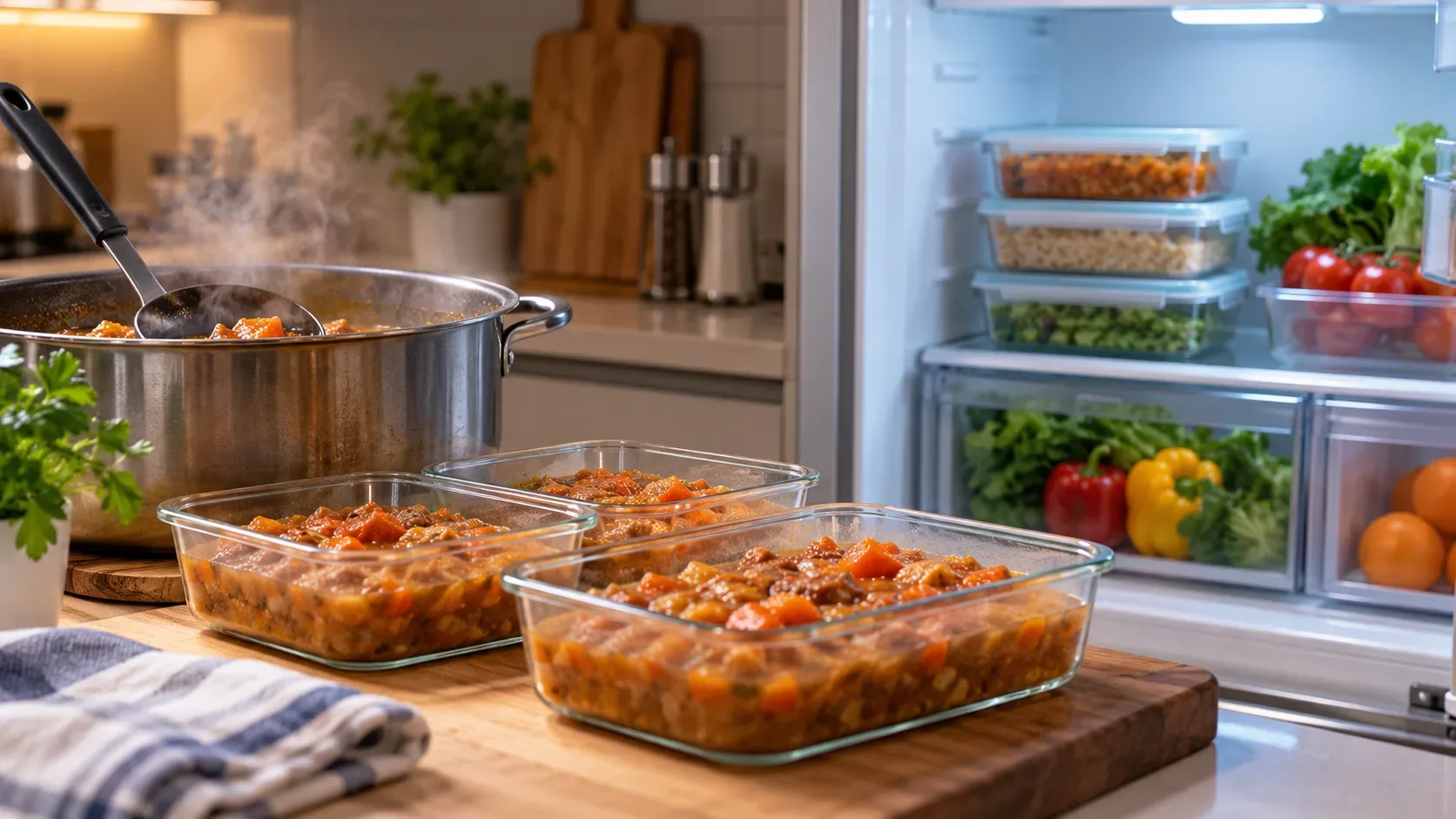
- Use smaller, shallow containers. They help the center of the food lose heat faster than a large, deep pot.
- Heat all the way through. If you have a thermometer, 74°C in the center is a measurable target consistent with USDA guidance. The FSA tells consumers to make sure food is steaming hot throughout.
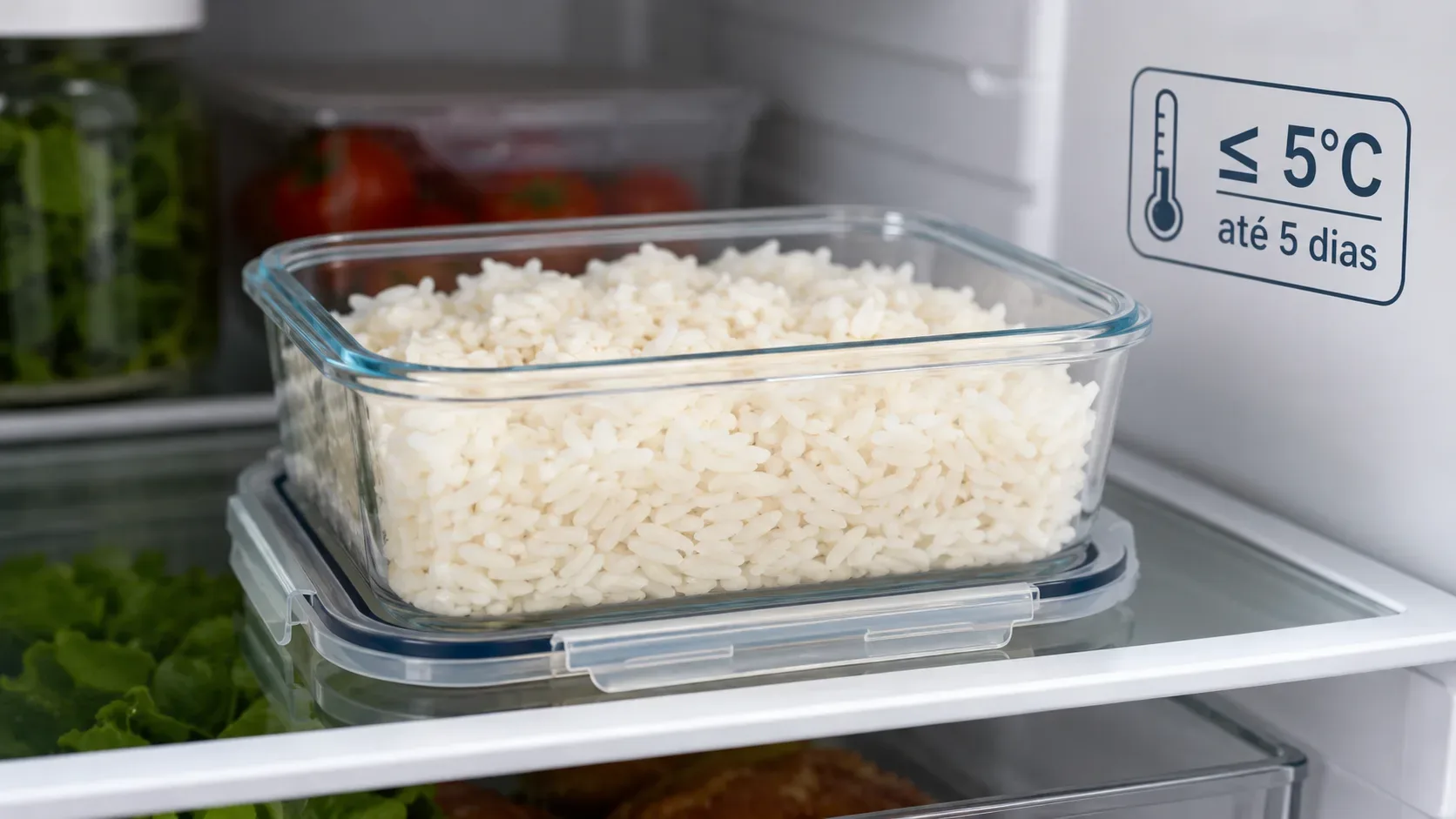
- For maximum caution, use the shorter storage window. The FSA says refrigerated leftovers should be eaten within 48 hours; USDA generally says three to four days. If you are combining the two by the more conservative standard, 48 hours is the shorter limit.
A safe reheating temperature does not fix poor cooling
A common mistake is assuming that “heating it really well” makes any leftover safe again. That is not a sound rule. USDA explains in How Temperatures Affect Food that mishandled food can allow bacteria to grow and toxins to form; some heat-resistant toxins are not destroyed simply by later cooking.
That is why “How many times can I reheat this?” only makes sense if the food was handled properly at every earlier step. Too much time out of the refrigerator, slow cooling or an unknown history can matter more than how many times the food has been through the microwave.
Four controls that matter more than counting reheats
1. Time out of the refrigerator
As a household rule, do not assume reheating “resets” accumulated risk. If a perishable leftover has spent too long at room temperature, the safe course is to discard it. USDA uses two hours as the general limit and one hour in temperatures above 90°F/32°C. The FSA also advises getting cooled leftovers into the refrigerator within two hours.
2. Cooling speed
Putting away a large, full pot can leave the center cooling too slowly. Dividing food into shallow containers reduces that problem. The goal is not to leave food on the counter until it is “completely cool,” but to reduce its temperature quickly and refrigerate it within the recommended window.
3. Even reheating
In a microwave, edges may be boiling while the center remains cool. Stirring, rotating the container, covering when appropriate and allowing standing time can reduce cold spots. USDA recommends checking for 165°F/74°C in several places when possible; the FSA recommends making sure the food is steaming hot throughout, including the center.
4. A reliable history
Smell, appearance and taste are not reliable food-safety tests. USDA advises against tasting leftovers to decide whether they are safe. If you do not know how long the food sat out, when it was refrigerated or how many cycles it has already been through, the safer decision is not to try to “rescue” it with another reheating.
Practical examples
| Situation | Conservative reading | What changes under USDA guidance |
|---|---|---|
| You have a large container of cold leftovers and want one serving. | Separate one portion and reheat that portion once. | This is also consistent with USDA guidance and avoids unnecessary cycles. |
| You reheated the entire dish, ate half and want to store the rest. | Under the FSA-style rule, do not plan a second reheating of that same food. | USDA allows you to refrigerate the remainder immediately and reheat it again later if handling remains safe. |
| The leftovers sat on the counter for more than two hours. | Do not try to compensate with a higher reheating temperature; discard them. | USDA also advises discarding perishable food after more than two hours, or one hour in high heat. |
| The leftovers were chilled promptly and you are reheating them for the first time. | Heat thoroughly; if using a thermometer, 74°C is a practical measurable target. | USDA specifies 165°F/74°C for leftovers. |
So, can you reheat the same food twice?
Under USDA guidance, a second reheating can be acceptable if the food was refrigerated immediately after the first reheating, kept properly chilled and reheated again to 165°F/74°C. Under FSA guidance, no: the household recommendation is to reheat leftovers only once.
If you want one rule you can apply at home without reconstructing the entire time-and-temperature history, the more conservative option is to follow the FSA on this point: reheat only once, and only the portion you are going to eat. Combine that with refrigerating within two hours, cooling in shallow containers and heating all the way through. That combination—not the reheating count alone—is what reduces risk.