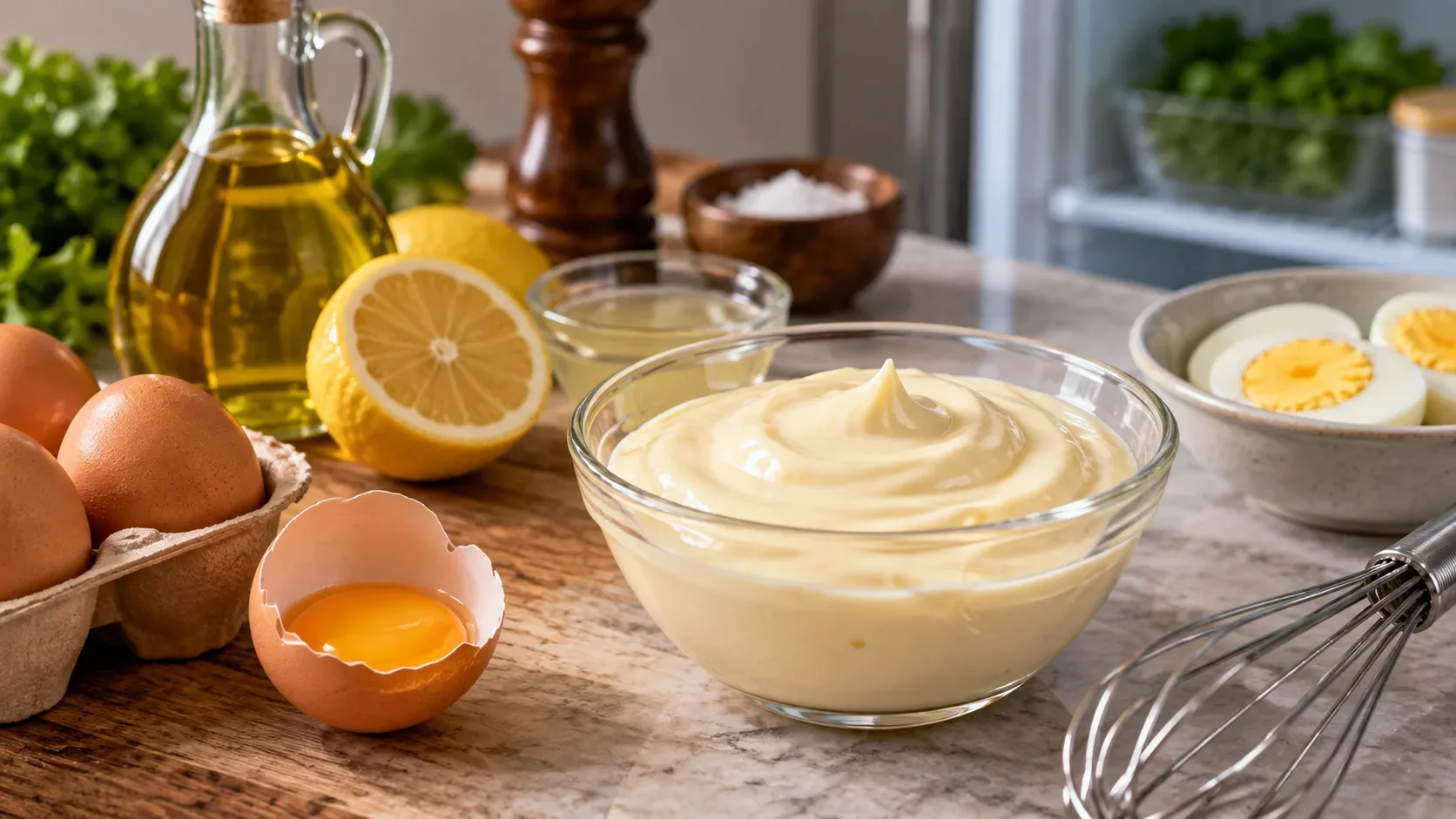
The key point about homemade mayonnaise made with raw egg is simple: lemon juice or vinegar can make the environment less favorable to microorganisms, and refrigeration slows microbial growth, but neither measure should be treated as a reliable home method for eliminating Salmonella. The risk starts with the raw ingredient. The more consistent strategy is therefore to replace untreated raw egg with an option that has already undergone appropriate thermal or industrial control, such as pasteurized or cooked egg.
Why raw egg changes the risk level
Salmonella can be associated with eggs and foods that use them without cooking. Brazil’s Ministry of Health lists raw or undercooked eggs and salad dressings made with unpasteurized eggs among possible transmission routes. In food-safety guidance, Anvisa recommends avoiding preparations that contain raw eggs, including homemade mayonnaise.
This does not mean every raw egg is contaminated or that every batch of homemade mayonnaise will cause illness. It means that when egg is used raw, a major control step is missing: cooking or pasteurization designed to reduce pathogenic microorganisms. Once the egg is emulsified into the sauce, appearance, smell and taste cannot reveal whether contamination was present.
What acid does — and why it is not an instant guarantee
Lemon juice and vinegar lower pH and can make bacterial survival or growth more difficult. The effect, however, depends on the amount and type of acid, final pH, recipe composition, temperature and contact time. In other words, “it has plenty of lemon” is not a household equivalent of pasteurization.
Experimental studies explain the need for caution. In research published in the Journal of Food Protection and indexed in PubMed, Salmonella inoculated into contaminated egg yolk survived the mayonnaise-making process; persistence varied with the acidulant and formulation. A review of pH, temperature and Salmonella survival in mayonnaise and other raw-egg products also shows that there is no single household pH threshold that can replace good handling practices and treated eggs.
Acid should therefore be understood as part of the recipe and, in controlled formulations, as an additional microbiological hurdle. It should not be used to “decontaminate” an untreated raw egg of uncertain origin or to assume that a homemade preparation has automatically become safe.
Refrigeration helps, but it does not sterilize
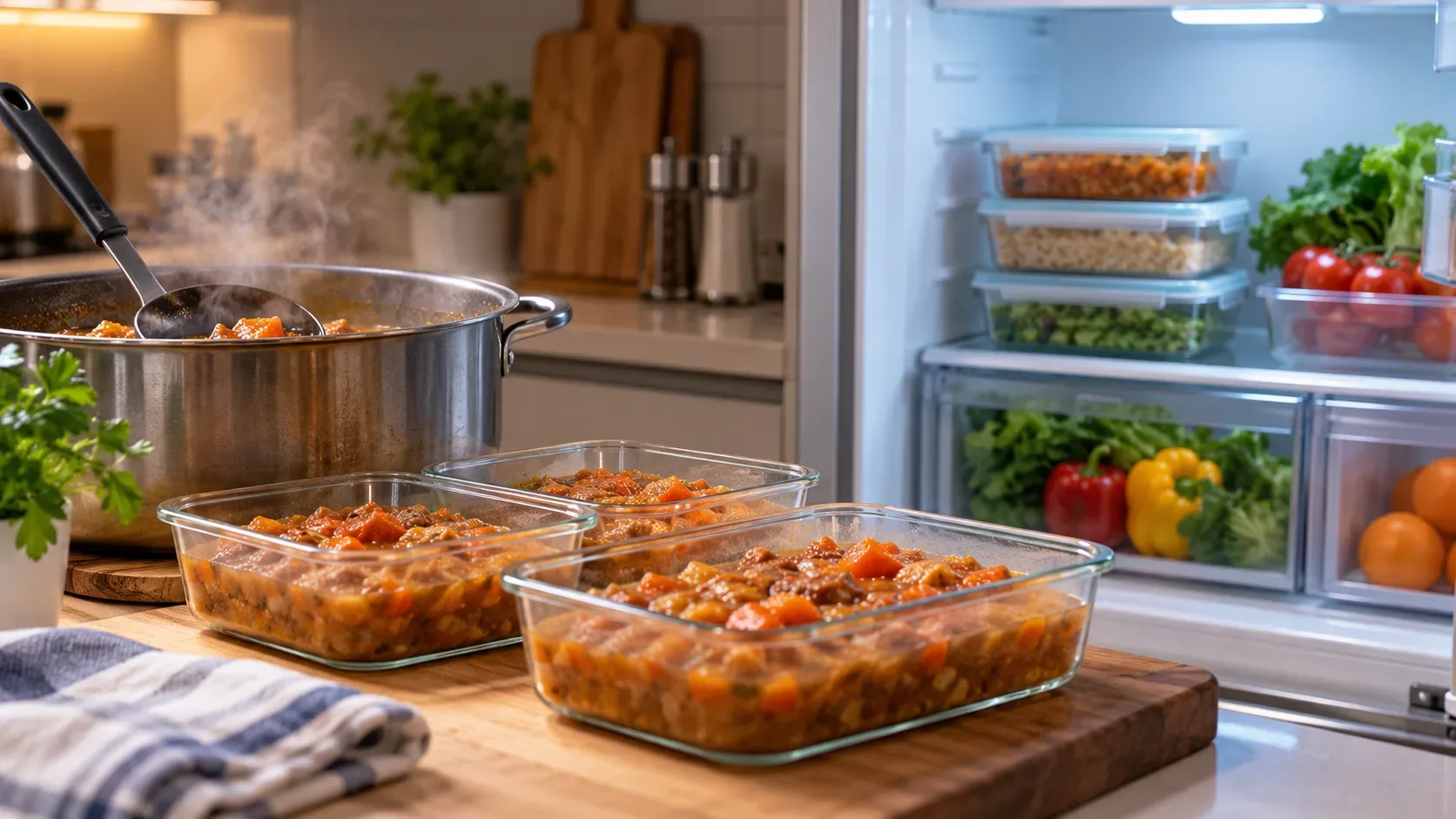
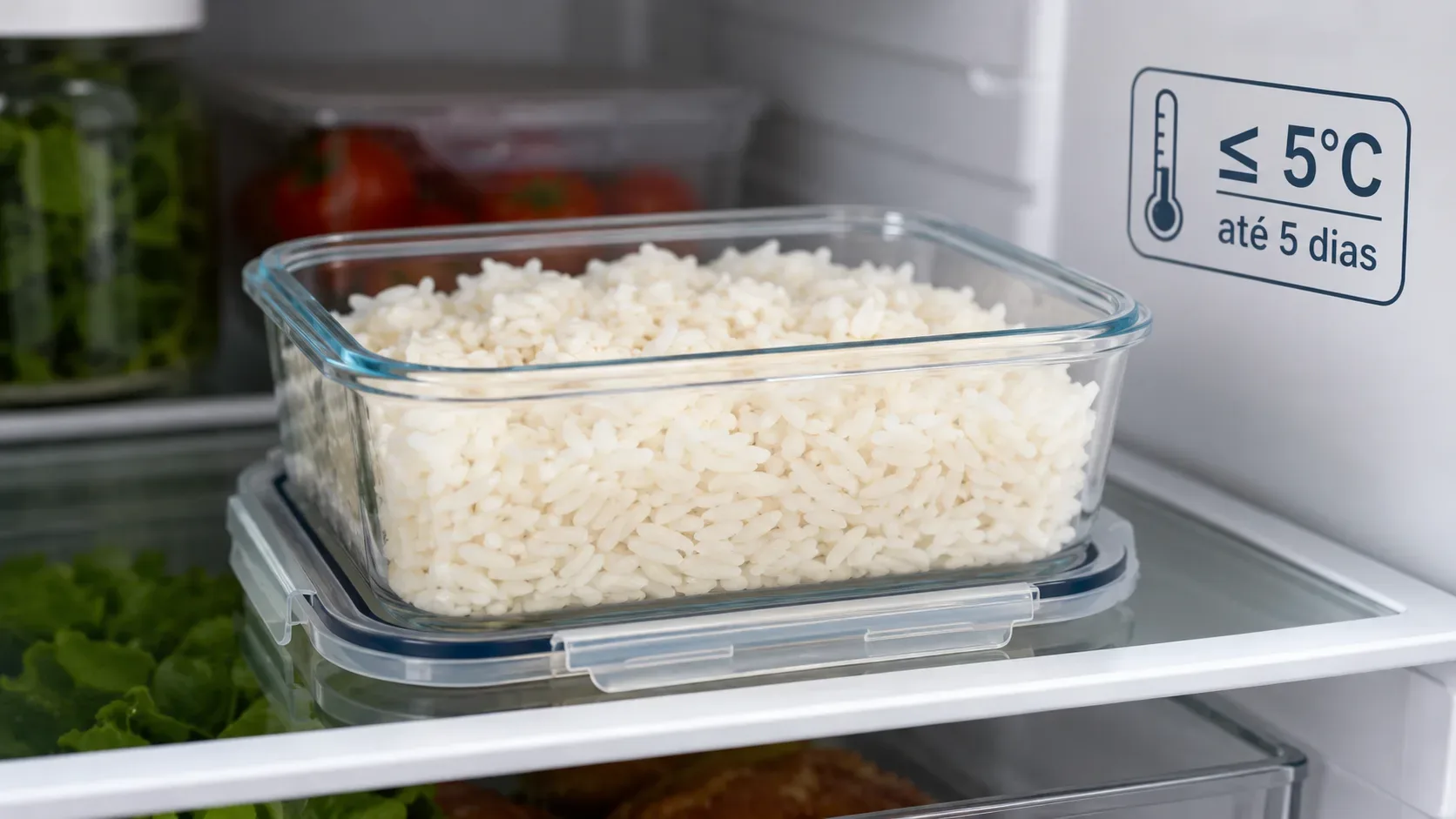
Refrigeration is essential for perishable foods because it slows the growth of many microorganisms. Anvisa itself advises keeping cold foods at low temperatures and minimizing the time perishable preparations spend outside refrigeration. The mistake is to confuse slowing growth with elimination.
If bacteria are already present, putting the mayonnaise in the refrigerator is not the same as killing them. In studies of acidified mayonnaise, Salmonella survival also varied with temperature, and refrigeration did not guarantee rapid inactivation. So “I made it and kept it cold” is better than leaving the sauce warm on the counter, but it does not correct the risk created by untreated raw egg.
Raw, pasteurized or cooked egg: what changes in practice
| Option | How it is used | Egg-related risk | Practical interpretation |
|---|---|---|---|
| Regular raw egg | No cooking or pasteurization step before consumption | Greater avoidable exposure to pathogens associated with eggs | Not the preferred choice for a preparation that will be eaten without cooking |
| Pasteurized egg | Treated product used according to label directions | Reduces the risk associated with untreated raw egg | The closest option to the texture of traditional raw-egg mayonnaise |
| Cooked egg | Egg is fully cooked before blending with the other ingredients | Avoids serving raw egg when cooking and handling are adequate | Texture and flavor are somewhat different, but it is a simple home alternative |
The Technological and Research Institute of Sergipe (ITPS) recommends using cooked, pasteurized or freeze-dried eggs to reduce risk and emphasizes hand and utensil hygiene. The FDA likewise recommends pasteurized eggs in recipes that normally use raw egg and notes that commercial mayonnaise uses pasteurized eggs.
How to reduce exposure when making mayonnaise at home
- Choose pasteurized egg when you want an uncooked recipe with a profile close to traditional mayonnaise.
- Use cooked egg when you accept a different texture in exchange for avoiding raw egg.
- Keep strict hygiene for hands, counters, blenders, immersion blenders, bowls and utensils, especially after contact with shells and raw eggs.
- Avoid cross-contamination: utensils that touched raw egg should not go back into the finished sauce before proper washing.
- Refrigerate the preparation and minimize time outside the refrigerator. This controls growth but does not turn a contaminated raw egg into a safe one.
- Do not use smell, appearance or acidity as safety tests. Mayonnaise can look normal and still contain pathogens.
What if the mayonnaise has already been made with raw egg?
Adding more lemon juice or vinegar afterward is not a reliable household method for “fixing” possible contamination. Refrigerating it immediately reduces the opportunity for microbial growth, but it does not eliminate a pathogen that may already be present. The more cautious approach is not to serve this type of preparation to people who are more vulnerable to foodborne illness and, whenever possible, to replace the recipe with one made from pasteurized or fully cooked egg.
For future batches, treat the ingredient choice as the main safety decision. The more useful question is no longer “how much acid do I need to kill the bacteria?” but “how can I avoid making an untreated raw egg the critical point of the recipe?”.
Bottom line: acid and cold are hurdles, not substitutes for pasteurization or cooking
Lemon juice, vinegar and refrigeration can all be part of good preparation, but they perform different functions from pasteurizing or cooking the egg. Acid can make Salmonella survival more difficult under certain conditions; cold slows microbial growth. Neither should be treated as a guarantee of elimination in a home kitchen. To reduce exposure more directly, choose pasteurized eggs, cooked eggs or suitable commercial products and maintain good hygiene and refrigeration practices.