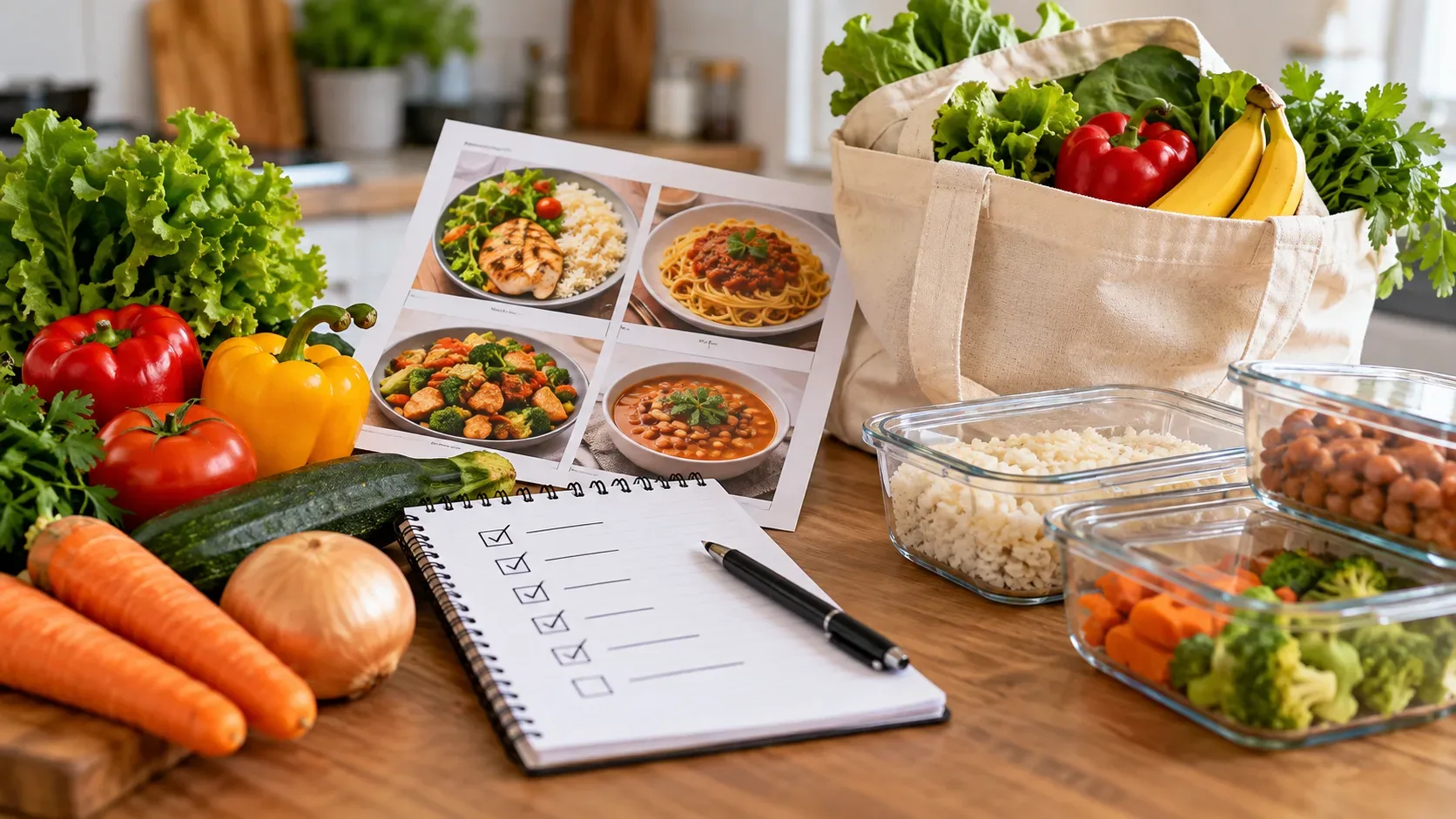
To build a grocery list without duplicate ingredients, start with the meal plan and the number of servings for each dish. Scale each recipe, put each shared ingredient on one line, subtract usable stock, and only then convert the total into purchase units. That way, tomatoes used in two meals become one combined requirement rather than two separate purchases.
From the meal plan to actual servings
Write down the planned dishes, when they will be served, and how many people will eat each one. Account for packed lunches, meals eaten out, and leftovers that will actually be eaten: counting the same meal twice increases the list without increasing the need.
Read the recipe yield and apply the scaling factor: desired servings ÷ recipe servings. A recipe yielding 4 servings that must yield 6 has a factor of 1.5. Multiply each ingredient by 1.5 while keeping its original unit. Do not automatically scale strong seasonings in exactly the same proportion without adjusting to taste, but record an estimated shopping quantity.
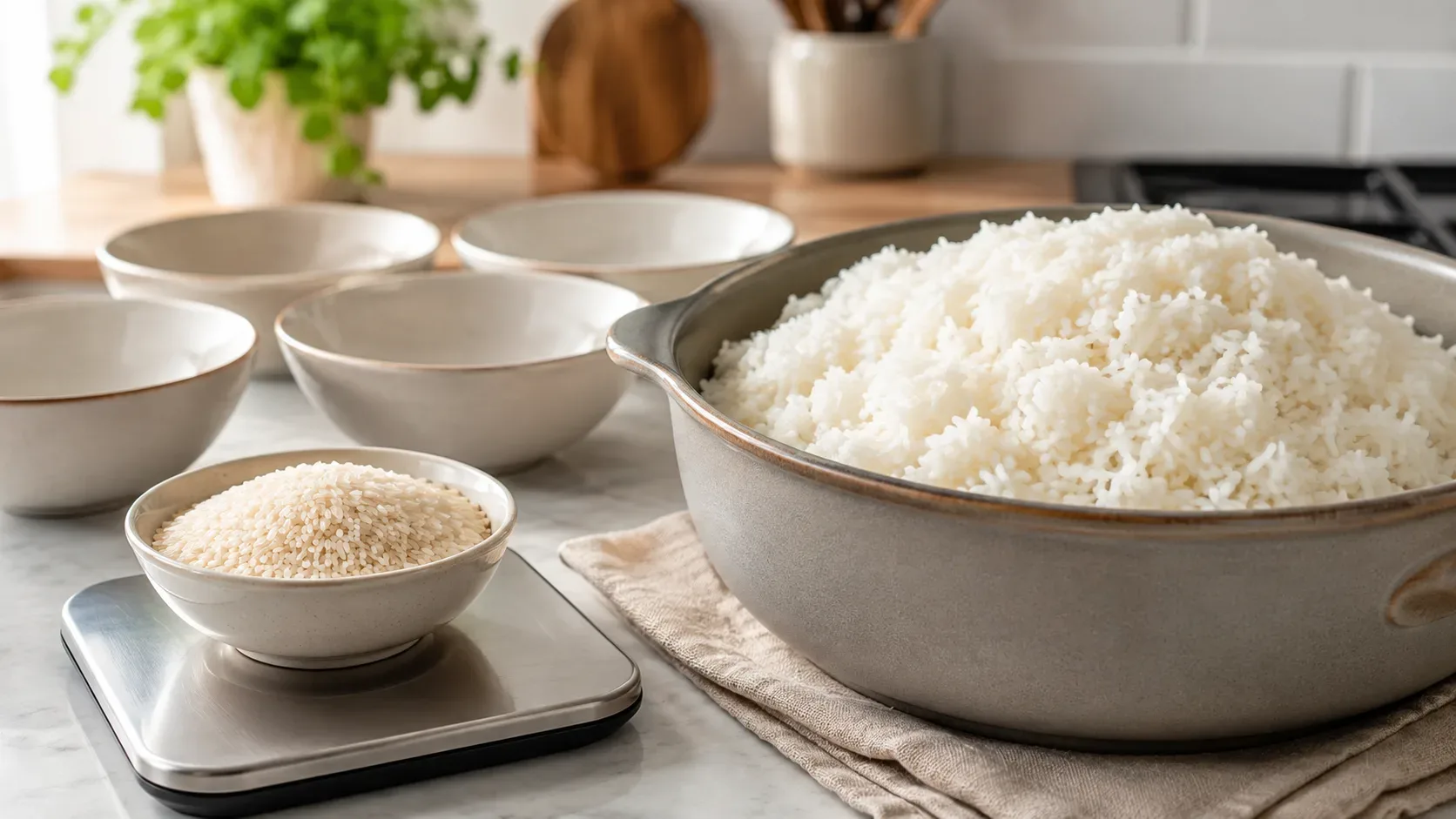
Distinguish raw ingredient amounts from cooked or trimmed amounts. If a recipe calls for 200 g of uncooked rice, do not add that to 200 g of cooked rice as though they were the same measure. When buying by weight, use a common unit and check the recipe yield or package information where needed.
Combine ingredients, not recipe lines
Make a working table with four fields: ingredient, use per dish, total needed, and quantity on hand. Standardize equivalent names, such as “tomato” and “tomatoes”, but keep non-interchangeable items separate, such as fresh tomatoes and tomato sauce, dried and cooked beans, or regular and lactose-free milk.
Add only compatible quantities: grams to grams, milliliters to milliliters, and pieces to pieces. If one recipe calls for 1 onion and another for 150 g, weigh a representative onion or check package information before combining them; do not guess a unit-to-weight conversion. Also note when an ingredient has already been allocated to an earlier dish.
Example: three dishes, one consolidated purchase
Consider this illustrative example for organizing 3 preparations. The amounts below are planning assumptions, not universal nutritional serving sizes.
| Ingredient | Dish 1 | Dish 2 | Dish 3 | Total | On hand | Buy |
|---|---|---|---|---|---|---|
| Fresh tomatoes | 300 g | 200 g | 150 g | 650 g | 200 g | 450 g |
| Carrots | 200 g | 150 g | 100 g | 450 g | 100 g | 350 g |
| Uncooked rice | 250 g | 200 g | 0 g | 450 g | 300 g | 150 g |
The totals add amounts by ingredient, not by dish. In the example, 300 + 200 + 150 = 650 g of tomatoes; subtracting the 200 g at home leaves 450 g to buy. The same calculation on one line prevents buying tomatoes three separate times. Quantities for each dish should already have been scaled to the planned servings.
Subtract pantry stock and account for package sizes
Before finalizing the list, check the refrigerator, freezer, and cupboards. Subtract only quantities that are available, in suitable condition, and not reserved for something else. The calculation is: amount to buy = the greater of zero and total required minus usable stock. If you have 300 g of uncooked rice and need 450 g, you are short 150 g; there is no need to record another 450 g purchase.
Next, convert the shortfall to the unit sold. If your net need is 650 g and a package contains 500 g, you need 2 packages and will have 350 g left for a later meal plan. Do not treat this expected remainder as another requirement. For produce sold individually or by the bunch, round explicitly and plan how to use the excess.
Mark each item “buy”, “already have”, or “check”. Pantry staples such as oil, salt, and spices can be checked separately: they still appear in recipes but should not be purchased if sufficient quantities are on hand.
Reuse ingredients without treating everything as leftovers
Choose dishes that share perishable ingredients on nearby days: carrots can go into a sauté and a soup; greens can be used in a salad and as a side. Allocate a quantity to each dish before cooking. Using the same carrots in two dishes means adding both uses, not assuming one whole carrot automatically covers both.
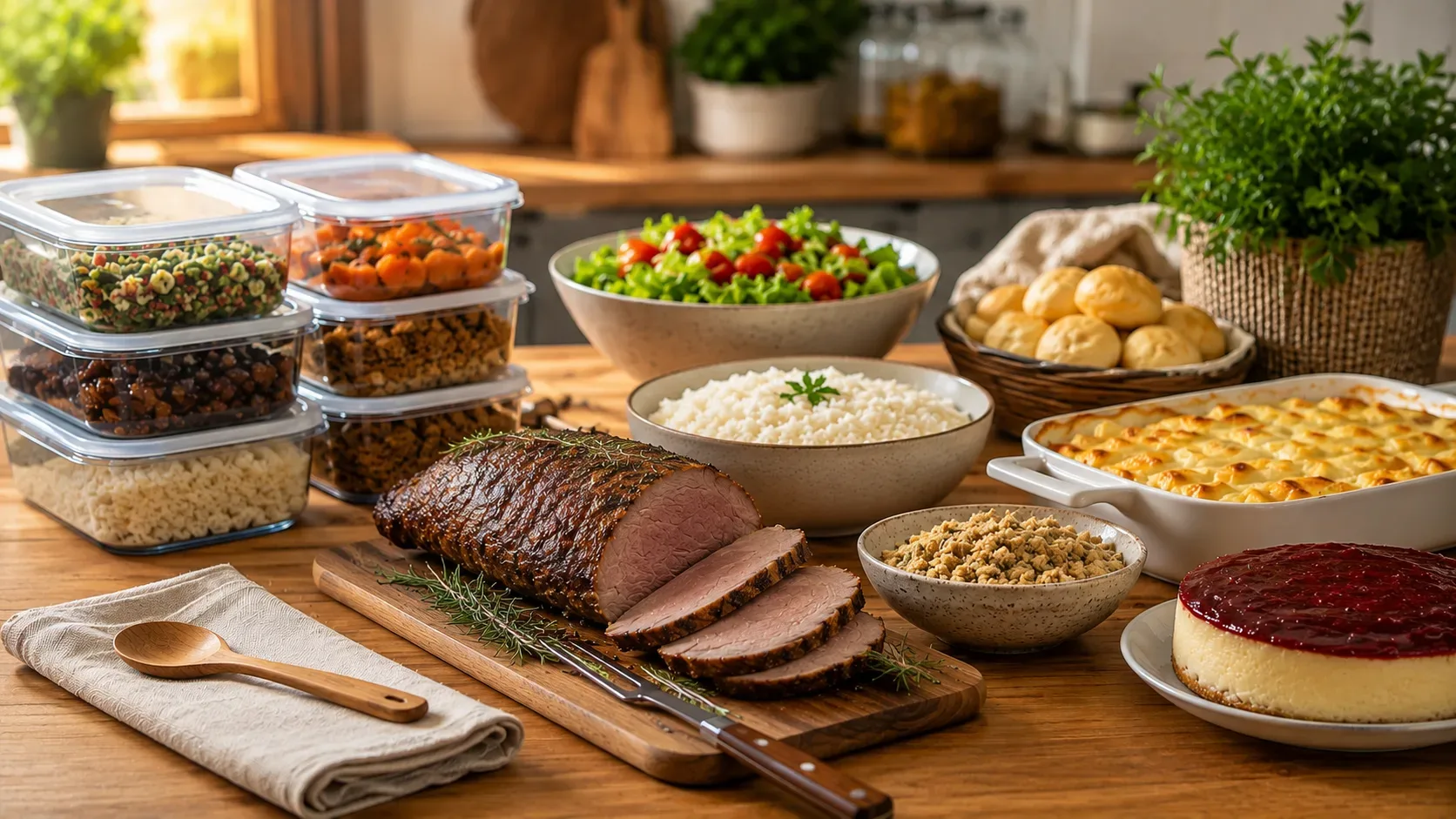
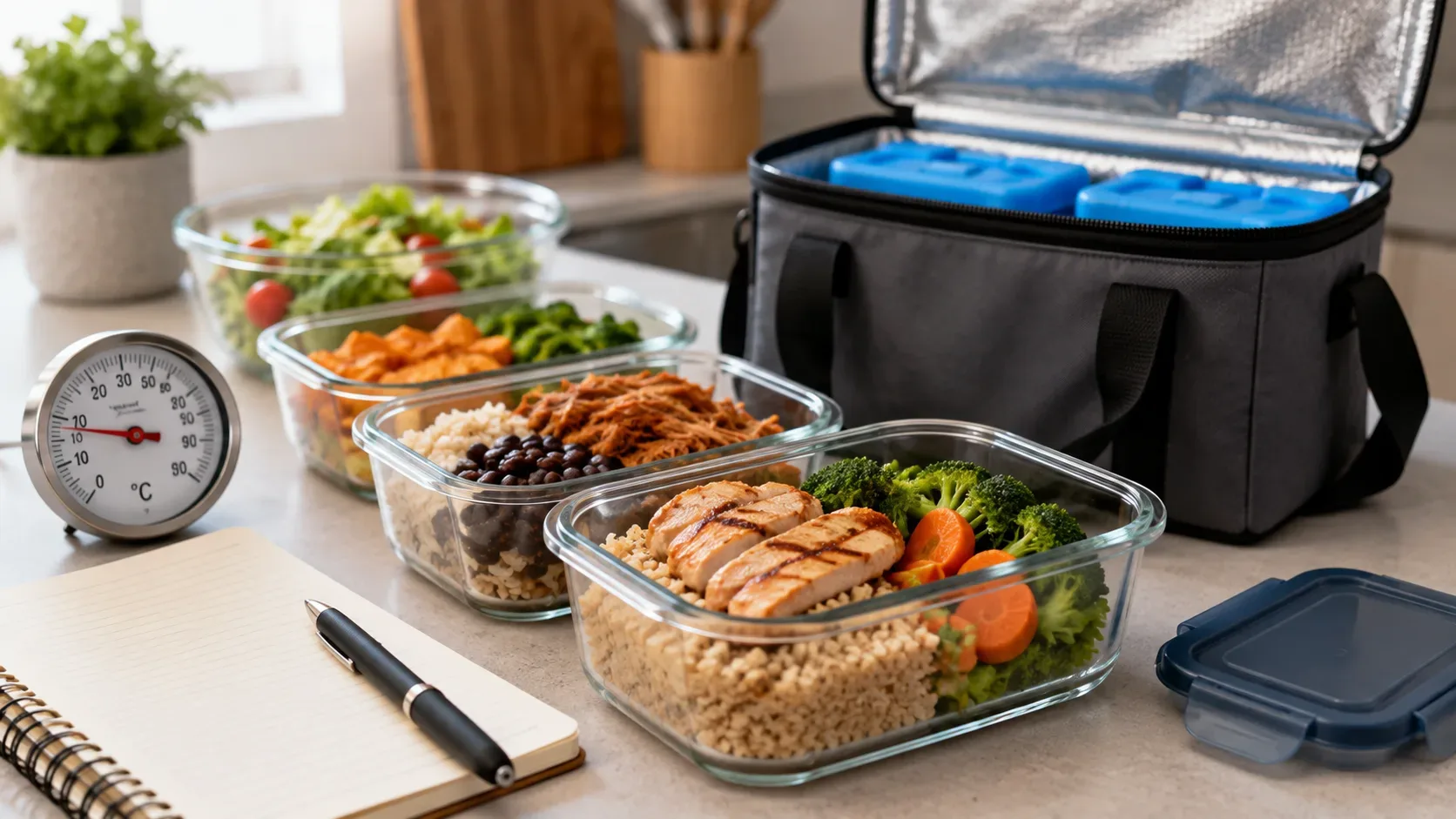
Reusing a prepared dish requires additional care. According to FoodSafety.gov, refrigerate perishable foods within 2 hours, or within 1 hour when exposed to temperatures above 32 °C; use shallow containers to speed cooling. Cooked leftovers generally should be eaten within 3 to 4 days when refrigerated at 4 °C or below, or frozen for later use. Check the specific guidance for each food.
MyPlate’s weekly planning guidance recommends checking what is already at home, planning to use leftovers, and organizing the list by store section. This helps turn the meal plan into one checkable purchase without treating fresh foods as indefinitely lasting stock.
Checklist before leaving
Check that every dish has a serving count; each ingredient has been converted to a comparable unit; repeated uses have been added on one line; stock has been subtracted only once; and the final amount matches the package sizes. Then group items by produce, proteins, dry goods, and refrigerated foods, picking up perishables toward the end of the shopping trip.