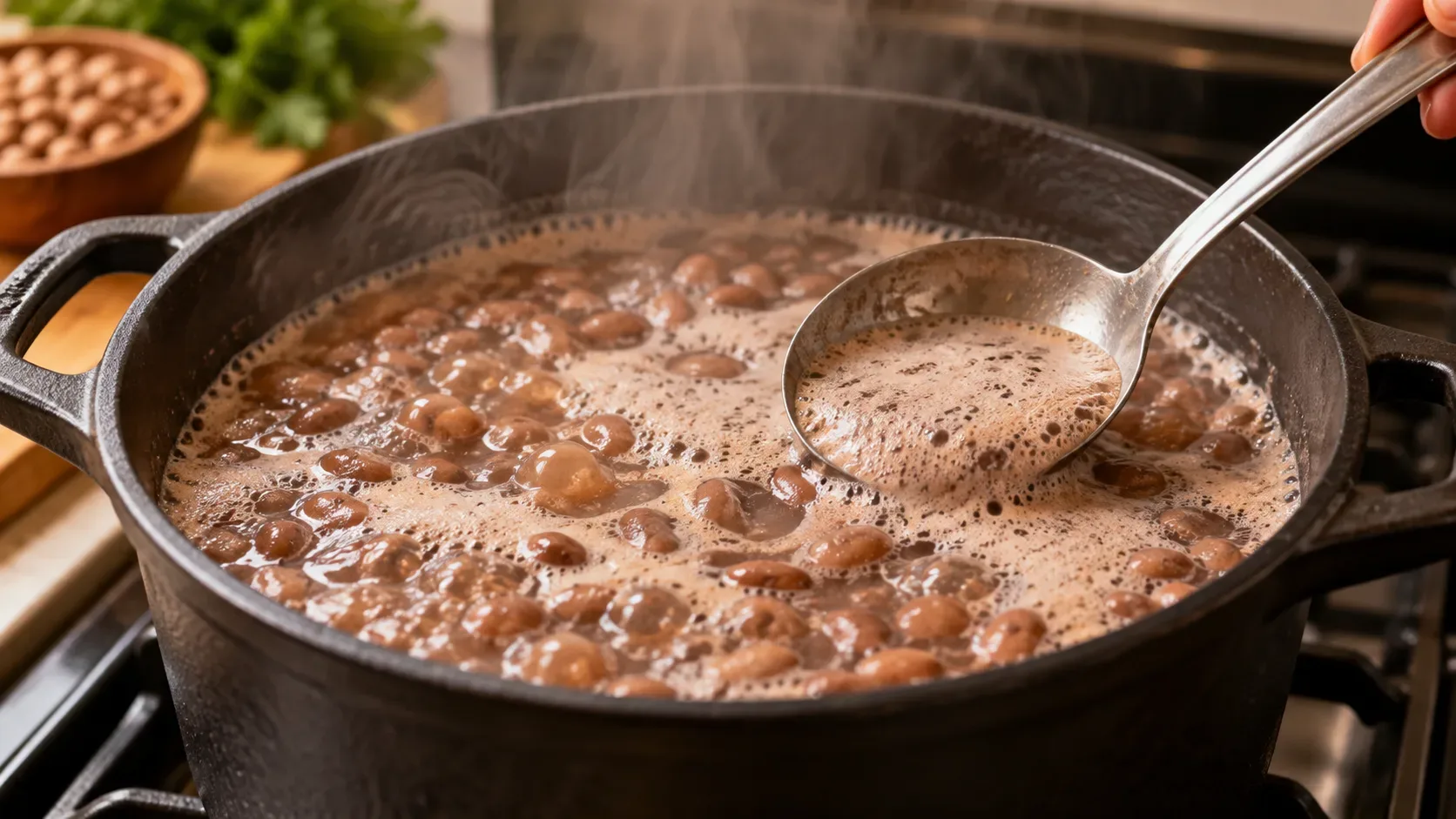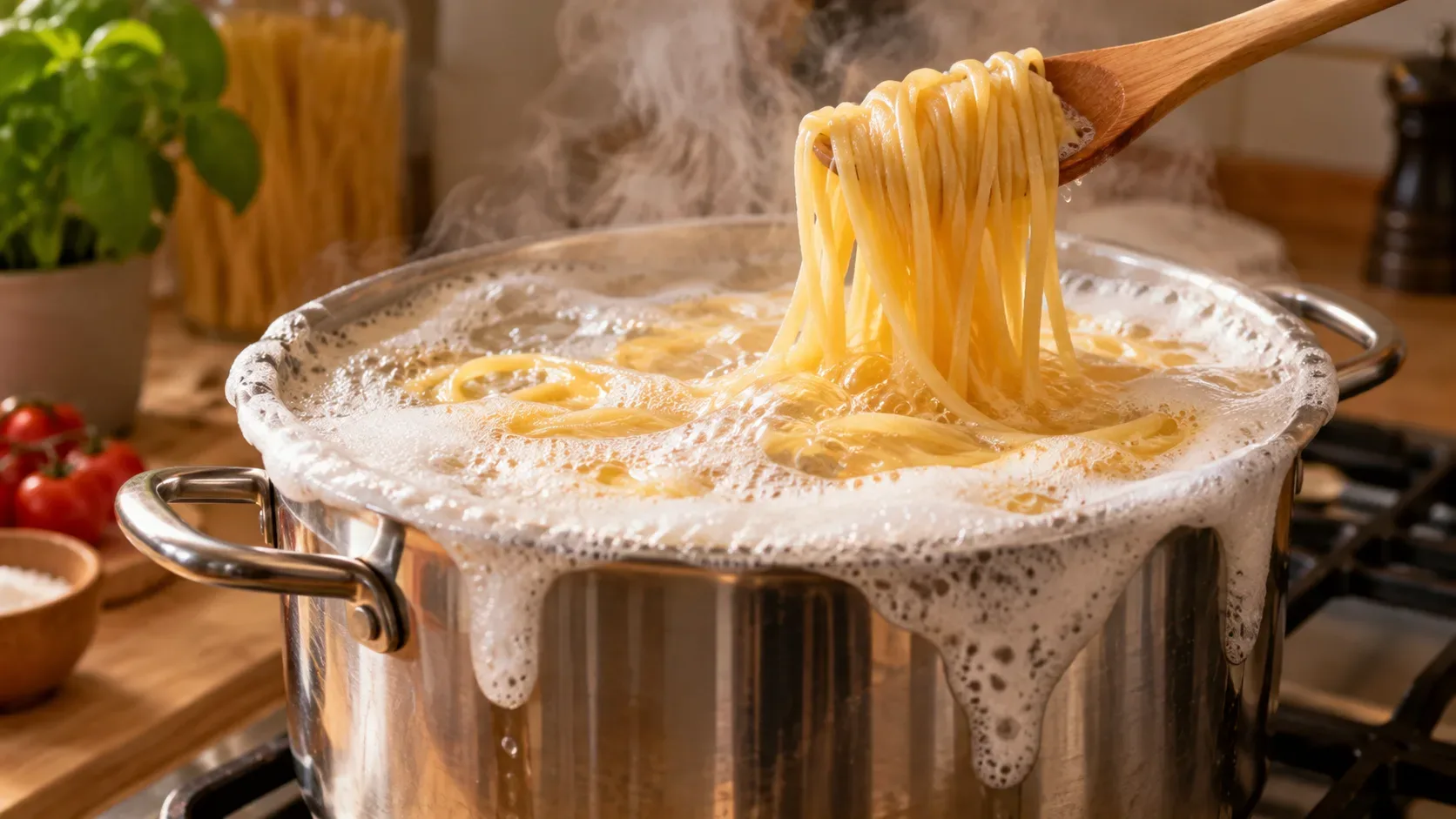
When pasta goes into hot water, some of the starch on its surface leaches into the cooking liquid. That starch does not turn the water into soap, but it changes how the bubbles behave: the water becomes slightly more viscous and the liquid films around steam bubbles can last longer before breaking. With an aggressive boil, new bubbles arrive faster than the foam can disappear. The layer grows, climbs the sides of the pot, and can boil over.
This explanation matches what is known about pasta cooking. Research describes hydration, starch gelatinization, and the loss of solids into cooking water, while recent culinary explanations emphasize that dispersed starch helps stabilize foam. The practical point is simple: the easier it is to generate many bubbles, and the less room there is for foam to dissipate, the greater the risk of a boilover. DidYeah summarizes this mechanism, while an academic paper on pasta-to-water ratio shows that cooking proportions affect hydration and pasta properties. International Journal of Food Science and Technology.
Why does the foam appear after the pasta goes in?
Plain boiling water forms steam bubbles that normally reach the surface and burst quickly. Once pasta is added, there is another variable: starch begins to hydrate and some soluble solids move into the water. The concentration rises especially near the pasta surface and during the first few minutes.
The liquid films that make up the bubbles then drain more slowly. Instead of each bubble disappearing soon after reaching the surface, many remain long enough to accumulate. If the heat is very high, steam production accelerates. If the pot is too full, the foam only has to rise a few centimeters before it reaches the rim. This combination, rather than one isolated factor, is what usually causes a boilover.
The four controls that help the most
| Control | What it changes | How to use it |
|---|---|---|
| Pot size | Creates more empty space above the water | Choose a pot in which the water and pasta occupy only part of the height. The headroom gives the foam a safety margin. |
| Boiling intensity | Reduces the rate at which bubbles form | Once the water returns to a boil with the pasta in it, lower the heat enough to keep an active but not explosive boil. |
| Early stirring | Separates pieces and disrupts some surface foam | Stir soon after adding the pasta and again during the first few minutes, when surface starch makes pieces more likely to stick together. |
| Amount of water | Changes the starch concentration in the liquid | Use enough water for the pasta to move freely. Less water can work, but it concentrates starch and requires tighter control of heat and stirring. |
1. A larger pot provides a margin that water volume alone cannot
Using more water in a nearly full pot does not solve the main safety problem: there is no room for the foam to rise. A more useful approach is to combine enough water with a pot that leaves generous area and height above the liquid. Barilla likewise recommends a large pot that gives pasta room to move.
If boilovers happen often, switching from a narrow, crowded pot to a wider or taller one is usually more predictable than any trick placed across the rim.
2. Excessive heat keeps feeding the foam
You do not need to keep the burner at maximum power throughout cooking. The goal is to keep the water hot and moving enough for even cooking. Once the water returns to a boil after the pasta is added, lowering the heat slightly reduces the rate of bubble formation and gives the foam more time to collapse.
If the foam begins to climb, lower the heat immediately and stir. That usually stops the rise faster than moving the pot after liquid has already spilled onto the stove.
3. Stirring early helps with both clumping and foam
The beginning of cooking deserves attention because the pasta surface is releasing starch and the pieces can still touch and stick. Stirring soon after the pasta goes in separates spaghetti strands, penne, fusilli, or other shapes and also disturbs the foam layer. Barilla recommends stirring during cooking to help prevent sticking and promote even cooking.
Continuous stirring is unnecessary. The biggest benefit usually comes early, followed by occasional stirring as the pasta cooks.
4. More water dilutes starch, but there is no single mandatory volume
The less water used for the same amount of pasta, the faster the liquid tends to become concentrated with released solids. That can increase viscosity and make foam more persistent. On the other hand, low-water methods can cook pasta successfully when heat and agitation are controlled. Technical literature shows that pasta-to-water ratios vary and can affect cooking properties, so one liters-per-gram rule should not be treated as a universal law.
For home cooking, a safe reference is to use enough water for the pasta to circulate without being packed together and to choose a pot that fits the total volume. If you deliberately use less water to create starchier liquid for a sauce, watch the pot more closely and reduce the heat early.
Why not add oil to the water?
Oil does not remove the starch released by the pasta. Because oil and water do not form a stable mixture, much of the oil stays near the surface. A small amount of fat can physically interfere with foam, but that does not make it the best default way to cook pasta.
There is also a culinary drawback: while draining, some oil can contact the pasta and make its surface more slippery. Barilla recommends skipping oil because it is not needed to prevent sticking and can interfere with sauce adhesion. Serious Eats likewise recommends early stirring instead of relying on oil.
This does not mean fat is undesirable in the finished dish. Olive oil, butter, and other fats can belong in the sauce or finishing step. The difference is using fat where it contributes flavor and emulsification rather than as the main fix for a pot that is about to boil over.
Cloudy pasta water is useful for sauce
The same starch that contributes to foam can be helpful later. Pasta cooking water contains solids from the noodles and can help bring water and fat together in a sauce, improve texture, and produce a more even coating. Barilla recommends reserving some cooking water before draining and using it to adjust the sauce.
So controlling foam does not require rinsing the pasta afterward or eliminating all starch-rich water. For most hot pasta dishes, it is better to preserve that feature and simply manage the boil so the liquid stays in the pot.
What to do when the foam is already rising
- Lower the heat immediately.
- Stir the pasta to break up the foam layer and redistribute heat.
- If there is a lid, remove it.
- If the pot is too full, use a larger pot next time instead of trying to compensate with oil.
Once the foam subsides, keep a steady boil and continue monitoring the pasta. A boilover is usually a problem of energy, concentration, and lack of headroom, not a sign that the pasta has gone bad.
Practical takeaway
Pasta water foams because cooking releases starch and other solids that make bubbles more persistent. To keep the foam below the rim, use a pot with plenty of headroom, avoid unnecessarily aggressive boiling, stir especially at the beginning, and match the amount of water to the pot size. Oil can affect foam, but it does not remove starch and is unnecessary for preventing clumps. If you want a sauce that coats the pasta well, it is more useful to reserve some starch-rich cooking water and finish the pasta in the sauce.