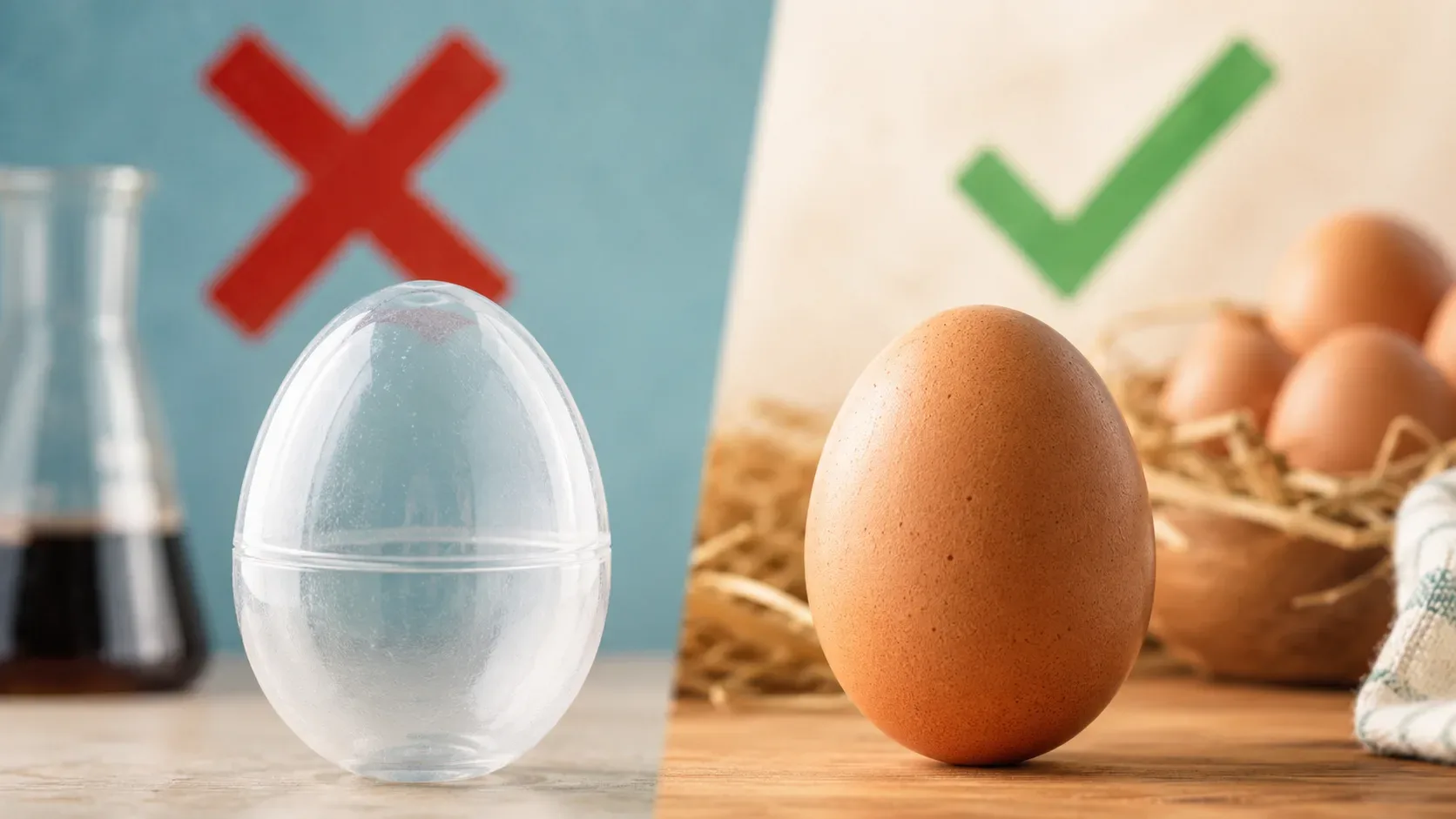
No. For those looking to find out if plastic eggs are true, the official answer is that the video gave Anvisa a warning that the Agency did not issue. In a note published at 4:57 pm on August 4, 2026 and updated at 5 pm, Anvisa classified the information as false and stated that there are no eggs made from plastic or petroleum — nor containing these substances — approved for consumption.
The check, however, does not end the matter with just an “it’s false”. It offers an opportunity to exchange the fear of unproven fraud for care that truly reduces risks: checking the origin, reading the label, respecting the expiration date, storing correctly, not washing eggs before storing them and avoiding raw or undercooked consumption.
The real risk is not a “plastic egg”; is to ignore origin, expiration date, refrigeration and cooking.
The rumor and what Anvisa actually denied
The video in circulation said that Anvisa had warned about the presence of plastic or oil in eggs. According to the Agency itself, this alert never existed. The note also informs that products with these characteristics are not approved for consumption.
It is important to understand the scope of this response. The publication refutes a message falsely attributed to Anvisa and clarifies the regulatory situation. It does not replace a laboratory analysis of a specific sample that presents a suspicious smell, appearance, packaging or origin. In these cases, the consumer must preserve the product information and contact the official inspection service or local health surveillance.
Rumor versus evidence
| Circulating statement | What official sources say |
|---|---|
| “Anvisa issued a warning about eggs containing plastic or oil.” | The Agency stated that it did not issue this alert and classified the video as false. |
| “There are plastic eggs approved for sale.” | Anvisa informed that there are no eggs made from these substances, or containing them, approved for consumption. |
| “All eggs must be washed as soon as they arrive from the market.” | The recommendation is to wash only when necessary and immediately before use, never before storing. |
| “The appearance of the egg is the only safety criterion.” | Provenance, inspection, batch, origin, validity, conservation and cooking are also essential. |
These conclusions are gathered in the check published on August 4, 2026 and in the health guidelines cited by the Agency.
Who supervises the production and sale of eggs
In the note about the video, Anvisa clarified that the inspection of farms and egg production is the responsibility of the Ministry of Agriculture and Livestock, Mapa. This does not mean that there is only one possible stamp on the packaging.
Inspection of products of animal origin can be carried out by municipal, state or federal services, depending on the establishment's area of activity and sales. The Map differentiates these identifications in the following way:
| Identification | What it represents |
|---|---|
| YES | Municipal Inspection Service, responsible for establishments linked to municipal inspection. |
| SIE | State Inspection Service, responsible for establishments inspected by the competent state body. |
| SIF | Federal Inspection Service, coordinated by Mapa and used by establishments with national or export coverage. |
| SISBI-POA | System that recognizes the equivalence of state or municipal services to the federal standard. It is not, in itself, a separate inspection service. |
In practice, the buyer should look for an official inspection seal compatible with the origin of the product, and not just the SIF acronym. Mapa itself guides consumers to look for identifications such as SIF, SIE, SIM or SISBI-POA on products of animal origin.
Anvisa, in turn, establishes sanitary requirements and labeling rules, in addition to monitoring and managing risks related to food. Agricultural inspection of production and health label requirements are complementary parts of consumer protection, not competing functions.
What to look for before putting eggs in the cart
Purchasing is the first point of control at home. Before choosing just based on price, size or color of the shell, check whether the packaging allows you to identify who produced and who inspected the food.
Label and packaging checklist
Search:
- seal or identification of the official inspection service;
- name and origin of the producer or establishment;
- batch number, important for tracking and eventual collection;
- expiry date;
- care instructions;
- intact packaging and eggs with no visible cracks.
Anvisa specifically highlighted inspection, batch, origin and validity as necessary information for a traceable purchase. RDC 727/2022 also makes it mandatory, depending on the product, to identify the origin, batch, validity and instructions for conservation and use.
The standard also requires that egg labels present two warnings:
“Consuming this raw or undercooked food can cause harm to your health.”
“Keep eggs preferably refrigerated.”
These phrases are not just advice freely added by the manufacturer. They are instructions provided for in article 35 of RDC 727/2022 for warehouses that pack eggs intended for human consumption.
Avoid purchasing trays without sufficient identification, with leaked liquid, heavily damaged packaging or cracked units. Mapa's processing rules determine the removal and controlled disposal of cracked or unsuitable eggs before commercialization, which reinforces the importance of shell integrity.
Do I need to wash the eggs?
Do not wash eggs before storing them. If there is dirt adhered to the shell and washing is really necessary, Anvisa recommends doing so only moments before preparation or consumption. Previous Agency guidance specifies drinking water, washing one egg at a time, and hand hygiene after handling.
What is the bark cuticle
The eggshell has pores and is covered by a natural protective film called cuticle. This layer acts as a barrier against the entry of microorganisms.
When the egg is washed, some of this protection can be removed. If it is wet and then stored, the pores are more exposed during a period in which the food will still be stored. Therefore, the household recommendation is to postpone washing until ready to use.
This natural film is not plastic. It is part of the protective structure of the egg.
Why eggs can be washed in the industry
Washing carried out by an inspected establishment should not be confused with washing in advance in the sink at home.
Ordinance SDA/Mapa 1.179/2024 provides that the industrial stage is carried out by mechanical means and with procedures designed to prevent microbial penetration. The standard also establishes water control, continuity of operation and mechanical drying after washing. This is a supervised process, not authorization to wash eggs and store them wet at home.
The rule of thumb is simple:
- clean egg: does not need to be washed before breaking;
- egg with impurities: wash only before use, with drinking water;
- after handling: wash your hands and sanitize surfaces and utensils that may have been contaminated.
How to store eggs at home
Read the manufacturer's instructions first. The mandatory rule on the label is to inform that eggs must be kept preferably refrigerated. The Ministry of Health recommends placing them inside the refrigerator, and not on the door, where there is greater movement and variations when opening the equipment.
When arriving from the market:
- check the validity and integrity of the units again;
- do not wash eggs before storing them;
- follow the storage conditions declared on the label;
- when refrigerated, keep them inside the refrigerator;
- prevent shells and hands that have touched raw eggs from coming into contact with ready-to-eat foods.
The “according to the label” recommendation is important because the validity conditions are defined considering the way the product is produced, packaged and preserved. It is not safe to adopt a generic domestic deadline in place of the date and instructions provided by the responsible establishment.
Why thorough cooking matters
The main microbiological risk addressed in the official guidance is Salmonella. The Ministry of Health informs that the bacteria can be transmitted by consuming raw or undercooked eggs and also by hygiene failures during preparation. Children, elderly people and people with compromised immune systems can develop more serious conditions.
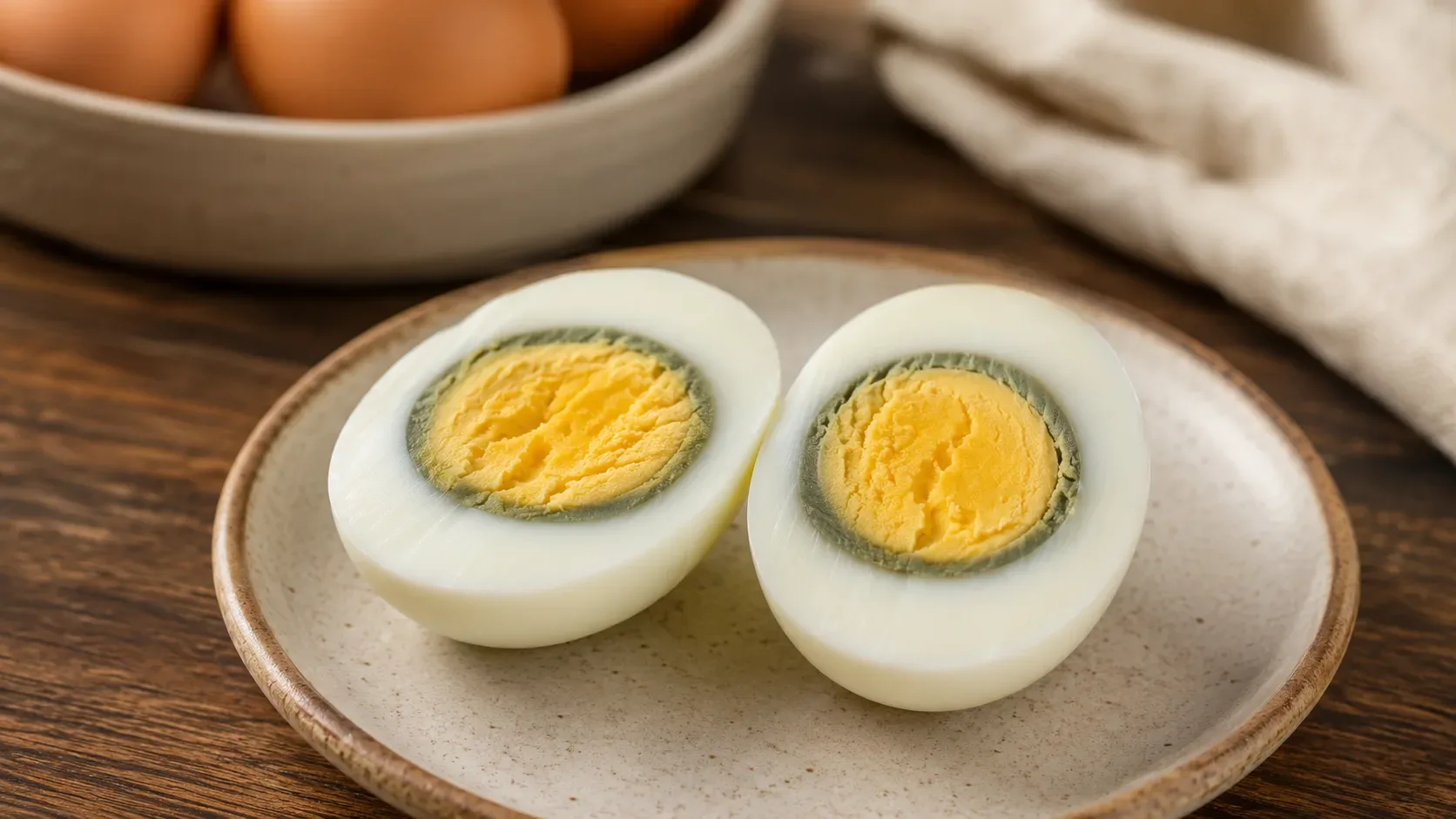
For boiled eggs, the Ministry of Health recommends boiling for at least seven minutes. The general recommendation is to consume well-cooked eggs and avoid preparations with raw or undercooked eggs, such as runny yolks, eggnog and homemade mayonnaise made with raw eggs.
The external appearance does not indicate whether the contents are free of bacteria. Even a clean, odorless egg with an intact shell needs to be handled hygienically and subjected to adequate cooking.
Checklist to save before next purchase
In store
- Look for official inspection stamp.
- Check producer, origin, batch and expiration date.
- Read the conservation guidance.
- Do not take visibly cracked eggs or leaky packaging.
At home
- Do not wash eggs before storing.
- Keep them refrigerated according to the label and out of the refrigerator door.
- If there is dirt, wash them one at a time, with drinking water, just before use.
- Wash your hands and utensils after handling raw eggs.
- Prefer well-cooked eggs and avoid recipes with raw or undercooked eggs.
The fake video attempts to direct attention to a fantasy product. The precautions that make a difference are less spectacular, but verifiable: buy from an inspected source, check the label, respect the expiration date, store correctly and cook thoroughly.
Save this checklist to consult on your next purchase and also see the blog content about how long food can remain out of the refrigerator.