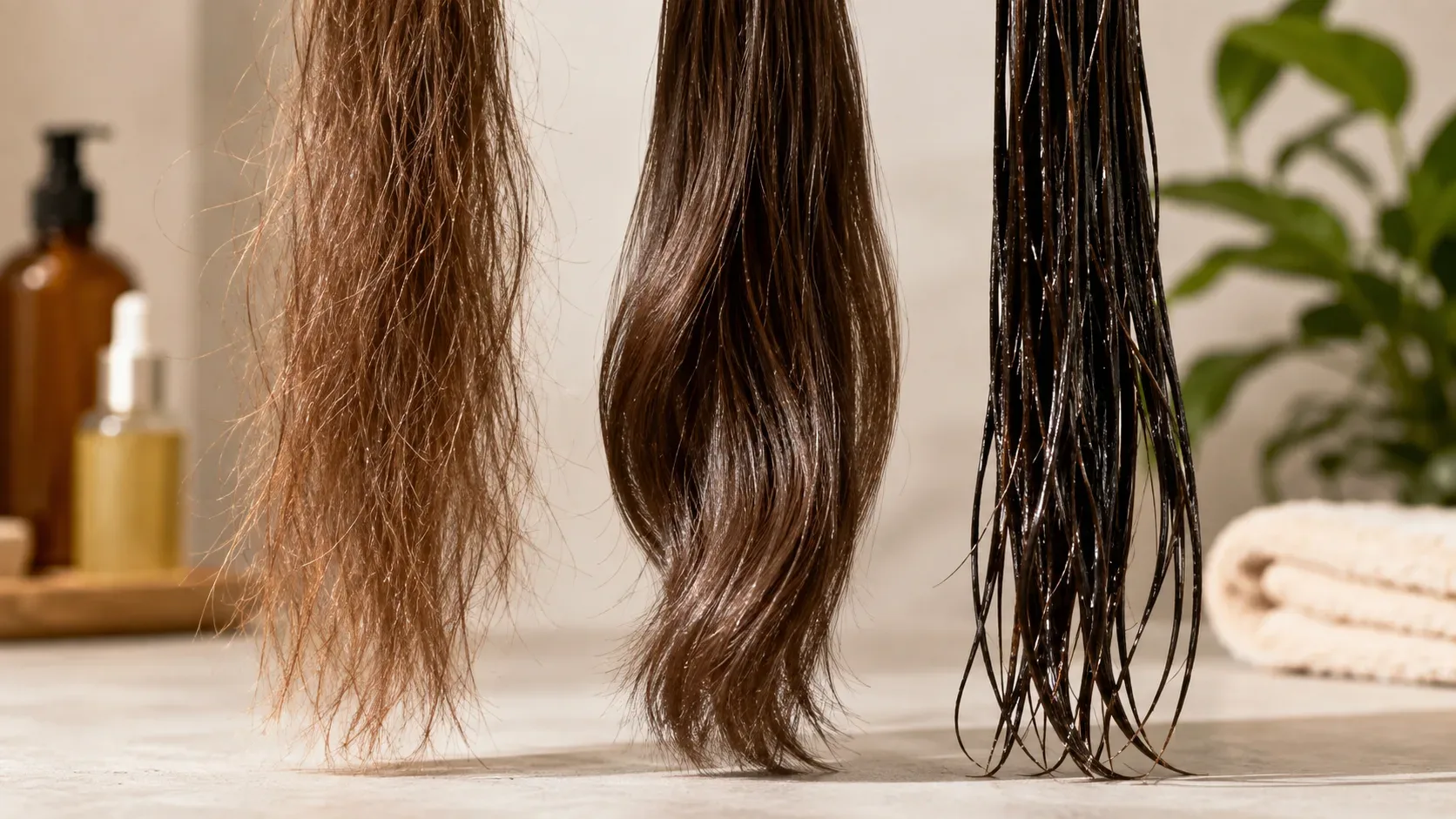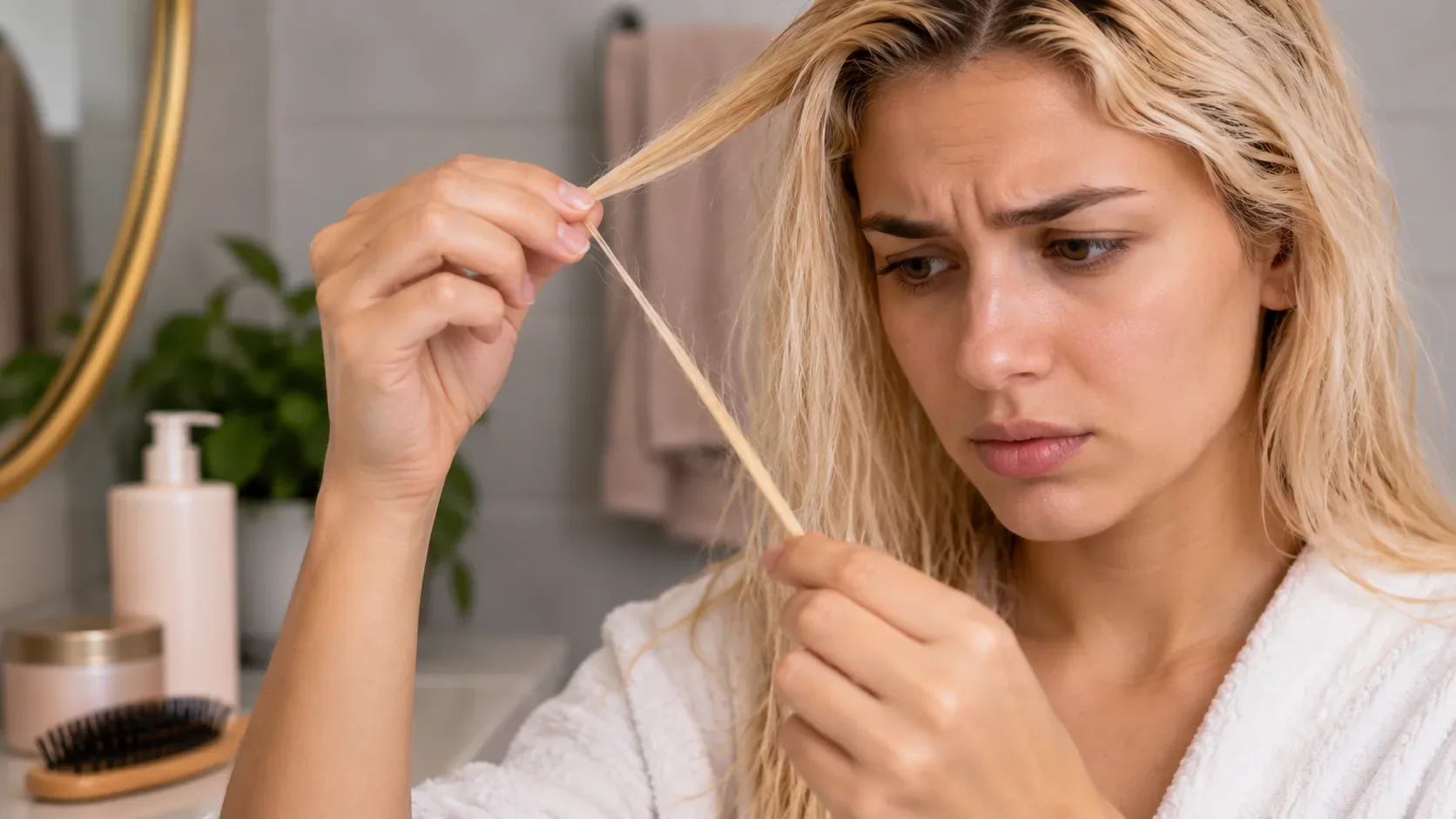
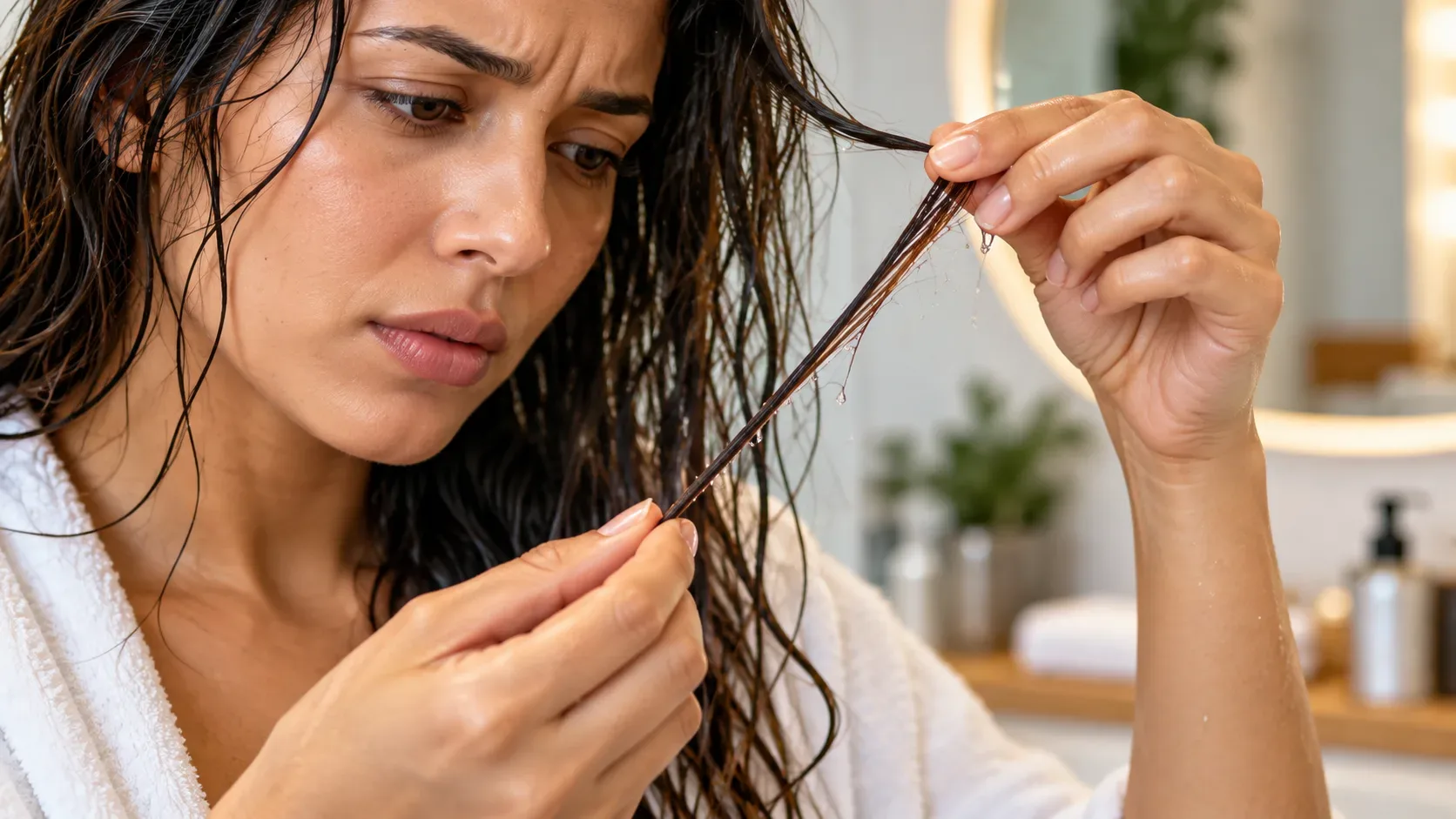
When hair feels unusually stretchy while wet, the first conclusion should not be “protein deficiency” or “too much moisture.” Water temporarily changes the mechanical behavior of the fiber: it enters the shaft, causes swelling, and weakens some of the hydrogen bonds in keratin. This makes wet hair more flexible and more vulnerable to deformation and traction damage. If a strand also feels gummy, becomes thinner as it is stretched, snaps with little force, or breaks repeatedly, that can be compatible with an already weakened fiber, especially after bleaching, straightening, perming, intense heat, or repeated manipulation. Even then, touch alone cannot identify the cause.
What changes in the hair fiber when it gets wet
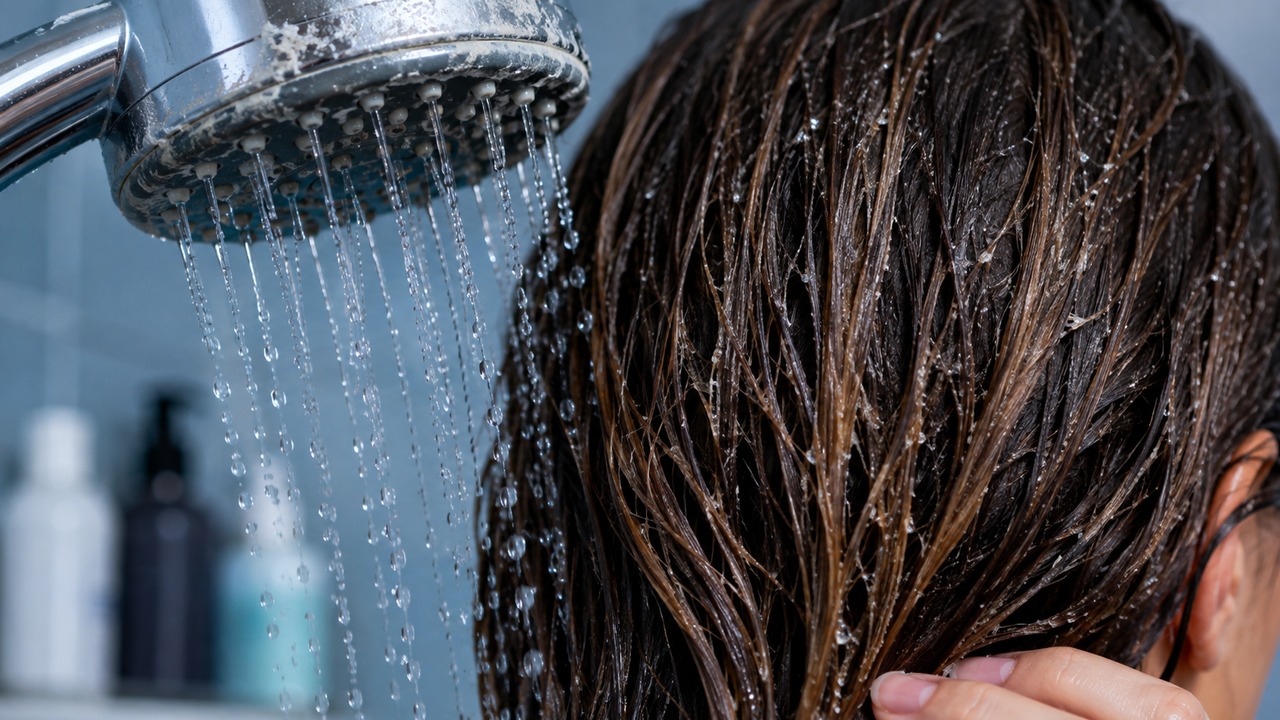
A hair fiber is made mainly of keratin, with an outer cuticle that protects the cortex. When it comes into contact with water, the fiber absorbs moisture and swells. A review of hair cosmetics describes damaged hair as tending to become more hydrophilic and porous, while a study on hair biomechanics explains that water temporarily weakens hydrogen bonds, making the fiber more flexible and more susceptible to physical damage while wet.
This helps explain why a strand may feel more “stretchable” in the shower without that, by itself, indicating a disease or a cosmetic diagnosis. The sign deserves more attention when the extra stretch comes with fragility, such as frequent breakage, fraying ends, noticeably uneven lengths, or loss of strength after chemical processing.
| What you observe | What may be happening | What it does not prove |
|---|---|---|
| Wet hair stretches more than dry hair but does not break easily | Part of this may be the normal mechanical response of the fiber to water | It does not prove protein deficiency, “moisture overload,” or chemical damage |
| The strand feels very soft, thins as it is pulled, and breaks easily | There may be reduced strength or accumulated damage to the hair shaft | It does not identify which process, product, or condition caused the problem |
| There is extensive breakage, short hairs, and whitish points or nodes | There may be significant shaft damage and, in some cases, a defect that needs evaluation | A diagnosis cannot be confirmed by home inspection alone |
Which situations raise the likelihood of fragility
Chemical and physical damage can alter the cuticle, the cell membrane complex, and the bonds that help maintain fiber strength. Bleaching, permanent coloring, perming, and some straightening procedures can affect structures inside the hair. Excessive heat, aggressive brushing, towel friction, and repeated traction can also contribute to hair shaft weathering.
This context matters more than the behavior of a single strand pulled between the fingers. If the change started after repeated bleaching, a straightening procedure, frequent flat iron use, or a sudden increase in manipulation, that timeline is useful information. It does not replace professional evaluation, but it can identify exposures that can be reduced while the situation is observed.
Why a home “elasticity test” cannot diagnose the cause
In research, hair strength and extensibility are measured with tensile testing equipment under controlled conditions. A study of wet hair tensile testing shows that this type of assessment uses specific mechanical variables and standardized samples. Pulling a strand by hand does not control force, speed, fiber diameter, chemical history, temperature, humidity, or the amount of water absorbed.
For that reason, a home result cannot establish that hair “needs protein,” has “moisture overload,” or requires a specific treatment schedule. There is also a practical downside: repeating the test applies traction to a fiber that may already be vulnerable.
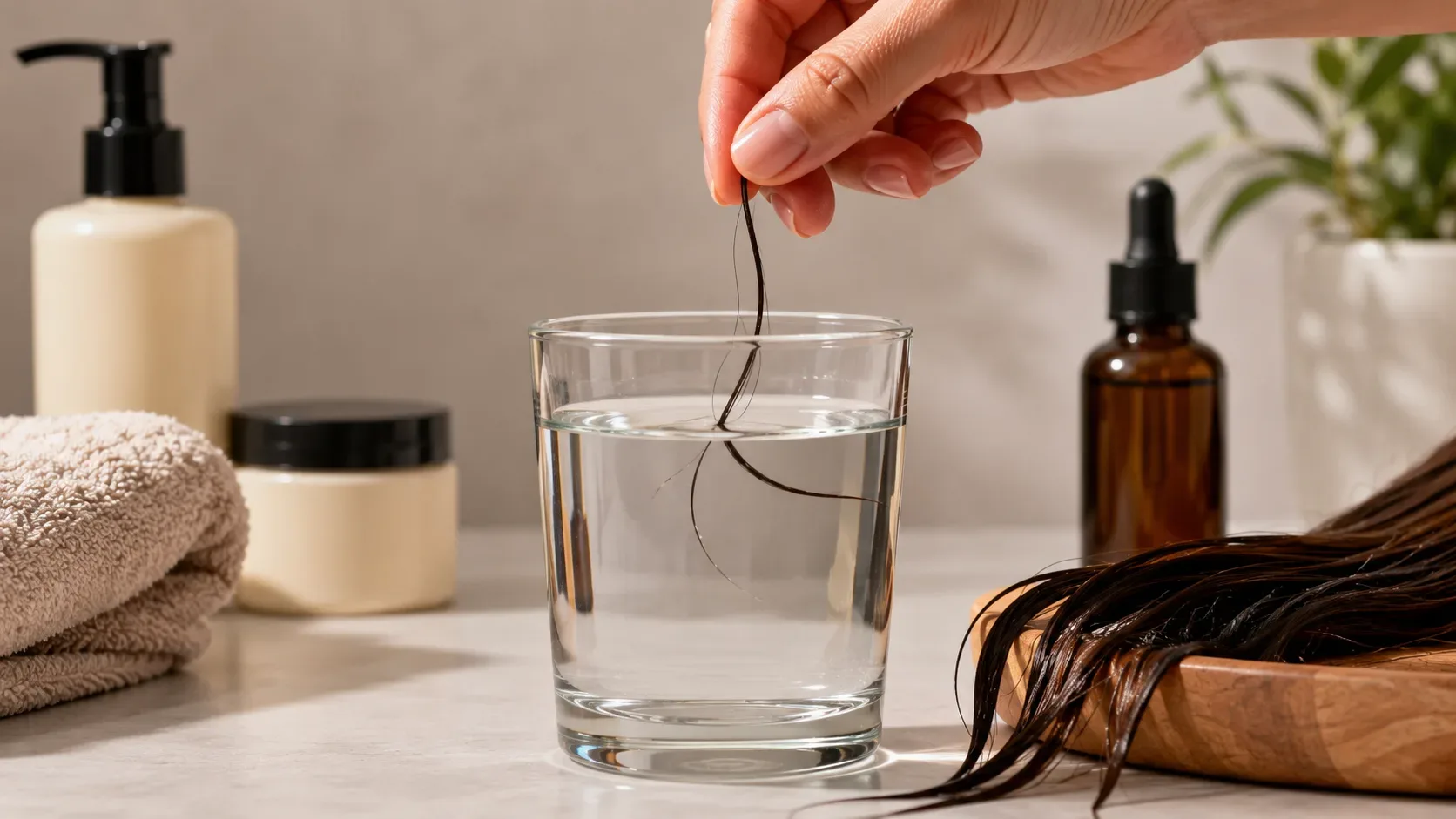
What about the glass of water porosity test?
Watching a strand float or sink in a glass is not a diagnostic method for porosity either. The hair surface contains lipids and may carry conditioner residue, silicones, or oils that change how easily water wets it. Trapped air and the way the strand contacts the water can also change the result. In scientific literature, porosity and damage are evaluated with instrumental methods such as gas sorption, swelling measurements, microscopy, and other physical tests. That is very different from classifying hair by how long it takes to sink.
A safer way to observe the problem
- Stop repeatedly pulling strands to test them. Observe the hair during normal use without trying to stretch it to the breaking point.
- Reduce manipulation while the hair is wet. The American Academy of Dermatology recommends gentle detangling and a wide tooth comb. For straight hair, allowing it to dry somewhat before combing may reduce damage, while curlier or more textured hair is often detangled while damp and conditioned.
- Use conditioner and minimize friction. Avoid vigorous towel rubbing. Gently pressing or wrapping the hair with a soft fabric reduces friction.
- Pause avoidable stressors. If breakage is present, temporarily reduce flat iron use, high heat, bleaching, straightening, and other chemical processes while you assess the pattern.
- Record the recent history. Note new products, chemical services, heat exposure, wash frequency, and when breakage began. This timeline helps distinguish a recent change from a persistent problem.
When a dermatology evaluation is useful
See a dermatologist when breakage persists or worsens, when there are areas with many very short hairs, visible points or nodes along the shaft, scalp patches, shedding from the root, intense itching, scaling, pain, inflammation, or a sudden unexplained change. Hair shaft defects can be acquired through physical or chemical trauma, but structural disorders also exist and may require examination. DermNet notes that some conditions are identified with trichoscopy or microscopy, not by how the hair feels between the fingers.
In short, greater stretchiness when hair is wet can be partly explained by the interaction between water and keratin. When that stretchiness is extreme and comes with breakage, it calls for caution, less aggressive handling, and attention to recent exposures. The key limitation of home tests is simple: they may raise a suspicion, but they cannot prove the cause.
Sources and references
- Hair Cosmetics: An Overview
- The biomechanics of splitting hairs
- American Academy of Dermatology: Tips for healthy hair
- DermNet: Defects of the hair shaft
- The information content of tensile tests of human hair (wet) is limited
- True porosity measurement of hair: a new way to study hair damage mechanisms