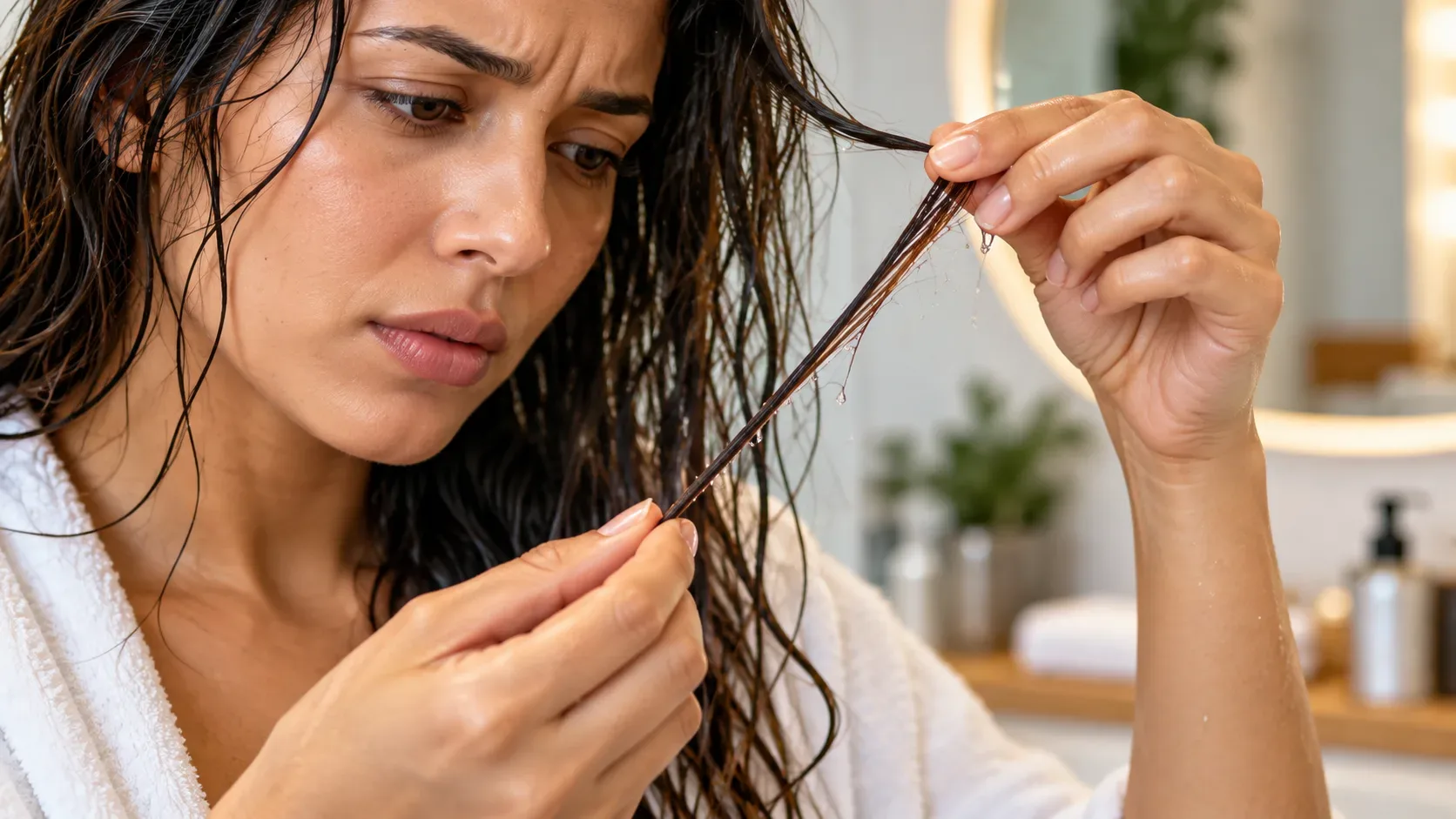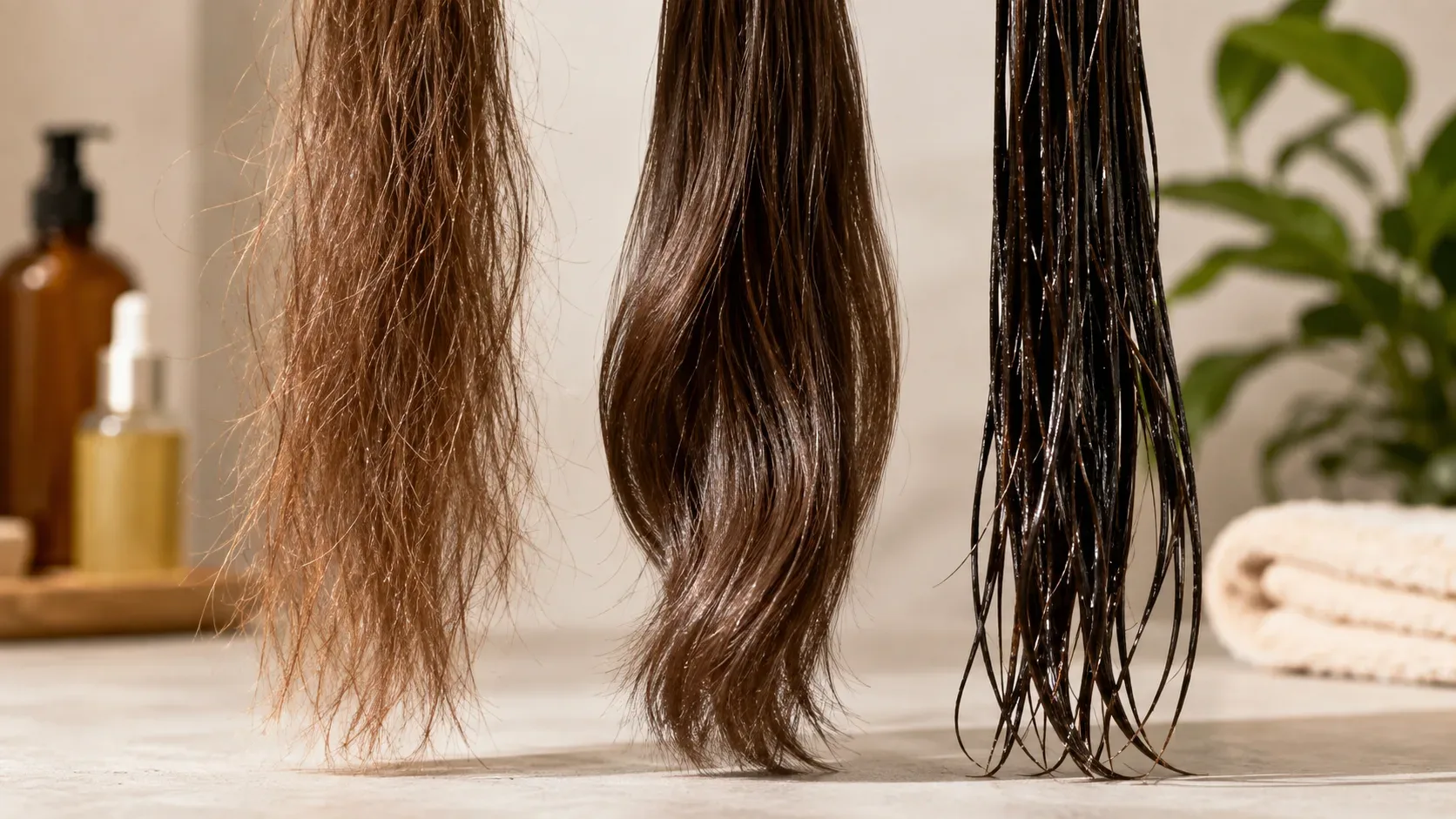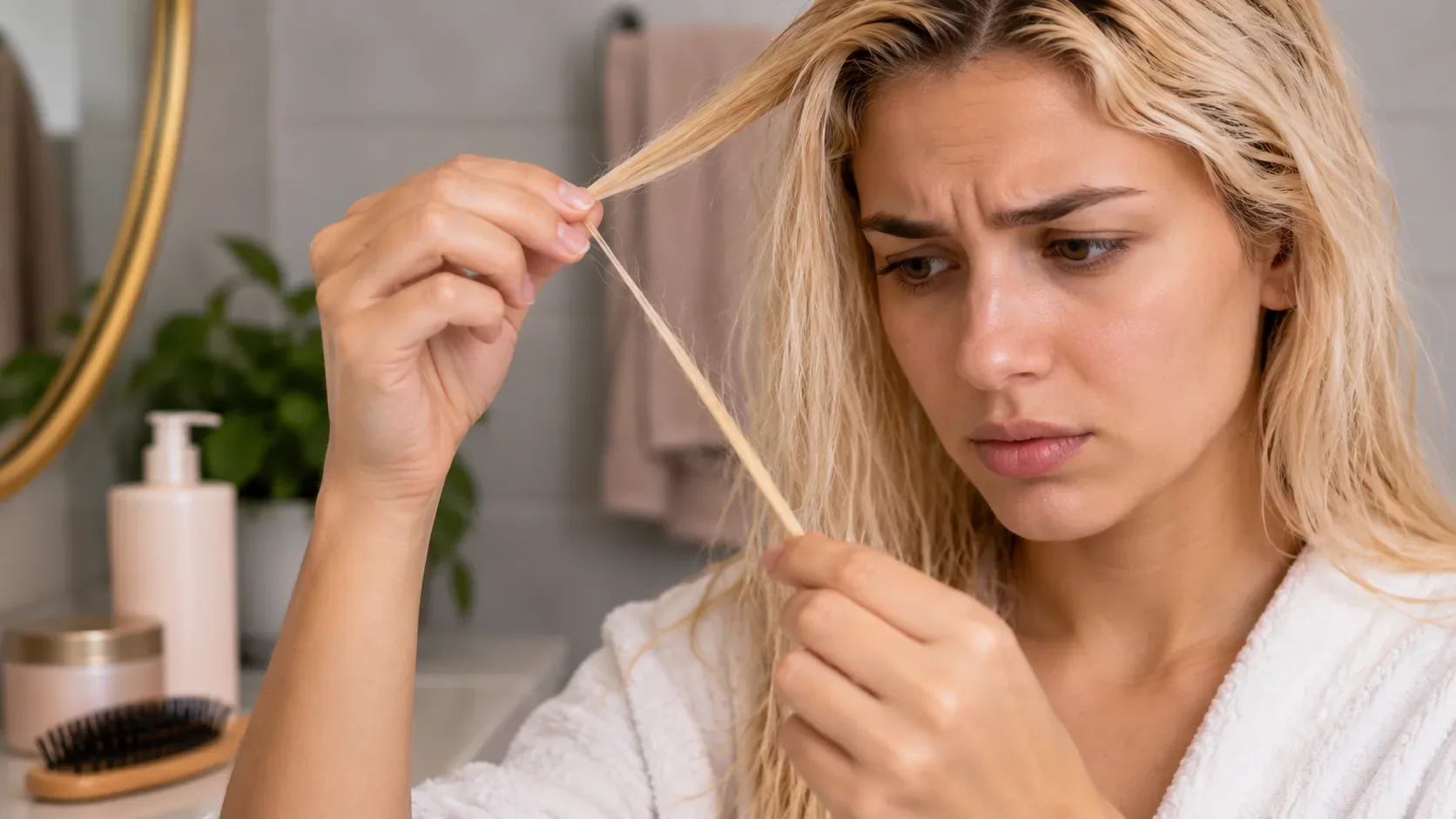
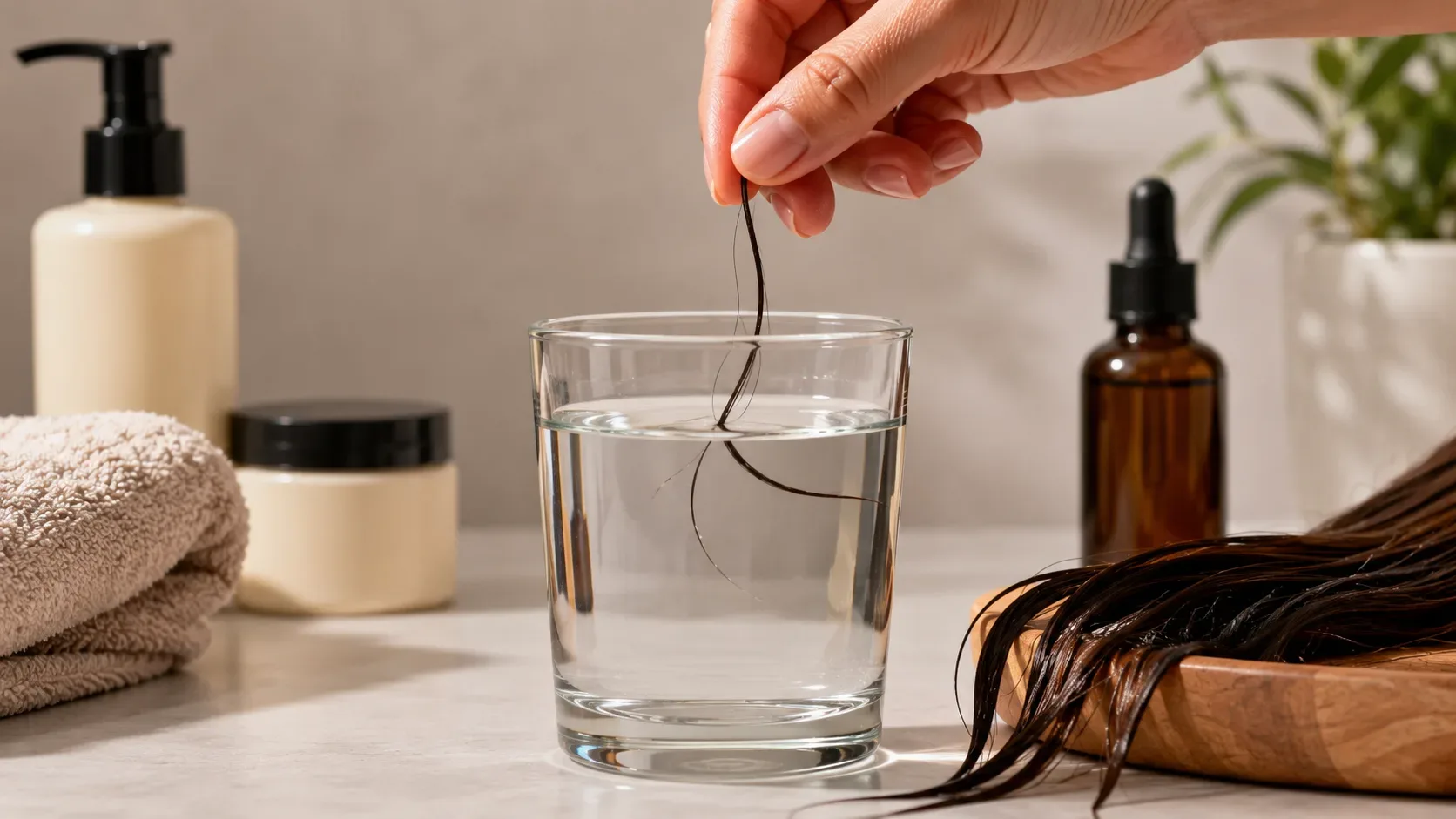
The cup test is popular, but it does not reliably measure porosity. Understand why the wire can float or sink and which signs are most useful.
Formatted content
Placing a strand of hair in a glass of water and observing whether it floats or sinks seems like a simple way to discover porosity. The most repeated rule says that thread on the surface means low porosity, in the middle indicates medium porosity and at the bottom means high porosity.
The problem is that this interpretation transforms a much more complex phenomenon into three positions within a glass. Hair fiber actually has a porous structure and its interaction with water changes with physical and chemical damage. This, however, does not mean that the depth at which a thread stops in water is a reliable measure of this porosity. Laboratory research evaluates fiber characteristics with techniques such as water sorption, microscopy, wettability measurements and, more recently, thermoporometry by differential scanning calorimetry.
The main problem: floating does not mean being less porous
When a dry thread is placed gently over water, it first encounters the surface of the liquid. And this surface exerts enough tension to support small objects even when they are denser than water itself. The United States Geological Survey uses the example of a metallic needle that can remain on the surface until this tension is broken.
This already creates a problem for the cup test. A thread that remains floating may simply not have crossed the surface of the water. If it is pushed, shaken or otherwise wet, the result may change without the internal structure of the hair changing at all.
Therefore, the test does not isolate what it intends to measure.
The surface of the hair also interferes
There is another important variable: natural hair has a relatively hydrophobic surface, that is, with some resistance to water spreading. Part of this characteristic is related to the outer lipid layer of the cuticle, including 18-methyleicosanoic acid, known as 18-MEA.
Chemical treatments and accumulated fiber wear can reduce this protection. Studies show that the loss of 18-MEA alters wettability and increases friction between the strands. This is precisely why laboratories can use contact angle measurements to evaluate how water spreads across the surface of the hair.
This helps explain another limit of the cup: a yarn may wet differently because of the state of its surface without this directly corresponding to the volume or size of the pores within the fiber.
Residues from conditioner, oils, sebum and finishing products add another layer of interference. Even if the yarn is washed before testing, it is difficult to turn a home experiment into a standardized measurement of wettability and absorbency.
Porosity exists, but it is more complex than “open or closed cuticle”
It is also common to find explanations saying that low porosity hair has a “closed” cuticle, while high porosity hair has an “open” cuticle. The image is easy to understand, but it oversimplifies the fiber structure.
A study published in the International Journal of Cosmetic Science evaluated the porosity of virgin and bleached hair using thermoporometry. The researchers found nanometer-scale pores and observed that chemical bleaching changed the volume and distribution of these pores.
Other work shows that chemical treatments can alter the cuticle, the cortex, the ability to absorb water and the swelling of the fiber. Damaged hair also tends to exhibit greater surface wear, friction, tangling and susceptibility to breakage.
In other words, there is an actual physical property behind the word “porosity”. The problematic jump occurs when it is assumed that a single thread floating for a few minutes faithfully translates this property.
In the research carried out for this topic, no scientific validation was found for the domestic scheme “boiou = low, sank = high” as a method of classifying capillary porosity.
What to look for instead of the cup test
To take care of your hair at home, it is often more useful to observe a set of repeated signs than to try to fit all strands into one category from a single test.
- History of bleaching and other chemical processes: bleaching, oxidative dyes, straightening and perming can alter the cuticle and other fiber structures. The greater the processing and accumulated wear, the greater the reason to suspect structural damage.
- Difference between roots and ends: the hair undergoes wear and tear over time. Therefore, the same person may have more preserved regions near the root and much more worn ends. The literature describes this progressive aging of the stem as weathering.
- Roughness, tangling and difficulty combing: loss of surface lipids and damage to the cuticle increase friction. If these signs appear especially in the most processed or older areas of the hair, they are more informative clues of damage than the result of a strand in the cup.
- How water spreads through clean hair: understanding whether the water remains in drops on the surface or spreads quickly can help observe the wettability of the hair. Still, this should not be treated as a “new definitive porosity test” because it primarily measures surface behavior.
- Breakage, very worn ends and changes in behavior after chemicals or heat: when they appear together with increased roughness and tangling, these signs point to fiber compromise and deserve more attention than the “high” or “low porosity” category.
The time for hair to dry also deserves caution. It can change with the number and length of strands, amount of water retained between them, products applied, air circulation, temperature, ambient humidity and drying method. Therefore, “dries quickly” or “takes a long time to dry” should not be used alone to define porosity.
So should I ignore porosity completely?
Não necessariamente. Thinking about how fiber interacts with water, products and treatments can be helpful. What's worth letting go of is the expectation that all hair needs to be given a precise label of “low,” “medium,” or “high porosity” for a routine to work.
If an area of your hair is rough, tangles easily and has undergone repeated bleaching, this information helps guide care even if a strand removed from there continues to float in a glass.
In the same way, if the hair is intact and has good combability, a strand that has sunk is not enough reason to conclude that there is a problem.
The cup test can be a curious experiment in how a thread interacts with water. As a home measurement of porosity, however, it poorly controls for important variables and offers more certainty than the evidence allows. Looking at hair history, comparing roots and ends, and tracking consistent changes in texture, wettability, tangling, and breakage tends to produce more helpful care decisions.