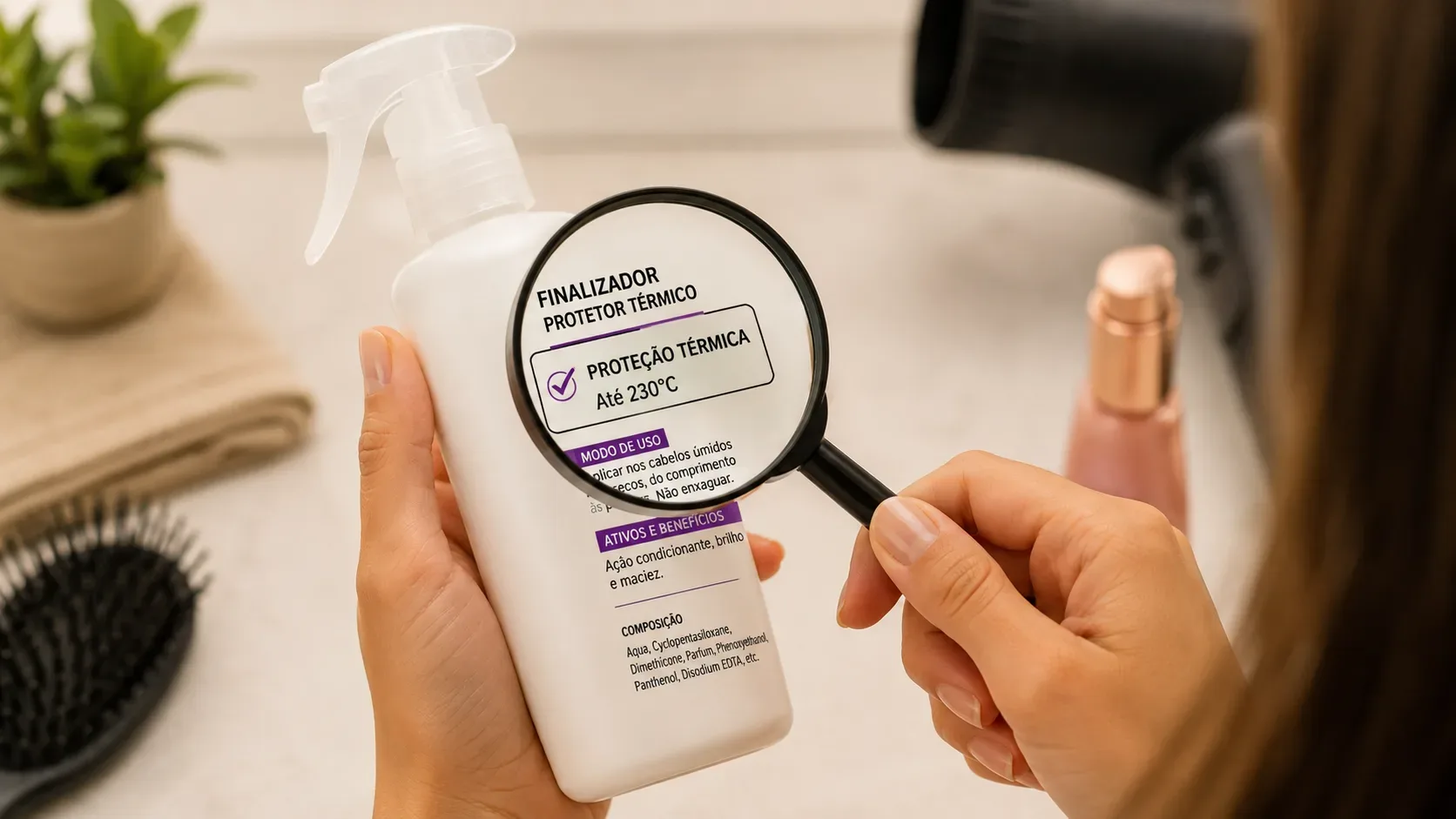
To tell whether a finishing product actually claims heat protection, the most useful question is not “does it contain silicone?” or “does it have conditioning ingredients?”. It is: does the label explicitly assign the product the function of protecting hair from heat? If the package says “heat protection,” “protects against blow-dryer and flat-iron heat,” or gives a limit such as “protection up to 230 °C,” there is a direct claim. If it only promises shine, softness, discipline, sealing, frizz reduction, or says it is “heat activated,” you should not turn those statements into a heat-protection promise on your own.
The most important rule: read the product claim, not an assumed ingredient function
In Brazil, RDC 752/2022 requires cosmetic labeling to be legible, clear, and truthful and bars wording that can mislead or confuse consumers about properties, composition, intended use, or safety. Anvisa also treats claims about product benefits as a relevant part of labeling. For consumers, the safest approach is therefore to separate three things: what the product says it does, how the manufacturer tells you to use it, and which ingredients it contains.
| What you find | What you can conclude | What it does not prove on its own |
|---|---|---|
| “Heat protection” or “protects from heat” | The manufacturer makes an explicit heat-protection claim | That heat becomes harmless or that any temperature is safe |
| “Protection up to 230 °C” | There is a claim with a stated temperature limit | That using 230 °C is necessary or suitable for every head of hair |
| “Heat activated” | Heat is involved in the described effect or use | That the product protects the fiber from thermal damage if that is not stated |
| Silicones, polymers, or conditioning agents in the ingredient list | Those ingredients are present in the formula | That the finished product provides a specific level of heat protection |
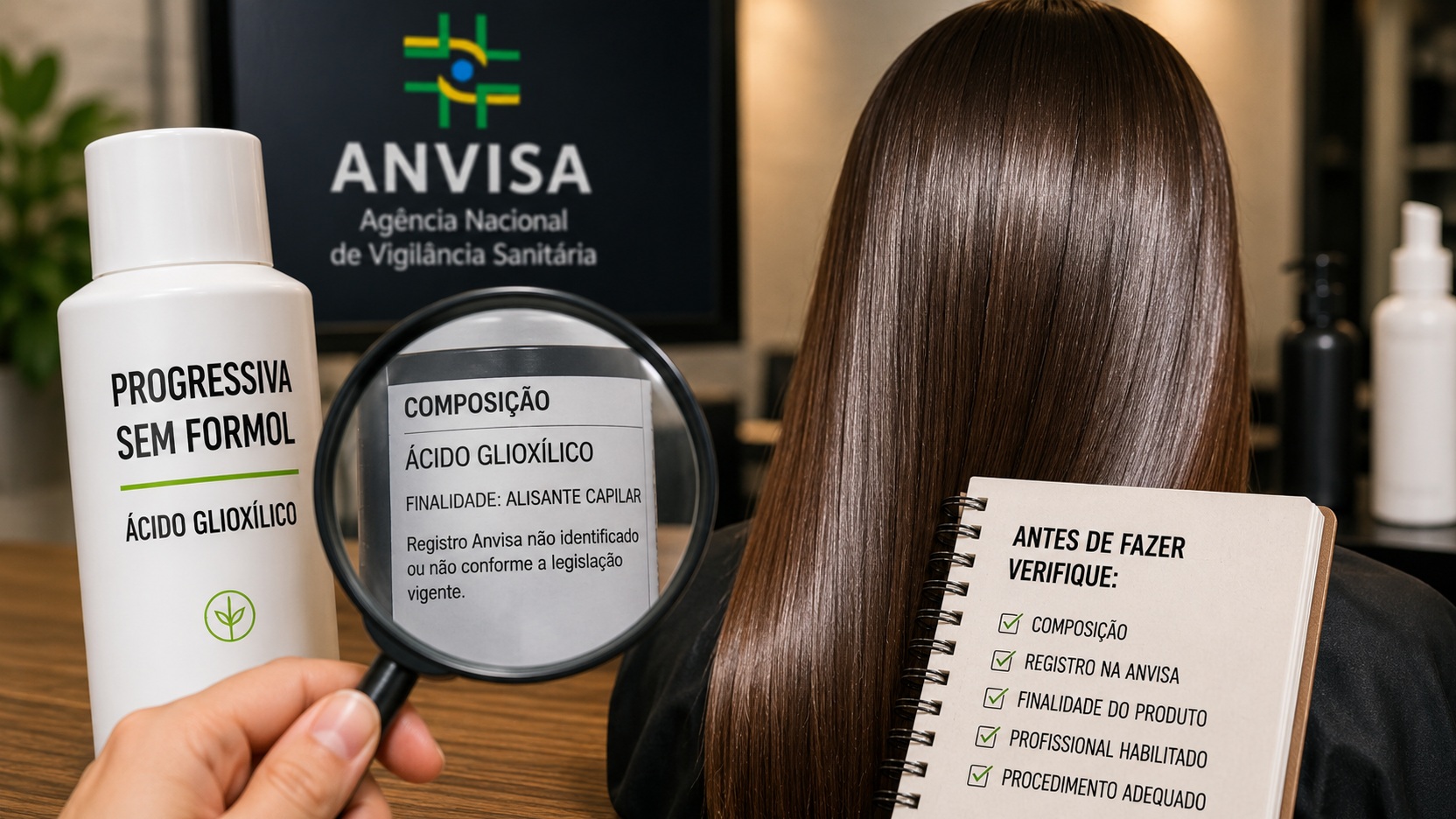
Front-and-back checklist: five things to verify
1. Look for the explicit claim anywhere on the package
Start with the front, but do not stop there. The claim may be on the back, side panel, or near the directions. Wording such as “heat protectant”, “heat protection”, “protects against heat damage”, or a direct reference to a blow dryer, diffuser, curling tool, or flat iron indicates that the product is being presented for that purpose. A product name by itself may be vague; prefer a sentence that describes the benefit.
2. Treat the directions as part of the claim
The directions should explain under what conditions to apply the product and how to fit it into the routine: damp or dry hair, approximate amount, application distance when relevant, distribution through sections, and use before a particular tool. This matters because performance claims may depend on application conditions. If the label calls for even application before blow-drying, for example, applying only to the ends does not necessarily reproduce the intended use.
3. If a temperature is listed, treat it as a stated limit — not a target
Some products say “up to 200 °C,” “up to 230 °C,” or equivalent. That is more specific than a generic protection claim, but it does not mean you should run the tool at its maximum. The American Academy of Dermatology recommends using flat irons on dry hair at a low or medium heat setting and limiting heat exposure. In other words, the number on the label describes the product’s claimed range; your temperature choice should still be conservative and appropriate for your hair and tool.
4. Check the ingredient list, but do not use it as a shortcut to “prove” the claim
The INCI list helps identify composition. Anvisa explains that INCI standardizes cosmetic ingredient identification; under current Brazilian rules, qualifying products must also provide the composition in Portuguese, either in print or through permitted digital access. This can help you identify silicones, polymers, proteins, oils, and conditioning agents, but the presence of an ingredient alone does not reveal concentration, deposition on the fiber, interactions with the rest of the formula, or the performance of the finished product.
5. Separate adjacent cosmetic benefits from heat protection
“Anti-frizz,” “shine,” “softness,” “detangling,” “sealing,” “shielding,” “repair,” and “breakage reduction” can all be useful benefits, but they are not automatic synonyms for heat protection. The phrase “heat activated” deserves the same caution: it may mean heat activates a styling or finishing effect. If the package does not connect that term to protecting hair from heat, classify the product as not carrying an explicit heat-protection claim.
Why the ingredient list does not replace the product claim
There is scientific support for the idea that certain formulations and pretreatments can reduce some types of damage from hot tools. A study indexed in PubMed, for example, found less breakage and signs of structural protection with certain specific polymers before repeated flat ironing. Another study found reduced damage in samples treated with heat-protection sprays, while also showing that application format and water content can influence other types of damage.
That does not support a rule such as “if it contains ingredient X, it is a heat protectant.” The finished formula, concentration, vehicle, amount deposited, and directions matter. As an international reference for good practice in cosmetic claims, EU Regulation 655/2013 explicitly says that properties of an ingredient should not be attributed to the finished product without adequate support. This is not Brazilian law, but it illustrates the reasoning that prevents an ingredient list from being turned into a promise.
Wording that sounds similar but does not mean the same thing
| Label wording | Prudent reading |
|---|---|
| “Heat protectant” | Direct heat-protection claim |
| “Protection from blow dryer and flat iron” | Direct, contextualized claim |
| “Protection up to 230 °C” | Direct claim with a stated temperature ceiling |
| “Heat activated” | Heat participates in the effect; it does not prove protection without another statement |
| “Smoother blowout,” “disciplining effect” | Styling or finishing claim |
| “With silicones,” “with polymers,” “with proteins” | Composition information; not a heat claim by itself |
| “Repairs damage” | Repair/conditioning claim; it does not automatically define thermal prevention |
Heat protection does not make heat neutral
Even when the claim is present, reducing heat load still matters. The American Academy of Dermatology recommends low or medium settings for flat irons and notes that excessive heat can damage any hair type. Laboratory studies also show more surface damage at higher blow-dryer temperatures. Applying a hot iron to wet hair can cause substantial shaft injury; case reports describe “bubble hair,” in which heating damp fibers creates cavities and brittleness.
A heat protectant should therefore be understood as one layer of risk management and cosmetic performance, not as permission to raise the temperature, multiply passes, or ignore the condition of the hair.
A 30-second decision flow
- Is there an explicit heat-protection statement? If yes, move to the directions. If not, do not turn “heat activated” or a particular ingredient into a claim.
- Do the directions include the tool you plan to use? Check whether the instructions cover a blow dryer, flat iron, curling tool, or more than one.
- Is there a temperature limit? Treat it as the manufacturer’s stated ceiling. If none is given, do not invent one from the ingredient list.
- Are there application conditions? Follow damp/dry hair instructions, amount, distribution, and timing.
- Is the product properly regularized in Brazil? If in doubt, use Anvisa’s cosmetic-product lookup, which allows searches using details such as product name, company tax ID, or process number.
When the label is ambiguous
If the package emphasizes “thermal technology,” “shield,” “armor,” or another promotional term without explaining what is protected and from which heat source, treat the message as ambiguous. Check the back, directions, and the product’s official page. If the brand publishes a maximum temperature or a more precise promise only on its website, that can help explain the commercial positioning, but it should not be confused with something you inferred from the ingredient list.
When comparing two finishing products, the best question is simple: which one clearly declares the protection I need under conditions that match my routine? That is a stronger criterion than choosing based on a “famous” ingredient or marketing words that do not define heat protection.
In short
A product truly declares heat protection when its package or official communication clearly assigns the product the function of protecting hair from heat. The directions and any temperature ceiling help define the boundaries of that claim. The ingredient list identifies the formula; it should not be used to create a claim the manufacturer did not make. And even with a protectant, using less heat, a lower temperature, and the shortest necessary exposure remains the safer approach to reducing thermal damage.