The question “shampoo with sulfate or without sulfate?” seems to ask for a binary answer, but hair doesn't work like that. What matters in practice is whether washing removes sebum, sweat, particles and product residues to the extent necessary, without leaving the scalp and strands uncomfortable. “Sulphate-free” can help pinpoint a formulation type, but it does not alone measure cleansing strength, smoothness, quality or compatibility with your hair.
The short answer: choose by the cleaning result, not by an isolated ingredient
Surfactants are the agents that allow the shampoo to mix water with oily materials and loosen dirt from the hair and scalp. They form the core of the formulation and also influence foam, viscosity, sensory and the way other ingredients are deposited in the hair. Therefore, real performance comes from the complete surfactant system, not from a prominent name on the front of the package.
A shampoo with sulfate can be well-balanced and comfortable. A sulfate-free shampoo can be gentle, but it can also be highly detergency. The useful comparison is not “good or bad sulfate”; is “this formula, used in this way and at this frequency, cleans what I need without going overboard?”.
What “sulfate-free” really tells you
On shampoos, the “sulfate-free” label typically indicates that the formula does not use certain common sulfate surfactants, such as Sodium Lauryl Sulfate, SLS, or Sodium Laureth Sulfate, SLES, in addition to ammonium variants. These ingredients belong to a family known for good detergency and foaming, but SLS and SLES are not the same substance and should not be treated as if they behave identically.
Removing sulfates does not mean removing anionic surfactants or automatically transforming the product into “light cleaning”. Sulfate-free formulas can use sulfonates, isethionates, sulfosuccinates, sarcosinates, glutamates, amphoters such as betaines and non-ionics such as glucosides. Sodium C14-16 Olefin Sulfonate, for example, is a sulfate-free anionic surfactant that can deliver high detergency. This is a good example of why the front-of-bottle claim is not enough to predict the washing experience.
What the INCI helps you see - and what it can't tell you alone
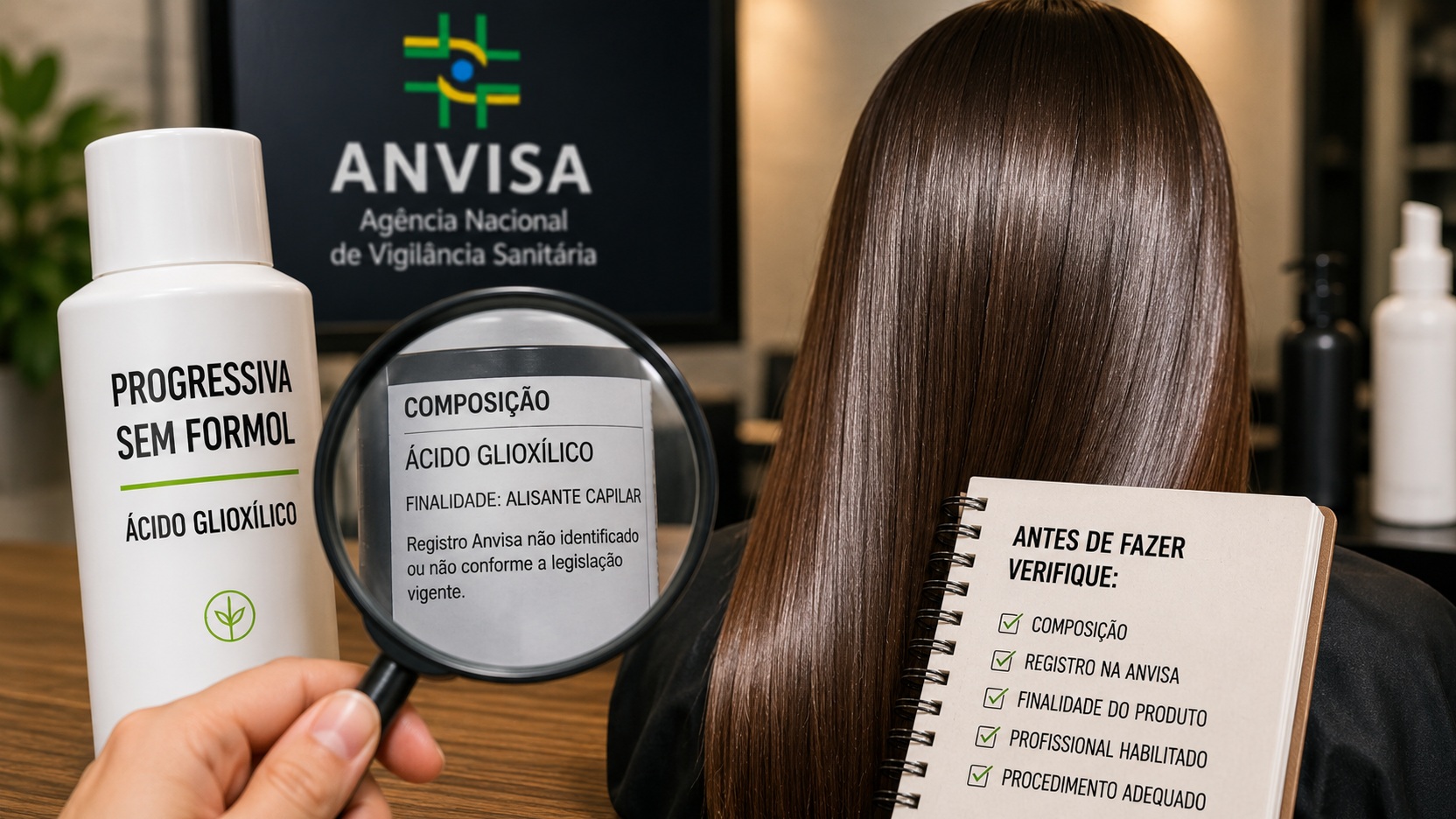
In Brazil, Anvisa maintains the INCI nomenclature as a mandatory reference for identifying cosmetic ingredients and also provides a translation into Portuguese. This list is useful to recognize which families of surfactants appear in the formula, compare products and avoid confusing commercial names with ingredients.
The limit is that INCI is not a shampoo performance test. Reading one or two names does not, in itself, reveal the final cleaning strength, because the result depends on the combination of surfactants, proportions, active concentration, pH, conditioning polymers, deposition agents and other components of the formula. Two shampoos that share the same main surfactant can behave very differently on hair.
For this reason, it is worth using the list of ingredients as a map, not as a sentence. It helps to formulate hypotheses about cleaning; who confirms whether the hypothesis makes sense is the repeated result in use.
Families of surfactants: how to read without turning the label into a hunt for villains
Anionics: normally carry much of the detergency
Anionic surfactants are very common in shampoos because they remove oil and dirt efficiently and tend to produce good foam. Sulfates belong to this group, but they are not alone. Sulfonates, isethionates, sulfosuccinates, sarcosinates and others can also be anionic.
The word “anionic” does not automatically mean “aggressive”. There are important differences between raw materials, usage levels and combinations. The practical point is to understand that, when the formula relies heavily on surfactants with a high oil removal capacity, it can be useful for very oily roots or product build-up, but may appear excessive on already dry strands or in a very frequent washing routine.
Amphoteric: frequent partners to balance the system
Betaines and related amphoters frequently appear alongside anionic surfactants. They can contribute to foam, sensorial and smoothness of the system. Cocamidopropyl Betaine is a common name in this role.
The presence of an amphoteric agent, however, also does not guarantee that every shampoo will be gentle. It is part of a composition. The same ingredient can be used in formulas aimed at different needs depending on who is using it and in what quantity.
Non-ionic: another route to cleaning systems
Glucosides, such as Decyl Glucoside and Coco-Glucoside, are examples of non-ionic surfactants used in cleaning products. They usually appear in formulas that seek a softer sensorial or in combinations with other families. Still, the final experience depends on the set. A product should not be classified solely by the presence of “glucoside” on the label.
Foam is not a reliable gauge of cleaning power
It's easy to associate a lot of foam with strong cleaning and little foam with weak cleaning. This relationship is not safe. The foam helps to spread the product and greatly influences the perception of use, but lather volume and detergency are not the same property.
Oil and residue can reduce the foam from the first application. Therefore, a shampoo may foam more on a second use simply because some of the oily material has already been removed. The opposite also happens: formulas designed to generate abundant foam may appear “potent” without necessarily removing more dirt than another less foaming formula.
The most useful reading is to look at how your hair looks after drying and in the hours following, not how much foam appeared in the shower.
How to recognize that cleaning may be insufficient
The best sign is not “my hair is greasy the next day”, because the speed of sebum production and distribution varies greatly between people. Look for a pattern closer to the time of washing.
If the roots end the wash while still heavy, with a filmy sensation, if residues of ointment, oil, cream or spray are still noticeable, if the strands clump together and quickly lose movement
once dry or if an occasional wash with more detergent clearly improves this set of signs, there is a clue that the current routine may be removing less residue than necessary.
This scenario may appear after switching to a milder shampoo, but it can also be caused by technique, small amount of product, insufficient rinsing or concentrated use of finishers. Before blaming the absence of sulfate, it is worth separating these variables.
How to recognize that washing may be overdue
On the other hand, a persistent sensation of the scalp pulling straight after washing, strands that are very rough to the touch, increased tangling and a loss of flexibility that is always repeated with the same shampoo may indicate that the combination between formula and routine is too intense for that hair.
A single bad day does not make a diagnosis. Very hot water, discoloration, heat, friction, insufficient conditioning and climate also alter the feel of the hair. What matters is the pattern: does the discomfort appear repeatedly after washing and improves when the detergency or frequency is reduced?
When itching, burning, wounds, intense peeling or hair loss persist, don't treat everything as a simple “strong shampoo”. These signs may have other causes and deserve dermatological evaluation.
Before changing shampoo, adjust how you use it
Wet your scalp well before applying
Enough water helps distribute the shampoo. When the hair is only partially wet, the product tends to be concentrated in a few spots and spreads poorly. This can produce the paradoxical feeling of using a lot of shampoo and still cleaning unevenly.
Direct the shampoo towards the roots
Most of the sebum is born on the scalp. In a regular wash, it makes more sense to massage the product mainly into the roots and let the foam that flows down take care of the lengths, instead of rubbing the ends as if they were stained fabric. Heavily loaded product lengths may require more contact, but this is a specific need, not a daily rule.
Second application must have a reason
Two strokes can be useful after a lot of sweat, excess oil, several days without washing or heavy use of finishing products. They don't need to become an automatic ritual. If a single well-distributed application cleans without leaving residue, repeating it only increases the hair's exposure to the cleaning system.
Rinsing is part of cleaning
Shampoo that gets stuck between dense strands, on the back of the neck or close to the roots can be confused with oiliness or a “heavy product”. Rinsing for longer, separating the strands with your fingers, is a simple test before concluding that the formula doesn't work.
Frequency and strength need to talk
The same person may adapt better to a milder shampoo used more frequently or a more detergent formula used at longer intervals. There is no universal number of washes that suits every scalp. The goal is to avoid both uncomfortable buildup and the need to “compensate” with overly aggressive cleaning.
When it makes sense to try a sulfate-free shampoo
A sulfate-free treatment can be a good experience when your current shampoo leaves your hair rough, when your routine requires frequent washing, when your hair length is sensitized or when you simply prefer the feel of less lipid-removing cleansing systems. The benefit, if it exists, comes from the behavior of the entire formula, not from the absence of the word “sulfate.”
When changing, watch your hair for a few washes. If the roots remain clean, the scalp feels comfortable and the length gains better touch without progressive build-up, the new detergent is probably closer to what your routine calls for.
When a sulfate shampoo can still make sense
If a sulfate shampoo removes sebum and residue well, rinses easily, does not cause discomfort, and leaves hair manageable after conditioning, there is no technical reason to discard it just because it contains SLS, SLES or another sulfate.
It can also be useful to have a more efficient cleaning option for times of accumulation, especially when there is frequent use of waxes, oils, silicones, sprays or high deposition creams. This does not necessarily require that the most detergent shampoo be the only one in the routine. Switching as needed may be more logical than trying to force a single product to solve all scenarios.
A simple script to decide without relying on ready-made rules
First: describe the current problem
Define whether your complaint is due to lack of cleaning, excessive detergent or just because the sensory result is not pleasing. “My shampoo has sulfate” is not a problem; “My roots are still heavy after washing” or “My hair feels rough every time I use this product” are observable problems.
After: read the surfactant system
Search INCI for the main cleaning agents and see if there is a combination of anionic, amphoteric and non-ionic. Use this to understand the likely architecture of the formula, without trying to turn every ingredient into a safety or quality note.
Next: correct technique and frequency
Before buying another bottle, test enough water, application focused on the roots, rinse thoroughly and at a frequency consistent with your oil level and use of finishers. If your cleaning needs change a lot from day to day, consider that perhaps one shampoo doesn't need to do it all.
Finally: change one variable at a time
If the problem persists, change the shampoo and keep the rest of the routine relatively stable for a few washes. This makes it easier to see if the new formulation has actually improved cleanliness and comfort. Changing shampoo, mask, finisher and frequency at the same time creates noise and makes it difficult to know what worked.
The best choice is the one that leaves room for your hair to respond
“With sulfate” and “without sulfate” are useful categories for describing part of the formula, but they are bad as a shortcut for deciding whether a shampoo is good, bad, strong or mild. Shampoo science works with surfactant blends because cleansing, lathering, softness and sensorial need to be balanced at the same time.
In practice, use the label to raise hypotheses and the repeated result to make the decision. If the hair is clean, the scalp is comfortable, and the length is manageable, the system is working for that routine. If there is residue left or there is a lack of comfort, adjust technique, frequency or formulation. This method is less simple than looking for a “forbidden” ingredient, but it is much more useful for choosing a shampoo for what it actually does.