Slowing the lowering or lifting phase of a repetition changes how effort is distributed, but it does not automatically make the exercise better. A slower phase increases the time spent in that part of the movement and can change the number of repetitions you can perform, the load you can use, fatigue, and the velocity you produce. The final effect depends on the goal, load, proximity to failure, exercise, and which phase was slowed.
What eccentric and concentric phases mean
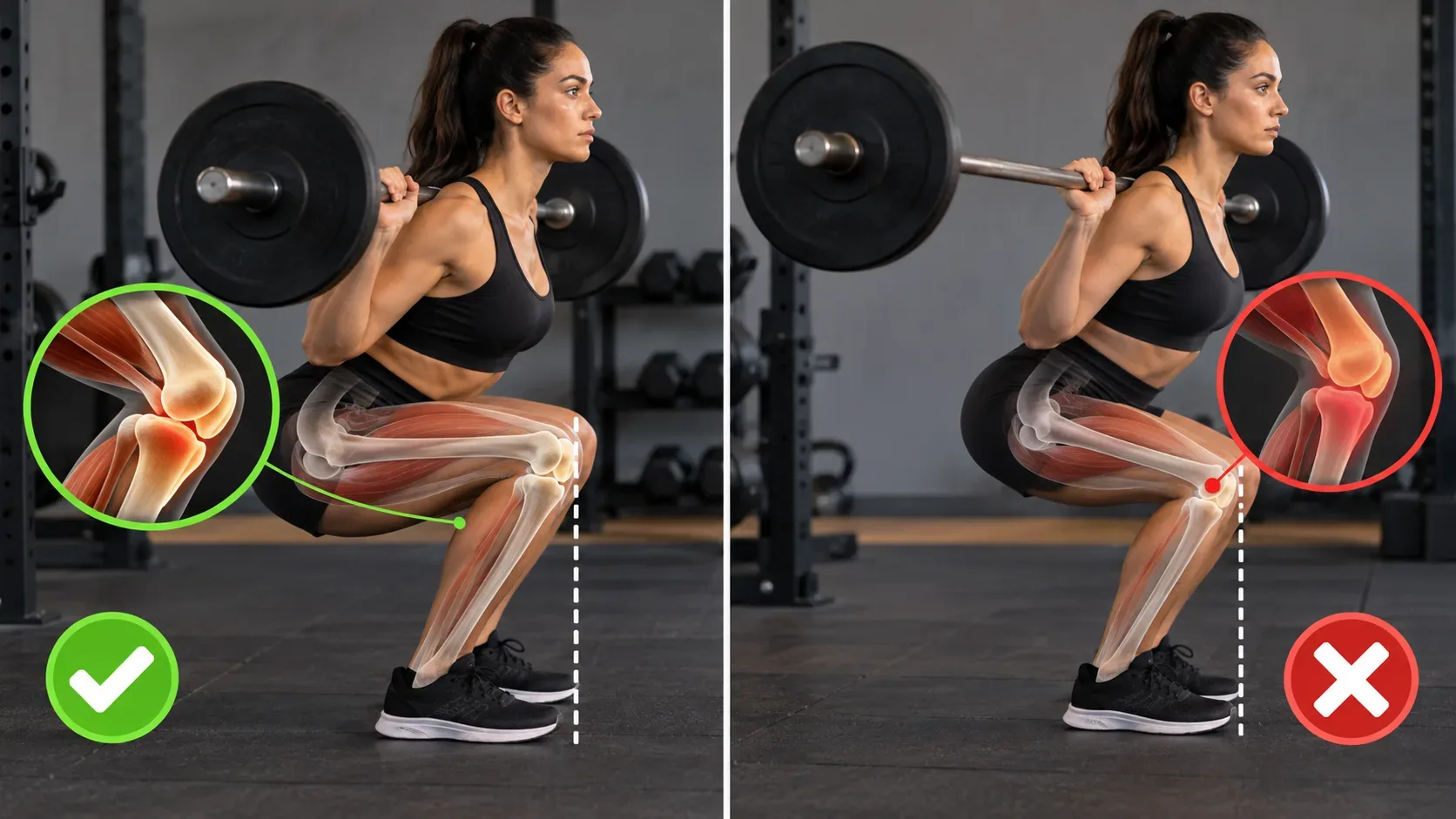
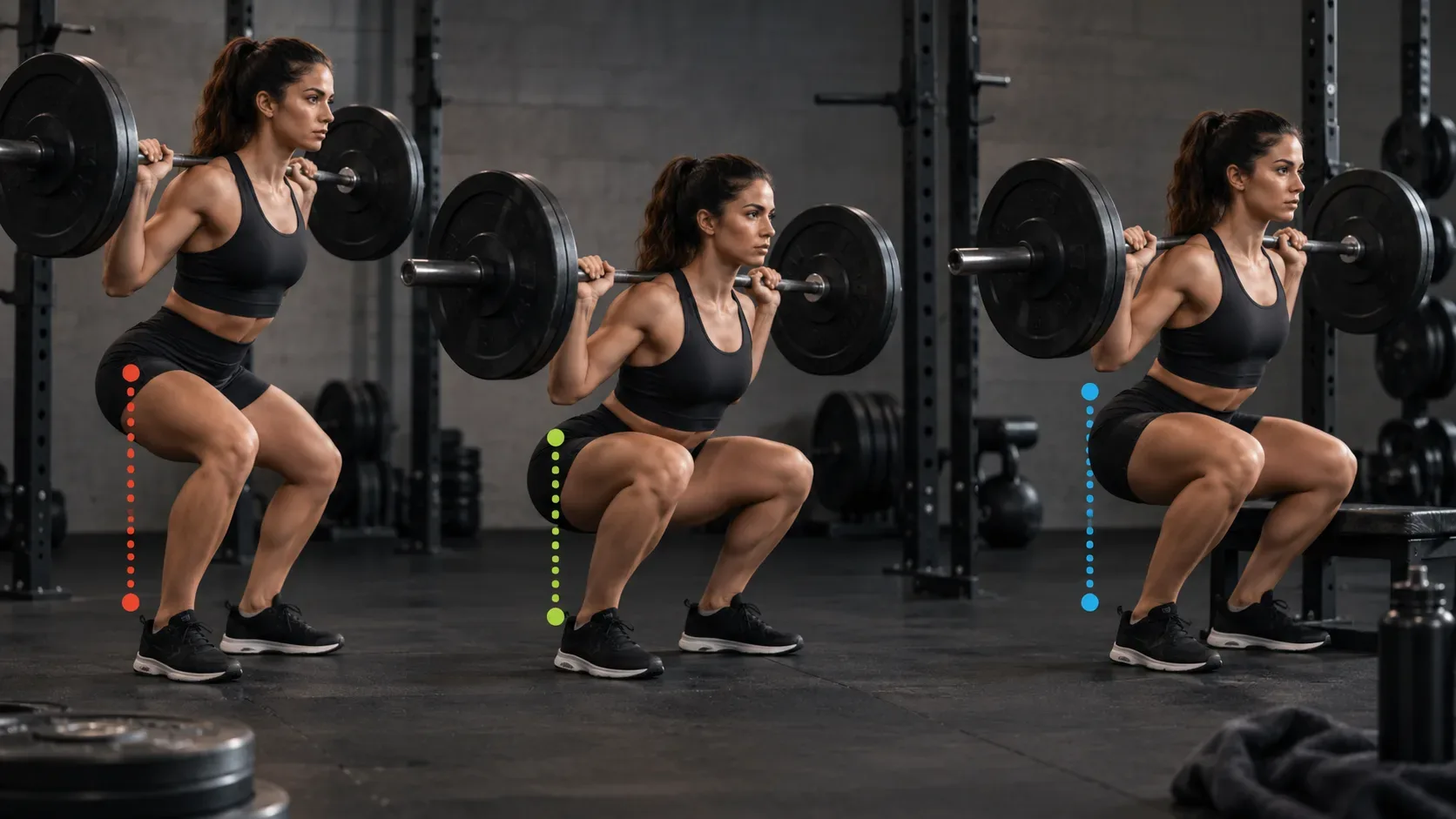
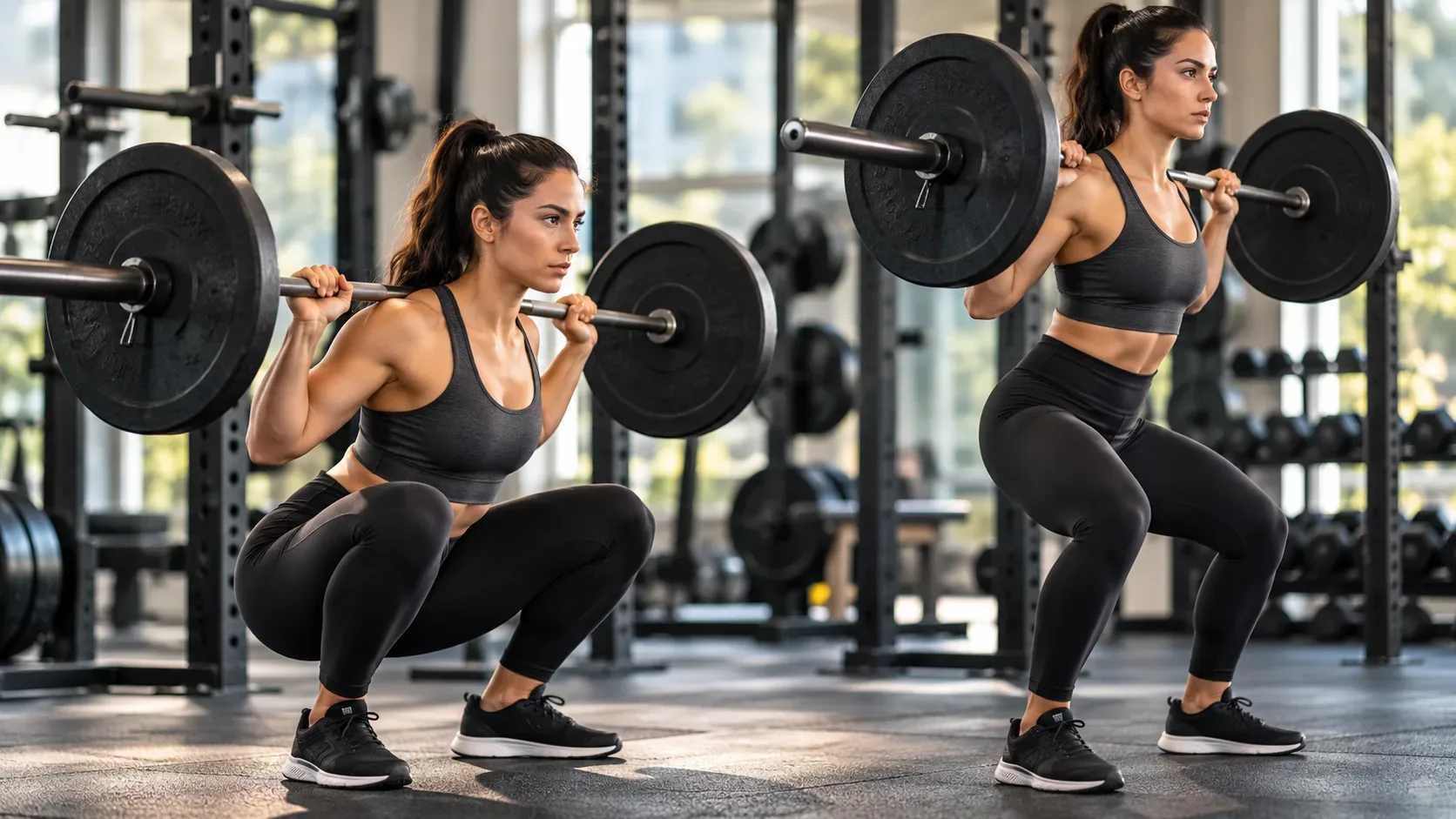
In resistance training, the eccentric phase is when an active muscle produces force while lengthening, and the concentric phase is when it produces force while shortening. In a conventional squat, for example, the descent is predominantly eccentric for the knee and hip extensors, while the ascent is predominantly concentric. In other exercises, the visual order may be different.
Cadence or repetition tempo describes how much time is intended for each phase. This is different from velocity that becomes slow without intention. A repetition may slow because the load is heavy or fatigue has increased, even when the lifter is trying to move the weight as fast as possible.
What changes when you slow the descent
Deliberately lengthening the eccentric phase increases the time under tension of each repetition. With the same load, this usually makes the set last longer and can reduce the number of repetitions available before fatigue. In other situations, the load has to be reduced to preserve the same repetition target and technique. Time under tension, load, and repetitions therefore cannot be treated as independent variables.
A slower descent also changes the transition from lowering to lifting. In explosive tasks, that may matter. A 2025 meta-analysis including nine studies and 166 participants found an advantage for shorter eccentric durations for improving countermovement jump performance. For maximal strength and hypertrophy, however, the overall estimates were uncertain. In subgroups of trained participants and studies with matched volume-load, longer eccentric phases, generally 3 to 6 seconds, produced similar or greater strength gains than shorter eccentric phases. The authors themselves emphasized that more research is needed.
This means a 3- or 4-second descent can be useful for standardizing execution, controlling the movement, or increasing time spent in a particular position. It does not mean that this choice is inherently superior for building muscle or strength.
What changes when you slow the ascent
The concentric phase behaves differently. If a person chooses to lift slowly even when faster movement is possible, concentric shortening velocity is deliberately reduced and, in many exercises, so is instantaneous mechanical power. This is not the same as trying to lift quickly while the bar moves slowly because the load is heavy.
This distinction appears in the strength literature. A 2023 meta-analysis pooled 24 studies with 625 participants and found a small average advantage for traditional or faster velocities compared with intentionally slow concentric training. The effect was small, but it weakens the claim that deliberately slowing the ascent is a general strategy for maximizing strength.
For power goals, the logic is even more direct: power depends on producing force with velocity. When the goal is to accelerate loads, imposing a slow ascent can conflict with the characteristic being trained. Actual velocity can still decrease as load or fatigue rises, but the intent to accelerate is different from being instructed to move slowly.
More time under tension is not an isolated dose
One reason tempo is confusing is that time under tension is often treated as if it could be increased without a tradeoff. In practice, increasing the duration of each repetition changes other parts of the session. The 2021 review on movement tempo notes that longer repetitions can reduce the number of repetitions possible with the same load and may require adjustments to load, volume, or both.
For hypertrophy, a 2015 meta-analysis found similar results with total repetition durations of about 0.5 to 8 seconds when protocols were performed to concentric failure. Available evidence suggested that voluntarily very slow repetitions, longer than 10 seconds, might be less favorable, but the authors stressed the small number of controlled studies. The correct interpretation is not that every cadence between 0.5 and 8 seconds is identical in every context. It is that the literature does not support a simple rule such as "the slower, the more hypertrophy."
How to count tempo without confusion
A common convention uses four positions in the order eccentric / pause after the eccentric / concentric / pause after the concentric. The review by Wilk, Zajac, and Tufano uses this format. Because some exercises visually begin with the concentric phase, the safest approach is to record the phase names as well as the numbers.
| Example | Reading | What is emphasized |
|---|---|---|
| 2/0/X/0 | 2 s eccentric, no pause, concentric with explosive intent, no final pause | Controlled lowering and accelerated lifting |
| 3/1/1/0 | 3 s eccentric, 1 s pause, 1 s concentric | More time in the descent and a transition without bounce |
| 1/0/3/0 | 1 s eccentric and 3 s concentric | Deliberately slow lifting |
| 4/0/2/0 | 4 s eccentric and 2 s concentric | A longer repetition overall |
The letter X usually indicates an intent to perform the concentric phase explosively without prescribing a fixed number of seconds. It does not guarantee that the bar will actually move fast: with heavy loads or fatigue, observed velocity may be low even with maximal intent to accelerate.
What the evidence supports, and what it does not
| Claim | Interpretation most consistent with the evidence |
|---|---|
| "A slower eccentric always produces more hypertrophy" | Not supported. Phase-specific evidence for hypertrophy is still uncertain. |
| "Lifting slowly is always better for strength" | Not supported. Pooled data modestly favor traditional or faster velocities over intentionally slow concentric training. |
| "Changing cadence changes set difficulty" | Yes. Time, available repetitions, load, and fatigue interact. |
| "Intent to accelerate and observed velocity are the same thing" | No. A heavy repetition can be slow despite maximal concentric intent. |
| "There is one ideal cadence for every exercise and goal" | There is not enough evidence for a universal rule. |
How to choose cadence according to the goal
For learning or standardizing execution
A deliberate count can work as a control tool. Using a 2- to 4-second eccentric for a period can make it easier to perceive bar path, range of motion, and pauses. The benefit here is execution organization. If the slower cadence reduces load or repetitions too much, the session is no longer directly comparable with the previous one.
For hypertrophy
Controlled cadences across a broad range can produce muscle growth. Rather than seeking the highest possible time under tension, it is more consistent with the evidence to preserve appropriate range of motion, sufficient effort, tolerable volume, and progression over time. A deliberately controlled eccentric can be used without turning every repetition into an extremely slow repetition.
For maximal strength
There is little reason to make the concentric phase deliberately slow in every set. In appropriate exercises, when technique allows it, trying to accelerate the concentric phase is consistent with literature showing traditional or faster velocities produce strength gains at least as good as, and on average slightly better than, intentionally slow concentric training.
For power and explosive movements
The intent to produce velocity is central. The 2025 evidence on eccentric duration favored shorter eccentric phases for countermovement jump performance, but that finding should not be converted into a rule for every gym exercise. Jumps, lifts, and common resistance exercises do not have identical mechanical demands.
How to compare two workouts without attributing everything to cadence
If you change execution tempo, also record at least load, repetitions, sets, range of motion, rest interval, and proximity to failure. For example, 8 squat repetitions with 80 kg at a self-selected tempo are not automatically equivalent to 8 repetitions with 80 kg using a 5-second descent. The second protocol creates a different set duration and may require a different effort strategy.
To judge whether the new cadence helped, compare workouts under similar conditions and observe what actually changed: tolerated load, repetition count, technical consistency, perceived effort, and performance across weeks. Cadence then becomes a programming variable rather than an isolated explanation for any result.
Limits of the evidence
The literature on repetition tempo is smaller and more heterogeneous than the literature on load, volume, or frequency. Studies use different exercises, populations with different training experience, different ways to match volume and load, and varying definitions of "fast" and "slow." The 2025 meta-analysis on the eccentric phase included only nine studies and 166 participants, mostly men, and rated several conclusions as uncertain. That requires caution before turning average findings into a mandatory cadence for everyone.
In short, slowing the descent increases eccentric time and can be useful for control and for manipulating a session; slowing the ascent deliberately reduces concentric velocity and has no demonstrated general advantage for strength. "Slower" describes an execution choice, not a synonym for "better."
Sources and references
- Amdi and King: eccentric phase duration, strength, hypertrophy, and jump performance, systematic review and meta-analysis, 2025
- Hermes and Fry: intentionally slow concentric velocity and strength adaptations, meta-analysis, 2023
- Wilk, Zajac, and Tufano: influence of movement tempo on strength and hypertrophy, review, 2021
- Davies and colleagues: movement velocity and dynamic strength, systematic review and meta-analysis, 2017
- Schoenfeld, Ogborn, and Krieger: repetition duration and hypertrophy, systematic review and meta-analysis, 2015