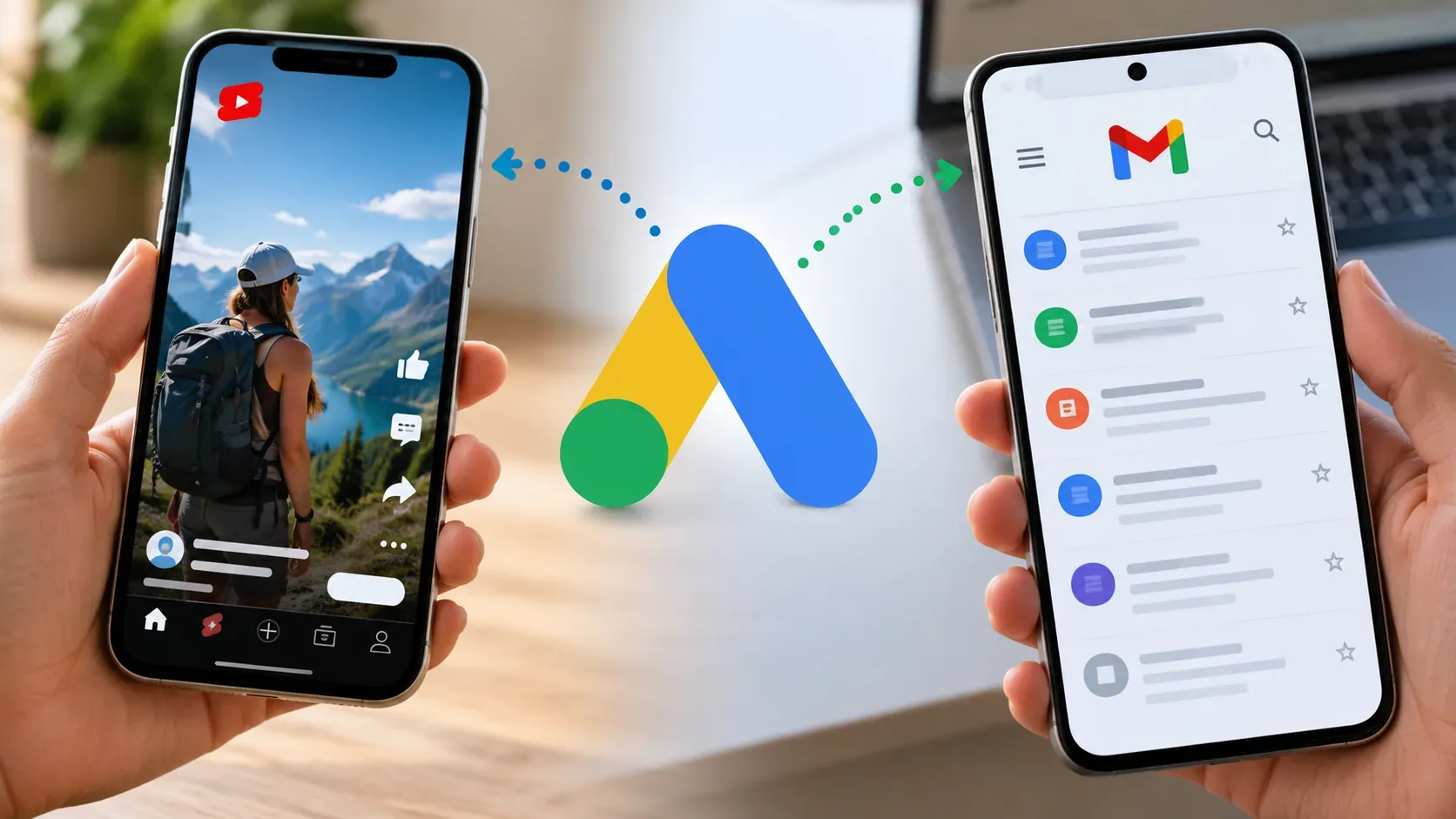
On September 24, 2026, Google announced a one-click experience for image ads in Demand Gen campaigns on YouTube Shorts and Gmail. The update lets consumers open an advertiser’s landing page with a single tap. The implementation difference expressly identified for Shorts is that advertisers must upload a full-bleed vertical 9:16 image to benefit from the new experience. For Gmail, Google describes a simpler path to the landing page without imposing that same specific 9:16 requirement in the announcement.
What changes in the user journey
The update concerns interaction with image ads, not a promise that a purchase can be completed in one tap. The destination is the advertiser’s configured landing page; any form, product selection, payment, or subsequent action still depends on that page. Nor does the announcement say that all Demand Gen formats acquire identical behavior.
Shorts versus Gmail: implementation differences
| Aspect | YouTube Shorts | Gmail |
|---|---|---|
| Announced change | One tap on the image ad opens the landing page. | One tap on the image ad opens the landing page. |
| Highlighted creative | Full-bleed vertical 9:16 image. | The announcement does not require 9:16 for this update. |
| Display context | Vertically oriented short-video feed. | Gmail ad experience, including its tab context. |
| Practical check | Review vertical framing, safe zones, and placement preview. | Review the ad preview and destination in the Gmail experience. |
“One click” should not be read as a separate new campaign type. Google presents the change within Demand Gen campaigns, where distribution and eligibility vary by asset and placement.
Preparing the Shorts creative
Google Ads creative documentation sets a 600 × 1067-pixel minimum for vertical 9:16 images and recommends 1080 × 1920 pixels. It also advises using safe zones similar to those for vertical videos because interface elements may overlap the ad. These are specifications for the 9:16 asset, not a new blanket requirement for every campaign image.
- Create or adapt a 9:16 image expressly for a vertical screen instead of relying on an automatic crop that could hide the product or visual message.
- Keep essential elements clear of interface overlays and inspect the Shorts placement preview.
- Check the final URL, mobile landing-page suitability, and consistency between the ad and page content.
- Verify format and asset eligibility for the intended placements in Google Ads; do not assume the vertical image will serve everywhere.
What to check in Gmail
For Gmail, the announced point is simpler access to the landing page from image ads. General Demand Gen asset rules still matter: documentation lists a final URL, business name, headlines, descriptions, and image assets, with specifications depending on format. The September 24 announcement does not instruct Gmail advertisers to adapt their creative to the Shorts 9:16 framing.
Google also reports a performance figure: advertisers adding Gmail to Demand Gen campaigns see, on average, 40% more conversions from image creatives at the same ROI. The footnote identifies global internal Gmail Ads data from February 2026. This is a company-reported average, not a guarantee for any account or a standalone causal estimate of the new one-click interaction.
How to measure the update without conflating channels
An operational approach is to examine placements separately wherever the available reports and settings allow. Compare equivalent periods before and after the change and review clicks, actual landing-page visits, conversions, cost per conversion, and return according to the campaign objective. Concurrent changes in budget, audience, creative, attribution, or landing page make it harder to attribute a difference solely to the new interaction.
A more direct click removes a navigation step but does not replace a fast, relevant, measurable landing page. Test links and campaign parameters, monitor traffic quality, and do not treat more clicks alone as proof of improved conversions.
What was announced and what remains unspecified
Google describes the feature as now available to consumers, but the announcement gives no country-by-country or account-level rollout schedule, feature-specific results broken out between Shorts and Gmail, or controlled experiment quantifying the effect of either new interaction. Check the specific experience in your account’s previews and settings against current documentation.