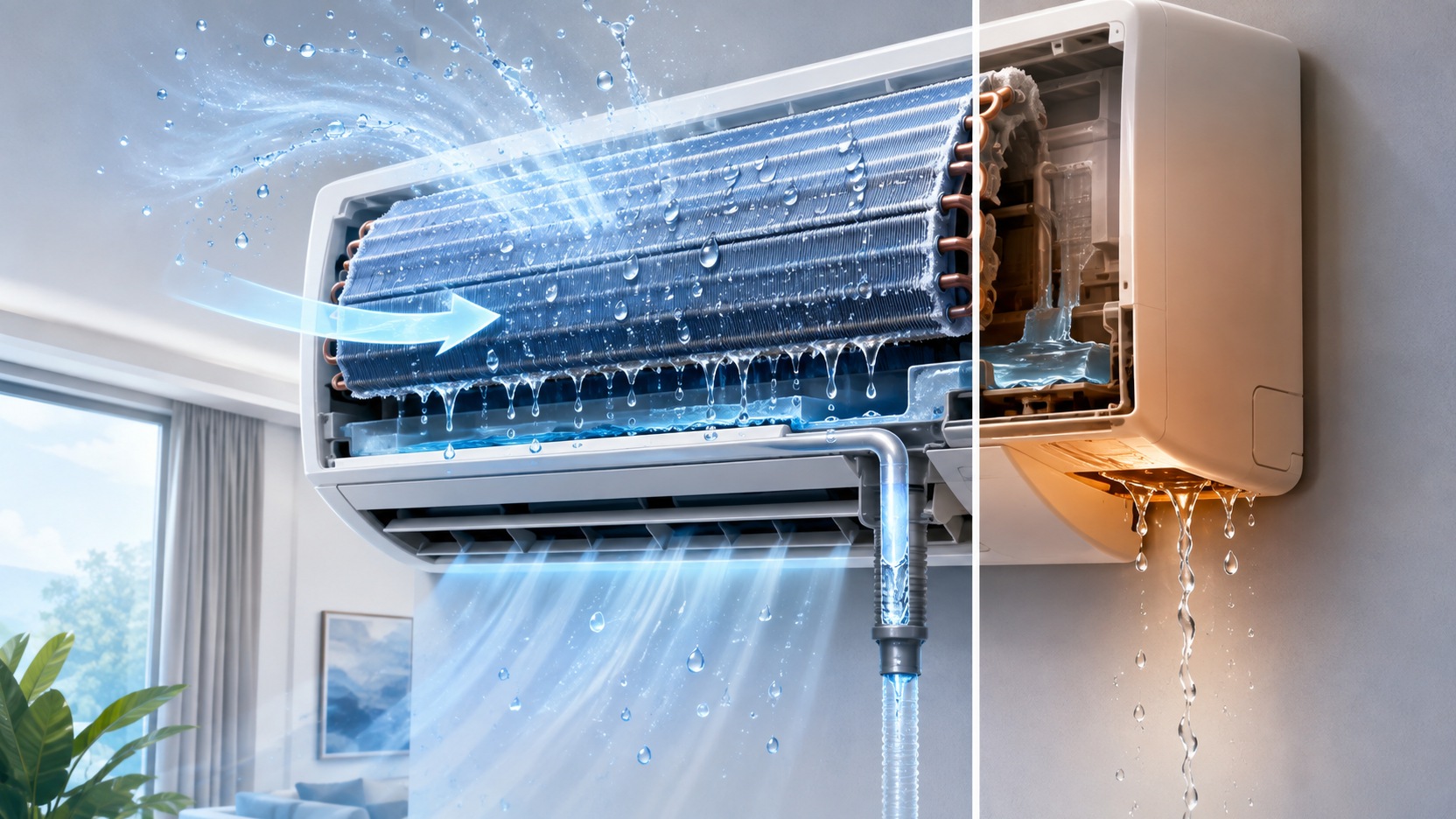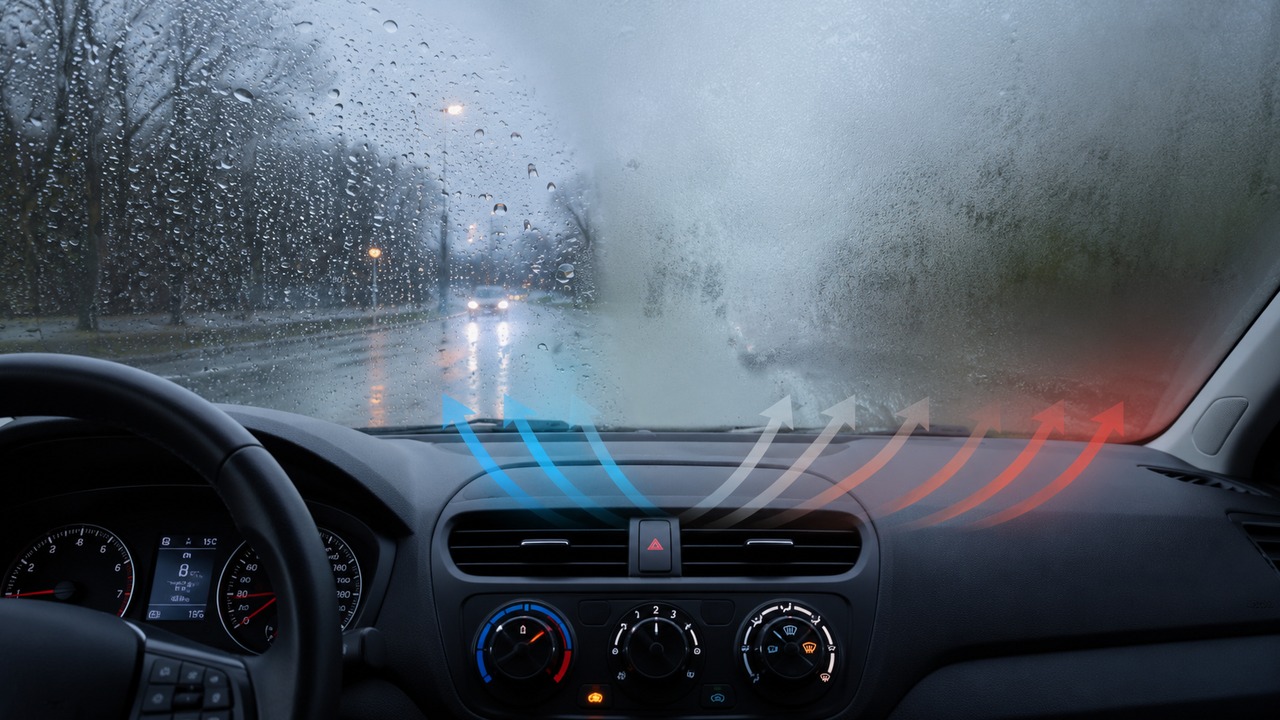
If the windshield fogs up, the first question is not "hot or cold air?". It's "is the water inside or outside the glass?". The same whitish appearance can arise from opposite situations. In one, humid cabin air meets cold glass and condenses on the inside. In the other, warm, humid air from outside meets a windshield cooled by the air conditioner and condenses on the outside. The solution changes because it is necessary to act on the side where the condensation is happening.
First diagnosis: is the blur inside or outside?
With the car parked in a safe place, wipe a small area on the inside with a clean cloth. If the stain opens immediately, the condensation is on the inside. If it doesn't change, turn on the windshield wipers: when visibility improves by swiping the wiper blade, the water is outside. In rain, it is possible to have both phenomena at the same time, external drops and internal condensation.
This diagnosis avoids trial and error with air controls. When visibility is already compromised, the important thing is not to continue driving while looking for the right combination of buttons. Reduce speed and, if necessary, stop in a safe place before adjusting the climate control.
What does the dew point have to do with glass
The air contains water vapor. There is a temperature at which, for that amount of vapor, the air reaches saturation and part of the water starts to form liquid droplets. This temperature is the dew point.
The important detail is that condensation can occur on a surface even if the rest of the environment appears normal. If the glass is cold enough to cool the thin layer of air in contact with it to the dew point, small droplets appear. It's the same mechanism that leaves a cold glass wet on the outside.
Inside the car, passengers breathing, wet clothes, umbrellas and water brought by rain increase the humidity in the cabin. If the inside of the windshield is cold, this moisture can condense there. Outside, the opposite is also possible: on a hot and very humid day, a windshield that is heavily cooled by the air conditioning can fall below the dew point of the outside air and fog up on the outside.
If the glass has fogged up from the inside: dry the air and heat the windshield
When condensation is inside, the objective is twofold: to reduce humidity in the cabin air and to increase the temperature of the internal surface of the glass. Therefore, the most robust combination in rain or cold is usually to direct a lot of flow to the windshield, turn on the air conditioning and choose a warm or hot temperature.
Air conditioning is not just used to produce cold air. When operating, it also removes moisture from the air. This is why many automotive systems automatically turn on the compressor when the front defogging mode is selected. At the same time, the warmer air helps raise the temperature of the glass. The combination decreases the chance of the surface remaining below the cabin air dew point.
Does hot air work on its own?
It can work, because it heats the glass and reduces the relative humidity of the air that receives the heat. But, if the cabin is loaded with water vapor, heating without removing moisture may be slower. With the A/C available and working normally, warm or hot air with the compressor turned on tends to attack both causes at the same time: cold glass and humid air.
And cold air?
Cold air coming from the system with the A/C on can be relatively dry and, in some conditions, can also clean the interior. The problem with making this a rule is that cooling the windshield further can keep its surface too cold or even create condensation on the outside in hot, humid weather. Therefore, "always use cold air" is not a reliable answer to all fogging.
Air conditioning on does not mean low temperature
This is one of the most confusing points. The A/C button controls the refrigeration and dehumidification system, while the temperature selector decides how hot or cold the air delivered to the cabin will be, depending on the vehicle's design.
In many cars, therefore, it is perfectly normal to use the A/C on and ask for hot air at the same time in defrost mode. The system dries the air and then adjusts its temperature before sending it to the windshield. Some vehicles do part of this work automatically when selecting the front defogging symbol.
As the logic varies between models, the car's own manual remains the reference for knowing which functions are activated automatically and whether or not the driver can turn off the compressor in that mode.
Recirculation can worsen internal fogging
Recirculation is useful for quickly cooling the cabin or temporarily preventing smoke and external odors, but it keeps much of the air inside the vehicle. With people breathing and objects wet, moisture can accumulate.
To defog from the inside, many systems are designed to encourage the entry of external air. Even when the air outside is moist from rain, it can help after being heated and conditioned while excess vapor produced inside the cabin is expelled. If the car insists on returning to outside air when selecting the defroster, this is usually part of the system's strategy.
If the glass has fogged up on the outside: use the cleaner and stop cooling the glass so much
Condensation on the outside often appears when the outside air is warm and humid and the windshield has become very cold. A classic sign is that the wiper opens a transparent band and the fog returns some time later.
In this case, the air conditioning does not necessarily need to be turned off, but the objective changes. Instead of heating the inner side to combat water inside the cabin, you need to prevent the glass from remaining too cold in relation to the external dew point. Raising the selected temperature a little, reducing the intense cooling directed to the windshield or reducing the cold flow over the glass may solve the problem.
As long as there are droplets on the outside, the cleaner physically removes the water and restores vision faster. If it is rain, and not just condensation, the pick remains the necessary tool. Air conditioning does not replace the cleaner for water that is coming from the environment.
Why strong A/C can cause exterior fogging
A windshield receives heat and cold from both sides. If the cabin is very cold, the glass also gets cold. In hot, humid weather, the outer surface may drop below the dew point of the ambient air. The vapor then condenses exactly where you didn't expect it, on the outside.
This case explains why increasing the cold even further can make the problem worse, even if the driver associates "defogging" with air conditioning. The compressor is still useful for controlling interior humidity, but the temperature and flow direction need to be adjusted so that the windshield does not remain too cold.
A simple decision tree to use right now
Rain or cold, and the cloth cleans the inside
Treat as internal condensation. Direct air toward the windshield, use strong ventilation, turn on the A/C if the system allows it, choose outside air over recirculation, and select a warm or hot temperature. This reduces the humidity in the cabin and heats the glass.
Hot, humid day, strong A/C, and the wiper clears the fog
Treat as external condensation. Use the wiper to restore vision and reduce windshield cooling. Increasing the temperature a little or decreasing the cold flow over the glass helps to bring the surface above the external dew point.
There are raindrops outside and fog inside
Use both strategies at the same time. The cleaner takes care of the external water; the defogging mode, with dry air and adequate temperature, takes care of internal condensation.
You can't identify the side
Don't try to solve it by driving blindly. Stop safely and test the cloth on the inside and the cleaner on the outside. Finding the water side is often more useful than alternating hot and cold without diagnosis.
Small details that make a difference
Glass that is clean on the inside tends to respond better to defogging. Film of grease, dust and residue makes vision more diffuse when microdroplets appear. Keeping the internal surface clean does not eliminate the physics of condensation, but it reduces a factor that worsens the loss of transparency.
It is also worth observing whether the system is actually switching from recirculation to external air, whether the flow reaches the windshield strongly and whether the A/C is operating. When internal fogging is persistent despite the correct procedure, the problem may require inspection of the air conditioning system or the presence of abnormal humidity in the cabin.
The rule that resolves the doubt between hot and cold
Air temperature alone does not decide everything. What matters is the relationship between air humidity and glass surface temperature.
If water is inside, it is usually necessary to dry the air in the cabin and heat the glass. That's why A/C on with warm or hot air is such an effective combination in rain and cold. If water is on the outside because the windshield has been cooled too much, the wiper removes the drops and a cooler setting helps stop the condensation.
Instead of decorating "hot" or "cold", try to answer two questions: which side is the water and which side of the glass has become cold enough to reach the dew point. From then on, the car's controls no longer seem contradictory.