A control group and controlled variables are not the same thing. A control group is a comparison condition in an experiment; controlled variables are the factors you try to keep the same across all conditions. The vocabulary difference may look small, but it changes how a science-fair experiment should be planned.
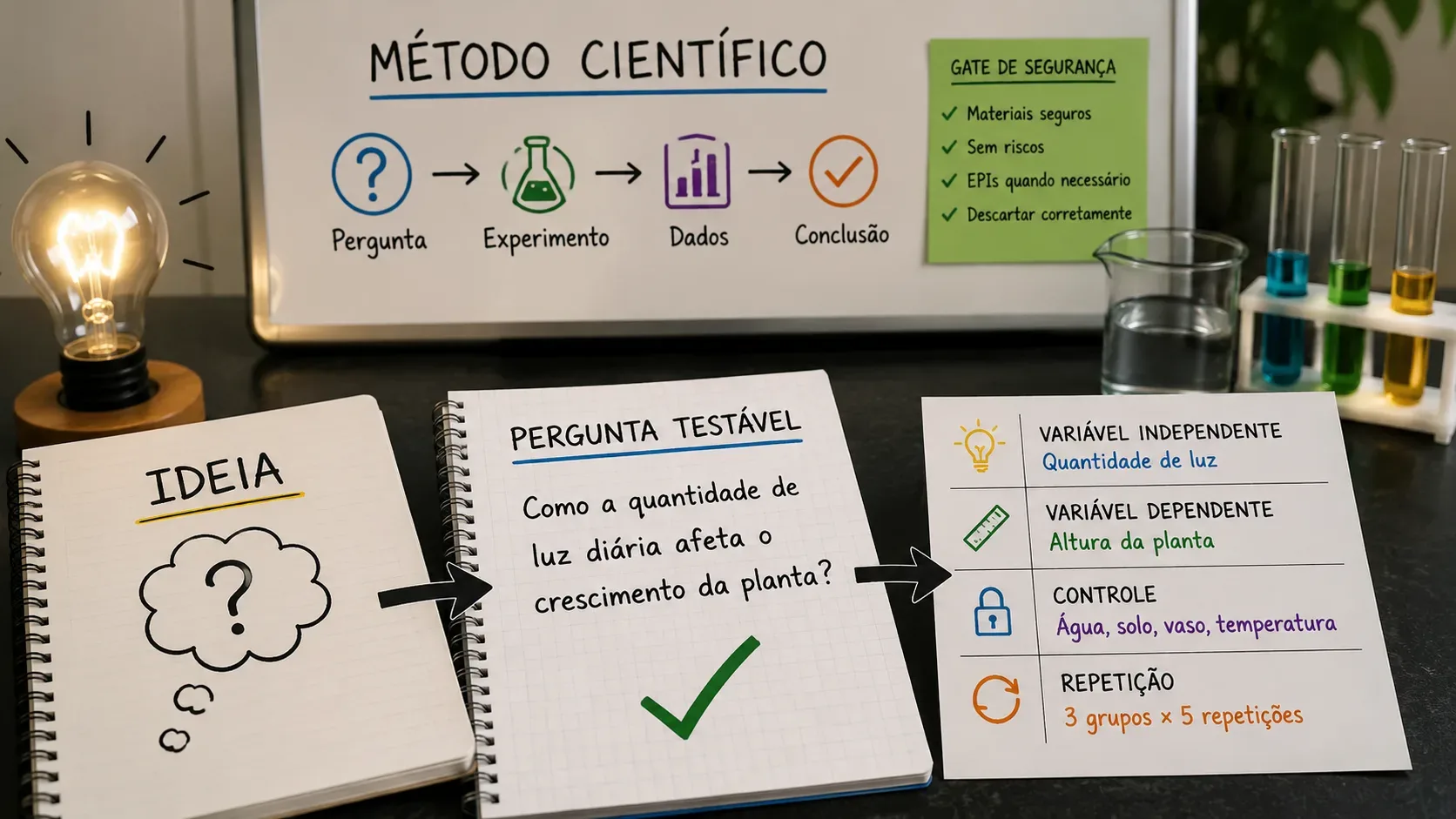
In a well-designed test, the goal is to deliberately change an independent variable, observe or measure a dependent variable, and keep other factors that could affect the result constant. A control group can be useful when there is a clear reference condition, but not every experiment needs one. Science Buddies makes this point explicitly: even when there is no control group, there are still controlled variables that should remain constant across trials. See the guidance on experimental procedures.
The difference in one sentence
| Element | Practical question | Function |
|---|---|---|
| Independent variable | What do I change on purpose? | The factor assigned different levels or conditions. |
| Dependent variable | What will I measure or observe? | The response used to test the effect of the change. |
| Controlled variables | What needs to stay the same? | They reduce alternative explanations for the result. |
| Control group | Is there a useful reference condition? | It provides a baseline for comparison with experimental groups when that makes sense. |
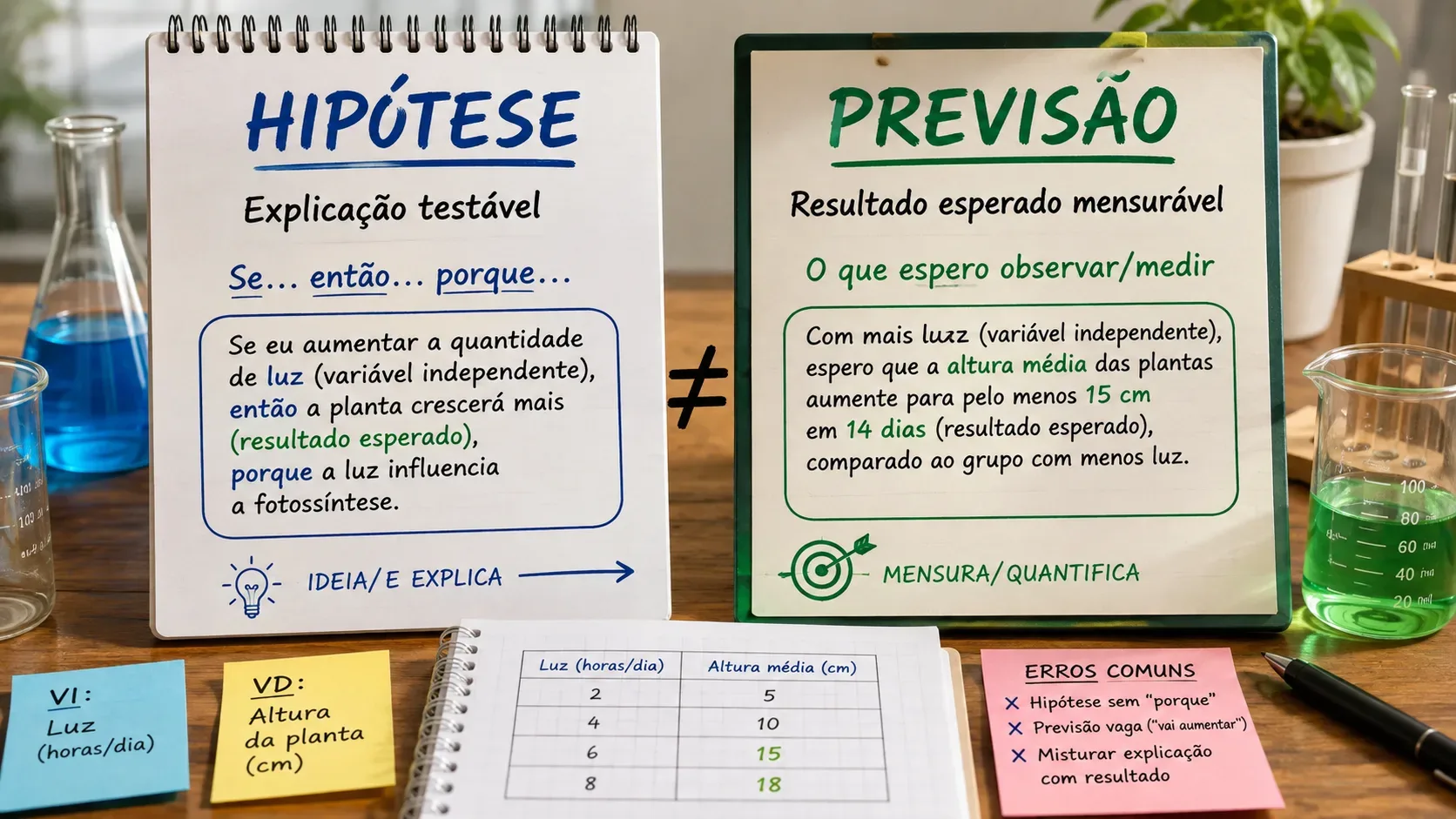
Science Buddies summarizes the three kinds of variables directly: the independent variable is intentionally changed, the dependent variable is measured or observed, and controlled variables are kept constant. It also warns that this is different from a control group. See the variable definitions.
Why mixing up the two concepts causes errors
Imagine a fertilizer project. Saying that “the amount of water is the control group” is incorrect: water is not a group. If every plant receives the same amount of water, water is a controlled variable. The plants that receive the reference condition—for example, no fertilizer—can form the control group.
The practical consequence of the confusion matters. A student can create a proper reference condition but still let light, water volume, or soil type vary between groups. In that case, a control group exists, but the test is no longer fair because other differences could explain the result. The fair-test principle is to change one factor at a time while keeping other relevant conditions the same. See the fair-test example.
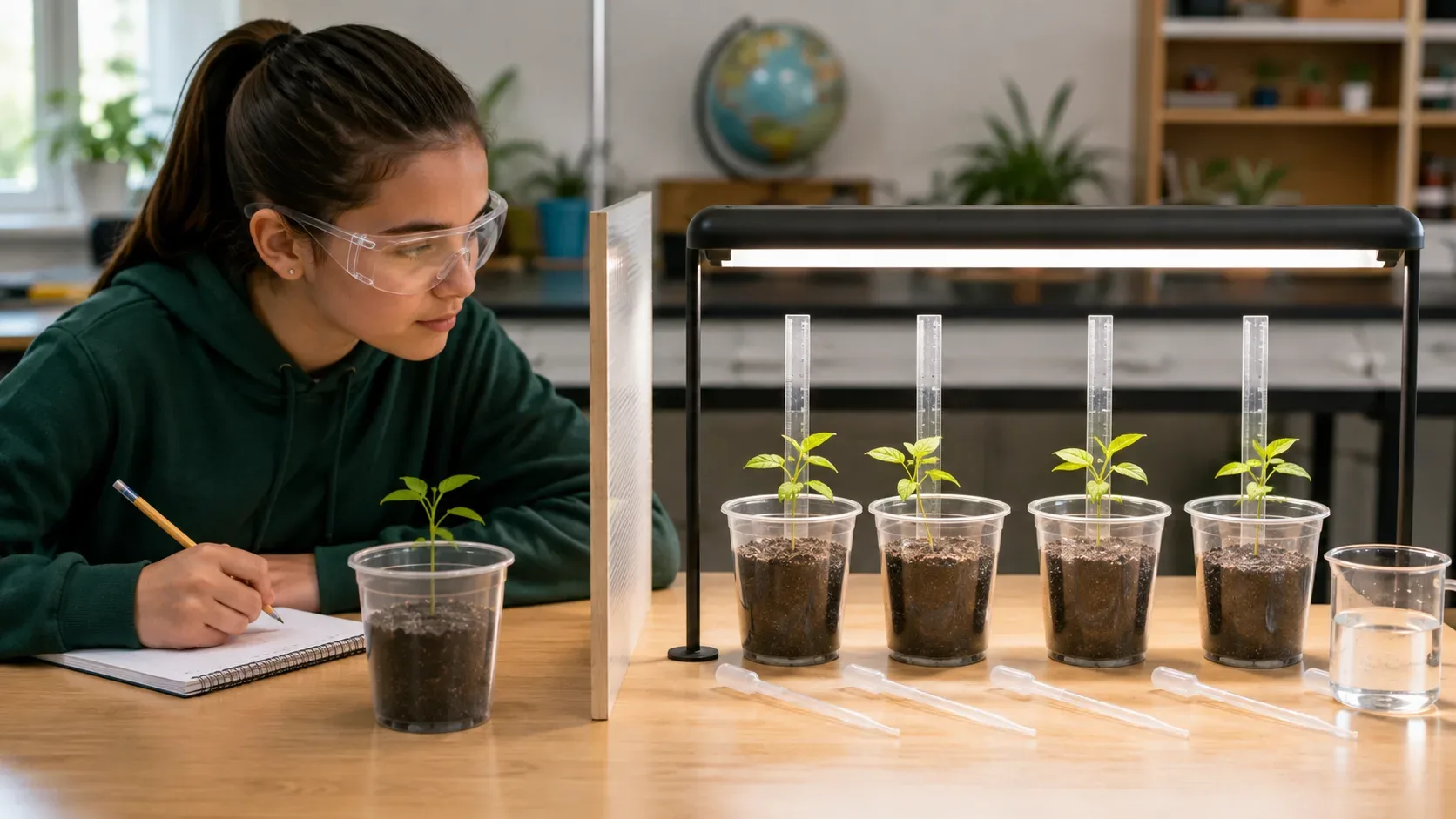
Experiment 1: fertilizer and seedling growth — there is a clear control group
Question: does adding fertilizer at the recommended dose change seedling growth over two weeks?
- Independent variable: presence or absence of fertilizer.
- Dependent variable: seedling growth, always measured in the same way, such as height.
- Controlled variables: seedling species and age, container size, amount and type of soil, water volume and frequency, light position, temperature, and measurement time.
- Control group: seedlings receiving the same care but no fertilizer.
- Experimental group: seedlings receiving fertilizer.
What makes the comparison valid
The no-fertilizer group serves as a reference because it represents the condition in which the independent variable is absent. But it only helps if the other factors are comparable. If the no-fertilizer seedlings receive less light or a different soil, more than one thing is changing and the difference cannot be attributed cleanly to fertilizer.
This is the same reasoning Science Buddies uses in its fertilizer example: water, light, and warmth need to stay the same across groups. Read the full example.
Experiment 2: ramp angle and toy-car time — you do not have to invent a control group
Question: how does ramp angle change the time a toy car takes to travel a fixed distance?
- Independent variable: ramp angle, such as three levels selected before testing.
- Dependent variable: time required to travel the chosen distance.
- Controlled variables: the same car, ramp and surface, distance, release point, release method, and timing method.
- Control group: may not exist.
In this project, the goal is to compare levels of a continuous variable. Each angle is an experimental condition. There is not necessarily a natural “no angle” or “no treatment” condition that works as a meaningful baseline. You can define one standard angle as a reference for analysis, but calling it a control group is useful only if there is an experimental reason to treat it as the baseline.
The key is not to confuse the absence of a control group with the absence of experimental control. The car, distance, surface, and release procedure still need to remain consistent.
Experiment 3: paper-towel brands and absorption — comparison groups do not automatically become a control group
Question: which paper-towel brand absorbs the greatest volume of water under the same procedure?
- Independent variable: paper-towel brand.
- Dependent variable: volume or mass of water absorbed.
- Controlled variables: sheet size, number of layers, available water volume, contact time, container, draining procedure, and measuring instrument.
- Control group: usually not required, because the goal is to compare brands with one another.
Choosing one brand as the “control” just because it appears first on the list does not make the experiment more rigorous. It can be called a reference if there is a practical reason—for example, it is the standard brand used by the school—but the other brands are still compared under the same conditions. Most of the rigor comes from standardizing the procedure and keeping controlled variables constant.
How to decide whether your experiment needs a control group
Use these questions before writing the procedure:
- What is the one thing I will deliberately change? That is the independent variable.
- What outcome will answer the question? That is the dependent variable.
- What other factors could change that outcome? Relevant ones should be controlled, standardized, or at least recorded.
- Is there a meaningful baseline condition? If there is a “no treatment,” standard practice, or normal condition that helps interpret the effect, a control group may be very useful.
- If there is no natural baseline, can the question be answered by comparing levels or categories? If so, a control group may not be necessary.
Common science-fair mistakes
- Calling a constant a control group: “the same amount of water” is a controlled variable, not a group.
- Changing two things at once: changing both fertilizer and soil type makes it impossible to know which change caused the effect.
- Forcing a control with no function: not every question needs a “zero” condition.
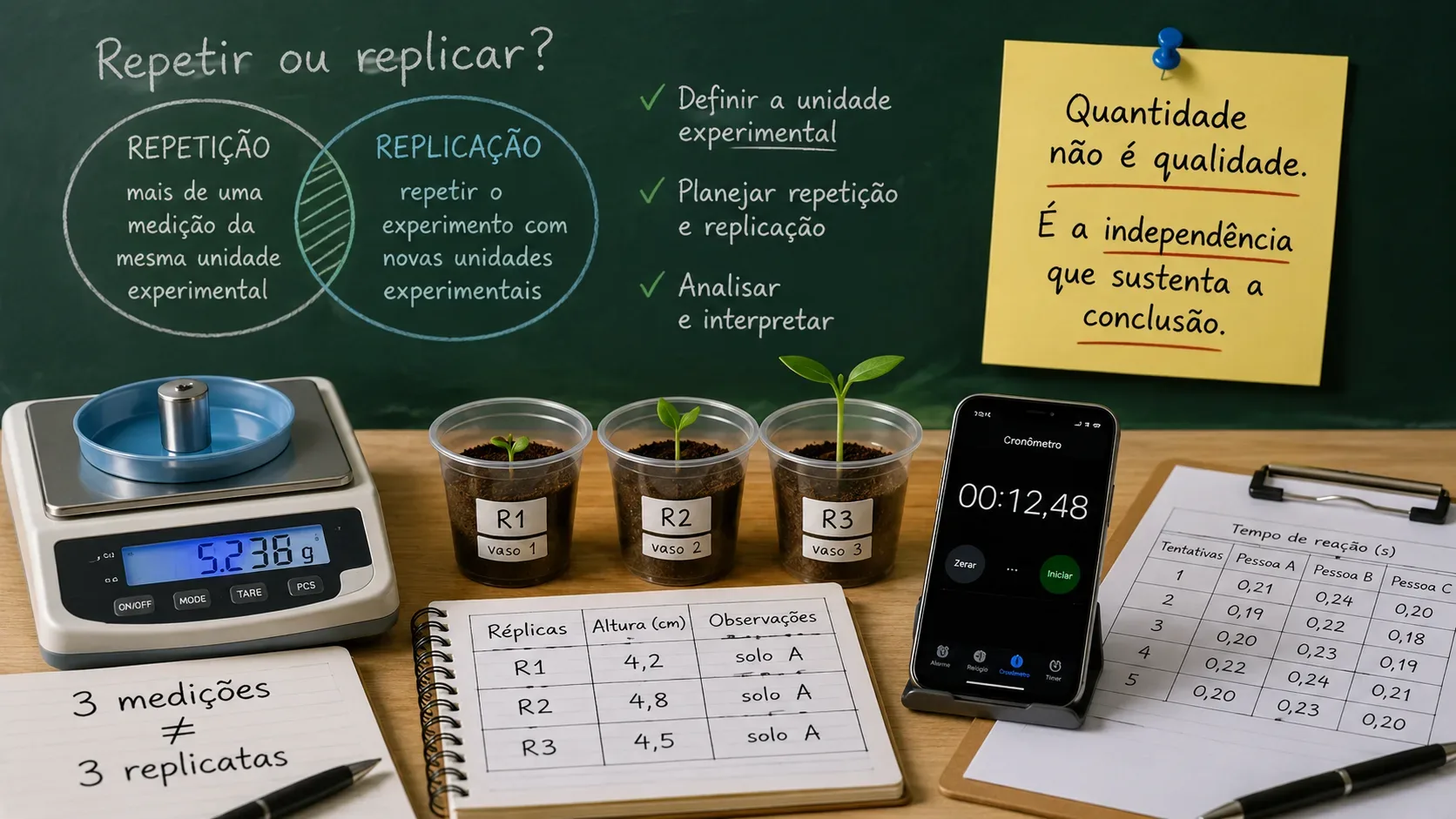
- Treating repetition as control: repeated measurements improve reliability, but they do not replace a control group or controlled variables.
- Controlling only the obvious factors: time of day, instrument, sample size, distance, lighting, and measurement method can also affect results.
A short template for your project notebook
Before you start, write down four lines:
- I will change: [independent variable and its levels].
- I will measure: [dependent variable and unit/method].
- I will keep the same: [list of controlled variables].
- My reference condition will be: [control group, if any] — or “there is no control group; I will compare the levels of the independent variable.”
This format prevents the most common mistake: using the word “control” for different things without explaining each function. A good project does not need every possible label; it needs to make clear what changes, what is measured, what stays the same, and which comparison answers the question.