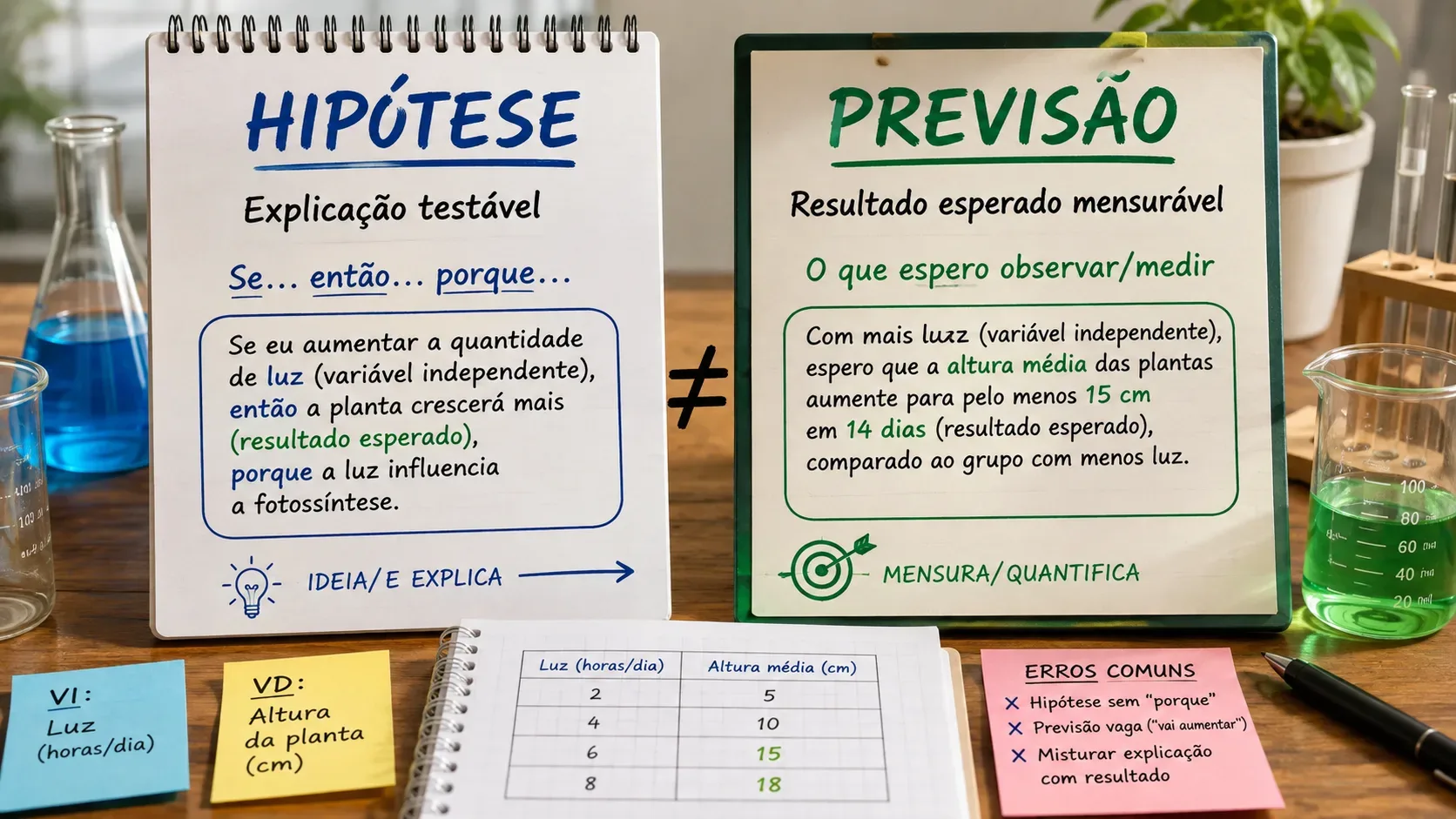
Hypothesis and prediction work together, but they are not the same thing. In a school science project, a hypothesis is a testable answer to the scientific question: it proposes a relationship between variables and, when possible, includes a rationale based on what is already known. A prediction is what you expect to observe or measure in the experiment if that hypothesis is on the right track.
This distinction helps prevent a common mistake: writing two nearly identical sentences and calling one a hypothesis and the other a prediction. A more useful approach is to start with the independent variable, identify the outcome that will be measured, and only then write each sentence for a different purpose.
Hypothesis vs. prediction in one sentence
- Hypothesis: proposes a testable answer or explanation for the question.
- Prediction: describes the measurable observation expected under a concrete test condition.
Science Buddies defines a hypothesis as a tentative, testable answer to a scientific question and emphasizes that a hypothesis leads to one or more predictions. It also explains that a prediction should include the independent variable — what the student changes — and the dependent variable — what the student observes or measures. A biology teaching example presents the sequence “hypothesis → prediction → experiment,” making it clear that the prediction is derived from the hypothesis. See Writing a Hypothesis for Your Science Fair Project and Hypothesis Testing.
Start with the variables, not a sentence template
Before writing, answer three questions:
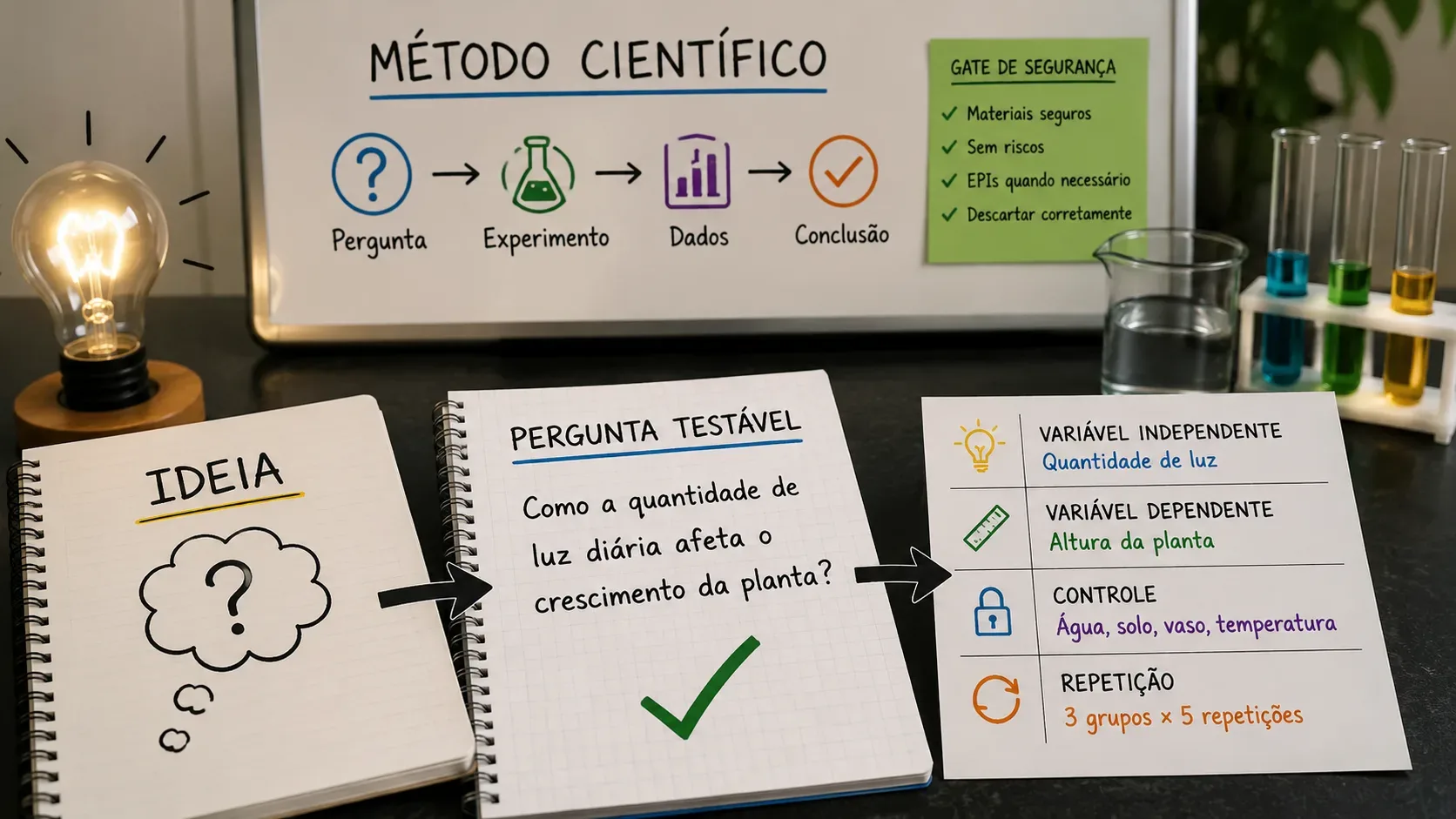
- What will be deliberately changed? This is the independent variable.
- What will be observed or measured? This is the dependent variable.
- Why do you expect that relationship? The rationale should come from prior research, scientific knowledge, or a plausible explanation that can be tested.
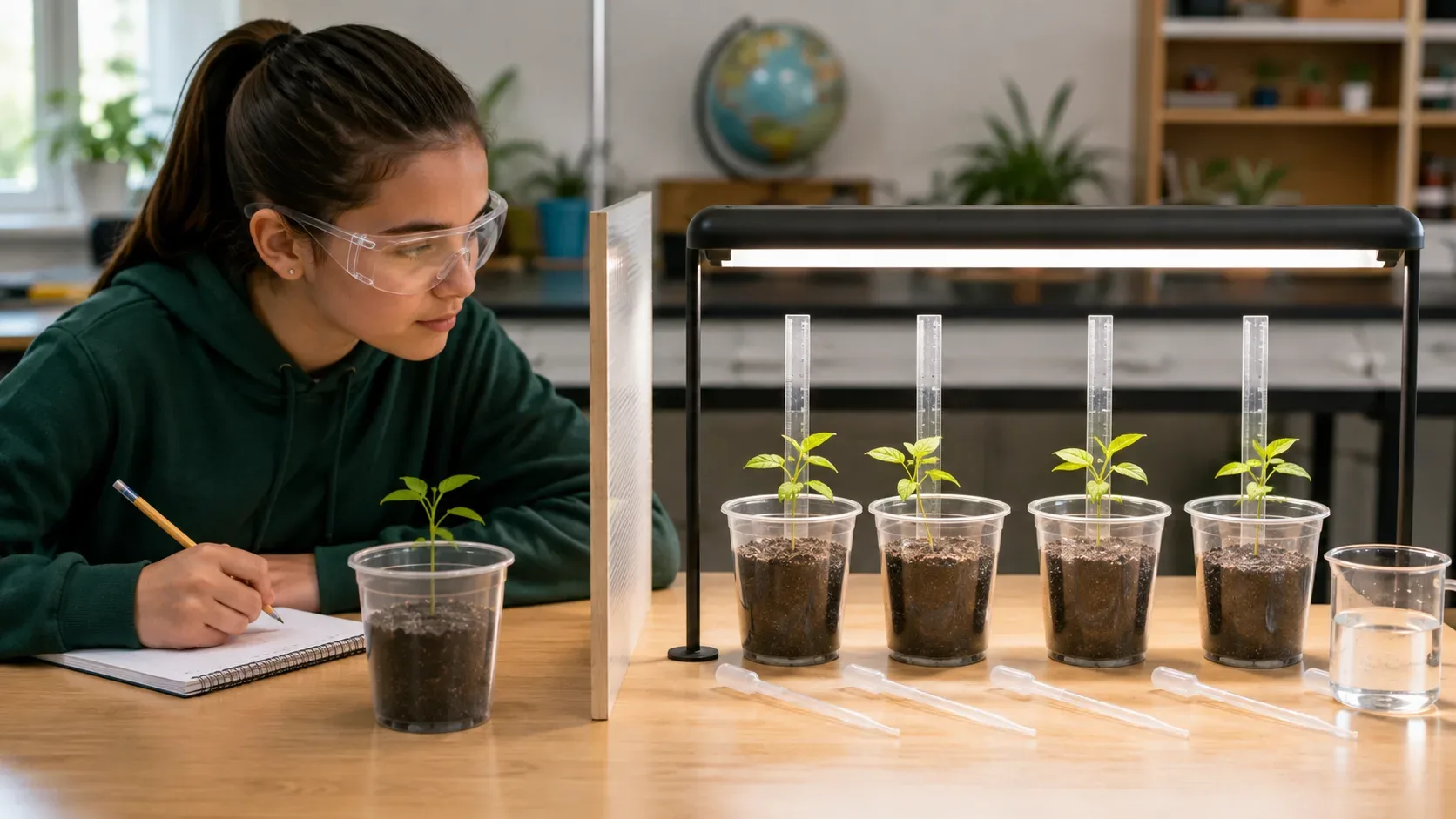
Example: “How does the amount of light per day affect seedling growth?” The independent variable may be the number of hours of light per day. The dependent variable may be growth in centimeters after a defined period. The rationale should connect light and growth rather than simply repeating the expected result.
A useful hypothesis template: “if… then… because…”
In many school projects, the structure “If [I change the independent variable], then [the dependent variable will change in a specified way], because [rationale]” works well for making the hypothesis explicit and testable.
Example: “If seedlings receive more hours of light per day, then their average growth will be greater, because light supplies energy for photosynthesis and can influence the plant’s production of organic matter.”
This structure is a writing tool, not a universal definition. Some teaching materials use “if… then…” mainly for the prediction. The important point is to keep the functions separate: the hypothesis should express the relationship or explanation being tested; the prediction should state what the experiment is expected to show.
How to turn the hypothesis into a prediction
The prediction should come from the hypothesis and move closer to the actual procedure. To write it, turn vague terms into observable conditions:
- replace “more light” with defined conditions, such as 4 and 8 hours of light per day;
- replace “will grow more” with a measurement, such as average change in height in centimeters;
- include the time period when it matters, such as 14 days;
- state the expected direction of the comparison.
Prediction: “After 14 days, seedlings kept under 8 hours of light per day will show greater average growth, in centimeters, than seedlings kept under 4 hours of light per day.”
Notice that the prediction does not need to invent an exact number. Saying “15 cm” is appropriate only if prior data, published evidence, or a pilot test provides a basis for that value. Without that support, predicting the direction of the difference and defining the metric is usually more defensible.
Six examples: from question to hypothesis and prediction
| Question | Hypothesis | Prediction |
|---|---|---|
| How do hours of light affect seedling growth? | If seedlings receive more hours of light per day, then their average growth will be greater, because light availability influences photosynthesis. | After the same number of days, the group receiving 8 hours of light per day will show greater average growth, in centimeters, than the group receiving 4 hours. |
| How does water temperature affect the time needed for sugar to dissolve? | If water temperature increases, then sugar will dissolve faster, because higher temperature tends to increase particle motion and the rate of the dissolving process. | Using the same amounts of water and sugar, the time to complete dissolution will be shorter in hot water than in cold water. |
| How does wing length affect the flight distance of a paper airplane? | If wing length is changed, then average flight distance will change, because wing geometry affects aerodynamic forces and the airplane’s stability. | When otherwise identical models with two defined wing lengths are launched using the same procedure, their average flight distances will differ between groups. |
| How does salt concentration affect seed germination? | If the salt concentration of the solution increases, then the proportion of seeds that germinate will decrease, because greater salinity can make water uptake by seeds more difficult. | After the same period, the percentage of germinated seeds will be lower in the higher-salt group than in the no-salt group. |
| How does ramp height affect the distance traveled by a toy car? | If the starting height of the ramp increases, then the car will travel farther after leaving the ramp, because greater height increases the gravitational potential energy available before motion. | Keeping the same car and surface, the average distance traveled will be greater in trials using the higher ramp. |
| How does insulation affect the temperature change of a container? | If a container is thermally insulated, then its temperature will change more slowly, because insulation reduces the rate of heat transfer between the container and its surroundings. | After a defined interval, the temperature change will be smaller in the insulated container than in the uninsulated container. |
What makes a prediction truly testable
A good prediction does not have to anticipate every numerical result, but it should make it possible to decide what to compare. Check whether it states:
- which condition of the independent variable will be compared;
- which dependent variable will be measured;
- which direction or pattern is expected;
- which interval or unit is needed to interpret the measurement.
The Science Buddies sample page shows this connection directly by identifying independent, dependent, and controlled variables in battery experiments. See Sample Variables & Hypothesis.
Common mistakes and how to fix them
1. A hypothesis with no relationship between variables
Weak: “Light is important for plants.”
Better: “If seedlings receive more hours of light per day, then their average growth will be greater, because light is involved in photosynthesis.”
2. A vague prediction
Weak: “The plants will grow better.”
Better: “After 14 days, average growth in centimeters will be greater in the 8-hour-light group than in the 4-hour group.”
3. Predicting a variable the experiment does not measure
If you measure height, do not write a prediction about “plant health” unless you define how health will be assessed. The prediction should point to the data that will actually be collected.
4. Inventing precision
A prediction such as “group A will reach exactly 17.3 cm” may sound scientific but can be arbitrary. Use a specific value only when there is a basis for estimating it. Otherwise, state the direction of the difference and the measurement unit.
5. Treating a favorable result as definitive proof
In science, data can support or fail to support a hypothesis under the tested conditions. A single school experiment does not prove an explanation for every case. Science Buddies itself recommends this language when discussing how to interpret results.
A five-step method for writing both
- Write the question in the form “How does X affect Y?”
- Mark X as the independent variable and Y as the dependent variable.
- Research a plausible reason for expecting a particular relationship.
- Write the hypothesis as a testable relationship: “If X…, then Y…, because…”.
- Write the prediction using the actual test conditions: “When X is A versus B, I expect to measure in Y a difference in the direction…”.
Checklist before submitting the project
- Does the hypothesis answer the scientific question?
- Can the proposed relationship be tested?
- Is the rationale more than a repetition of the expected result?
- Does the prediction follow from the hypothesis?
- Does the prediction mention what will be changed and what will be measured?
- Are the comparison conditions clear?
- Does the wording avoid claiming that the hypothesis will be “proved”?
The distinction worth remembering
Think of it this way: the hypothesis states which relationship you are proposing and why; the prediction states what you expect to find when that relationship is put to the test. If the two sentences can be swapped without changing anything, the prediction probably needs to become more concrete or the hypothesis more explanatory.