Warning: this text contains spoilers for The Last House, a Netflix sci-fi thriller directed by Louis Leterrier and starring Wagner Moura and Greta Lee.
The short answer to the ending is this: the creatures are not aliens, but ancient ocean beings; the family's liberation happens when Jason abandons the logic of confrontation and spares one of them; and the voice on the radio confirms that the Delgados are not necessarily alone, although the identity of the responder is purposely left unresolved. The director himself clarified these three points in official Netflix material. What the film doesn't deliver is a complete manual of the rules of the phenomenon, and that's where it's important to separate canonical response from interpretation.
What are the creatures in The Last House?
The origin of the creatures is one of the points that can be treated as confirmed. For much of the film, the family interprets what they see as a possible alien invasion. The script, however, plants a decisive clue when Ruth realizes that the liquid associated with the being that enters the house is salt water. The revelation changes the reading: the threat comes from the planet itself.
Louis Leterrier explained to Netflix that these beings are ancient inhabitants of the ocean, predating humanity. In the logic presented by the director, they emerge after human action degrades the environment, warms the planet and alters the seas. Therefore, the film behaves like an invasion story only until it reverses the perspective: for the creatures, it is humans who have come to occupy and explore their world.
This makes the marine origin a canonical answer, not a later fan theory invention. The basic ecological dimension of the story is also canonical. Now calling the creatures gods, supernatural punishment or literal awareness of nature goes beyond what the film and the director confirm. These readings can function as interpretation, but are not necessary to explain the plot.
Why is the family imprisoned for more than five years?
The film makes the immediate mechanism clear: a barrier associated with rain prevents the opening of doors and windows, blocks drilling attempts and keeps houses isolated. Over time, the Delgados realize something even more important: the creatures can enter and open passages that humans cannot. In other words, confinement is not simply a climate accident. It is linked to their action.
The general motivation also received an explanation from the director. Leterrier describes the creatures as beings who are retaking a planet they consider their own and trying to force humanity to learn another form of coexistence. The ending reinforces this idea because the way out is not achieved when Jason demonstrates more strength, but rather when he finally stops the violence.
Still, there is a difference between knowing the thematic intent and knowing all the rules of thumb. The film does not detail why each house must remain sealed for so many years, why some humans are kept alive rather than attacked outright, or what exact conditions would cause a family to be freed. Saying that there is a formal test, with universal criteria applied to each residence, is an interpretation. What is confirmed is that confinement is part of the creatures' strategy and that the Delgados' behavior at the climax changes the decision about them.
Does Ruth have any supernatural connection to the creatures?
There is no confirmation of supernatural power. Ruth notices patterns before adults, draws, observes and insists that beings may be trying to communicate something. Because Jason and Ann are focused on protecting their family and controlling their environment, they tend to interpret any approach as an attack.
Leterrier explained that Ruth's sensitivity should be understood as childlike intuition and openness, not as a mystical gift. Wagner Moura also described the character as someone capable of thinking on another frequency, in the sense of perceiving a possibility that adults, trapped by fear and defensive logic, cannot see.
This distinction matters in the end. Ruth does not discover a secret password or exert control over the creature. She simply recognizes before others that the confrontation
it may not be the only form of interaction. That's why Jason's decision to listen to her has dramatic weight: his father stops acting merely as someone who needs to dominate the threat and accepts a different reading of the situation.
Why do the creatures free the family in the end?
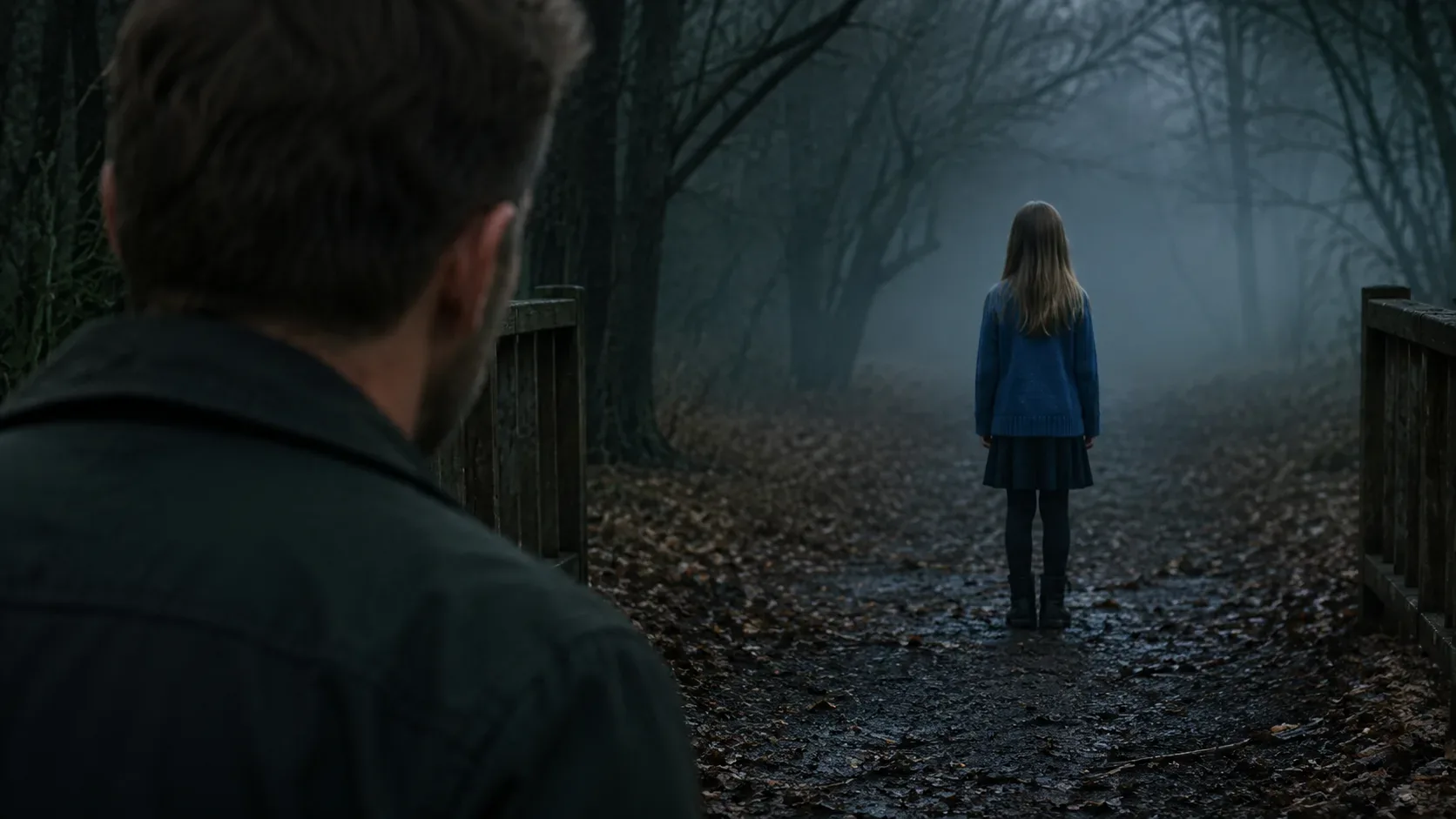
The release happens after the Delgados manage to capture one of the creatures during the flooding of the house. Jason is ready to kill her and tries to use violence as a last resort to open the exit. Ruth interferes. Upon realizing that the being is communicating, she convinces her father to back off. Jason drops the weapon and spares the creature.
This gesture is not just a symbolic reading constructed after the film. The official Netflix material records Leterrier's explanation that the creatures spare the Delgados when Jason finally stops fighting them. The director relates the scene to the idea that humanity needs to learn to live together with other forms of life, instead of insisting on dominating everything around it.
For this reason, the family does not escape because they defeated the monsters, found a definitive flaw in the barrier or physically forced the creature to obey. She is released. The creature opens the passage and prevents the others from attacking. The difference is essential to understand the scene: the climax does not reward Jason's victory over the enemy, but his change in behavior.
It is also possible to read the sequence as a conclusion to the character's arc. Throughout most of the story, Jason solves problems by building, repairing, hunting, improvising, and controlling risks. These skills keep the family alive, but they don't resolve the central conflict. At the decisive moment, the solution depends on accepting that not everything can be mastered. This reading is compatible with the director's explanation and the trajectory shown on the screen.
So the creatures wanted to teach humans a lesson?
The idea of learning and coexistence is supported by Leterrier's explanation, but it is worth avoiding simplification. The film does not show the creatures gathered around a verbalized plan, nor does it present a rule such as “whoever shows compassion will be saved”. What exists is a combination between what we see in the climax and what the director says about the intention of the story.
Thus, it is safe to say that the gesture of mercy demonstrates to beings that the Delgados are capable of changing and that this motivates the liberation of that family. It is less safe to turn this episode into proof that the entire catastrophe was created solely as an individual moral examination. The film continues to leave gaps about the scale, method and organization of the creatures.
The same caution applies to the idea of “punishment”. Graham raises this possibility, and the ecological background favors the reading that humanity faces the consequences of its destructive relationship with the planet. But the more accurate formulation is that the creatures are reclaiming the space they consider theirs and demanding coexistence. Calling everything conscious punishment is a stronger interpretation than the evidence allows.
What does the radio mean in the last scene?
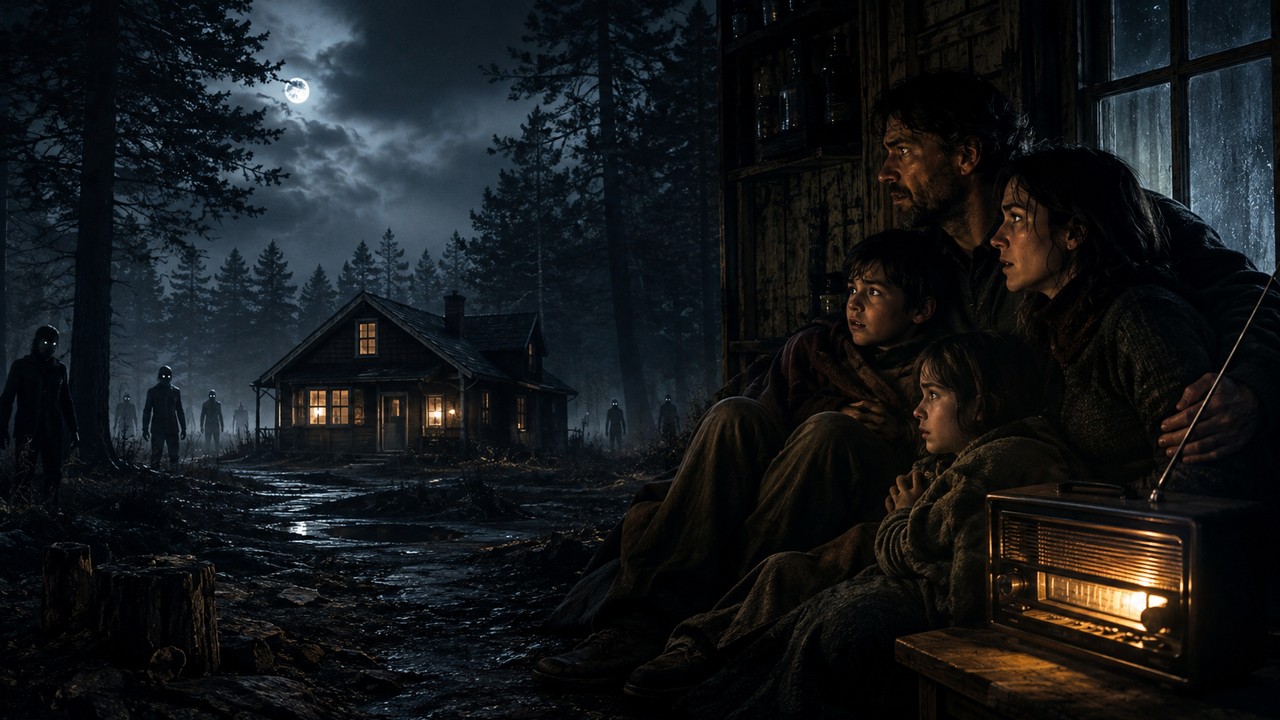
After the family leaves the house, finds a largely flooded world and leaves by boat, Ruth uses a radio to search for other survivors. She asks if anyone is around. Just before the credits, a voice with a lot of static responds “Hello?”.
This detail works as narrative confirmation that there is someone other than the Delgados capable of receiving or responding to the transmission. The director also said he believes other people survived, especially in high places or in structures where groups managed to cooperate. The film, however, does not reveal how many survived, where they are or what conditions they live in.
There is still a second, purposeful mystery. Leterrier said the voice belongs to a “very, very, very iconic” person, but declined to reveal who it is and said the public won’t know for sure. Therefore, trying to identify the voice as a hidden character, a specific star, or a clue for continuation does not produce a canonical answer. Identity is, by the director's decision, an open joke.
The narrative function of radio is clearer than the identity of the voice. This information changes the meaning of the ending: After years of isolation, the film ends with the first external human response that the family receives. The known world is over, but the possibility of community is not. The “Hello?” does not guarantee safety, rescue or reconstruction; it only guarantees that the silence is not absolute.
What the ending confirms and what remains open
The firmest answers are those supported simultaneously by what appears in the film and by the director's statements. The creatures are ancient beings from the ocean. History links their emergence to environmental degradation caused by humanity. Ruth does not have a confirmed supernatural power. Jason spares the creature, the creature opens the exit and the family is released. There is a response on the radio indicating another live caller.
The gaps begin when we try to turn these facts into complete rules. The film does not explain in detail the physics of the barrier, the exact extent of the creatures' control over the rain, the operational reason for keeping each house closed for years, or a universal release protocol. It also does not identify who responds to the
radio. These questions remain open, and any very specific answers are up to interpretation.
It is precisely this separation that avoids confusing explanation with theory. The Last House offers a relatively clear thematic outcome, based on coexistence and abandonment of violence, but preserves mysteries about how the apocalypse works. The ending resolves why the Delgados are given a chance to leave; does not resolve, and apparently does not intend to resolve, the entire mythology of the flooded world.