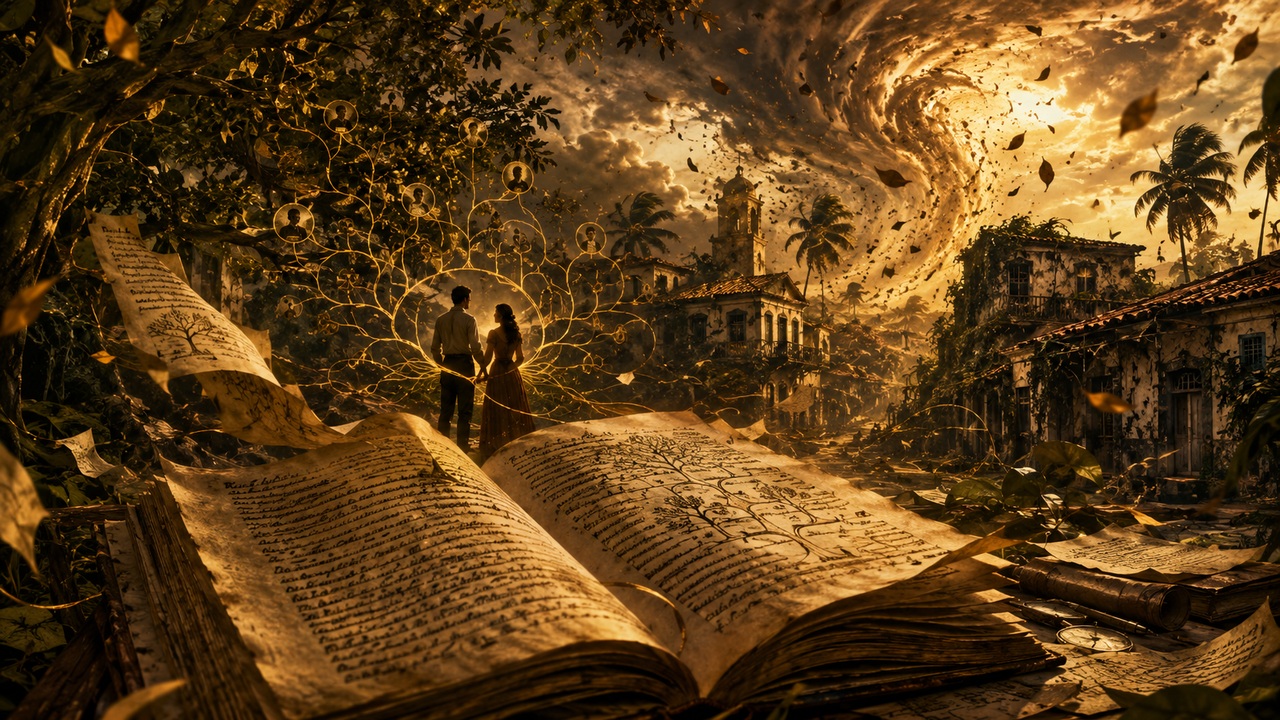
Warning: this text contains full spoilers for the final episode of One Hundred Years of Solitude and for the ending of Gabriel García Márquez’s novel. The special episode that concludes the adaptation premiered on Netflix on August 26, 2026.
The short answer: Aureliano Babilonia is Amaranta Úrsula’s nephew
The family relationship that organizes the ending is simpler than the repeated names make it seem. Aureliano Segundo and Fernanda del Carpio are the parents of Renata Remedios, known as Meme, José Arcadio, and Amaranta Úrsula. Meme becomes involved with Mauricio Babilonia, and their relationship produces Aureliano Babilonia. Because Amaranta Úrsula is Meme’s sister, she is Aureliano’s maternal aunt.
That is the connection the two of them do not know when they fall in love. Their relationship therefore does not join two distant branches of the Buendía family: it joins aunt and nephew. The couple’s son, also named Aureliano, belongs to the next generation and is the last descendant of the line.
This distinction resolves a common point of confusion in the ending. Aureliano Babilonia is the last adult Buendía and the character who manages to read the entire history. But the last member of the bloodline, in genealogical terms, is the baby he has with Amaranta Úrsula.
Who Aureliano Babilonia is and why his origin was hidden
Aureliano Babilonia is the son of Meme and Mauricio Babilonia. Their relationship is suppressed by Fernanda del Carpio, Meme’s mother. After the romance is discovered, Meme is removed from Macondo, and her son ends up being raised inside the Buendía house without clear access to the truth about his parentage.
The secret is not a side detail. Fernanda breaks the transmission of information between generations. Aureliano grows up isolated, surrounded by books and by Melquíades’s manuscripts, but without knowing who his parents are. Amaranta Úrsula is not told the truth about him either.
In the novel, when the pregnancy brings the fear of consanguinity back to the surface, the two try
to reconstruct the past. Amaranta Úrsula remembers Fernanda’s version that the boy had been found in a basket, a story that does not actually explain his origin. Aureliano looks for records but cannot reach the answer he needs. The decisive fact appears only when the manuscripts finally become legible.
The series ending preserves this central mechanism: the problem is not simply that the family is large or that names repeat. The information was deliberately hidden, and when the last Buendías need it, family memory is already too broken to protect them.
Why Amaranta Úrsula does not know Aureliano is her nephew
Amaranta Úrsula is the youngest daughter of Aureliano Segundo and Fernanda. She grows up in the same house where Aureliano spends his childhood, but she is never given the key that would explain who he is. To her, the boy is not presented as Meme’s son.
Later, Amaranta Úrsula spends years away from Macondo. When she returns, the old house is decaying and much of the generation that could have clarified the relationship has already died, left, or retreated into silence. The absence of a reliable genealogy turns what should be basic information into a mystery.
That is why the incest at the end does not depend on the characters ignoring an obvious family tree. The tree has, in practice, been erased for them. That erasure is consistent with one of the strongest movements in One Hundred Years of Solitude: repetition grows when memory stops circulating. The characters inherit names, habits, and fears, but they do not always inherit the knowledge needed to recognize the pattern in time.
Who is the last Buendía: Aureliano Babilonia or baby Aureliano?
The two occupy different final positions. Aureliano Babilonia is the last adult member of the family and the last reader of the parchments. He survives Amaranta Úrsula and their son long enough to understand what Melquíades left written.
Baby Aureliano, the son of Aureliano Babilonia and Amaranta Úrsula, is the last biological descendant. He is born with a pig’s tail, fulfilling the fear of consanguinity that has followed the Buendías since the founders José Arcadio Buendía and Úrsula Iguarán, who were also related.
Within the novel’s fantastic logic, the pig’s tail functions as the fulfillment of the old family warning. There is no need to turn the image into a medical or genetic explanation: in the text, it is above all the narrative sign that the family has reached the point it spent generations trying to avoid.
Amaranta Úrsula dies after giving birth. The newborn dies as well and is carried away by ants. Seeing the baby in that state allows Aureliano to connect one of the keys in the manuscripts to the beginning and the end of the line: the first Buendía associated with a tree and the last descendant devoured by ants.
What Melquíades’s manuscripts actually reveal
The parchments do not contain only a short prophecy about Macondo’s destruction. They contain the entire history of the Buendía family, written in advance by Melquíades and arranged in a way that challenges ordinary chronological time.
When Aureliano Babilonia finally finds the keys to decipher them, he begins to recognize episodes that the reader and viewer have already followed. The reading reaches Aureliano’s own origin, clarifies that Meme and Mauricio Babilonia are his parents, and therefore reveals that Amaranta Úrsula was his aunt.
The next step is even more radical: Aureliano realizes he is not reading only the past. The text reaches the present moment of the reading. The manuscripts describe the history of the Buendías
up to the instant when the final reader is inside the house trying to finish the last page.
That is why the object left by Melquíades works as more than an oracle. It is a kind of duplication of the work itself. A recent academic study of metafiction in the novel describes the manuscripts as a mirror text: a narrative within the narrative that contains, in another form, the same story we have just read.
Why Macondo is destroyed when Aureliano finishes reading
Macondo’s destruction occurs in the same movement in which the manuscripts reach the present. The wind intensifies as Aureliano reads, the house and the town begin to be swept away, and the final page makes clear that Macondo will disappear when that history has been completely deciphered.
It is more precise to speak of simultaneity than of a simple magical switch activated by reading. Aureliano does not destroy Macondo by opening the text. What the ending does is synchronize three closures: the end of the bloodline, the end of the town, and the end of the narrative.
That construction also explains the feeling that there is no future after the final sentence. When Aureliano reaches the passage that describes his own act of reading, the manuscript and life arrive at the same point. No distance remains between account and event.
In the Netflix adaptation, that idea has to become image, sound, and movement. The final episode keeps the core of the novel and turns the convergence of reading and catastrophe into a visual sequence: the genealogical revelation, Melquíades’s pages, and Macondo’s disappearance stop being separate events.
Book and series: what comes from the novel and what is an adaptation choice
The family relationship between Aureliano Babilonia and Amaranta Úrsula was not created by the series. It is the novel’s genealogical revelation. Also from the book are the child with a pig’s tail, the death of the last descendant, the deciphering of the manuscripts, and the destruction of Macondo in the final moment.
Netflix reorganizes the work for television and, across the adaptation, uses a more chronological progression than García Márquez’s prose. In the grand finale, however, the essential architecture of the ending is preserved. A review published during premiere week highlighted precisely the episode’s fidelity to the sequence and tone of the ending, although there are small adjustments in staging and pacing.
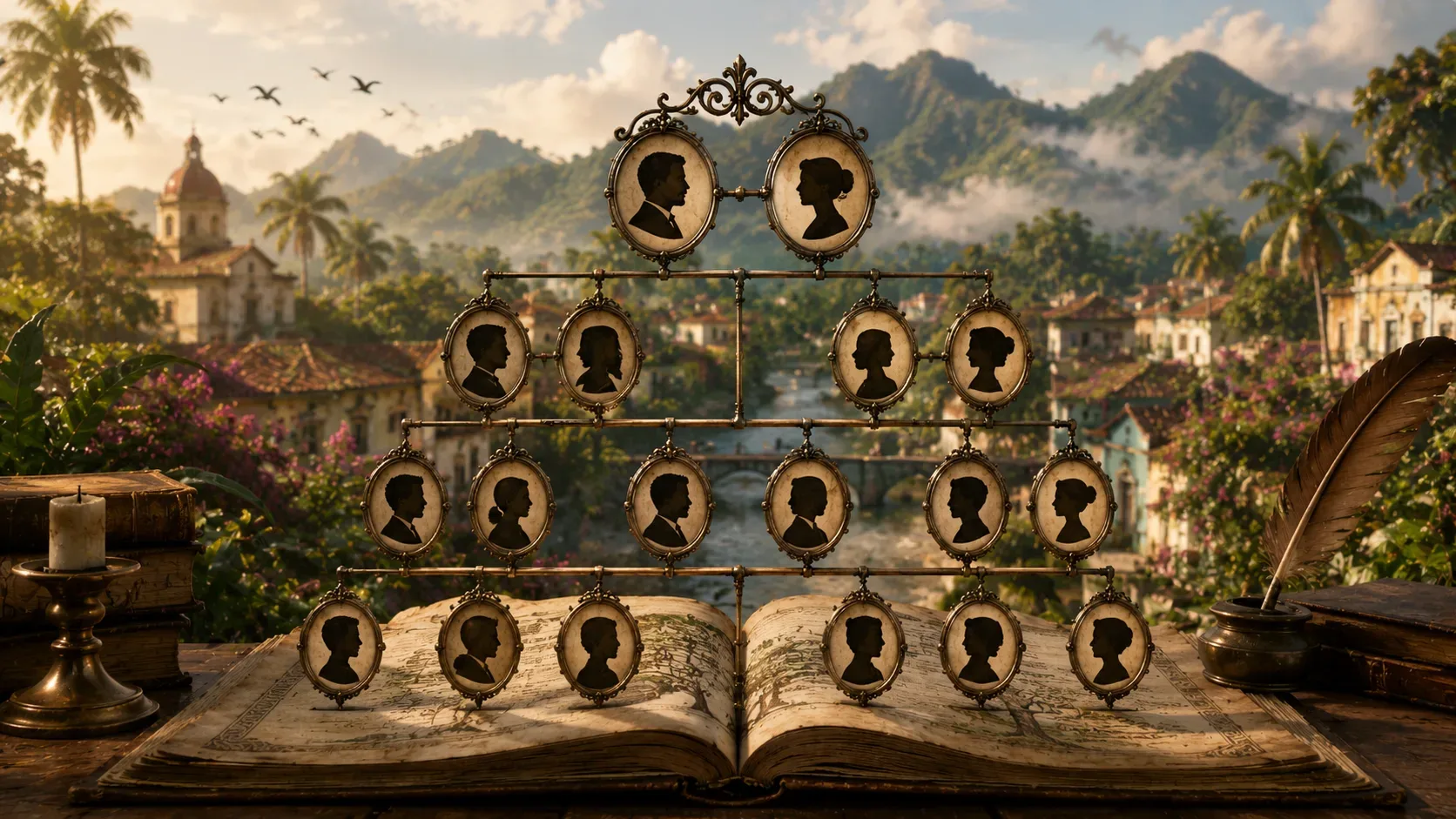
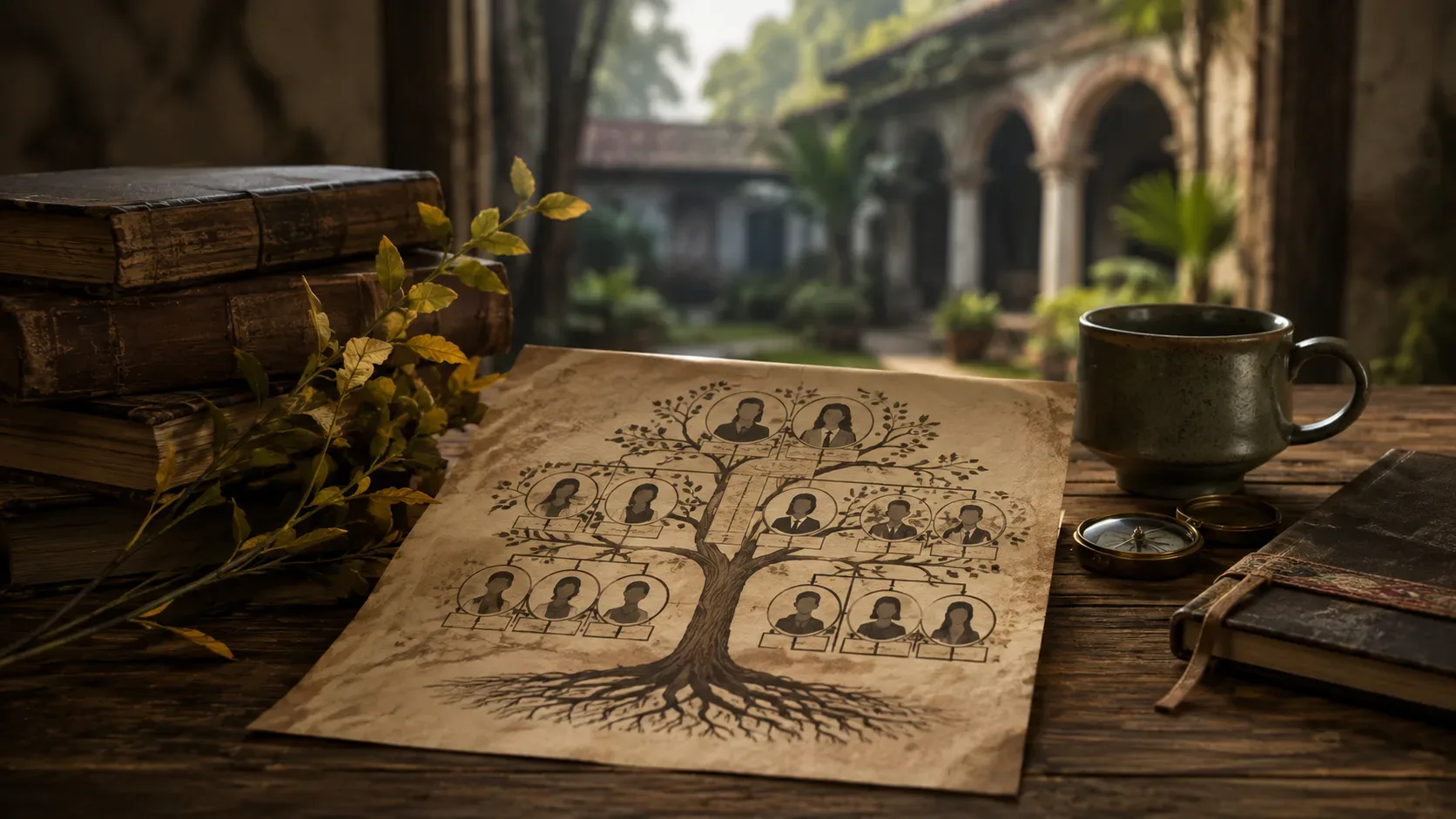
For viewers who only want to understand the part of the family tree needed for the ending, there is no need to reconstruct seven generations. One short branch is enough: Aureliano Segundo and Fernanda are the parents of Meme and Amaranta Úrsula; Meme and Mauricio Babilonia are the parents of Aureliano Babilonia; Aureliano Babilonia and Amaranta Úrsula have baby Aureliano. That small branch contains the entire revelation.
Is the ending about fate, repetition, or memory?
Within the story, fate is literal: Melquíades wrote in advance events that extend all the way to Macondo’s destruction. But the novel does not have to be reduced to the idea that everything happened because a prophecy forced the characters to obey.
One possible reading is that the effect of fate also arises from repetition. Studies of the novel call attention to the way names, desires, mistakes, and forms of solitude return from generation to generation. The future seems closed because the family repeatedly returns to structures that already existed.
The secret about Aureliano makes this interpretation concrete. Fernanda tries to erase a shameful episode and, by doing so, prevents the next generation from recognizing the relationship. What is not transmitted returns as repetition. The family preserves the name Aureliano but loses the information that would make it possible to understand which Aureliano is whose child.
There is also a layer of interpretation about literature itself. Melquíades’s manuscripts tell the story of the Buendías inside One Hundred Years of Solitude. When Aureliano deciphers them, he approaches the position of the reader: he receives a text full of repetitions, keys, and temporal displacements and has to discover how everything connects. The difference is that, for him, understanding the last page means discovering that he too is written inside it.
What the ending actually brings to a close
The final revelation is not only that Aureliano and Amaranta Úrsula were related. It reorganizes everything that came before. Fernanda’s secret explains why the couple does not recognize the bond; the baby’s birth confirms the family’s old fear; the death of the last descendant provides the key to the parchments; and the parchments show that Macondo’s entire history was already contained in that text.
Aureliano Babilonia ends as the final reader because he arrives too late at knowledge that could have changed his life. Baby Aureliano ends as the last Buendía because there will be no new generation. And Macondo ends with both of them because, in the conclusion, family, town, and narrative are treated as parts of the same story.
Who are Aureliano Babilonia’s parents?
He is the son of Renata Remedios, known as Meme, and Mauricio Babilonia. Meme is the daughter of Aureliano Segundo and Fernanda del Carpio.
How is Amaranta Úrsula related to Aureliano Babilonia?
Amaranta Úrsula is Meme’s sister. She is therefore Aureliano Babilonia’s maternal aunt. They do not know about this family relationship when they begin their relationship.
Who is the last descendant of the Buendías?
It is baby Aureliano, the son of Aureliano Babilonia and Amaranta Úrsula. Aureliano Babilonia is the last adult Buendía and the final interpreter of the manuscripts, but his son is the last member of the family generation.
What do Melquíades’s manuscripts contain?
They contain the complete history of the Buendía family and reach the very moment in which Aureliano Babilonia is reading them. The deciphering reveals his origin, his relationship to Amaranta Úrsula, and the simultaneous end of the bloodline and Macondo.