Short answer: Netflix’s Habeas Corpus should not be treated as a reconstruction of one specific true story. In its most recent materials, Netflix describes the production as a fictional series inspired by real cases and by the work of Innocence Project Brasil. As of September 2, 2026, no specific legal case, person or proceeding has been officially identified as a direct counterpart to the convicted young man at the center of the plot.
What Netflix has confirmed about the origins of Habeas Corpus
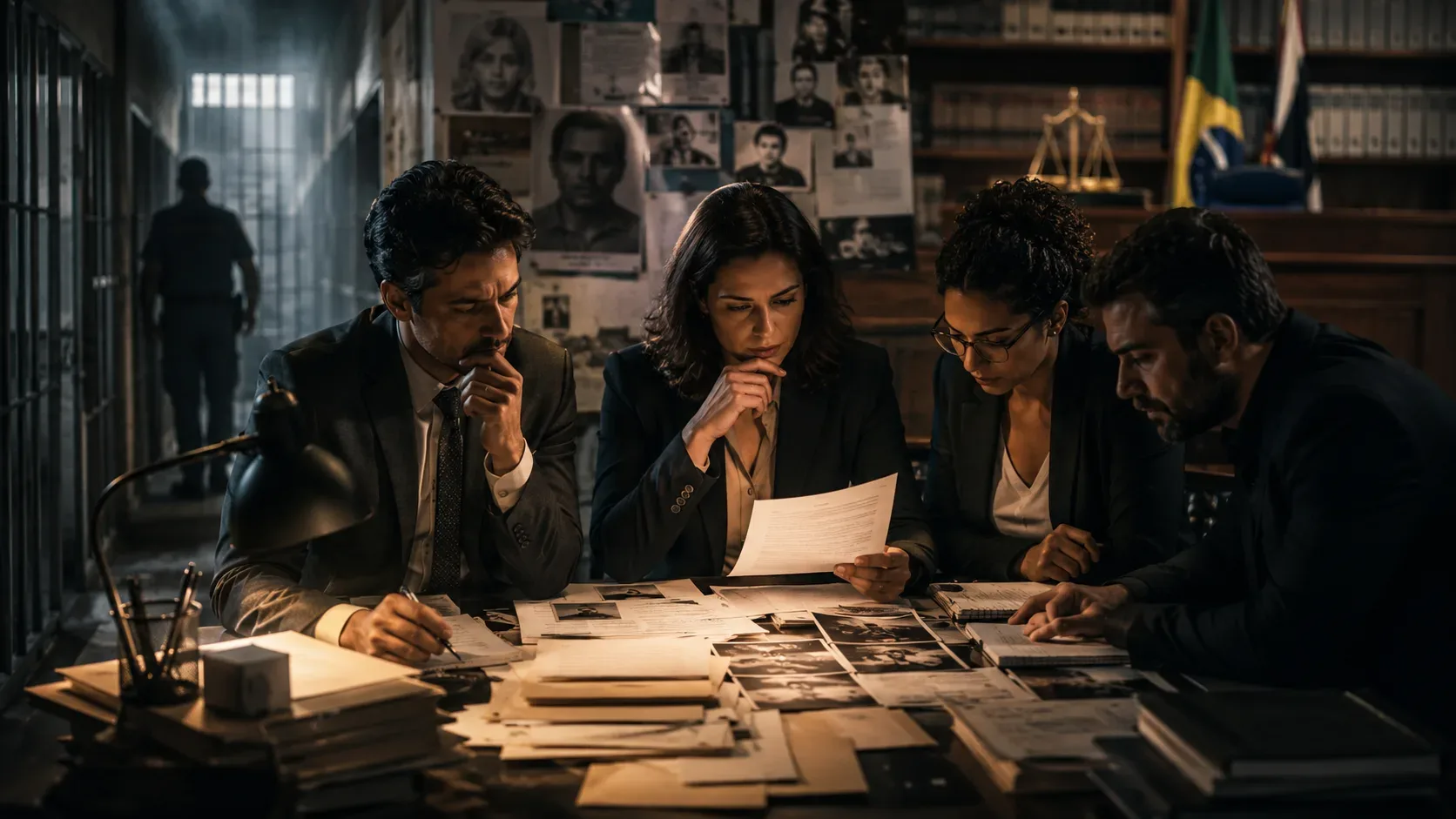
On September 1, 2026, when it released the trailer, Netflix said the series would have eight episodes and premiere on September 23. The story follows Inez, a law professor and former criminal defense attorney who creates a student group to revisit the conviction of a young man who may have been wrongfully convicted. Marina, one of the students, joins the investigation with personal motives connected to an injustice from the past.
The key point for separating fact from dramatization appears in that same announcement: the final screenplay, written by Leonardo Moreira, is described as inspired by real cases and by the work of Innocence Project Brasil. In an earlier announcement on August 18, Netflix had already called Habeas Corpus a fictional series and said that the reality of wrongful convictions serves as a starting point for building a fictional story.
| Classification | What can be stated |
|---|---|
| Confirmed by Netflix | The series is fictional, premieres on September 23, 2026, has eight episodes and follows a post-conviction review group led by Inez. |
| Inspired by real cases | The screenplay draws on wrongful-conviction cases and the work of Innocence Project Brasil, an organization that investigates and seeks to overturn miscarriages of justice. |
| Fictional or not confirmed as real | As of September 2, 2026, there is no public confirmation that Inez, Marina, the convicted young man, their family connections or the plot twists directly correspond to people and events from an identified case. |
Why do some pages say the series is “based on a true case”?
There is a concrete reason for the discrepancy. In the December 2025 announcement, Netflix presented the production as a fictional story “inspired by a real case that was reviewed after a conviction.” That wording was repeated by outlets covering the first announcement.
The more recent official materials use a different framing. In August 2026, Netflix said the series uses the reality of miscarriages of justice as a starting point to build a fictional story. On September 1, it described the final screenplay as inspired by real cases, in the plural, and by the work of Innocence Project Brasil.
The safest reading today is therefore this: a particular post-conviction review case may have helped originate the project, but the final version presented to the public is a fictional narrative informed by multiple real-world references. Without an official identification of the initial case and without a statement mapping characters to real people, it is not accurate to claim that the series reproduces one specific legal proceeding.
What comes from the reality documented by Innocence Project Brasil
The clearest factual link between the series and reality is the kind of problem Innocence Project Brasil works on: innocent people being convicted, evidence being re-examined, new evidence being produced and flaws becoming visible only after a detailed review of the case. The organization’s official case page documents several different paths to wrongful conviction.
- Francisco Mairlon Barros Aguiar: the project attributes his wrongful conviction to a false confession, misconduct by authorities and forensic failures. According to the organization, he spent 14 years and 11 months in prison before being cleared in October 2025.
- Carlos Edmilson Silva: he was convicted in multiple proceedings involving mistaken identification. Innocence Project Brasil says DNA evidence and the invalidation of improper identification procedures helped overturn the convictions; he spent 12 years in prison.
- Lucas Santos de Medeiros: he was convicted of robbery after a mistaken identification. The organization says a forensic examination of his phone helped show that he was using it while the crime was taking place.
- Sílvio José da Silva Marques: his conviction relied on a challenged photographic identification. The project filed a habeas corpus petition with Brazil’s Superior Court of Justice and presented alibi evidence; he was acquitted after nearly six years in prison.
These cases help explain the real-world material behind the series — mistaken identification, overlooked evidence, defense investigation, post-conviction review and the search for redress — but Netflix has not officially identified any of them as direct equivalents of the characters or the central case in Habeas Corpus.
What appears to be fictional construction
The synopsis and trailer contain clear dramatic devices: Inez’s personal journey, Marina’s secret, the student’s connection to a family injustice, conflicts inside the group, complex personal relationships and escalating twists. Because Netflix explicitly calls the work fictional and has not identified real-life counterparts for these elements, they should be treated as fiction or, at minimum, details with no confirmed real-world correspondence.
The same caution applies to the young man whose conviction drives the investigation. The existence of many real people who were cleared after years in prison does not justify choosing one of them and calling it “the case from the series” merely because of similarities in theme, type of evidence or sentence length.
Could the series combine elements from several cases?
The current announcements make that possibility plausible, but it should be presented as an editorial inference rather than a confirmed fact. By saying the screenplay is inspired by “real cases” and that reality is a starting point for fiction, Netflix leaves room for a composite construction: one conflict may resemble a documented type of error, a review technique may reflect real practice, while characters and chronology may be entirely created for the story.
That is different from a biographical drama or a dramatization that explicitly identifies the proceeding it reproduces. Here, the most consistent official reference is the field of work of Innocence Project Brasil, not a promise of a faithful reenactment of one particular case file.
How to check what is real once the episodes are released
After the premiere, the safest way to separate reality from fiction will be to compare any “true case” claim with primary sources. Three checks are especially useful:
- look for a statement from Netflix, the creators or Innocence Project Brasil explicitly naming a case as the inspiration for a particular episode or character;
- verify the chronology and evidence in public records or on the organization’s official case page instead of relying only on narrative similarities;
- distinguish real legal mechanisms — such as post-conviction review, habeas corpus petitions, forensic examinations and challenges to eyewitness identification — from personal relationships, dialogue and twists created for the show.
In short: is Habeas Corpus a true story?
Not in the sense of faithfully telling one true story. The latest official description is of a fictional series inspired by real cases and by the work of Innocence Project Brasil. There are documented wrongful convictions involving mistaken identification, false confessions, false accusations and new evidence capable of reversing decisions, but Netflix has not confirmed that Inez, Marina or the central case are direct portrayals of specific people and proceedings.
Sources: Netflix, September 1, 2026; Netflix, August 18, 2026; Netflix, December 2, 2025; Innocence Project Brasil — Our cases.