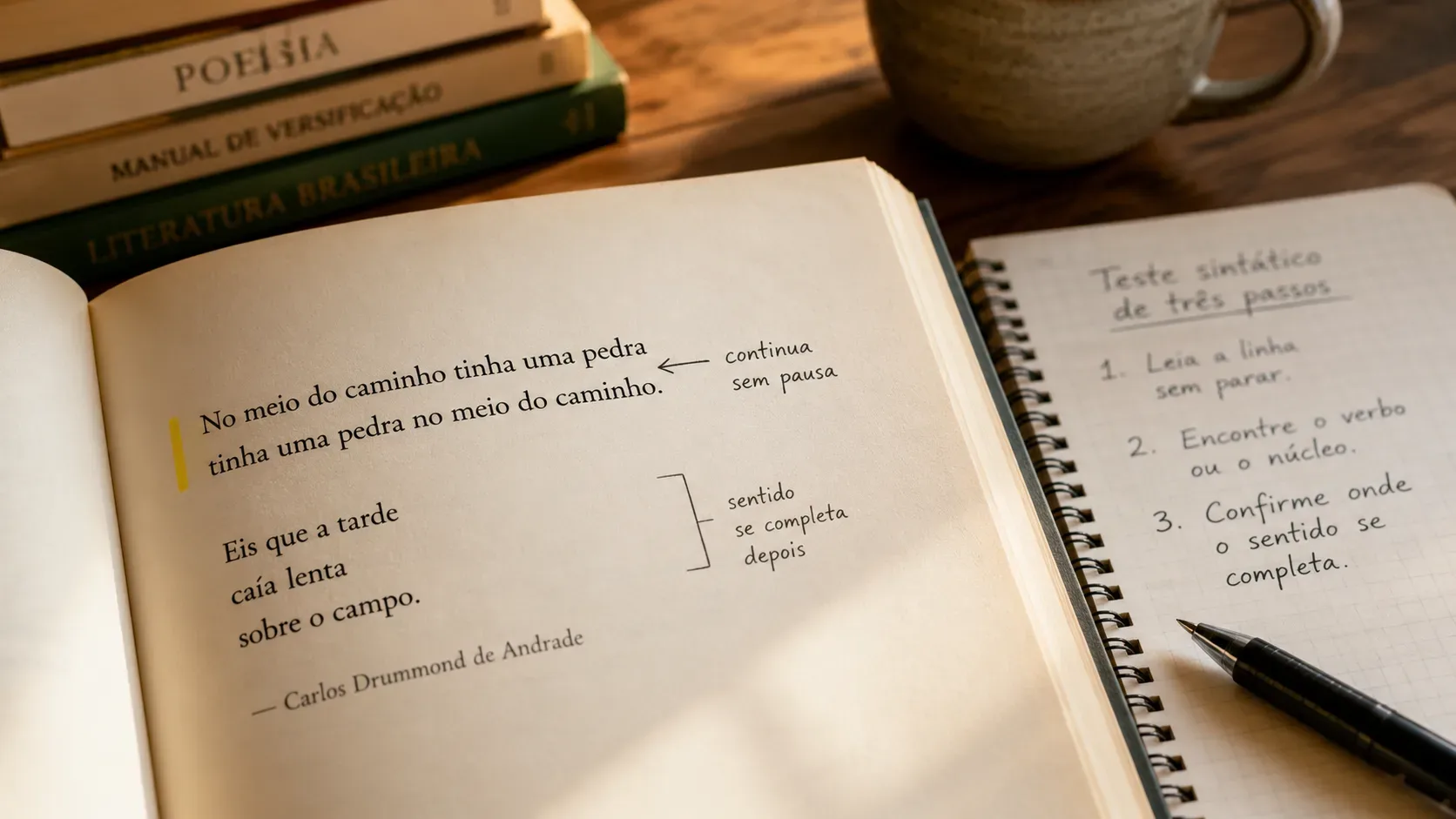

First person does not automatically turn a poem into autobiography. In poetry reading, the lyric speaker or poetic voice is the voice speaking inside the poem. It may be close to the author’s experience, but it can also be invented, dramatized, exaggerated, contradictory, or built through a persona. The Academy of American Poets defines the speaker as the voice of the poem, similar to a narrator in fiction, and notes that the poet does not have to be that voice.
What is the lyric speaker?
The lyric speaker is the speaking position created by the poem. The speaker may say “I,” “we,” or even remain outside the action while narrating in the third person. The key is to separate two figures: the person who wrote the text and the voice speaking inside it.
This distinction is especially clear in persona poems. According to the Academy of American Poets, this kind of poem uses an assumed voice, such as a character or fictional identity. The Poetry Foundation likewise defines a persona as a dramatic character, distinct from the poet, who occupies the role of speaker.
Not every poem, however, presents such an obvious character. Sometimes the voice seems very close to the author’s known biography. Even then, reading should begin with the text. Without enough evidence, safer formulations are “the speaker states,” “the poetic voice suggests,” or “the speaker remembers,” rather than directly assigning the statement to the real author.
Why “I” does not prove identity
The pronoun “I” signals a choice of point of view, not a biographical certificate. The Academy of American Poets page on point of view notes that the author should not automatically be assumed to be the narrator or speaker of a poem. First person can create intimacy, but that closeness is an effect of language.
A poem can therefore use first person in very different situations: a fictional account, a historical mask, a collective voice, an invented character, a personified animal, an ironic speech, or an experience that echoes the author’s life without reproducing it literally.
Internal clues checklist: who is speaking?
- Pronouns and verb person: notice whether the voice says “I,” “we,” addresses a “you,” or narrates someone from the outside.
- Speaking situation: identify where the voice seems to be, what is happening, and when the speech occurs.
- Addressee: look for who is called, remembered, accused, advised, or silently listened to.
- Available knowledge: note what the speaker knows, does not know, and merely assumes.
- Vocabulary and register: suggested age, profession, historical period, social group, formality, and ways of naming the world can construct a persona.
- Contradictions and gaps: shifts in version, omissions, or claims that conflict with other clues can show that the voice is partial.
- Tone and distance: irony, exaggeration, and ambivalence can create distance between what the speaker says and what the poem as a whole lets the reader perceive. The Poetry Foundation connects tone to choices in vocabulary, syntax, rhythm, and figurative language.
Four situations that help separate speaker and author
1. First person without an explicit persona
Consider these invented lines: “I have kept the key since winter / and still have not returned to that house.” There is an “I,” a memory, and a house. This supports saying that the speaker keeps a key and avoids or postpones a return. By itself, it does not support the conclusion that the real poet owned that house or lived through that episode.
Reading improves when biographical claims are turned into textual questions: who is this “I”? What is the speaker’s relationship to the house? What does the verb “return” presuppose? Why does winter matter?
2. Persona or assumed voice
Now imagine: “From the tower, I count the ships’ lights / before the fog erases the harbor.” If the poem presents the speaker as a lighthouse keeper, sailor, or character from another period, an identity has already been built inside the text. The reader does not need to look for a literal match with the author’s profession.
Persona poems make visible a procedure that can also exist less explicitly elsewhere: writing involves choosing a voice, and that voice can differ from the private person whose name appears on the work.
3. Irony: when the voice says more, or less, than it understands
In an ironic poem, the speaker may praise something that the larger pattern of images presents as harmful, or claim confidence while syntax and repetition reveal anxiety. Reading the speech as the author’s direct declaration can erase part of the effect.
A useful question is: does the poem confirm the speaker’s view, or does it create signals that invite the reader to question it? The answer depends on the relationship among words, images, rhythm, line breaks, repetition, and internal context.
4. Narrative poem
Not every lyric poem works like a confession. A poem can narrate a scene with characters, actions, and the passage of time. The voice may observe from outside, follow one character, or shift distance. In these cases, the distinction between author and speaker approaches the distinction between author and narrator in fiction.
Even when an “I” appears, check whether that “I” takes part in the events, witnesses them, retells something heard from others, or mainly organizes the narrative.
When the author’s biography helps
Biography is not forbidden. It can enrich reading when a poem engages with documented events, places, relationships, historical movements, or formal choices in the author’s life and work. The problem arises when biography becomes a shortcut for deciding meaning before examining the poem.
A more productive order is: first identify the voice and the internal evidence; then consult biographical or historical context; finally compare the two layers. If the context supports a connection between author and speaker, that adds information. If it does not, the poem still works as an independent verbal construction.
A five-step reading method
- Mark who speaks: highlight pronouns, verbs, and forms of address.
- Describe the situation: summarize in one sentence where the voice is, whom it addresses, and what it is trying to do.
- Collect identity evidence: age, profession, period, family relations, memory, space, and knowledge attributed to the speaker.
- Separate certainty from hypothesis: note what the text clearly states and what you have inferred.
- Only then consult biography: use outside information to compare, contextualize, or revise your hypothesis, not to replace reading.
Common mistakes when identifying the lyric speaker
- “It says I, so it is autobiographical”: first person is a mode of utterance, not documentary proof.
- “If the author lived through something similar, the poem reports it exactly”: experiences can be transformed, condensed, combined, or fictionalized.
- “Persona exists only when a character is named”: a voice can be constructed through situation, vocabulary, and perspective without receiving a name.
- “Every emotion belongs to the author”: sadness, desire, anger, or guilt are effects produced by the speaker and the poem’s form.
- “Biography is useless”: it can matter, provided it comes after textual observation and is treated as context, not as an automatic key.
Quick questions for any poem
| Question | What to observe | What it prevents |
|---|---|---|
| Who speaks? | Pronouns, verbs, position in the scene | Confusing the voice with the author’s signature |
| Who is being addressed? | Direct address, second person, implied addressee | Assuming every statement is directed at the reader |
| What does this voice know? | Memories, certainties, doubts, available information | Giving the speaker knowledge the text does not provide |
| Are there signs of persona? | Period, profession, age, fictional identity, social role | Turning a character into a biographical fact |
| Is there irony or distance? | Contradictions among speech, images, rhythm, and context | Taking every statement literally |
In short, identifying the lyric speaker means reconstructing a speaking position from clues inside the poem itself. Biography can enter later as context. This order helps readers recognize first person, persona, irony, and narration without automatically turning verse into a document of the author’s life.