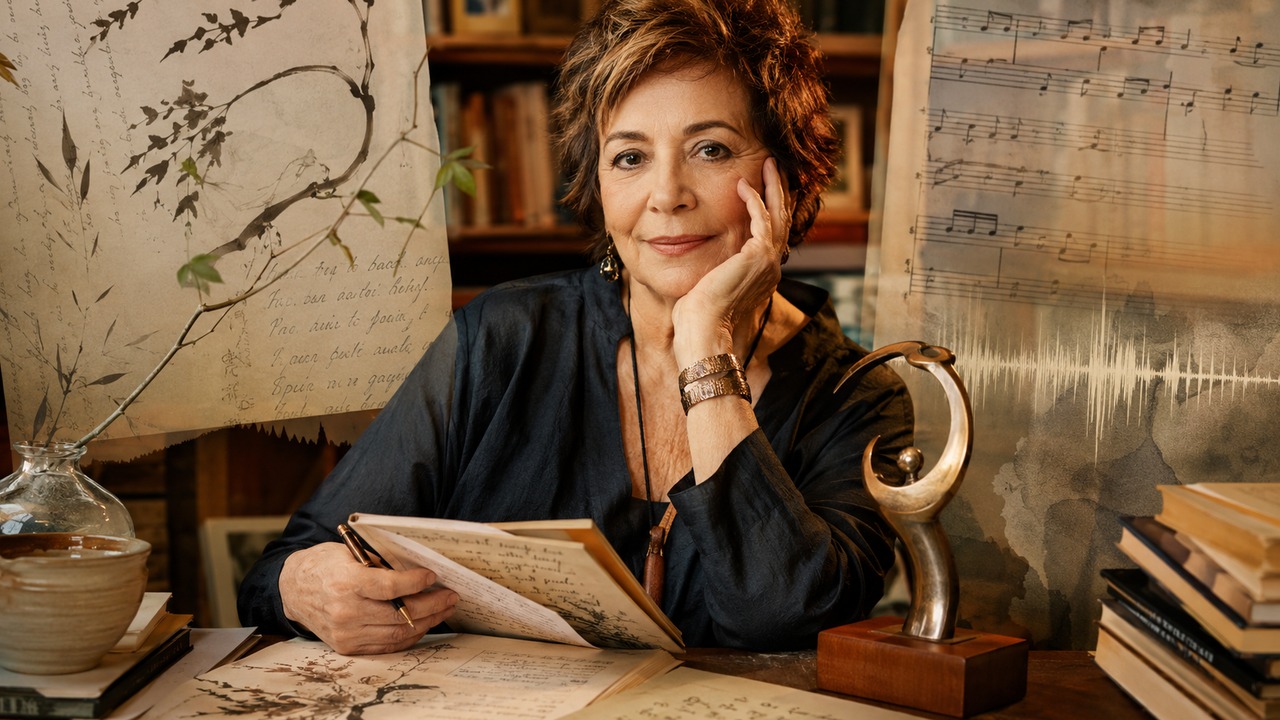
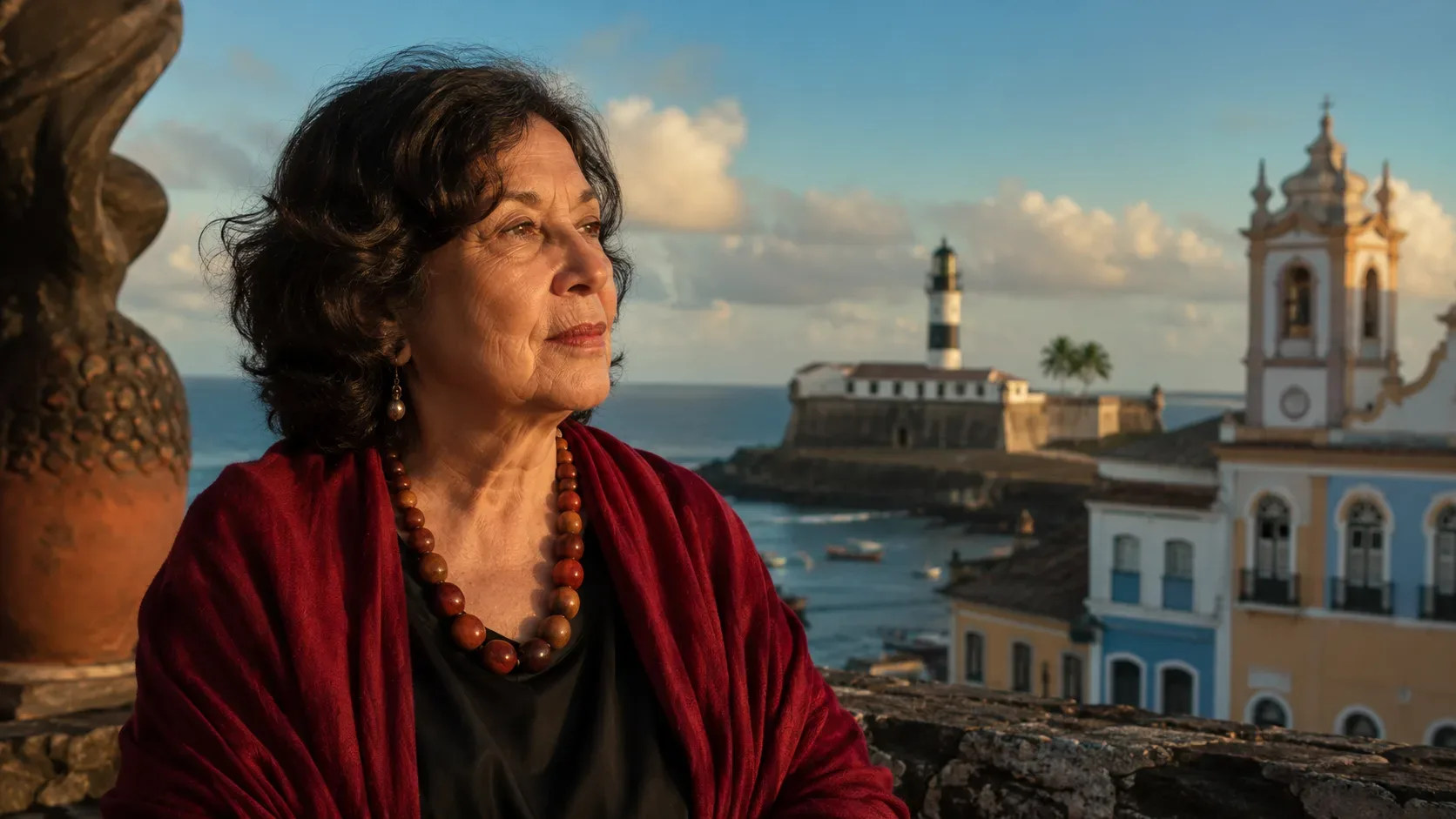
The 10th Flipelô's tribute to Myriam Fraga does not just celebrate a poet born in Salvador. She returns to the center of the party an author who helped create the very institutional space from which the event was born and whose poetry made Bahia a matter of imagination, memory and conflict.
The Pelourinho International Literary Festival takes place from August 5th to 9th, 2026, in the Historic Center of Salvador, with free programming. Myriam Fraga, who lived from 1937 to 2016, is the main honoree of the edition, alongside the artist Calasans Neto. The organization chose as its theme “Poetry, dream and destiny”. It was also Myriam who created Flipelô and directed the Casa de Jorge Amado Foundation from 1986 to 2016.
There is, therefore, a kind of return to the origin. But the tribute takes on another dimension when you get into the poems. Bahia, myth and feminine do not appear in Myriam's work as isolated subjects. They intersect through images that return: the sea, the city, the journey, the memory, the body, the fabric and characters that receive a new possibility of speech.
Myriam Fraga's Bahia is not just a landscape
Myriam Fraga debuted as a book with Marinhas, in 1964. Since that beginning, the sea has occupied a place that goes far beyond the coastal landscape. In reading his work, he can be threat and opening, departure and shipwreck, workspace and imaginary territory. The author herself, in a statement recovered by Ricardo Nonato Almeida de Abreu Silva's academic research, pointed out city, sea, myth and memory among the major aspects of her poetry.
This relationship is even more evident in Sesmaria. The book transforms the history and urban space of Salvador into a poetic construction. The city is there with its streets, confrontations, ruins and memories, but not as neutral documentation. It is reassembled by language.
A study by Vilma Santos da Paz, developed at the Federal University of Bahia, calls this process the construction of an “imaginary Bahia”. When analyzing books such as Sesmaria, Marinhas, Pescadors de Mar Grande, A island, The risk on the skin and Femina, the researcher observes how places, characters, bodies and waters form a territory that relates to Salvador and its surroundings, but is reinvented by the poem.
This helps to avoid a folkloristic reading of the author. Bahia de Myriam does not only function as a local color. The sea is not there to decorate Salvador, just as colonial history is not there to produce an old postcard. The Bahian space is crossed by memory, violence, belonging, displacement and desire.
Critic Manuel da Costa Pinto already drew attention to this combination when observing, in Poesia Reunida, the simultaneous presence of the landscape and history of Bahia, of mythological figures and the female experience. For him, historical roots did not prevent Myriam's poetry from being modern.
The myth enters the poem to be displaced
When mythological figures appear in Myriam Fraga, they are rarely simple scholarly references. The poet goes back to old stories to ask what happens when the point of view changes.
This operation is especially important in the treatment of female characters. Ricardo Silva's research on the mythical and the feminine in his poetry identifies a recurring procedure: Myriam takes up known figures from tradition and displaces the discourses built around them.
Penélope is one of the most expressive cases.
In the tradition associated with the Odyssey, she has been identified throughout the centuries mainly with waiting and fidelity to her absent husband. In Myriam's poetry, the act of weaving and unweaving can acquire another weight. What seemed like a sign of domestic permanence also becomes thought, conflict and self-elaboration.
UFBA research highlights precisely this change: the Penélope recreated by the poet gains an interiority that disturbs the model of the merely faithful and submissive woman. The myth remains recognizable, but it no longer tells of exactly the same place.
This is decisive for understanding the author's use of mythology. Myriam does not need to destroy the myth to challenge it. She gets into your gaps.
In Femina, the feminine is no longer just a theme
Published in 1996, Femina makes an investigation that spans different moments of the work more explicit. The presentation of the book in the collection dedicated to the author describes a feminine universe reinvented by myth, built with recurring images such as mirror, labyrinth, scissors and embroidery.
These objects have particular weight because they bring activities historically associated with female space closer to larger issues: creation, time, identity, death, desire and writing.
Fabric, for example, is not just fabric. When approaching the figure of Penelope, it can be read as memory, language and strategy. The spinning woman also organizes a narrative. The one who unravels the fabric refuses the idea that her story is already finished.
A more recent thesis from Universidade Estadual Paulista expanded this discussion by studying mythical, biblical and historical characters in Myriam's poetry. The work precisely identifies a challenge to the discourses that produced silencing and rigid models for women.
Therefore, saying that Myriam writes about the feminine is correct, but insufficient. It is especially interesting to observe who starts to speak when the poet returns to known stories.
Sea, body and fabric end up being part of the same language
It is at this point that Bahia, myth and feminine begin to no longer seem like three different paths.
The image of navigation, so frequent in Myriam, can lead to the Bahian sea, but also to the mythical journey and the inner experience. The fabric belongs to Penélope, but it also offers an image for the memory work itself. The city contains concrete history, but it can be reconstructed as subjective territory.
Evelina Hoisel, when analyzing Poems, published posthumously, identified the permanence of themes such as memory, travel, navigation, weaving and reflection on one's own poetic making. These are elements that return throughout the production and help to understand the internal coherence of an extensive work.
The encounter between these elements produces a poetry in which moving and remaining are not necessarily opposites. Penelope can travel without abandoning the loom; Salvador can carry centuries of history and still be recreated; the past can return without simply being repeated.
Myriam works precisely in this range.
A poet who also built institutions
There is another layer to Flipelô's tribute. Myriam Fraga didn't just leave behind books.
She participated in the creation of the Casa de Jorge Amado Foundation and directed it for three decades. He was also a member of the Academia de Letras da Bahia and maintained for years the cultural column Linha D’Água, published in the newspaper A Tarde. Flipelô's official website records a production of 25 books, including poetry, prose and children's works.
His trajectory, therefore, combined writing and cultural action. This combination helps explain why the 2026 honor isn't limited to displaying a biography.
The party's programming itself transforms different aspects of its legacy into activities. Among the events dedicated to the author are Poetry is Women's Thing — Homage to Myriam Fraga, the soirée Sesmariando com Myriam e Calá, the conversation Myriam Fraga: a multi-referential poetics, as well as meetings about his life and poetry. On Sunday, August 9, the Fundação Casa de Jorge Amado will also host the monologue Portraits: Poetic Images by Myriam Fraga.
The choice of these titles is revealing: Flipelô does not just honor the manager who helped build the Foundation or the creator of the festival. He puts words, images and questions that belong to his work back into circulation.
Why reread Myriam Fraga in 2026
The theme “Poetry, dream and destiny” offers a possible entry, but does not exhaust the author.
Reading Myriam Fraga today means encountering a Salvador who does not remain immobile in the past; myths that change when other voices take over the narrative; and female characters who no longer fit entirely into the roles they received from tradition.
It also means realizing how some of the most constant images in his poetry talk to each other. Sea, travel, fabric and memory are not scattered pieces. They are ways of thinking about time, belonging and the possibility of reconstructing a history.
Perhaps this is why Flipelô's tribute has a special coherence. In 2026, Myriam returns to Pelourinho not just as the name of an edition, but as a poet of a city that she herself helped transform into words and as an author for whom revisiting the past never meant leaving it intact.
>